History
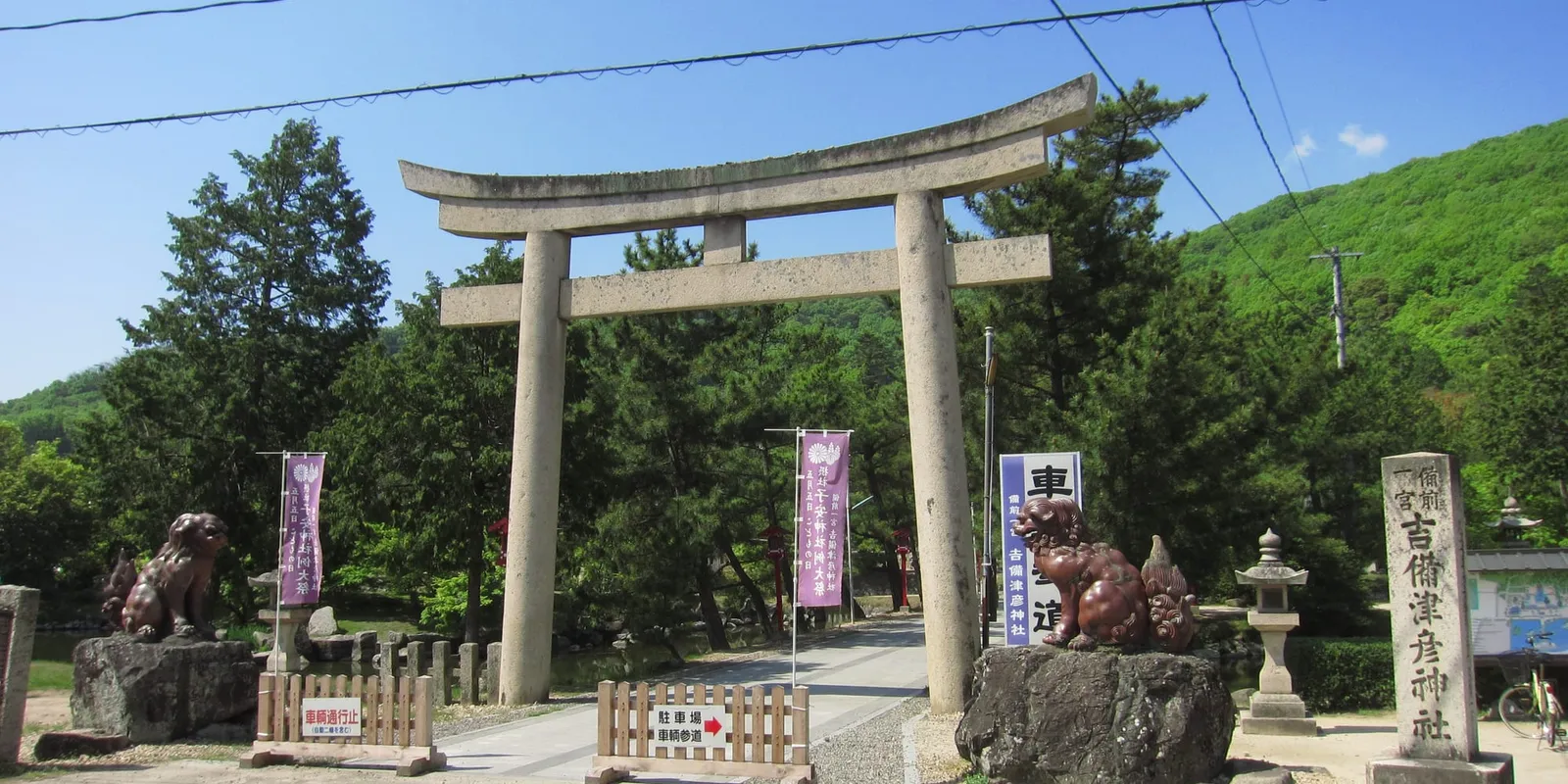
Kibitsuhiko Jinja stands at the northeastern foot of Mount Kibi-no-Nakayama and holds the rank of Ichinomiya (chief shrine) of former Bizen Province. Its enshrined deity, Okibitsuhiko no Mikoto, is said to have been a son of the 7th legendary emperor, Korei, and one of the “Four Generals of the Four Roads” dispatched by the Yamato court to pacify the region of Kibi; tradition holds that after pacifying the province, he made his residence on this very site.
The shrine’s status as Ichinomiya has an unusual history. When the Engishiki Register of Deities was compiled in 927, the rank of Bizen’s chief shrine belonged to Ani Jinja, in what is now Higashi-ku, Okayama. After Ani Jinja’s standing at the imperial court declined in the aftermath of the Tengyo Rebellion (939–941), the Ichinomiya rank is said to have passed instead to Kibitsuhiko Jinja — the shrine standing on the opposite side of Mount Kibi-no-Nakayama from Kibitsu Jinja (Ichinomiya of neighboring Bitchu Province), with which it shares its principal deity. During the Sengoku period, the shrine’s buildings were burned in fighting involving the Matsuda clan, but were restored with support from Ukita Naoie; Toyotomi Hideyoshi is also said to have prayed here before his siege of Bitchu-Takamatsu Castle. The main hall and Zuijinmon gate were later rebuilt in 1697 (Genroku 10) by order of Ikeda Tsunamasa, lord of Okayama Domain, but a fire in December 1930 destroyed most of the rest of the shrine’s structures, sparing only the main hall and Zuijinmon gate. Those buildings were rebuilt in 1936 in a style drawing on Asuka-period design, and the shrine stands in that form today.
Highlights
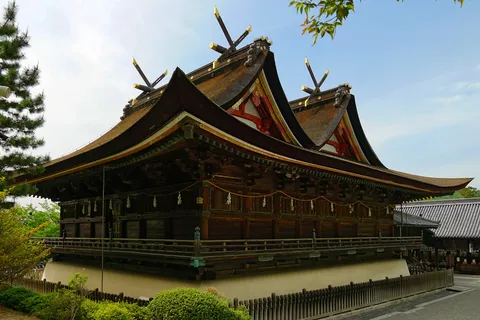
Having survived the 1930 fire, the main hall and Zuijinmon gate preserve their 1697 (Genroku 10) form and are designated Important Cultural Properties of Okayama Prefecture. The main hall’s cypress-bark-roofed nagare-zukuri style offers a more restrained, dignified profile than the dramatic twin-gabled roofline of neighboring Kibitsu Jinja’s National Treasure hall.
The shrine’s nickname, “Shrine of the Morning Sun,” comes from a striking phenomenon on the summer solstice, the longest day of the year: the rising sun is said to align directly with the main torii gate, its light traveling the full length of the long approach to strike the sacred mirror enshrined within the main hall — evidence, shrine tradition holds, that the buildings were originally laid out according to ancient solar worship. Kibitsu Jinja, standing on the opposite side of Mount Kibi-no-Nakayama, shares this same summer-solstice alignment, a phenomenon the two closely related shrines owe to their common relationship with the mountain between them.
The grounds also preserve a strong tradition connecting the shrine to the Momotaro legend: the battle between Okibitsuhiko no Mikoto and a demon named Ura, said to have brought ironworking culture to the Kibi region, is believed to have spread across Japan and become the basis for the “Momotaro” (Peach Boy) folktale. In 2018, the shrine was certified as a constituent site of the Japan Heritage program “The Town Where the Momotaro Legend Was Born.”
Visiting Tips
It’s about a 3-minute walk from JR Bizen-Ichinomiya Station on the JR Momotaro Line to the main torii gate, making the shrine easy to reach by public transport. Free parking for worshippers covers 100 spaces for cars, expanding to around 300 spaces including temporary overflow lots during the New Year’s period. Goshuin stamps are available at the shrine office behind and to the left of the worship hall from 8:30 AM to 5:00 PM for ¥500, and an original goshuin book featuring a Momotaro-themed peach design (¥2,000) is a popular choice. Visitors hoping to witness the summer solstice sunrise should plan to arrive before dawn, as the grounds fill early for the occasion.
Annual Festivals
- Summer Solstice Festival (around June 21): Held on the longest day of the year, this rite begins before dawn so worshippers can watch the sunrise align with the main torii gate. Open to general participation, it’s the festival most closely tied to the shrine’s “Shrine of the Morning Sun” nickname.
- Autumn Grand Festival (3rd Saturday and Sunday of October): The shrine’s principal annual festival, in which newly harvested grain is offered to give thanks for a bountiful harvest. On the Sunday, a yabusame (mounted archery) rite said to date back to 1342 is performed, designated an Okayama City Intangible Folk Cultural Property.
- Otaue Rice-Planting Festival (August 2–3): A traditional rite praying for a good harvest, designated an Okayama Prefecture Intangible Folk Cultural Property.
- Setsubun Festival (February 3): A bean-throwing ritual to drive away misfortune and invite good luck for the year ahead.
Nearby Food & Sightseeing
- Kibitsu Jinja: Dedicated to the same deity, Okibitsuhiko no Mikoto, and standing on the opposite, western side of Mount Kibi-no-Nakayama — the Ichinomiya of former Bitchu Province, known for its National Treasure main hall with a distinctive twin-gabled roof and its roughly 360-meter roofed corridor. Often visited together with Kibitsuhiko Jinja.
- Saijo Inari: One of Japan’s three great Inari sites, this historic temple blending Buddhist and Shinto worship is known for its bright vermillion great torii gate and grand main hall. About a 20-minute drive from Kibitsuhiko Jinja, it’s a popular stop for visitors touring the area.
- Kibiji Cycling Road: A cycling route linking historic sites across the Kibiji region, including both Kibitsuhiko Jinja and Kibitsu Jinja, with burial mounds and temples from the ancient Kibi Kingdom along the way for a leisurely ride.
Frequently Asked Questions
- Q. Can I get a goshuin here?
- A. Yes, at the shrine office behind and to the left of the worship hall, open 8:30 AM–5:00 PM, for a fee of ¥500. An original goshuin book decorated with a Momotaro-themed design is also available for ¥2,000.
- Q. What are the visiting hours and is there parking?
- A. The shrine grounds are open for free visiting from 6:00 AM to 6:00 PM. Free parking for worshippers (100 spaces for cars) keeps the same 6:00 AM–6:00 PM hours.
- Q. How do I get to Kibitsuhiko Jinja?
- A. It's about a 3-minute walk from JR Bizen-Ichinomiya Station on the JR Momotaro Line to the main torii gate. By car, it's about 10 minutes from the Okayama interchange on the Sanyo Expressway.
- Q. What's the connection to the Momotaro legend?
- A. According to shrine tradition, the battle between the enshrined deity Okibitsuhiko no Mikoto and a demon named Ura, who is said to have brought ironworking culture to the Kibi region, became the origin of the "Momotaro" (Peach Boy) folktale. In 2018 the shrine was certified as a constituent site of the Japan Heritage program "The Town Where the Momotaro Legend Was Born."
- Q. Why is it called the "Shrine of the Morning Sun"?
- A. On the summer solstice, the rising sun is said to align directly with the main torii gate, its light traveling the length of the approach to strike the sacred mirror enshrined in the main hall — a feature traced to ancient sun worship, and the source of the shrine's nickname, Asahi no Miya ("Shrine of the Morning Sun").
Related Shrines
Okayama, Okayama (Kita-ku)
Kibitsu Jinja
Kibitsu-jinja
- Household Safety
- Business Prosperity
- Victory in Competition
Oita Prefecture, Usa
Usa Jingu
Usa-jingū
- Victory in Competition
- Protection from Misfortune
- Household Safety
Kyoto Prefecture, Yawata
Iwashimizu Hachimangu
Iwashimizu Hachimangū
- Protection from Misfortune
- Victory in Competition
- Household Safety