History
Kibitsu Jinja has long stood as the guardian shrine of the ancient Kibi Kingdom, once one of Japan’s most powerful regional polities, and holds the rank of Ichinomiya (chief shrine) of former Bitchu Province. Its exact founding date is unknown, but it was already listed as a Myojin Taisha, a shrine of the highest rank, in the Engishiki Register of Deities compiled in 927 — evidence that it held great prestige even before the Heian period. Its enshrined deity, Okibitsuhiko no Mikoto, is said to have been a son of the 7th legendary emperor, Korei, and to have been dispatched by the Yamato court as a hero who pacified the province of Kibi.
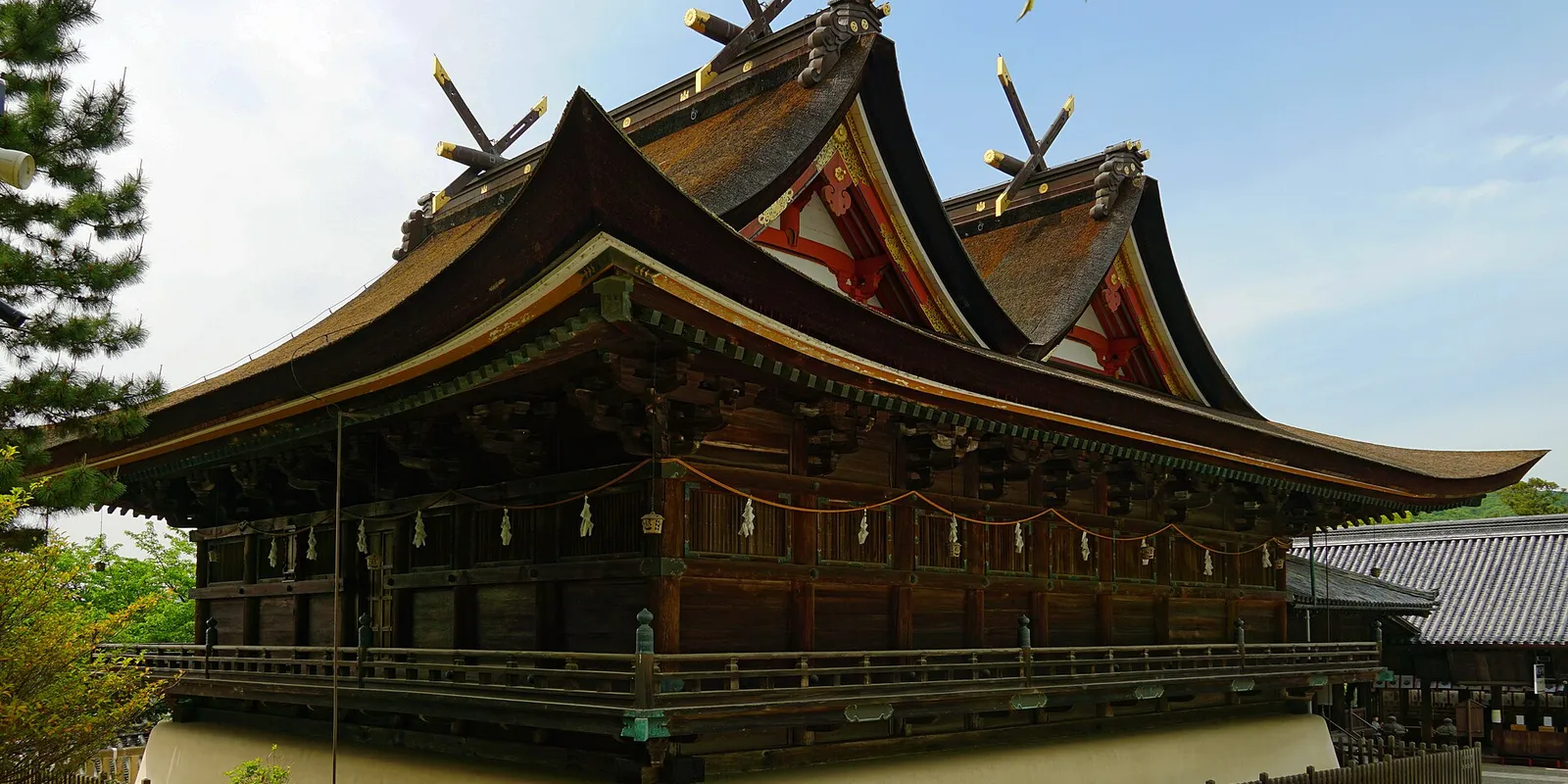
According to shrine tradition, Okibitsuhiko no Mikoto defeated a demon named Ura, who had terrorized the region from his stronghold at Kinojo Castle on the northern slopes of Mount Kibi-no-Nakayama. As this legend of demon-slaying spread across Japan, it is believed to have become the origin of the famous folktale “Momotaro” (Peach Boy), which is why the wider Kibiji region is considered the setting of the Momotaro legend. Sites connected to the Ura legend still dot the shrine grounds today, including the Yaoki-iwa rock, where the arrows used in the battle are said to have been placed, and the Okamaden hall, said to be where the demon’s head was buried. The current main hall and worship hall were rebuilt in 1425 on the order of Ashikaga Yoshimitsu, the third shogun of the Muromachi shogunate, and are now designated a National Treasure.
Highlights
The single greatest highlight of Kibitsu Jinja is its National Treasure main hall and worship hall. Known as “hiyoku irimoya-zukuri” (also called “Kibitsu-zukuri”), this style joins two hip-and-gable roofs one behind the other, a design found nowhere else in Japan. The intricately layered gables create a roofline that rewards viewing both from a distance and up close.
The other symbol of the shrine is its “kairo,” a roofed corridor stretching roughly 360 meters south from beside the main hall. Said to have been built in 1579, the corridor follows the gently undulating terrain of the approach in a single straight line, and walking beneath it amid seasonal flowers feels like stepping into a painting. Partway along the corridor stands the Okamaden hall, where the “Narikama Shinji” ritual — a divination that reads fortune from the sound of a great iron kettle — is still performed today, offering visitors a mystical experience tied directly to the Momotaro legend’s demon-slaying story.
Visiting Tips
It’s about 200 meters on foot from JR Kibitsu Station to the shrine’s first torii gate, and from there another 500 meters along a pine-lined approach to the main hall, so allow around an hour if you want to explore the grounds at a relaxed pace. Because the corridor is roofed, it’s easy to walk even in light rain, and comfortable shoes are recommended given the grounds’ gentle slopes. Goshuin stamps are available at the shrine office from 9:00 AM to 4:00 PM, and a goshuinbook decorated with a Momotaro illustration is a popular choice among visitors.
Annual Festivals
- Spring Grand Festival / Shichijugo-zen Sue Shinji (2nd Sunday of May): One of Okayama Prefecture’s three great festivals, in which 75 ceremonial food offerings are carried from the offering hall to the main hall in a procession of well over a hundred people winding along the corridor.
- Autumn Grand Festival / Shichijugo-zen Sue Shinji (2nd Sunday of October): Held twice a year alongside the spring rite, this solemn processional festival gives thanks for the autumn harvest.
- Yatate Shinji (January 3): A New Year’s rite in which arrows are shot to drive away evil spirits, commemorating Okibitsuhiko no Mikoto’s defeat of the demon Ura.
- Summer Solstice Festival (around June): Held on the longest day of the year, when the morning sun is said to rise directly in line with the approach — a feature the shrine shares with nearby Kibitsuhiko Jinja, known as the “Shrine of the Morning Sun.”
Nearby Food & Sightseeing
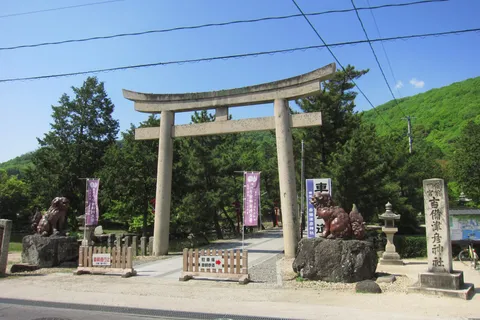
- Kibitsuhiko Jinja: The Ichinomiya of former Bizen Province, also dedicated to Okibitsuhiko no Mikoto, standing just across Mount Kibi-no-Nakayama from Kibitsu Jinja. Known as the “Shrine of the Morning Sun” for the way sunrise aligns with its torii gate at the summer solstice, it’s often visited together with Kibitsu Jinja.
- Oshokujidokoro Momotaro: A long-established restaurant and souvenir shop in front of the shrine’s parking lot dating from before World War II, famous for its “Momotaro Udon” topped with kibi dango sweet dumplings and pheasant meatballs.
- Kibiji Cycling Road: A cycling route starting from Kibitsu Jinja that winds past historic sites across the Kibiji region, including the five-story pagoda of Bicchu Kokubun-ji temple and the Tsukuriyama burial mound, tracing the legacy of the ancient Kibi Kingdom at a leisurely pace.
Frequently Asked Questions
- Q. What are the visiting hours?
- A. The grounds are open 5:00 AM–6:00 PM; the amulet office is open 9:00 AM–4:00 PM.
- Q. When is the goshuin office open?
- A. 9:00 AM–4:00 PM, from ¥300 (¥500 for a hand-written stamp).
- Q. Is there parking?
- A. Yes, two paid lots are available (first 20 minutes free for cars, then ¥300 per 60 minutes).
- Q. What's the connection to the Momotaro legend?
- A. The enshrined deity Okibitsuhiko no Mikoto's legendary defeat of the demon Ura is considered the origin of the Momotaro folk tale, and sites tied to the legend are scattered across the grounds.
- Q. How do I get there?
- A. About a 10-minute walk from JR Kibitsu Station.
Related Shrines
Okayama, Okayama (Kita-ku)
Kibitsuhiko Jinja
Kibitsuhiko-jinja
- Household Safety
- Victory in Competition
- Protection from Misfortune
Okayama, Mimasaka
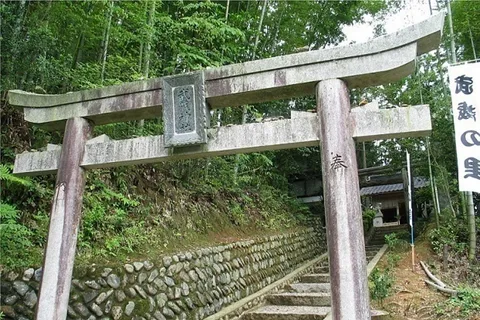
Musashi Jinja
Musashi-jinja
- Victory in Competition
- Exam Success
- Good Relationships
Okayama, Kurashiki
Achi Jinja
Achi-jinja
- Maritime Safety
- Traffic Safety
- Business Prosperity