History
Kotohira Shrine stands in Shinchi-machi, Furubira, on the northeastern side of the Shakotan Peninsula in Hokkaido. Its name is read “Kotohira-jinja” (the Japanese Wikipedia also lists “Konpira-jinja” as a reading). According to the Hokkaido Shrine Agency, the enshrined deities are Omononushi no Kami, Yae-Kotoshironushi no Kami, Ukemochi no Kami and Emperor Sutoku. It was formerly a village shrine (gosha), the halls are in the Shinmei-zukuri style, and the agency lists 1,820 parishioner households.
According to the agency’s history, in 1865 (Keio 1) the shrine petitioned the Hakodate magistrate’s office and was assigned land at the foot of Mt. Maruyama. In 1866 the object of worship of Omononushi no Kami was received from Kyoto and the deity was invited to the site, with Emperor Sutoku enshrined alongside. A temporary hall was built at the foot of Maruyama in 1867, a Shinmei-zukuri main hall and an irimoya-style worship hall were built in 1871, and in 1875 it was ranked as a village shrine and made the guardian shrine of Furubira District.
In 1949 a great fire in western Furubira destroyed everything except the object of worship, which was enshrined together with the deity at Ebisu Shrine in Hamamachi. The main hall and a temporary shrine office were rebuilt on the old site in 1950, but in 1960 a national road was to run through the middle of that site, so the buildings were moved to the present address, 86 Shinchi-machi. In 1961 the offering hall and worship hall were built and a relocation ceremony was held in July. The agency also records that the deities of Inakuraishi Shrine (1985) and Ebisu Shrine (1999) were merged into the shrine.
Highlights
The main attraction is the festival’s “Kotohira Shrine Festival Mikoshi Procession.” Sarutahiko, dressed in a vermilion costume and wearing a tengu mask, leads the mikoshi through town, and at night a fire-walking ritual takes place. According to a tourism information site, the pillar of fire is about 3 meters high, and lion dancers and mikoshi pass through it afterward. A feature article in the web magazine “Kai” says that playing Sarutahiko is a dream for local boys and that the role is typically held for about three years. The procession was designated a Hokkaido Intangible Folk Cultural Property (customs and traditions) in June 2025.
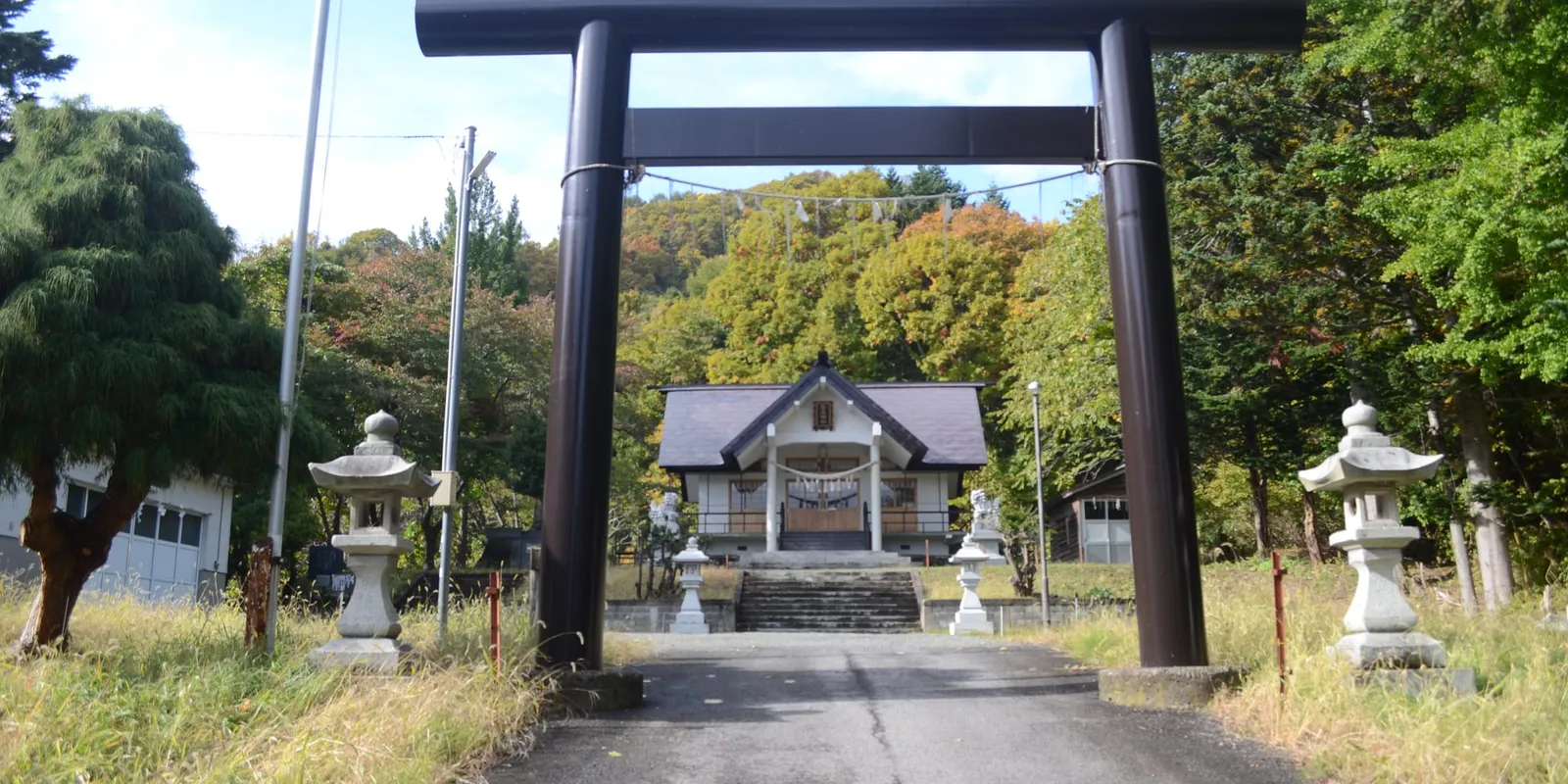
The grounds also hold a memorial to the war dead (a chukon-hi, which the Japanese Wikipedia says was erected in 1906 for those who died in the Russo-Japanese War and later moved), a koshin stone marker, and a poem monument to the poet Yoshida Issui, “Chinkon-ka” (Requiem). The poem monument was erected in 1965 and, according to the on-site sign, is a designated historic site of Furubira Town. The shrine halls stand against a backdrop of woods, and you can see the worship hall at the top of the stone steps beyond a black torii.
The records that would show the festival’s origins are said to have been lost in the 1949 fire, so its exact beginnings are unclear. The Kai feature considers the fire-walking to be at least 100 years old, while the tourism association’s page says over 300 years, so accounts differ by source.
Visiting Tips
Public sources such as the Hokkaido Shrine Agency give no confirmed visiting hours, goshuin information or parking details, and we could not tell whether a shrine office is staffed. If you want a prayer service or an amulet, it is best to contact the shrine before you go.
To get there, take a Hokkaido Chuo Bus bound for Shakotan from JR Yoichi Station on the Hakodate Main Line and get off at “Furubira Shinchi-machi”; it is about a 5-minute walk. There is no railway in town and public transport is limited. In winter there is snow and ice on the roads, so allow plenty of time and dress for the season.
During the festival, traffic is restricted around the fire-walking venues. According to Furubira Town’s notice, in 2026 a section of the national road was closed to vehicles on the evening of July 11 (about 6:00 to 8:00 PM). This varies by year, so check the town’s latest notice if you plan to watch.
Annual Festivals
- Grand Festival and Tengu (Sarutahiko) Fire-walking (July): The festival day is July 10 (Hokkaido Shrine Agency), and in recent years it has run for three days including the second Saturday of July. In 2026 it ran Friday, July 10 to Sunday, July 12. A tourism information site explains that Sarutahiko leads the mikoshi, and the fire-walking purifies the town of misfortune and prays for safe fishing and a good catch. According to the Shrine Agency, the rite has Sarutahiko and then the mikoshi walk through a bonfire of burning wood shavings three times each.
- Sea procession (first day of the festival): According to the Hokkaido Shimbun, in 2026 a fleet of fishing boats carrying Sarutahiko and the mikoshi purified the sea on the first day.
- Fire-walking venues (2026): The 11th at the Hokaiji temple parking lot (Minato-machi) and the 12th at Midori Park (Hon-machi), both scheduled to start at 8:00 PM (Hokkaido Shimbun). Venues change from year to year.
- Selected for “Nihon no Matsuri” (July 2026): According to the Hokkaido Shimbun, the festival was selected for Daido Group’s “Nihon no Matsuri” (Festivals of Japan), and a certificate of selection was presented to the mayor.
Dates and venues can change, so check with the Furubira Tourism Association (0135-48-9840) or the Furubira Town website for the latest.
Nearby Food & Sightseeing
- Ebisu Shrine (Hamamachi): Described by the Hokkaido Shrine Agency as the otabisho (resting place) for the mikoshi during the festival. After the 1949 fire, Kotohira Shrine’s object of worship was enshrined here.
- Setakamui Rock: A coastal rock formation listed as a Furubira sightseeing spot by the Japanese Wikipedia, introduced by a tourism site as looking like a barking dog.
- Michi-no-Eki Furubira Tarako Museum: A roadside station introducing tarako (salted pollock roe), Furubira’s seafood-processing specialty (said to have opened in April 2025). Hours and closing days can change, so check the official site.
Frequently Asked Questions
- Q. Are there set visiting hours?
- A. The Hokkaido Shrine Agency page and Furubira's tourism information give no visiting hours, and no official website was found, so hours and shrine-office availability are unknown. During the annual festival in July, the fire-walking starts at around 8:00 PM. At other times of year, it is safest to visit in daylight.
- Q. Can I get a goshuin?
- A. Whether goshuin are regularly given out, and at what fee, could not be confirmed from the Hokkaido Shrine Agency page or the town's tourism information. In a 2025 crowdfunding campaign, a "Kotohira Shrine Goshuin (Sarutahiko Fire-walking Ritual Version)" was made as a reward for supporters, but it is unclear whether it is a regular offering at the shrine. If you want one, please contact the shrine beforehand.
- Q. How do I get there, and is there parking?
- A. According to the Hokkaido Shrine Agency, take a Hokkaido Chuo Bus bound for Shakotan from JR Yoichi Station and get off at "Furubira Shinchi-machi"; it is about a 5-minute walk. There is no railway station in town and buses are not frequent, so check the timetable in advance. Parking at the shrine could not be confirmed. At the festival's fire-walking venues there is no parking, and visitors are advised to use nearby lots.
- Q. Is it a designated cultural property?
- A. Yes. The festival's "Kotohira Shrine Festival Mikoshi Procession" was designated a Hokkaido Intangible Folk Cultural Property (customs and traditions) by the Hokkaido Board of Education (effective June 18, 2025, according to the Hokkaido Shimbun). It includes the fire-walking by Sarutahiko (the tengu), and news reports describe it as a tradition of about 145 years. The shrine's buildings themselves are not designated.
- Q. When can I see the Tengu fire-walking?
- A. The shrine's festival day is July 10 (Hokkaido Shrine Agency), and in recent years the grand festival has run for three days including the second Saturday of July; in 2026 it ran July 10–12. According to the Hokkaido Shimbun, the 2026 fire-walking was scheduled for the night of the 11th at the Hokaiji temple parking lot (Minato-machi) and on the 12th at Midori Park (Hon-machi), both starting at 8:00 PM. Venues change from year to year, so check with the Furubira Tourism Association (0135-48-9840) or similar for future years. In July 2026 the Hokkaido Shimbun also reported that this festival was selected for Daido Group's "Nihon no Matsuri" (Festivals of Japan).
Plan Your Visit
Before you go, you can book a stay and get your shrine-visit items ready.
Amazon links open Amazon.co.jp (Japan) in English; whether an item ships overseas depends on the product.
※ Contains ads (PR). Links open external sites such as Amazon, Rakuten, Trip.com and Booking.com.