History
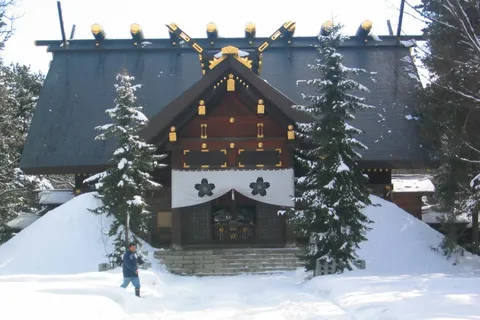
Sumiyoshi Shrine stands in Suminoe, Otaru, Hokkaido, close to Minami-Otaru Station, and its official site calls it the “chief guardian shrine of Otaru.” It is read “Sumiyoshi-jinja” (as spelled in the official site’s domain name). The official site names the three Sumiyoshi deities, Sokotsutsunoo, Nakatsutsunoo and Uwatsutsunoo (written 表筒男神 on the site), together with Okinagatarashihime no Mikoto (Empress Jingu). The site explains that, because the deities appeared in the act of purification, they are revered as gods of purification and safe childbirth, and, following the legend of a safe return across the sea, as ancestral gods of seafaring, traffic safety, commerce and agriculture. This is a different shrine from Sumiyoshi Taisha in Osaka.
According to the official history, in 1864 (Genji 1) the head priest of Hakodate Hachimangu applied to the Hakodate magistrate’s office to enshrine the Sumiyoshi deities as chief guardian of the “Otarunai” and “Takashima” districts. Permission was granted in Keio 1, and work began on preparing a shrine site, but it was halted midway by the reforms of the Meiji Restoration, so the deity was temporarily enshrined at Itsukushima Shrine in Yamanoue-cho. In Meiji 1 the sacred object arrived from Hakodate and an enshrinement ceremony was held, it is said. In Meiji 4 the shrine moved to Ryotoku-cho and in Meiji 8 it was ranked as a village shrine (gosha). After a fire in Meiji 14, relocation to its present site was approved. It was first called Suminoe Shrine and was renamed Sumiyoshi Shrine in January of Meiji 25. It became a prefectural shrine in November of Meiji 39, was designated a Beppyo shrine of the Association of Shinto Shrines in Showa 30, and in July of Showa 46 its buildings were rebuilt to mark the 100th anniversary of its enshrinement. All of this is the shrine’s own account of its history.
Highlights
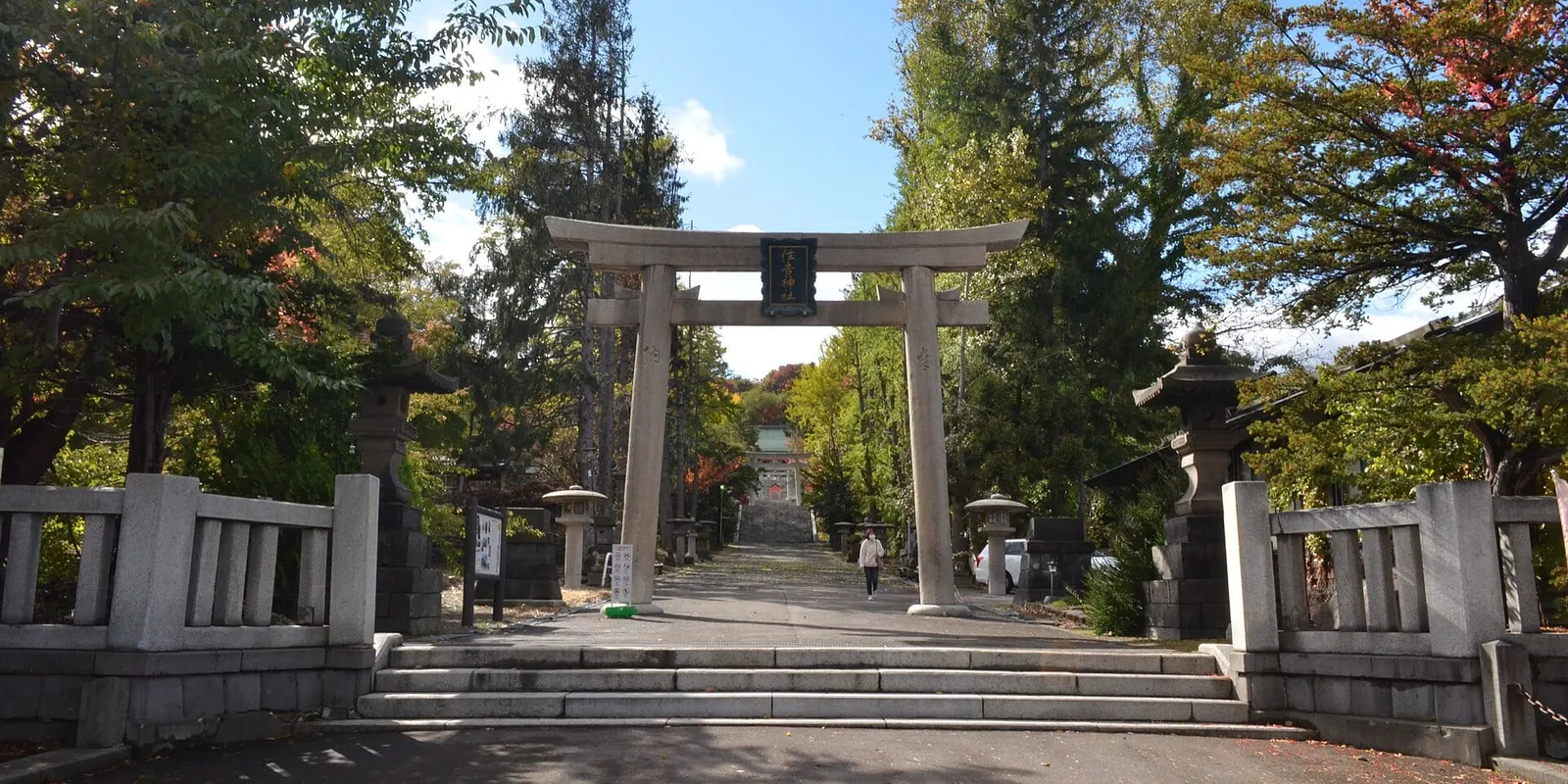
A highlight is the approach that looks toward the sea. According to the official site, as a project for the 150th anniversary of its enshrinement, the shrine rebuilt the stone steps and paving of the main approach and the secondary approach (with a new torii) between 2018 and 2022, and trimmed branches beside the approach to open up views of Ishikari Bay (the Sea of Japan) from the approach and of the shrine hall from the seaward side. The project is introduced as having won the 25th Otaru City Urban Landscape Award.
Another feature is the “Hyakkan Mikoshi.” The official site says it was restored in 1997 to mark the 130th anniversary of the enshrinement, and that in 2007, for the 140th anniversary, a mikoshi storehouse was built to hold five mikoshi and one horse-drawn carriage. “One of the largest in Hokkaido” is the shrine’s own description, not a ranking certified by a third party.
The shrine also has a star connection. According to the official site, the three Sumiyoshi deities have long been likened to the central stars of Orion (called “tsutsumi-boshi”), which rise straight from due east and set straight into due west, and so served as a guide for ocean voyages. The site says Orion can be seen above the main hall from the approach, and gives January 1 at about 1:00 AM, February 1 at about 11:00 PM and March 1 at about 9:00 PM as rough guides.
The official blog also mentions lighting of the 49 torii on the secondary approach, a flower-filled hand-washing basin (hana-chozu) and the “Setake Stone” (dedicated in 2011), and the top of the official site notes that Ezo squirrels have begun to appear in the grounds (since they are wild animals, it asks visitors not to feed them).
Visiting Tips
Regular visiting hours are not stated on the official site, and phone inquiries are taken 9:00 AM–5:30 PM. The official blog says that during the 2026 annual festival the shrine hall opens 6:00 AM–9:00 PM and the amulet counter is open 9:00 AM–9:00 PM.
The official site says the shrine performs prayers for safe childbirth, first shrine visits, Shichi-Go-San, recovery from illness, unlucky-year purification, household safety, traffic safety (car purification), business prosperity and Shinto weddings. Application forms can be downloaded from the official site to bring with you. Monthly festivals (tsukinami-sai) are held on the 1st and 15th of each month.
The official site has nothing on a regular goshuin. According to the official blog, a special paper-cut goshuin (Hatsutatsu Kirie Shuin) and rice from the shrine’s own field are handed out at the “Hatsutatsu-mode” visit on the first Tatsu (Dragon) day of each month, 9:00 AM–4:00 PM, with an offering of ¥2,000. In 2026 those days are November 2 and December 8. The shrine says the visit is modeled on the Hatsutatsu-mairi of Sumiyoshi Taisha in Osaka.
The shrine is about 8 minutes on foot from Minami-Otaru Station (JR Hokkaido), or about 1 minute on foot from the “Sumiyoshi Jinja-mae” bus stop (Chuo Bus / JR Bus). The number of parking spaces and any fee are not stated on the official site, and public transport is asked for during the annual festival.
Annual Festivals
Main events from the official annual schedule, with dates as the site gives them.
- Gentan-sai (January 1) and Dondo-yaki (January 7–8): The Dondo-yaki fire festival is held in the park beside the first torii.
- Setsubun Yakubarai-sai (February 3): Listed in the official event schedule.
- Nagoshi no Oharae (June 30): A rite that includes passing through a ring of reeds (chi-no-wa).
- Annual festival, commonly called Otaru Matsuri (July 14–16): Three days: the eve festival, main festival and return festival. According to the official site, in the Meiji and Taisho periods it was counted among the three great annual festivals of Hokkaido alongside Sapporo and Hakodate, and it features the Hyakkan Mikoshi procession on the night of the 15th and the Daidai Kagura dance, handed down in 1889 (Meiji 22) from Hachiman Shrine in Sanjo, Niigata. The official blog said that around 150 stalls were expected in the grounds and on city streets in 2026.
- Ujiko Hanei Kigan-sai and Daidai Kagura offering (August 9–10): Listed in the official event schedule.
- Autumn grand festival (October): The schedule lists it as the second Saturday and Sunday of October, while the explanatory column on the same page says October 15, so the two differ. A four-mikoshi procession is held in the grounds.
- Niiname-sai (November 23) and Oharae and Joya-sai (December 31): Listed in the official event schedule.
Dates and details change from year to year, so check the official site and the official blog “Sumiyoshi Tsurezure-ki” for the latest.
Nearby Food & Sightseeing
- Minami-Otaru Station: The nearest station given on the official site (8 minutes on foot), a starting point if you come by train.
- Unga Park (運河公園): A place named on the 2026 mikoshi procession route in the official blog.
- Sakaimachi-dori: Another street named on the same mikoshi procession route.
Frequently Asked Questions
- Q. What are the visiting hours?
- A. Regular visiting hours are not stated on the official site. Phone inquiries are taken from 9:00 AM to 5:30 PM (0134-23-0785). The official blog says that during the 2026 annual festival the shrine hall opens at 6:00 AM and closes at 9:00 PM, and the amulet counter is open 9:00 AM–9:00 PM.
- Q. Can I get a goshuin at Sumiyoshi Shrine?
- A. The official site says nothing about a regular goshuin. According to the official blog, a special paper-cut goshuin (Hatsutatsu Kirie Shuin) and rice from the shrine's own field are handed out at the "Hatsutatsu-mode" visit on the first Tatsu (Dragon) day of each month, 9:00 AM–4:00 PM, with an offering of ¥2,000. In 2026 those days are November 2 and December 8. To check whether a regular goshuin is available, it is safest to ask the shrine office (0134-23-0785).
- Q. How do I get there, and is there parking?
- A. The official site gives about 8 minutes on foot from Minami-Otaru Station (JR Hokkaido) or about 1 minute on foot from the "Sumiyoshi Jinja-mae" stop (Chuo Bus / JR Bus). By car it is about 10 minutes from JR Otaru Station and about 50 minutes from JR Sapporo Station via the 札樽道 expressway. The number of parking spaces and any fee are not stated on the official site, and during the annual festival the official blog asks general visitors not to use the lot and to take public transport.
- Q. Has the approach won an award?
- A. Yes. According to the official site, the shrine's work from 2018 to 2022 for its 150th anniversary (stone steps and paving on the main approach, plus a secondary approach with a new torii) won the 25th Otaru City Urban Landscape Award. The work opened up views of the sea from the approach and of the shrine hall from the seaward side.
- Q. When is the annual festival (Otaru Matsuri)?
- A. In the official annual schedule, the annual festival (commonly called Otaru Matsuri) runs July 14 (eve festival), 15 (main festival) and 16 (return festival). The official site highlights the "Hyakkan Mikoshi" procession on the night of the 15th and the Daidai Kagura dance offering, which it says has been handed down since 1889 (Meiji 22). The official blog says that in 2026 the Hyakkan Mikoshi was to leave the main shrine at 6:45 PM on the 15th.
Plan Your Visit
Before you go, you can book a stay and get your shrine-visit items ready.
Amazon links open Amazon.co.jp (Japan) in English; whether an item ships overseas depends on the product.
※ Contains ads (PR). Links open external sites such as Amazon, Rakuten, Trip.com and Booking.com.