History
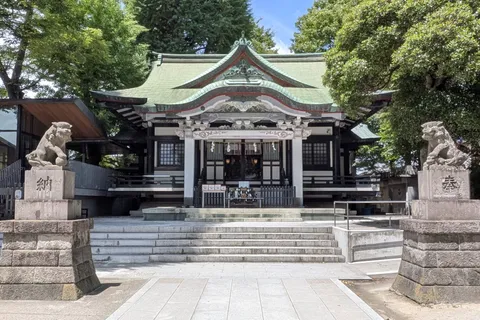
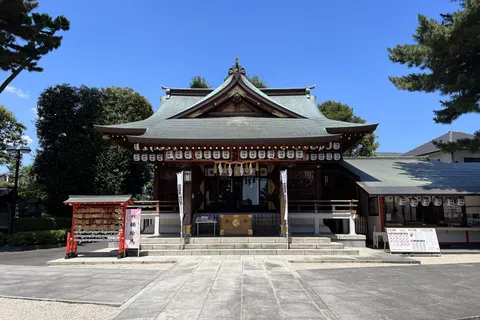
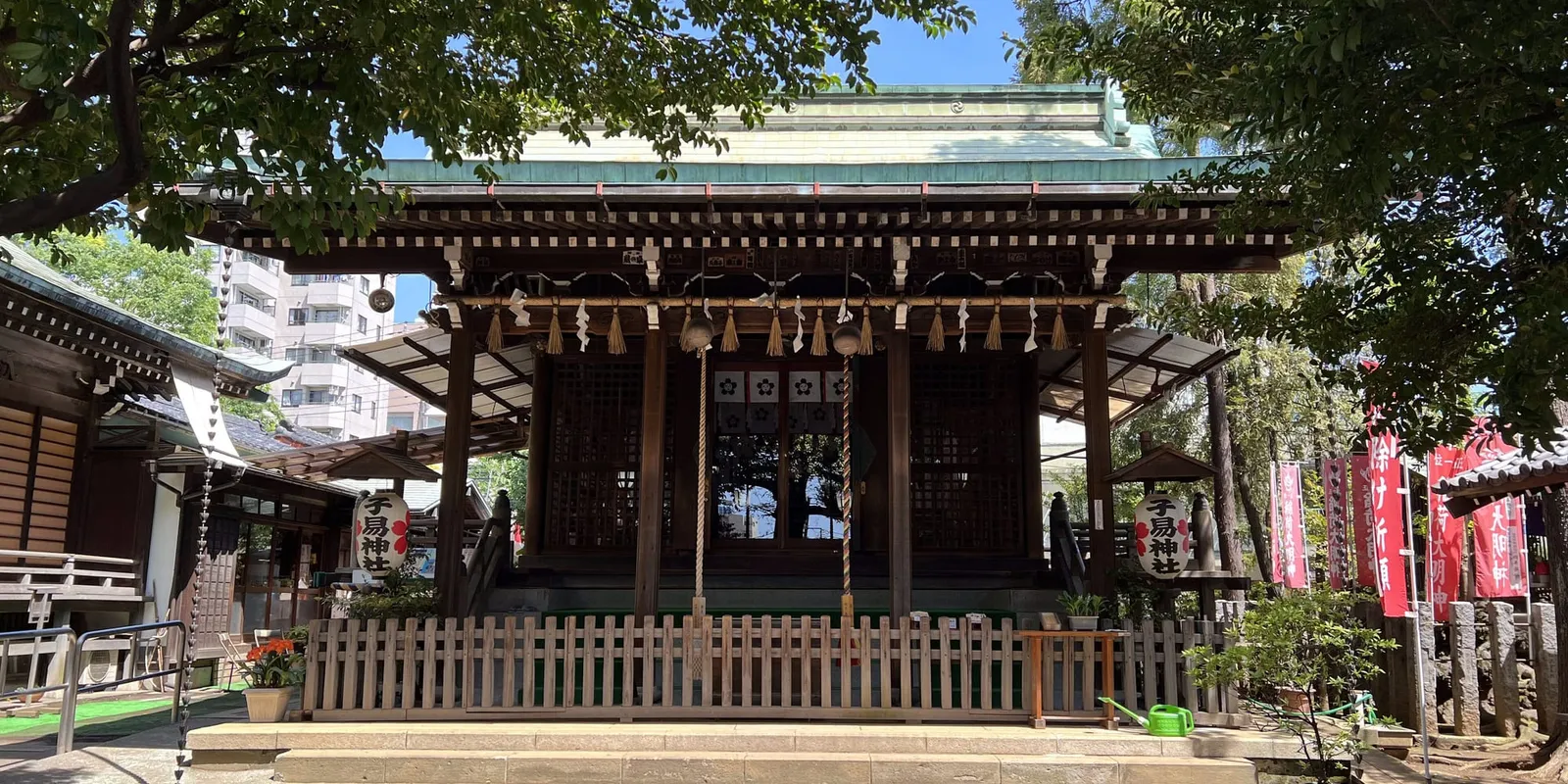
Koyasu Shrine (Koyasu Jinja) stands in Itabashi 2-chome, Itabashi Ward, Tokyo. Its deity is Konohanasakuya-hime no Mikoto, and it was the guardian shrine of the former village of Kanaikubo. Its founding date is unknown, but according to the Itabashi Ward Board of Education sign, the grounds appear in a 1674 (Enpo 2) land register, so the shrine is thought to be older than that. Tradition holds that a branch spirit of Fujisan Hongu Sengen Taisha (Fuji Sengen Shrine) was enshrined here.
In the Edo period it was called “Koyasu-gu” or “Koyasu Myojin” (子安), and its administering temple was the Shingon temple Fukusho-ji. In the Anei (1772–1781) and Kansei (1789–1801) eras it is said to have been known for its protective talismans and to have drawn many worshippers as a deity of safe childbirth and child-rearing. With the separation of Shinto and Buddhism in the early Meiji period it separated from Fukusho-ji and took the name “Koyasu Jinja” (子易神社). Fukusho-ji was later abolished, and the Kannon image that belonged to the temple is now enshrined in the Koyasu Kannon hall on the grounds.
Highlights
In the Shimo-Itabashi episode of TV Tokyo’s “Shutsubotsu! Ad-machic Tengoku” broadcast on October 7, 2023, Koyasu Shrine was introduced together with Ikebukuro Hikawa Shrine as No. 2 (per the program’s official page, where the heading is a single combined entry, and the information dates from 2023). The page says the shrine is said to have been founded in the Edo period and that the sacred kaya (Japanese nutmeg-yew) tree on the grounds is said to be over 600 years old. By contrast, the Itabashi Ward Board of Education sign gives the founding date as unknown.
One visitor report notes that the raised ground holding the shrine buildings is surrounded by large rocks, which, together with the shrine’s Fuji Sengen origins, is reminiscent of a Fuji-zuka (a miniature Mt. Fuji mound). Guardian dogs (komainu) sit on rocks on either side of the stone steps of the approach.
Other things to see around the grounds and torii:
- Koyasu Kannon (Koyasu Kannon hall): said to have been moved to the shrine from Fukusho-ji when the temple was abolished. The shrine (zushi) is reported to carry an inscription dating its consecration to 1765 (Meiwa 2).
- Munetsuki Jizo (Migawari Jizo): beside the torii; said to have been erected in 1695 (Genroku 8). The base is inscribed with place names, and it is said to have also served as a road marker.
- Subsidiary shrines: an Inari shrine and a Suwa shrine (the Inari shrine is reported to have been moved from another shrine and merged here in 1907).
Visiting Tips
This is a shrine long venerated for safe childbirth and child-rearing, and many visitors come to pray for a safe birth or a child’s growth. However, the sources I could check say nothing about how safe-childbirth prayer services are handled or about belly bands (hara-obi) and Dog Day visits. If you would like a prayer service, it is safest to ask the shrine office (03-3963-0383) beforehand.
Goshuin: Available at the shrine office to the left of the worship hall, behind the kagura hall. According to a visitor report, only pre-written sheets are offered, for ¥500 (an older listing says ¥300). One account says you press a buzzer at the office. Official office hours could not be confirmed; one guide gives visiting hours of 9:00 AM–5:00 PM.
Access: Itabashi-kuyakushomae Station (Toei Mita Line), and Shimo-Itabashi and Oyama stations (Tobu Tojo Line), are each roughly 5–10 minutes on foot (times vary between sources). One guide gives about 12 minutes on foot from Itabashi Station (JR Saikyo Line). Sources disagree on whether there is parking, so if you are coming by car, check with the shrine office first.
Annual Festivals
No official list of annual events could be confirmed, so the following comes from visitor reports and guides. Dates can change from year to year, so please confirm details with the shrine office.
- Grand Festival (third Saturday and Sunday of September): On Sunday evening, neighborhood mikoshi are said to enter the shrine together.
- Munetsuki Jizo memorial service (July 24)
- Koyasu Kannon memorial service (October 16)
Nearby Food & Sightseeing
- Enkiri Enoki: An enoki (hackberry) tree along the old Nakasendo, in the Nakamachi shopping street in Honcho, Itabashi, and a well-known spot tied to the Edo-period post town of Itabashi-juku. The nearest station is Itabashi-honcho on the Toei Mita Line.
- Itabashi-juku and the old Nakasendo: The area that flourished as a post town on the Nakasendo in the Edo period; the district’s name is said to come from the “Itabashi” bridge over the Shakujii River. The old Nakasendo was also named No. 5 in the October 7, 2023 “Shimo-Itabashi” episode of “Shutsubotsu! Ad-machic Tengoku” (per the program’s official page).
- Kondo Isami Grave Site: Just outside the east exit of JR Itabashi Station, designated a Kita Ward tangible cultural property as the memorial for Kondo Isami and the Shinsengumi members. Note that Itabashi Station is in Kita Ward, not Itabashi Ward.
- Ikebukuro Hikawa Shrine: A separate shrine at 3-14-1 Ikebukuro-honcho, Toshima Ward, introduced together with Koyasu Shrine as No. 2 in the same TV episode. It is in a different ward, so plan to travel between the two by train or similar.
Frequently Asked Questions
- Q. How is "Koyasu Jinja" written, and why is it spelled 子易 rather than 子安?
- A. It is read "Koyasu Jinja." According to the Itabashi Ward Board of Education sign and similar sources, in the Edo period it was called "Koyasu-gu" or "Koyasu Myojin" (written 子安) and was known as a deity of safe childbirth and child-rearing. When it separated from its administering temple, Fukusho-ji, in the early-Meiji separation of Shinto and Buddhism, it was renamed Koyasu Jinja (子易神社). The sources I could check do not explain why the character 易 was chosen.
- Q. Which deity is enshrined, and what blessings is it known for?
- A. The enshrined deity is Konohanasakuya-hime no Mikoto. The shrine has long been venerated as a deity of safe childbirth and child-rearing, and one visitor report also mentions blessings for household safety and business prosperity. There is a stone monument for safe-childbirth prayers on the grounds, and one guide says prayers for safe childbirth can also be offered at the Munetsuki Jizo (a "substitute" Jizo) beside the torii. I could not confirm how prayer services, belly bands (hara-obi), or Dog Day (inu no hi) visits are handled, so please ask the shrine office (03-3963-0383).
- Q. Can I get a goshuin?
- A. Yes, at the shrine office to the left of the worship hall, behind the kagura hall. According to a visitor report, only pre-written sheets are available, for ¥500 (an older listing says ¥300). Official office hours could not be confirmed; one guide gives 9:00 AM–5:00 PM. One account says you need to press a buzzer at the office, so a call beforehand is a good idea.
- Q. Has the shrine been featured on TV?
- A. Yes. In the Shimo-Itabashi episode of TV Tokyo's "Shutsubotsu! Ad-machic Tengoku" broadcast on October 7, 2023, it was introduced together with Ikebukuro Hikawa Shrine as No. 2 (per the program's official page, where the heading is a single combined entry: "Koyasu Shrine & Ikebukuro Hikawa Shrine"). The broadcast was in 2023, so the information is not recent.
- Q. What is the nearest station?
- A. Itabashi-kuyakushomae Station (Toei Mita Line) and Shimo-Itabashi and Oyama stations (Tobu Tojo Line) are all close; walking times given in different sources range from about 5 to 10 minutes (one source says about 400 m south of Exit A2 at Itabashi-kuyakushomae). From Itabashi Station (JR Saikyo Line), one guide gives about 12 minutes on foot.
Plan Your Visit
Before you go, you can book a stay and get your shrine-visit items ready.
Amazon links open Amazon.co.jp (Japan) in English; whether an item ships overseas depends on the product.
※ Contains ads (PR). Links open external sites such as Amazon, Rakuten, Trip.com and Booking.com.