History
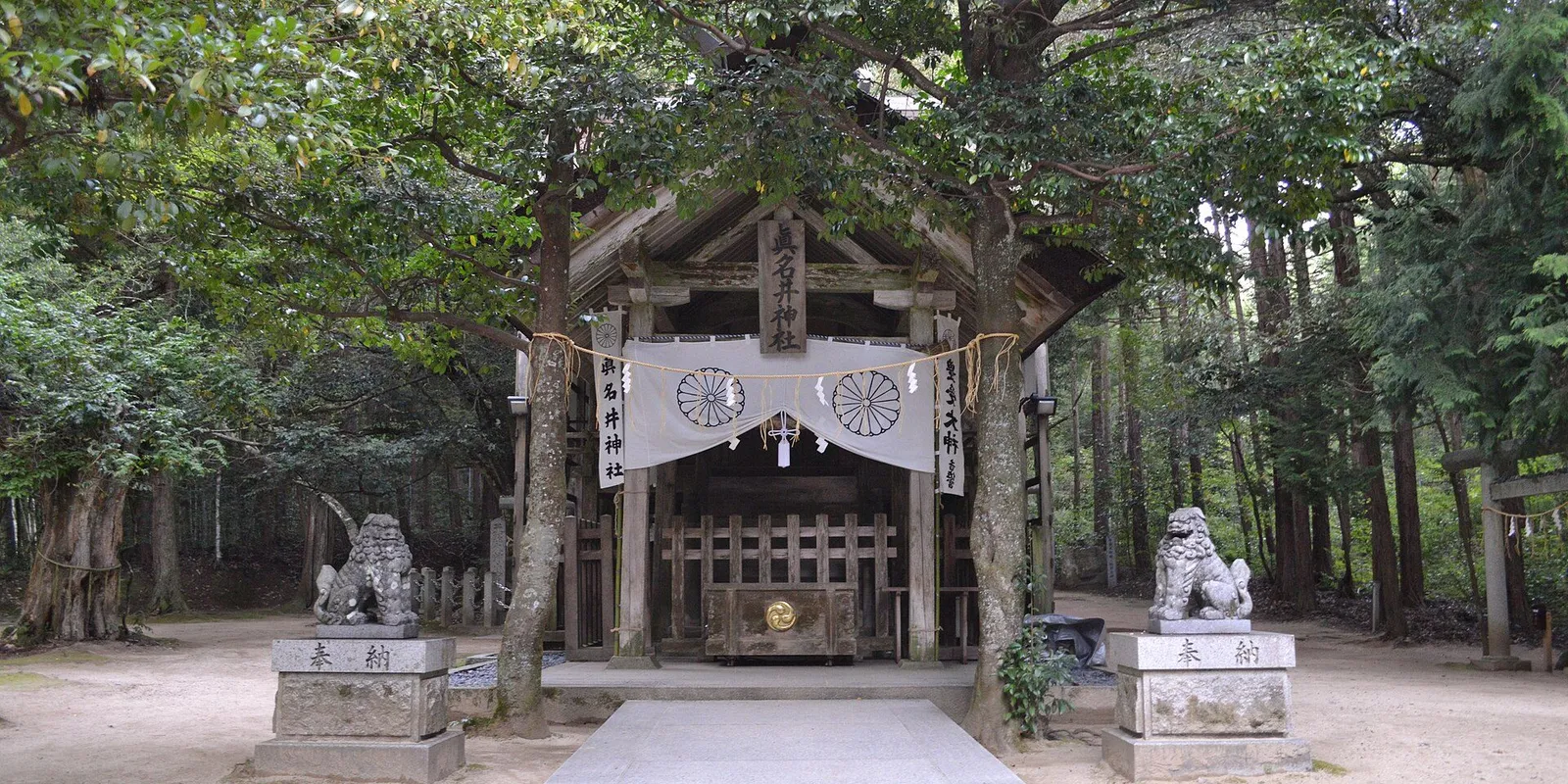
Mana-i Jinja (also written Manai Jinja) is the okunomiya, or inner shrine, of Moto-Ise Kono Jinja, standing at the foot of the Amanohashidate sandbar in Miyazu, Kyoto Prefecture. Kono Jinja itself is known as a “Moto-Ise” — a place where Amaterasu-Omikami and Toyouke-Omikami are said to have resided before their eventual, permanent enshrinement at Ise Jingu — and Mana-i-hara, the plain where Mana-i Jinja stands today, is regarded as the very source of that tradition.
Shrine tradition holds that Toyouke-Omikami was enshrined here in ancient times, and that Amaterasu-Omikami was later welcomed to this same site as well. Another strand of tradition tells of Amenomurakumo-no-Mikoto, an ancestor of the Amabe clan that has served as Kono Jinja’s hereditary priestly family, descending to this spot carrying the sacred water of the heavenly Mana-i well in a golden vessel. In later reigns, Amaterasu-Omikami is said to have journeyed on to Ise, and Toyouke-Omikami to have been invited to Ise’s Outer Shrine as well — the layered tradition behind the name “Moto-Ise.” Even after the deities’ departure for Ise, a shrine continued to be maintained at Mana-i-hara, and it is preserved today as the okunomiya of Kono Jinja.
Highlights
The single most striking feature of Mana-i Jinja is the iwakura — an ancient sacred rock formation preserved in its original state directly behind the main hall. Predating the construction of shrine buildings altogether, it represents one of Japan’s oldest known forms of nature worship, in which people venerated bare rock outcrops as the dwelling place of the gods. The iwakura is divided into two seats: the primary seat, enshrining Toyouke-Omikami, and the western seat, enshrining Amaterasu-Omikami together with Izanagi-no-Okami and Izanami-no-Okami. Stone tools and scrapers from the Jomon period, along with magatama beads and fragments of miniature ritual pottery from the Yayoi period, have been excavated in the surrounding area — physical evidence that this site has been used for ritual purposes since prehistoric times.
Within the grounds, a sacred spring called Ame no Mana-i no Mizu (“the heavenly Mana-i water”) flows continuously, said to be the very water that Amenomurakumo-no-Mikoto carried down from the heavens. It is considered one of the sources behind the many “Mana-i” and “Ama-no-Mana-i” place names and shrine names found across Japan. The iwakura itself, however, is treated as forbidden ground: visitors can approach only as far as the sacred fence (tamagaki) that now marks its boundary, beyond which entry and photography are both prohibited.
Visiting Tips
The grounds are open 8:00–17:00 (subject to change). Mana-i Jinja has no shrine office of its own for most of the month, so goshuin are normally obtained at Kono Jinja’s shrine office at the base of the hill (roughly 9:00–16:30). Mana-i Jinja’s own office is staffed only a few designated days each month, with the dates announced on Kono Jinja’s official website.
Beyond the second torii, the stone steps up to the main hall and the iwakura precinct behind it are off-limits — both entry and photography are prohibited there, a rule that has been enforced more strictly in recent years as the shrine’s fame as a “power spot” has drawn larger crowds. The approach and the area at the base of the stairs remain free to photograph, but be sure to follow any signage or staff instructions once inside the restricted zone. There is no dedicated parking at Mana-i Jinja, so visitors arriving by car should park at Kono Jinja (the first 30 minutes are free, then ¥800 for the day) and walk up the roughly 10-minute approach path.
Annual Festivals
- Okunomiya Mana-i Jinja Reisai (October 15): Mana-i Jinja’s own annual festival, timed to echo the traditional date of the full moon of the ninth lunar month, honoring Toyouke-Omikami in her aspects as a deity of water and of the moon.
- Kono Jinja Reisai (April 24): The annual festival of the main shrine, Kono Jinja, and one of the most important observances for the entire sacred precinct, including Mana-i Jinja.
Nearby Food & Sightseeing
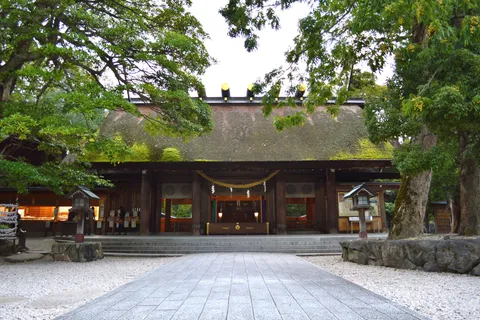
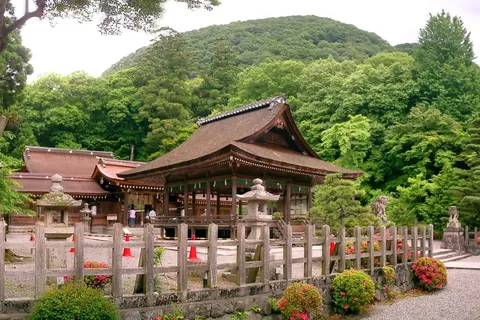
- Kono Jinja: The main shrine of which Mana-i Jinja is the okunomiya, and the Ichinomiya of former Tango Province. Most visitors pay their respects at Kono Jinja first before continuing up to the inner shrine.
- Amanohashidate: One of Japan’s “Three Views,” this pine-covered sandbar stretches out directly in front of Kono Jinja and can be crossed on foot or explored by rental bicycle.
- Amanohashidate View Land: A hilltop observation park reached by chairlift or monorail, famous for viewing Amanohashidate upside-down between one’s legs (“matanozoki”). Many visitors combine it with a stop at Kono Jinja and Mana-i Jinja.
Frequently Asked Questions
- Q. How is Mana-i Jinja related to Kono Jinja?
- A. Mana-i Jinja (also written Manai Jinja) is the okunomiya, or inner shrine, of Moto-Ise Kono Jinja, the Ichinomiya of former Tango Province. It stands at Mana-i-hara, about a 10-minute walk (roughly 550m) up the approach path behind Kono Jinja's main hall, and is administered by Kono Jinja both organizationally and ritually. There is no separate parking area, so visitors typically park at Kono Jinja and walk up.
- Q. Which deities are enshrined at Mana-i Jinja?
- A. The iwakura (sacred rock formation) behind the main hall is divided into two seats. The primary seat enshrines Toyouke-Omikami, guardian of agriculture and of food, clothing, and shelter, while the western seat enshrines Amaterasu-Omikami along with Izanagi-no-Okami and Izanami-no-Okami.
- Q. Why is this shrine called a "Moto-Ise" (former Ise) site?
- A. According to tradition, Toyouke-Omikami — and, in some accounts, Amaterasu-Omikami as well — was first enshrined here at Mana-i-hara before these deities were eventually moved to what is now Ise Jingu. Because of this, Kono Jinja and its okunomiya Mana-i Jinja are known as "Moto-Ise," a place where the deities resided before their final enshrinement at Ise. A sacred spring called Ame no Mana-i no Mizu ("the heavenly Mana-i water") still flows continuously within the grounds.
- Q. Is photography allowed at Mana-i Jinja?
- A. Photography is restricted in part of the grounds. Beyond the second torii, the stone steps leading up to the main hall and the iwakura sacred rocks behind it are treated as forbidden ground (kinsokuchi), where both entry and photography are prohibited. This has been enforced more strictly in recent years as visitor numbers have grown with the site's reputation as a "power spot." The approach and the area up to the base of the stairs can still be freely photographed, but visitors should follow any posted signage or staff instructions in the restricted zone.
- Q. Where can I get a goshuin for Mana-i Jinja?
- A. Mana-i Jinja is normally unstaffed, with its own on-site office open only a few designated days each month (dates are announced on Kono Jinja's official website). On other days, goshuin are obtained at Kono Jinja's shrine office at the base of the hill: ¥500 for Kono Jinja alone, or ¥500 for a combined goshuin covering both the main shrine and the okunomiya Mana-i Jinja.