History
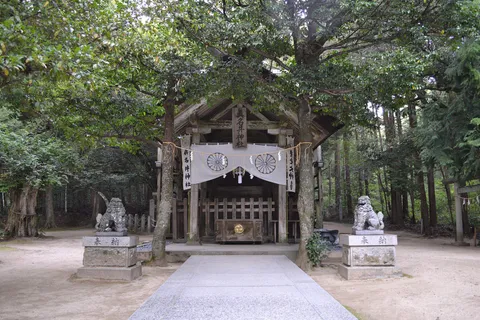
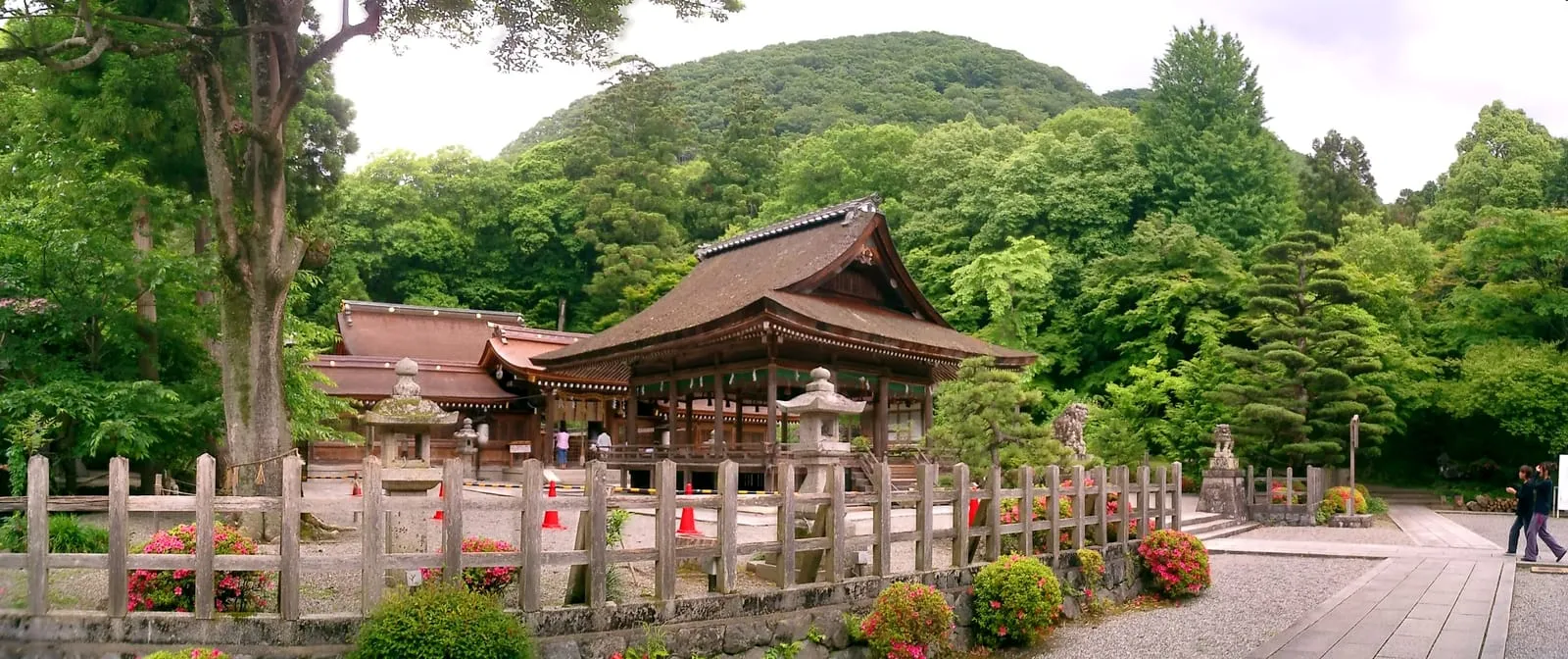
Izumo Daijingu stands at the foot of Mt. Mikage, in the eastern part of the Kameoka Basin. The mountain itself is believed to have been worshipped since ancient times as a kannabi — a mountain dwelling place of the kami — and is thought to have been a site of worship even before any shrine buildings existed here. According to shrine tradition, the current shrine buildings were established on October 21, 709, though the mountain’s sacred status likely predates that date by a considerable margin.
The shrine enshrines two deities: Okuninushi no Mikoto and his consort, Mihotsuhime no Mikoto. Listed in the Engishiki as a myojin-taisha (major shrine), Izumo Daijingu served as the ichinomiya, or chief shrine, of the former Tanba Province, and held the rank of kokuhei-chusha (a nationally supported shrine) under the pre-1945 system of shrine ranks. Today it operates as an independent shrine, unaffiliated with the Association of Shinto Shrines (Jinja Honcho).
Izumo Daijingu is also widely known by the nickname “Moto-Izumo,” meaning “original Izumo.” This name comes from a tradition holding that the deity now enshrined at Izumo Taisha in Shimane Prefecture was originally enshrined here, before being transferred west — and it’s said that before the Edo period, the name “Izumo” itself sometimes referred to this shrine in Tanba rather than the famous one in Shimane. It’s worth being clear, though, that this is a tradition passed down at Izumo Daijingu rather than an established fact accepted by historians generally; Izumo Taisha is far better known nationally, and its own history is understood differently. Visitors curious about the two shrines’ relationship are best served by treating the “Moto-Izumo” story as local shrine tradition — a fascinating point of local pride, but a legend rather than settled history.
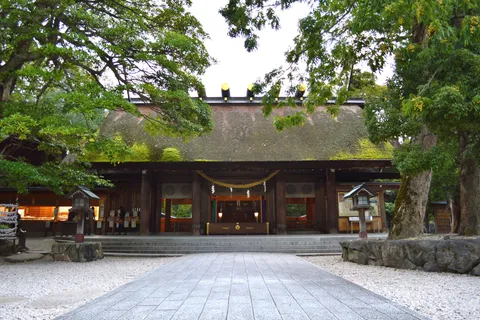
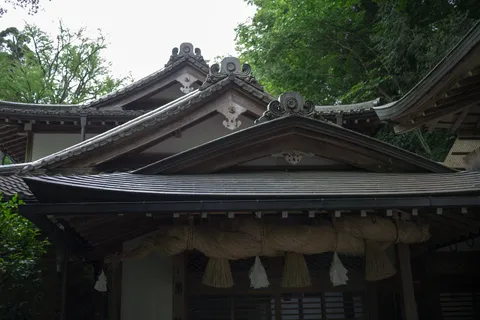
The present honden (main hall), said to have been rebuilt in 1345 under the direction of the shogun Ashikaga Takauji, is a three-bay nagare-zukuri structure with a cypress-bark roof, and is designated a National Important Cultural Property.
Highlights
Rising behind the honden, Mt. Mikage is considered the shrine’s goshintai — its sacred body itself. Several iwakura (sacred rocks) are scattered across its slopes, including a cluster said to enshrine Kunitokotachi no Kami, reachable via a trail up the mountain. Entry requires borrowing a sash from the shrine office rather than wandering in freely. The mountain’s atmosphere has earned Izumo Daijingu a reputation in popular and spiritual media as one of Kyoto’s foremost “power spots” — a widely repeated claim worth taking as folklore and popular reputation rather than verified fact, but part of what draws many visitors here.
Within the grounds is a spring known as Manai no Mizu, fed by water filtering down through Mt. Mikage. Long cherished as a source of pure water, it flows from beneath a large, rope-bound sacred rock and is one of the shrine’s most photographed features; some visitors take the water home with them.
The honden, rebuilt in 1345 under Ashikaga Takauji, is a dignified three-bay nagare-zukuri structure with a cypress-bark roof, designated a National Important Cultural Property. Set against the deep green of Mt. Mikage, it carries the quiet dignity befitting the chief shrine of a former province.
Visiting Tips
The grounds can be visited at any time, but the shrine office — for amulets and goshuin — is open 9:00–17:00, with goshuin reception until 16:30. Visitors wishing to climb toward the iwakura on Mt. Mikage should stop by the shrine office first to borrow the required sash.
The community bus connecting the shrine to the nearest train stations runs on a limited schedule, so it’s worth checking the timetable in advance. Drivers can use one of the three free parking areas near the shrine (roughly 80 spaces combined), though the shrine becomes very crowded around its April and October festivals, when public transport is the more reliable option.
Annual Festivals
- Kayaura Shinji (January 15): A traditional divination rite performed to foretell the year’s harvest.
- Spring Festival (April 18): The shrine’s spring festival features the Izumo Furyu Hana Odori, a flower dance registered as an intangible folk cultural property of Kyoto Prefecture.
- Autumn Grand Festival (October 21): Held on the traditional anniversary of the shrine’s founding, this is Izumo Daijingu’s most important festival, with a mikoshi procession through the surrounding Chitose and Maji districts.
- Niiname-sai (November 23): An autumn festival of thanksgiving for the year’s harvest.
Nearby Food & Sightseeing
- Hozugawa River Boat Ride: A scenic boat trip down the Hozu River gorge from Kameoka to Arashiyama, guided by boatmen with traditional poles — one of Kameoka’s signature activities, about a 15–20 minute drive from Izumo Daijingu.
- Kuwayama Jinja: A historic shrine dedicated to Onamuchi no Kami, revered as the deity who reclaimed the Kameoka Basin’s land, and known as “Yata’s autumn colors” for its vivid foliage — many visitors combine it with a visit to Izumo Daijingu.
- Torokko Kameoka Station (Sagano Scenic Railway): The Kameoka-side terminus of a scenic sightseeing train through the Hozu River gorge, connecting to Torokko Saga Station in Arashiyama.
Frequently Asked Questions
- Q. Is Izumo Daijingu the same shrine as Izumo Taisha in Shimane?
- A. No, they are two separate shrines. Izumo Daijingu stands in Kameoka, Kyoto Prefecture, and is the ichinomiya (chief shrine) of the former Tanba Province, while Izumo Taisha is a different shrine in Izumo City, Shimane Prefecture. The two are easily confused because both enshrine Okuninushi no Mikoto. Izumo Daijingu is also known as "Moto-Izumo" ("original Izumo"), and shrine tradition holds that Izumo Taisha's deity was originally enshrined here before being transferred to Izumo. This is a tradition passed down at Izumo Daijingu, however, not a settled academic fact, so it's worth keeping that distinction in mind.
- Q. What does "Moto-Izumo" mean?
- A. According to shrine tradition, around the time the shrine buildings were established in 709, the deity now enshrined at Izumo Taisha in Shimane was transferred from this site — hence the name "Moto-Izumo," or "original Izumo." It's said that before the Edo period, the name "Izumo" was sometimes used to refer to this shrine in Tanba rather than the one in Shimane. This is a tradition specific to Izumo Daijingu, though, and differs from how Izumo Taisha's own history is generally understood, so it should be treated as shrine legend rather than established history.
- Q. What are the goshuin hours and fee at Izumo Daijingu?
- A. The shrine office is open 9:00–17:00, with goshuin reception until 16:30. The standard goshuin costs ¥300, though in some years special zodiac-themed goshuin have been offered for around ¥1,000.
- Q. Is there parking at Izumo Daijingu?
- A. Yes. Three free parking areas — near the front approach, a large lot, and a west lot — offer roughly 80 spaces combined. The shrine gets very congested around its April and October festivals, so using public transport is recommended during those periods.
- Q. How do I get to Izumo Daijingu?
- A. From Kameoka Station or Chiyokawa Station on the JR Sagano Line, take the Kameoka City community bus (Kawahigashi Line, route F11) about 15 minutes to the "Izumo-jinja-mae" stop right by the shrine. Buses are infrequent, so it's worth checking the timetable beforehand. A taxi from either station takes about 10 minutes.