History
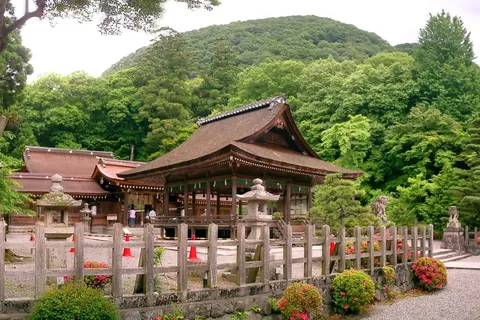
Kono Jinja stands at the base of the Amanohashidate sandbar in Miyazu, Kyoto Prefecture, and holds the rank of Ichinomiya, the first shrine, of former Tango Province. Shrine tradition holds that, in ancient times, Toyouke-Omikami was enshrined at Mana-i-hara, the site of today’s okunomiya Mana-i Jinja, and that Amaterasu-Omikami later came to be enshrined there as well. In time, Amaterasu-Omikami journeyed on to what is now the Inner Shrine of Ise Jingu, and Toyouke-Omikami to Ise’s Outer Shrine. Because this was the place where the deities resided before their final enshrinement at Ise, Kono Jinja and Mana-i Jinja came to be known as “Moto-Ise,” shrines directly tied to the origin story of Ise Jingu itself.
After the deities’ departure, a shrine continued to be maintained at Mana-i-hara, but in 671 its name is said to have been changed to “Kono-miya,” and in 719 a shrine hall was built and the shrine relocated to its present site. The 927 Engishiki shrine registry records it as a Myojin Taisha, a rank entitled to receive imperial offerings at the Tsukinami and Niiname festivals — the only shrine among the eight provinces of the Sanindo region (Tango, Tajima, Tanba, Inaba, Hoki, Oki, Izumo, and Iwami) to hold this distinction, cementing its standing as Ichinomiya of Tango. Under the modern shrine ranking system it was a Kokuhei Chusha (national middle shrine), and it is counted today among the Jinja Honcho’s Beppyo Jinja.
The shrine’s hereditary priestly family, the Amabe clan, traces its lineage to Hikohoakari-no-Mikoto himself. The Amabe Clan Genealogy they preserve is recognized as Japan’s oldest surviving genealogical record and designated a National Treasure, standing as first-rate historical evidence of Kono Jinja’s deep ties to the Imperial family and to Ise Jingu.
Highlights
Kono Jinja’s greatest attraction is the view of Amanohashidate stretching out directly in front of its grounds. One of Japan’s “Three Views,” this pine-covered sandbar appears to rise into the sky like an ascending dragon when viewed upside-down, between one’s legs, from Amanohashidate View Land to the south — a perspective known as “Hiryukan,” the “flying dragon view” (the view from Kasamatsu Park to the north is called “Shoryukan,” or “ascending dragon view”). Kono Jinja occupies a prime position directly overlooking this famous scenery.
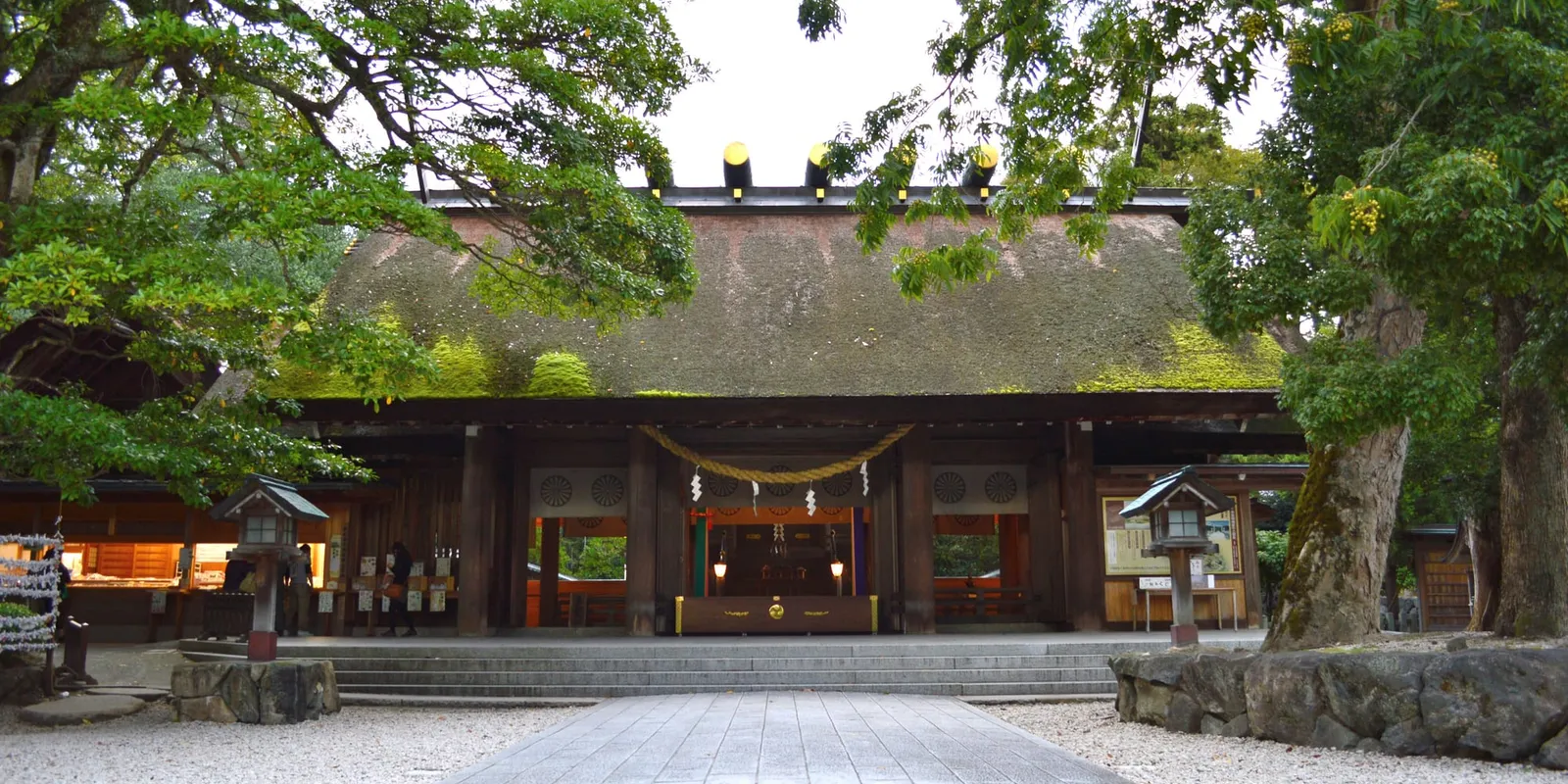
The shrine’s architecture is also noteworthy. Its main hall follows the Shinmei-zukuri style modeled on the Inner Shrine of Ise Jingu, with a cypress-bark roof and ornamental spheres called “goshiki no suetama” (five-colored jewels) set along its gable ends — a feature said to be shared by only Ise Jingu and Kono Jinja, reflecting the deep bond between the two shrines. The present shrine hall was rebuilt in 1845.
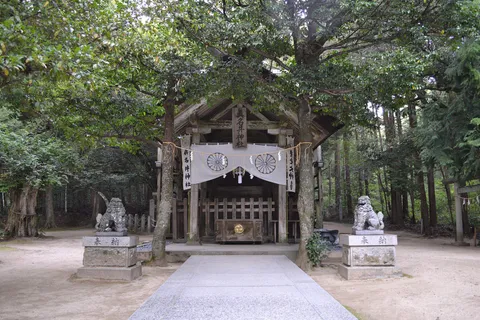
Among the shrine’s treasures, alongside the National Treasure Amabe Clan Genealogy, are a pair of ancient bronze mirrors — the Hentsu-kagami, from the Former Han dynasty, and the Okitsu-kagami, from the Later Han dynasty — both designated Important Cultural Properties and unveiled publicly in 1987 after roughly 2,000 years in the Amabe family’s keeping; the genealogy itself records their transmission. A pair of Kamakura-period komainu guardian lion-dogs along the approach is also designated an Important Cultural Property, and legend holds that the statues once roamed at night as far as Amanohashidate, until they were struck with a sword to subdue them — said to explain markings on the statues resembling sword cuts.
Visiting Tips
The grounds are open 8:00–17:00 from February to November, and 8:00–16:30 from December to January (hours may be extended on weekends and holidays). The shrine office, where goshuin, talismans, and amulets are available, is open from 8:30 until closing, though goshuin themselves are issued only from 9:00 — worth keeping in mind for an early-morning visit.
Most visitors pay their respects at Kono Jinja first, then continue up the roughly 10-minute path (about 550m) behind the main hall to the okunomiya, Mana-i Jinja. Mana-i Jinja has almost no shrine office of its own, so its goshuin is normally received at Kono Jinja’s shrine office. A parking area for worshippers is available on the grounds: the first 30 minutes are free, after which a preservation fee of ¥800 for the day applies to a car (revised August 1, 2025). From Amanohashidate Station, options include walking the pine-lined sandbar, renting a bicycle, taking a sightseeing boat, or riding the local bus — choose whichever suits the time you have.
Annual Festivals
- Aoi Matsuri (Annual Festival, April 24): Said to carry over 2,500 years of history, this is among the oldest annual festivals in the Tango region. Its highlight is a layered program of ritual performances offered by different local districts — lion dances, tachifuri sword dances, sacred kagura music, and bamboo flute (sasabayashi) music — and it is designated a Kyoto Prefecture Intangible Folk Cultural Property.
- Summer Grand Purification (June 30): A ritual to cleanse the sins and impurities accumulated over the first half of the year, including passage through a great chinowa ring of woven grass.
Nearby Food & Sightseeing
- Mana-i Jinja: Kono Jinja’s okunomiya, about a 10-minute walk up the path behind the main hall. This sacred site preserves an ancient form of iwakura (sacred rock) worship, and is traditionally visited together with Kono Jinja.
- Amanohashidate: One of Japan’s “Three Views,” this pine-covered sandbar stretches out directly in front of Kono Jinja and can be crossed on foot or explored by rental bicycle.
- Amanohashidate View Land: A hilltop observation park reached by chairlift or monorail, famous for the “Hiryukan” view of Amanohashidate rising like a dragon when seen upside-down between one’s legs. Many visitors combine it with a stop at Kono Jinja.
Frequently Asked Questions
- Q. Which deities are enshrined at Kono Jinja?
- A. The principal deity is Hikohoakari-no-Mikoto, also known as Amenohoakari-no-Mikoto or Amaterumitama-no-Kami. Toyouke-Omikami, Amaterasu-Omikami, Watatsumi-no-Kami (god of the sea), and Amenomikumari-no-Kami are also co-enshrined. Toyouke-Omikami and Amaterasu-Omikami were originally enshrined at Mana-i-hara, the site of this shrine's okunomiya, and are honored at the main shrine today in recognition of that shared history.
- Q. Why is Kono Jinja known as a "Moto-Ise" (former Ise) site?
- A. Shrine tradition holds that, in ancient times, Toyouke-Omikami — and later Amaterasu-Omikami as well — was enshrined at Mana-i-hara, where the okunomiya Mana-i Jinja stands today. In the reigns of Emperor Sujin and Emperor Suinin, Amaterasu-Omikami journeyed on to what is now Ise Jingu, and in the reign of Emperor Yuryaku, Toyouke-Omikami was likewise invited to Ise's Outer Shrine. Because this was the place where the deities resided before their final enshrinement at Ise, Kono Jinja and its okunomiya Mana-i Jinja are known as "Moto-Ise."
- Q. How is the okunomiya, Mana-i Jinja, related to Kono Jinja?
- A. Mana-i Jinja is Kono Jinja's okunomiya (inner shrine), standing at Mana-i-hara, about a 10-minute walk (roughly 550m) up the path behind Kono Jinja's main hall. It is administered by Kono Jinja both organizationally and ritually. Mana-i Jinja has no shrine office of its own for most of the month, so its goshuin is normally received at Kono Jinja's shrine office together with Kono Jinja's own. Most visitors pay their respects at Kono Jinja first before continuing up to the okunomiya.
- Q. Can I receive a goshuin here, and how much does it cost?
- A. Yes, at the shrine office, with goshuin issued from 9:00 until closing (the office itself is open from 8:30). A goshuin for Kono Jinja alone is ¥500, and a combined goshuin covering both the main shrine and the okunomiya Mana-i Jinja is also ¥500.
- Q. What is the Amabe Clan Genealogy, and why is it significant?
- A. The Amabe Clan Genealogy (Amabe-shi Keizu) is a family register kept by the Amabe clan, who have served as Kono Jinja's hereditary priests since the shrine's founding deity, Hikohoakari-no-Mikoto. It is recognized as Japan's oldest surviving genealogical record and was designated a National Treasure in June 1976. It is owned by the Amabe family rather than by the shrine itself. The main text is believed to be an early Heian-period copy, and it is preserved together with an annotated version, the Kanchu Keizu, added in the early Edo period.