History
Miho-jinja stands in Miho no Matsubara, the white-sand, green-pine scenic area on the Miho peninsula in Shimizu Ward, Shizuoka. The official site says locals know it affectionately as “Miho Daimyojin” or “Miho no Myojin-san.” Note that this is a different shrine from Miho Shrine (美保神社) in Matsue, Shimane.
The official site names two deities: Onamuchi no Mikoto (also called Okuninushi no Mikoto and Mihotsuhiko no Mikoto) and Mihotsuhime no Mikoto. They are revered for national development, long life and the prosperity of industries; for safe childbirth, child-rearing, children, and song, dance and music; and for good relationships and family harmony. Because the Miho peninsula is a natural breakwater for Shimizu Port, the deities are also honored as guardians of the port and the sea.
The date of founding is unknown. The official site says the shrine is listed in the Engishiki shrine register of 927 (Encho 5) and is the oldest Engishiki-listed shrine in the region, and it describes a tradition that the two deities descended on a heavenly feathered vehicle, with the Tokoyo belief (welcoming gods from across the sea) as its source. All of this is the shrine’s own account. The Agency for Cultural Affairs’ Cultural Heritage Online, on the other hand, says it is “said to have been founded in the 9th century,” so the accounts of the founding period differ by source. The official site also says the vermilion shrine buildings erected in Tokugawa Ieyasu’s time were all lost to lightning in 1668 (Kanbun 8).
Highlights
From the sacred tree “Hagoromo no Matsu” to the shrine runs a pine-lined approach of about 500 meters called the “Kami no Michi.” According to the official site, the god-welcoming rite of February 14 is performed along this path. The site calls the area the setting of the Hagoromo (feathered robe) legend, in which a heavenly maiden hangs her robe on a pine, and states that Miho no Matsubara, including the shrine grounds, was registered in June 2013 as a component of the World Heritage site Mount Fuji. Its chronology also says the pine grove was designated a national place of scenic beauty in 1922 (Taisho 11).
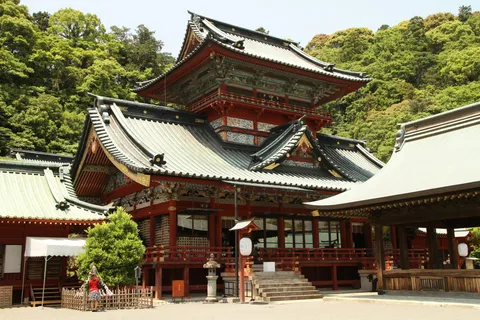
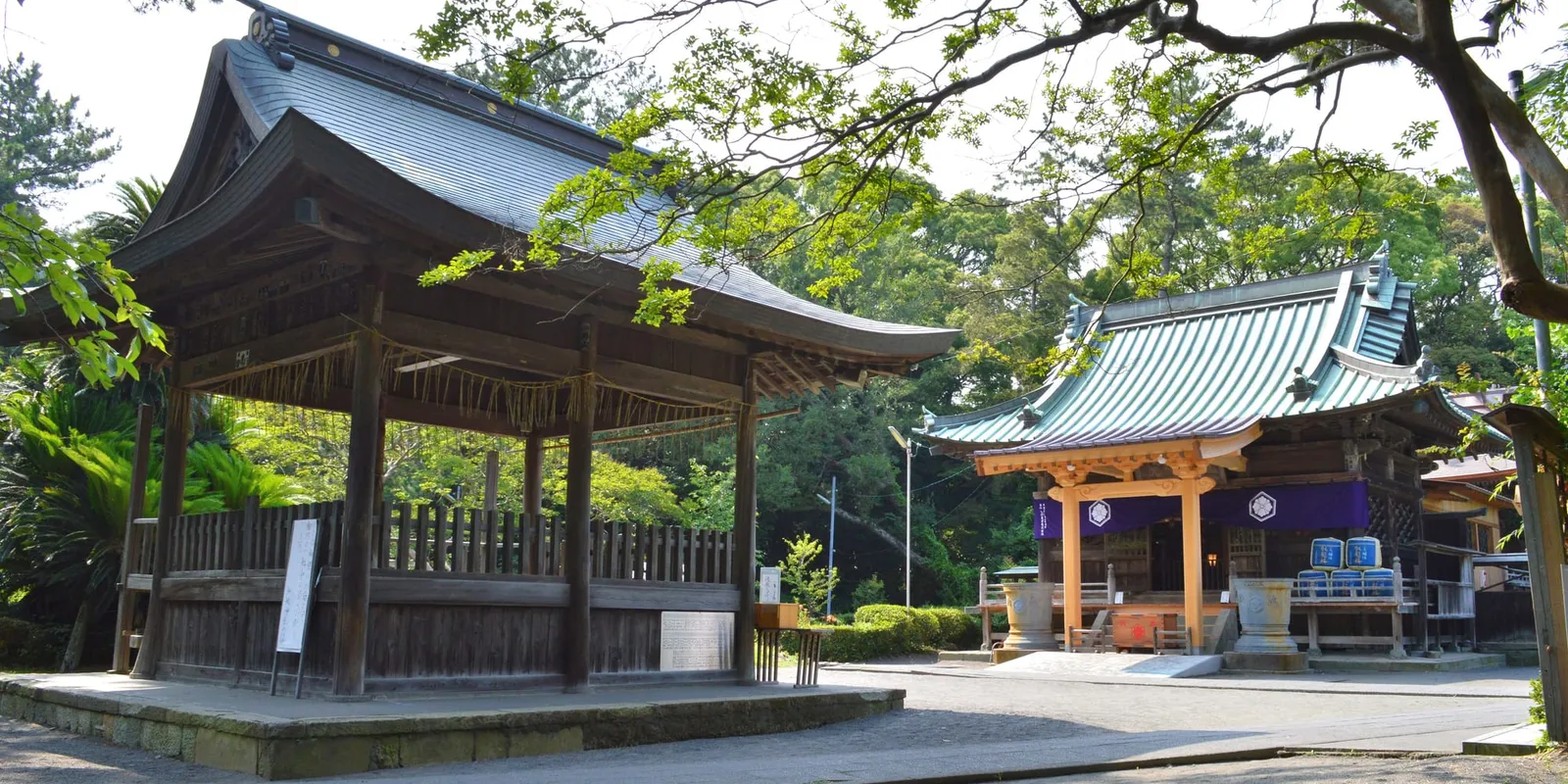
The official grounds guide lists the “Itomaki no Tachi” sword (an Important Cultural Property, attributed to Sanjo Kokaji Munechika) among the treasures. The main hall is designated a tangible cultural property of the city as a representative mid-Edo-period building, and the chronology says that in 1996 (Heisei 8) the main hall (with two ridge-tags and a pair of lion-dog guardians) became a tangible cultural property of the former Shimizu City (now Shimizu Ward). The ridge of the dance hall is described as bearing the Tokugawa hollyhock crest.
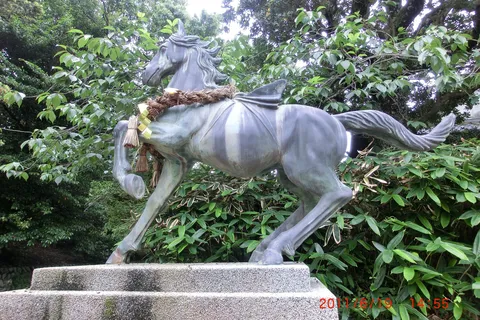
The grounds include auxiliary and subordinate shrines such as Koyasu Shrine, where the official site says there is a custom of dedicating ladles with holes for safe childbirth. The hall of the white sacred horse is revered as a “wish-granting horse,” and on the festival days of February 15 and November 1 it is opened for the horse-belly walk-under. The official chronology also records that the shrine became the setting of the fourth volume of Yukio Mishima’s “The Sea of Fertility” (“Tennin Gosui”) in 1970 (Showa 45).
Visiting Tips
The shrine office and amulet counter are open 9:00 AM–4:00 PM (official site). Opening hours for the grounds are not stated, so a daytime visit is safest. Prayer services are by reservation, accepted 9:30 AM–3:30 PM, with offerings starting from ¥8,000 or ¥10,000.
Goshuin are given at the amulet counter. The official site lists the regular goshuin, a Miho Matsubara special goshuin, an enshrined-deities goshuin, and a winter-only sunrise goshuin. The fee is not stated, and they are not sent by mail.
It takes about 30 minutes by bus from JR Shimizu Station or Shin-Shimizu Station to “Miho Matsubara Iriguchi,” then about 10 minutes on foot. By car it is about 20 minutes from the Tomei Shimizu IC; the shrine’s lot has 8 spaces, with space for 173 regular cars behind “Mihoshirube” (official site).
Annual Festivals
These are the main events on the official site’s festival page (times may change).
- Sunrise Rite (January 1, 6:30 AM): A rite at Haguruma Shrine, followed by watching the first sunrise at Miho no Matsubara.
- Tsutogayu Rites (February 14–15): On the evening of the 14th the gods are welcomed along the “Kami no Michi,” and the festival is held on the 15th. The year’s farming, fishing and stock-market fortunes are divined from how the porridge fills the tubes, and the “Hagoromo no Mai” dance is offered.
- Nagoshi Purification Rite (June 30, 3:00 PM): Visitors pass through a chinowa ring to purify the sins and impurities of the past six months.
- Annual Festival (November 1): The festival and prayer rites are followed at 7:00 PM by the Yudate hot-water rite, and the “Hagoromo no Mai” is offered.
- Year-End Purification and New Year’s Eve Rite (December 31): The year-end purification and a rite to close out the year.
The “Miho Hagoromo Takigi Noh,” held around October at Miho no Matsubara, is a performance for which the official site refers readers to the city website for details.
Nearby Food & Sightseeing
- Hagoromo no Matsu: The sacred pine where the heavenly maiden is said to have hung her robe; the official site says the present tree is the third generation.
- Miho no Matsubara: A sandy beach and pine grove jutting into Suruga Bay, a component of the World Heritage site Mount Fuji.
- Mihoshirube (Shizuoka Miho Matsubara Culture Creation Center): A facility completed in 2019; the official site notes a car park behind it.
Frequently Asked Questions
- Q. What are the visiting hours?
- A. The official site does not appear to state opening hours for the grounds themselves. The shrine office and amulet counter are listed as open 9:00 AM–4:00 PM, and prayer services are accepted 9:30 AM–3:30 PM (on ordinary days by reservation, by phone or the application form). Visiting during the daytime, while the amulet counter is open, is the safest plan.
- Q. Can I get a goshuin at Miho-jinja?
- A. Yes. According to the official site, goshuin are given at the amulet counter from 9:00 AM to 4:00 PM. Besides the regular goshuin, the site introduces a Miho Matsubara special goshuin, an enshrined-deities goshuin, and a winter-only sunrise goshuin. They are not sent by mail. The fee is not stated on the official site, so please check at the counter. For special-project goshuin that are distributed differently, check the news page of the official site.
- Q. How do I get there, and is there parking?
- A. Per the official site, take a bus bound for Miho from JR Shimizu Station or Shin-Shimizu Station (about 30 minutes), get off at "Miho Matsubara Iriguchi," and walk about 10 minutes. By car it is about 20 minutes from the Tomei Shimizu IC. The shrine's own lot has 8 spaces (right of the torii on the "Kami no Michi" side), and there is space for 173 regular cars behind "Mihoshirube." Fees are not stated on the official site.
- Q. What are the "Kami no Michi" and the "Hagoromo no Matsu"?
- A. According to the official site, the "Kami no Michi" (Path of the Gods) is the pine-lined approach of about 500 meters running from the sacred tree "Hagoromo no Matsu" to the shrine (the pines are described as about 300 years old). It is said to be the way by which the gods of Tokoyo travel from across the sea, and the Hagoromo no Matsu, the Kami no Michi and the shrine stand in a straight line. The site also states that Miho no Matsubara, including the shrine grounds, was registered as a component of the World Heritage site Mount Fuji in June 2013.
- Q. What festivals are held here?
- A. The official festival page lists, as the main events, the Tsutogayu rites and festival on February 14–15 (a god-welcoming rite and a divination of the year's farming, fishing and stock-market fortunes from how the rice porridge fills bamboo tubes) and the annual festival on November 1 (including the Yudate hot-water rite). It also lists the sunrise rite on January 1, the Nagoshi purification rite with a chinowa ring on June 30, and the year-end purification and New Year's Eve rite on December 31. Times can change, so check the official site.
Plan Your Visit
Before you go, you can book a stay and get your shrine-visit items ready.
Amazon links open Amazon.co.jp (Japan) in English; whether an item ships overseas depends on the product.
※ Contains ads (PR). Links open external sites such as Amazon, Rakuten, Trip.com and Booking.com.