History
Miho Jinja stands in the port town of Mihonoseki, at the easternmost tip of the Shimane Peninsula. It enshrines two deities, Mihotsuhime no Mikoto and Kotoshironushi no Kami — the latter identified with Ebisu, the deity of fishing and commerce — and is venerated nationwide as the head shrine (sohonsha) of more than 3,000 Ebisu shrines across Japan.
Kotoshironushi is a son of Okuninushi no Kami, and according to the Kuniyuzuri (Land-Transfer) myth, when messengers of the sun goddess Amaterasu came to ask Okuninushi to cede the land of Izumo to the heavenly deities, it was Kotoshironushi — who happened to be out fishing at this very cape — who consented to the transfer on his father’s behalf. Two ritual reenactments of this myth have been handed down at the shrine since ancient times and are still performed today: the Aofushigaki Shinji, which reenacts the scene of Kotoshironushi’s consent, and the Morotabune Shinji, which reenacts the boats that carried the heavenly messengers.
Highlights
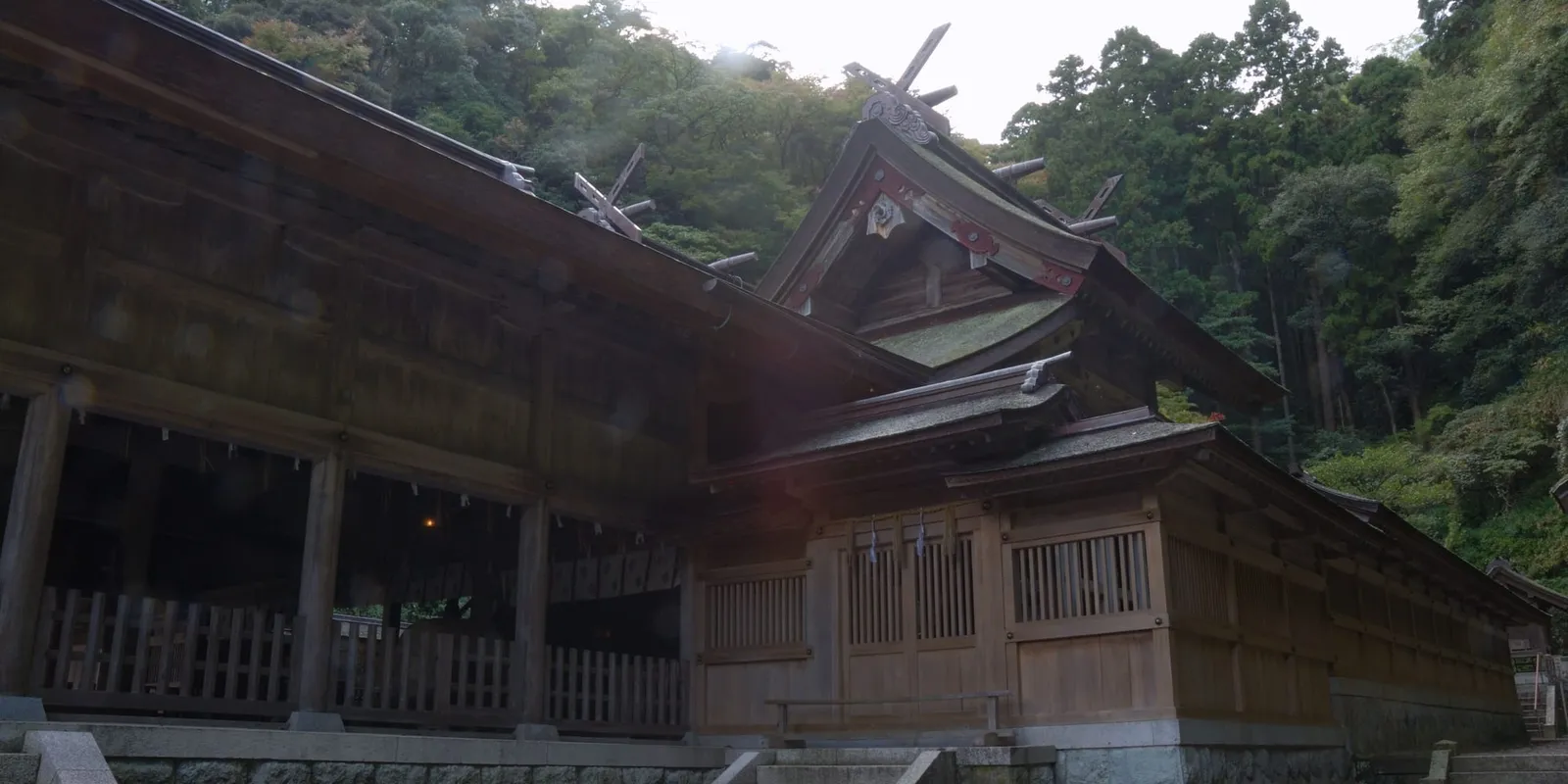
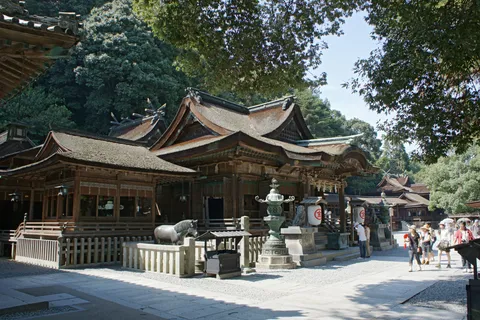
The current main hall dates to 1813 and is a nationally designated Important Cultural Property. It is built in the rare “Miho-zukuri” style (also called hiyoku-taisha-zukuri), in which two separate Taisha-zukuri halls stand side by side, joined by a connecting space called the “shozoku-no-ma.” Mihotsuhime no Mikoto is enshrined in the hall on the right as viewed by worshippers, and Kotoshironushi no Kami in the hall on the left.
Another highlight is the shrine’s extraordinary collection of donated musical instruments. Because Ebisu (Kotoshironushi) is believed to love music, worshippers have donated instruments to the shrine for centuries — drums, flutes, shamisen, harmoniums, and more, totaling 846 items in all. This collection, known as the “narimono,” is designated a national Important Tangible Folk Cultural Property.
Visiting Tips
Miho Jinja sits in a fishing port town some distance from central Matsue, so reaching it by public transportation involves a bus transfer at Matsue Station; visiting by car gives you more flexibility if you’re short on time. Goshuin stamps are available at the shrine office on the grounds. Many visitors follow their prayers with a stop at one of the town’s seafood restaurants, taking advantage of the fresh catch that defines this port town.
Annual Festivals
- Aofushigaki Shinji (April 7): A rite reenacting the Kuniyuzuri myth of Kotoshironushi’s consent, with ceremonial boats processing around the harbor in ancient style.
- Morotabune Shinji (December 3): An ancient rite tied to the same land-transfer myth, in which two ceremonial boats race across the harbor to greet the heavenly messengers.
- Nanuka Ebisu (January 7): A New Year festival that draws worshippers praying for business prosperity in the year ahead.
Nearby Food & Sightseeing
- Kamome-tei: A restaurant on the second floor of the Fukumakan inn, just steps from Miho Jinja, known for its seafood bowls made with catch landed at Mihonoseki port (lunch is reservation-only).
- Ajidokoro Matsuya: A seafood restaurant of more than 50 years’ standing in the nearby Ui area, about a 5-minute drive from the shrine, popular enough to draw visitors from outside the prefecture.
- Mihonoseki Lighthouse: A short trip from the shrine, this Meiji-era lighthouse stands on a sea cliff with sweeping views over the Sea of Japan.
Frequently Asked Questions
- Q. What are the visiting hours?
- A. The grounds are open to visitors at all times. The shrine office is generally staffed around 8:00–17:00.
- Q. When is the goshuin office open?
- A. Around 8:00–17:00, for ¥300.
- Q. Is there parking?
- A. Yes, free parking is available through Mihonoseki town, about a 2–5 minute walk from the shrine.
- Q. Why is Miho Jinja called the head shrine of Ebisu?
- A. Kotoshironushi no Kami, one of the shrine's two enshrined deities, is identified with Ebisu, and Miho Jinja is regarded as the head shrine (sohonsha) of more than 3,000 Ebisu shrines across Japan.
- Q. How do I get there?
- A. About 45 minutes by Ichibata Bus from JR Matsue Station to the Mihonoseki Terminal, then about a 10-minute ride on the Mihonoseki community bus to the Miho-jinja-mae stop; or about 40 minutes by car from Matsue Station.
Related Shrines
Okayama, Kurashiki
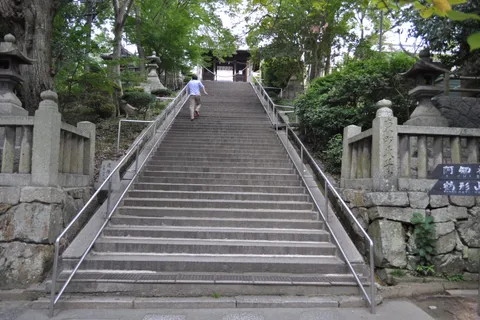
Achi Jinja
Achi-jinja
- Maritime Safety
- Traffic Safety
- Business Prosperity
Hiroshima Prefecture, Miyajima, Hatsukaichi
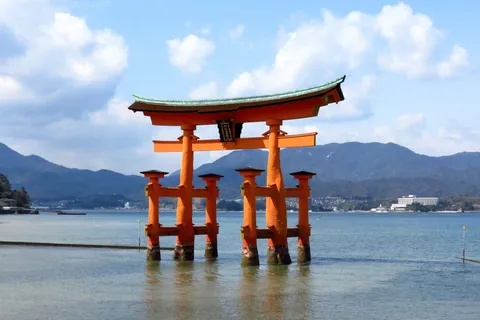
Itsukushima Shrine
Itsukushima-jinja
- Maritime Safety
- Wealth
- Success in the Arts
Kagawa Prefecture, Kotohira, Nakatado District
Kotohiragu
Kotohira-gū
- Maritime Safety
- Bountiful Harvest
- Business Prosperity