History
Itsukushima Shrine sits on the island of Miyajima (Itsukushima) in the Seto Inland Sea, and tradition dates its founding to 593. It enshrines the three Munakata goddesses, deities of the sea, and is known for the deep devotion of Taira no Kiyomori, who in the late Heian period developed the shrine into the grand complex of buildings that seem to float on the sea, much as it appears today.
Because the entire island has long been regarded as sacred ground, the shrine buildings were constructed not on land but over the sea, creating an otherworldly sight at high tide, when the shrine appears to float on the water. In 1996, together with the primeval forest of neighboring Mount Misen, it was registered as a UNESCO World Cultural Heritage Site.
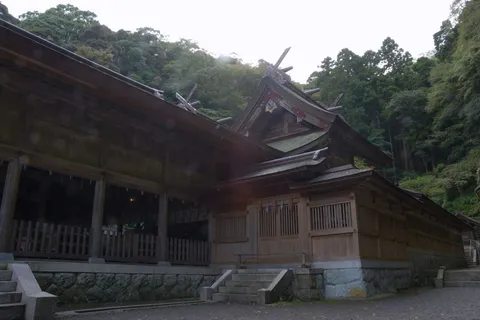
Tradition holds that the shrine was originally established on the shore by Saeki no Kuramoto, but in the late Heian period, Taira no Kiyomori, who became Governor of Aki, developed a deep devotion to it, and drawing on the wealth he gained through trade with Song-dynasty China, he expanded it into a large complex of shrine buildings over the sea, built in the shinden-zukuri style of aristocratic residential architecture. The buildings were designed with the tides carefully calculated, so that at high tide they appear to float on the sea. Today, six buildings — including the main hall, worship hall, and corridors — are designated National Treasures, and 14 buildings are designated Important Cultural Properties.
The Great Torii
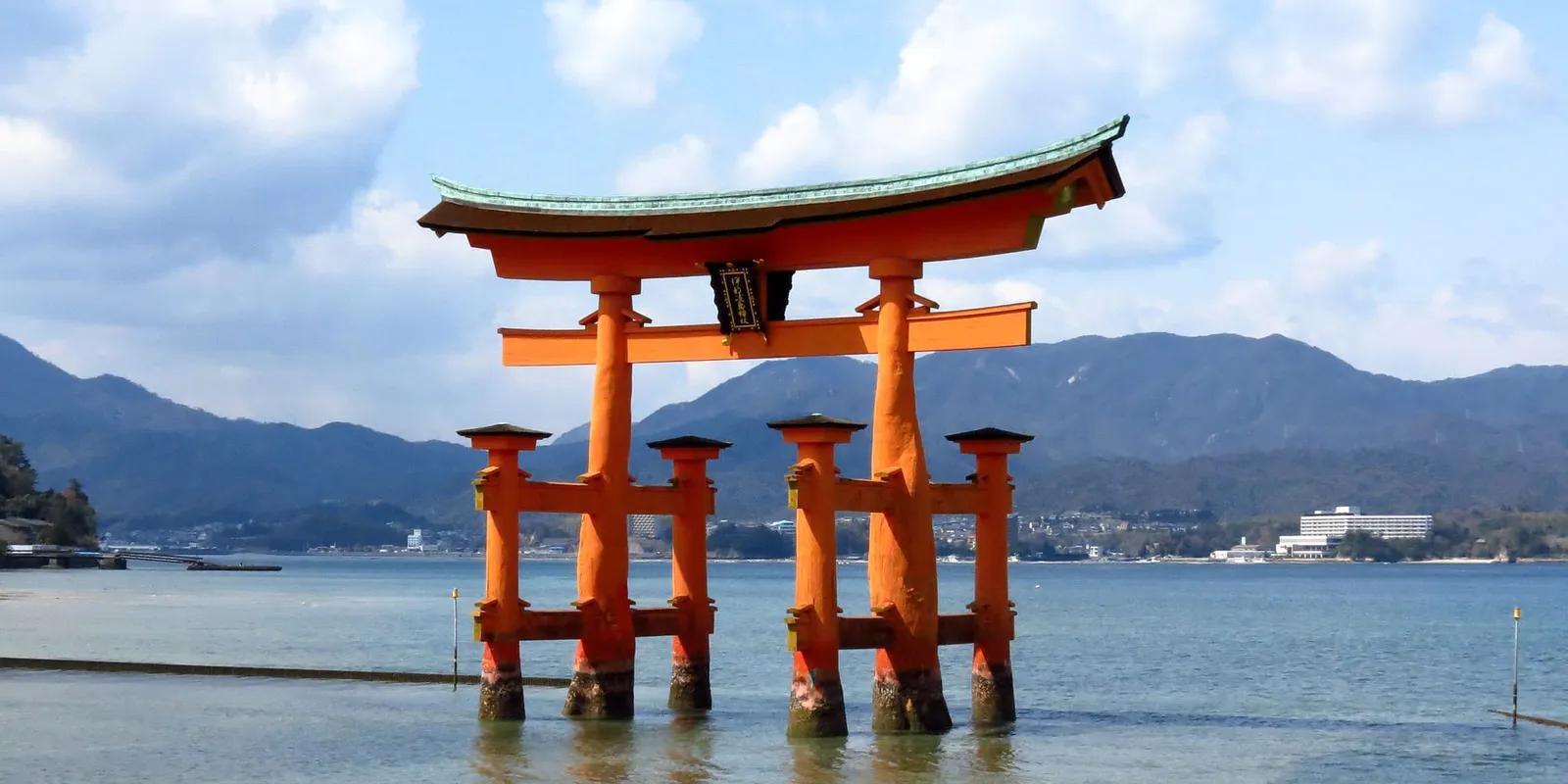
The vermillion Great Torii Gate standing offshore rises about 16 meters and is one of Japan’s three great torii gates, serving as the symbol of Itsukushima Shrine. At high tide it appears to float on the sea, while at low tide visitors can walk right up to its base — offering entirely different views depending on the tide. Checking a tide chart before your visit will help you get the most out of it.
Visiting Tips
The shrine buildings are connected by vermillion-lacquered corridors, and the view of the Great Torii from these corridors is an especially popular photo spot. In the evenings the shrine is illuminated, offering a different, dreamlike atmosphere from its daytime appearance.
Annual Festivals
- Toka-sai (April 15): An annual spring event in which peach blossoms are offered before the deity and ten pieces of bugaku court dance and music are performed on the elevated stage.
- Kangen-sai (17th day of the 6th lunar month): Said to originate from Taira no Kiyomori’s adaptation of the imperial court’s kangen music banquet into a rite honoring the Munakata goddesses, this is one of Japan’s three great boat festivals, alongside the Tenjin Festival in Osaka and the Horan Enya in Matsue. A boat bearing the sacred palanquin travels round-trip to Jigozen Shrine on the opposite shore, with court music performed on board.
- Reisai (June 17): One of Itsukushima Shrine’s most important festivals.
- Chinka-sai (December 31): A ritual held on the beach in front of the Great Torii on New Year’s Eve, praying for protection from fire.
Nearby Food & Sightseeing
Miyajima’s approach, the “Omotesando Shopping Street,” offers local specialties such as the famous momiji manju cakes and grilled oysters, another Miyajima favorite. The island is also home to a large population of wild deer, making it known, alongside Nara Park, as a destination where visitors can encounter deer up close.
- Kaki Fukumaru — Run directly by an oyster farming company, this shop serves freshly landed grilled oysters, with the garlic butter flavor a particular favorite.
- Itsuki Coffee — A café just off the side of Itsukushima Shrine, popular for its espresso-topped soft serve and Hiroshima lemon drinks.
- Anagomeshi restaurants along Omotesando Shopping Street — Miyajima has long been known for conger eel fishing, and shops serving anagomeshi (conger eel rice) line the street.
Frequently Asked Questions
- Q. What are the visiting hours?
- A. Generally 6:30–18:00, varying by season.
- Q. Can I get a goshuin?
- A. Yes, during visiting hours, for ¥300.
- Q. Can I drive to Miyajima?
- A. Vehicle access to the island itself is restricted — park near Miyajimaguchi and take the ferry across.
- Q. When's the best time to see the Great Torii?
- A. At high tide it appears to float on the sea; at low tide you can walk right up to its base. Check a tide table before you go.
- Q. How do I get there?
- A. Take JR or a ferry from Miyajimaguchi to Miyajima, then about a 10-minute walk from the pier.