History
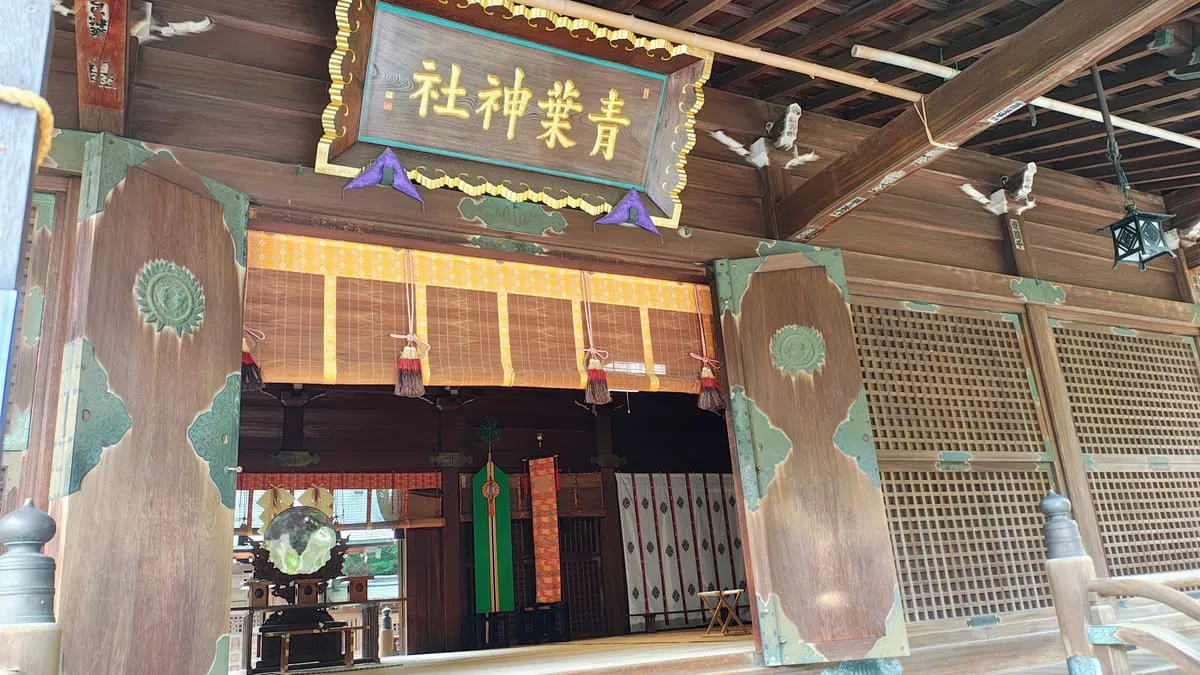
Aoba Jinja enshrines Date Masamune, the founding lord of the Sendai domain, as a Shinto deity. Born in 1567, Masamune rose to fame as a formidable warlord who dominated the Tohoku region while still young. After allying with the victorious Tokugawa forces at the Battle of Sekigahara in 1600, he was awarded the lands that became the 620,000-koku Sendai domain. He transformed what had been sparsely developed land into the castle town of Sendai — still nicknamed the “City of Trees” today — and died in Edo in 1636 at the age of 70.
After his death, Masamune’s remains were interred on Mt. Kyogamine in Sendai, and the following year the ornate mausoleum Zuihoden was built there in his honor. Yet many former Sendai domain retainers felt that memorial rites at his tomb were not enough — they wished to see Masamune formally worshipped as a kami. In 1868, these former retainers petitioned the imperial court to found a shrine for this purpose. The petition succeeded, and on February 7, 1874, Miyagi Prefecture granted permission to establish the shrine; the enshrinement ceremony followed on November 15 of that year, with Masamune receiving the divine title “Takefuruhiko-no-mikoto.” The chosen site was the hill of Kitayama, north of the former Sendai Castle, in an area also home to a cluster of Date-family temples known as the “Kitayama Gozan.”
Aoba Jinja and Zuihoden: Two Different Sites
Visitors are often unsure how Aoba Jinja relates to Zuihoden, one of Sendai’s best-known tourist attractions. Zuihoden is Masamune’s mausoleum — the place where his remains are actually buried — built on Mt. Kyogamine in 1637 by his son and successor, the second lord Date Tadamune, in an ornate architectural style drawing on the Momoyama period. Designated a national historic site, it is one of Sendai’s most popular destinations.
Aoba Jinja, by contrast, is a shrine founded during the Meiji era specifically to worship Masamune as a Shinto deity, and it stands on Kitayama, a hill some distance from Kyogamine. Former domain retainers had long gathered at Zuihoden through an association called the Teizan-ko to hold memorial rites on the anniversary of Masamune’s death, but after the Meiji Restoration, momentum grew for something more: formal recognition, with the imperial court’s blessing, of Masamune as an enshrined kami. That movement produced Aoba Jinja. In short, Zuihoden is where Masamune rests, while Aoba Jinja is where he is venerated as a deity — two related but distinct historical sites, each offering a different way to encounter his legacy.
The Origin of the “One-Eyed Dragon” Nickname
Date Masamune is famous as the “One-Eyed Dragon” (Dokuganryu), a nickname traced back to smallpox he contracted around age five, which cost him the sight in his right eye and, according to some accounts, later caused the eye itself to shrink. The nickname was not used during his lifetime, however — it is said to have first appeared in the 1830s, when a Confucian scholar of the late Edo period compared Masamune in verse to Li Keyong, a one-eyed general of Tang-dynasty China. There is likewise no historical record that Masamune ever wore an eyepatch; the portrait of him held by the Sendai City Museum depicts him with both eyes open, in keeping with his own last wishes. The now-familiar image of an eyepatched warlord is largely a creation of 20th-century films and television dramas.
The Connection to the Sendai Aoba Festival
The lively Sendai Aoba Festival, held each May, actually traces its roots to Aoba Jinja’s own annual rites. Since its founding, the shrine has held a spring grand festival on May 24 and 25, the anniversary of Masamune’s death. From around 1882, citizens began calling this festival the “Aoba Festival,” and it grew into a beloved celebration marking the start of early summer in Sendai. Then, in 1985 — the 350th anniversary of Masamune’s death — the city of Sendai reorganized and expanded the celebration into the large-scale civic event known today as the “Sendai Aoba Festival,” billed as a festival “made by citizens, for citizens.”
In other words, today’s Sendai Aoba Festival grew out of Aoba Jinja’s own religious rites but is now run as a much larger civic festival by the city and an organizing committee, separate from the shrine’s own religious observances. Even so, the festival’s centerpiece — the portable-shrine procession honoring Lord Masamune — still departs from Aoba Jinja each year, preserving the historical link between the shrine and the festival it inspired. The shrine’s own main annual festival (reitaisai) is also held separately each autumn, on October 9 and 10, marking the day Masamune was appointed to the court rank of chunagon.
Highlights
Six shrine buildings, including the worship hall, are registered as national tangible cultural properties, preserving a fine example of Meiji-era shrine architecture. The torii gate was damaged in the 2011 Great East Japan Earthquake and has since been restored. The shrine sits on a green, elevated site surrounded by the “Kitayama Gozan,” a cluster of temples with ties to the Date clan, making the approach itself a pleasant place to stroll. The shrine’s current chief priest is a descendant of the Katakura family, whose ancestor Katakura Kojuro served as one of Masamune’s most trusted retainers — a living link between the shrine and the lord’s own inner circle.
Visiting Tips
The grounds are open to visitors at all times, and the shrine office is open 9:00–17:00. Goshuin are available by donation, typically around ¥300. Free parking is available beside the grounds (about 20 spaces), though the access road is narrow, so drive carefully. The shrine is an easy 7-minute walk from Kita-Sendai Station on the JR Senzan Line and subway Namboku Line, making public transport the recommended way to visit.
Annual Festivals
- Spring Grand Festival (May 24–25): Marks the anniversary of Masamune’s death and is the historical origin of the Sendai Aoba Festival. The portable-shrine procession honoring Lord Masamune still departs from Aoba Jinja each year.
- Grand Festival, Autumn (October 9–10): Commemorates the day Masamune was appointed to the court rank of chunagon.
- New Year’s Festival and Hatsumode (January 1–3): The shrine’s first visits of the new year draw large crowds.
- Monthly Festival (the 1st of every month): A regular rite of thanksgiving for the deity’s blessings.
Nearby Food & Sightseeing
- Rinno-ji: A Soto Zen temple with deep ties to the Date family, relocated to its present site when Masamune founded Sendai. Its strolling garden behind the main hall (¥300 admission) is well known for autumn foliage and is within easy walking distance of Aoba Jinja.
- Kakuhan-ji: A temple Masamune built to honor his father, Date Terumune, later relocated to Kitayama when Sendai was founded. One of the “Kitayama Gozan” temples, it pairs well with a visit to Aoba Jinja for a walk through this Date-family temple district.
Frequently Asked Questions
- Q. What are the visiting hours at Aoba Jinja?
- A. The grounds are open to visitors at all times. The shrine office is open 9:00–17:00, and prayer services (kito) are received 10:00–15:00.
- Q. Can I get a goshuin at Aoba Jinja, and how much does it cost?
- A. Yes, goshuin are available at the shrine office from 9:00 to 17:00. There is no fixed fee — visitors offer what they feel is appropriate, typically around ¥300.
- Q. Is there parking at Aoba Jinja?
- A. Yes, there is free parking beside the shrine grounds for about 20 vehicles. The access road is narrow, so please drive carefully.
- Q. Is Aoba Jinja the same place as Zuihoden?
- A. No — they are two separate sites. Zuihoden is Date Masamune's mausoleum, built in 1637, shortly after his death, on Mt. Kyogamine, where his remains are actually interred. Aoba Jinja, by contrast, is a Shinto shrine founded in 1874 to formally worship Masamune as a kami, and it stands on Mt. Kitayama, a different hill some distance from Kyogamine. It was founded because former Sendai domain retainers petitioned to have Masamune enshrined as an official kami, not merely honored at his tomb. In short, Zuihoden is where Masamune is buried, while Aoba Jinja is where he is worshipped as a deity — related but distinct sites, each worth visiting for a different reason.
- Q. How do I get to Aoba Jinja?
- A. About a 7-minute walk from Kita-Sendai Station on the JR Senzan Line and the subway Namboku Line, or about a 6-minute walk from the "Aoba Jinja-mae" city bus stop.
Related Shrines
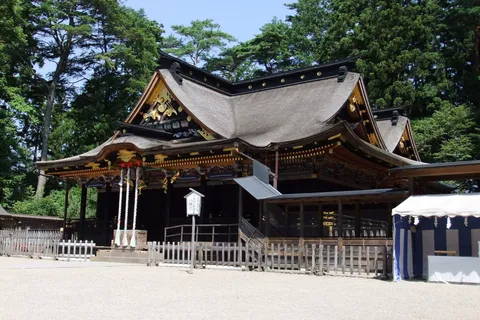
Miyagi Prefecture, Sendai (Aoba Ward)
Osaki Hachimangu
Ōsaki Hachimangū
- Victory in Competition
- Protection from Misfortune
- Good Fortune
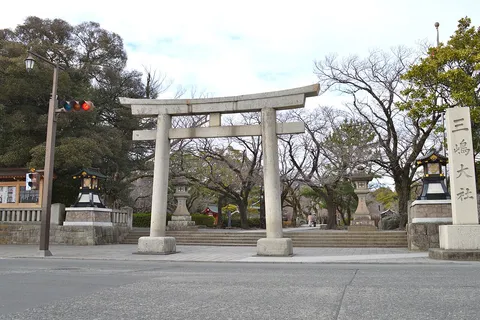
Shizuoka, Mishima
Mishima Taisha
Mishima Taisha
- Business Prosperity
- Good Fortune
- Victory in Competition
Miyagi Prefecture, Shiogama
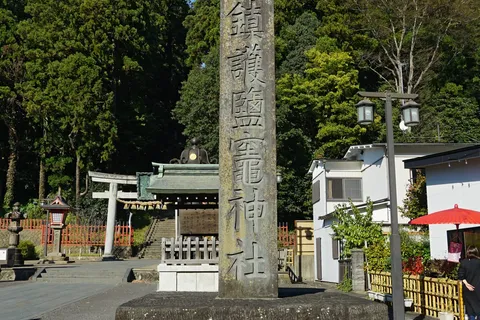
Shiogama Jinja
Shiogama-jinja
- Maritime Safety
- Safe Childbirth
- Longevity