History
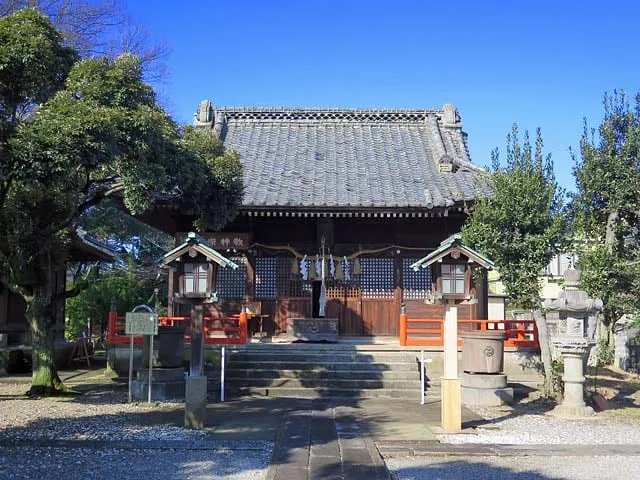
Sachinomiya Shrine stands in Naka 4-chome, Satte City, Saitama Prefecture. The name is read “Sachinomiya-jinja,” and locally it has also been called “Hachiman-sama.” The shrine introduces itself as the chief guardian shrine of Satte-juku, the post town where the Nikko Kaido and the Onari Kaido met. The main deities are Hondawake no Mikoto (Emperor Ojin) and Futsunushi no Kami, with Omononushi no Kami, Ukanomitama no Kami and Sugawara no Michizane also enshrined (the Saitama Shrine Agency’s page lists only three: Hondawake no Mikoto, Futsunushi no Kami and Sugawara no Michizane).
The founding date is not clear. An offering dated 1699 (Genroku 12) suggests that the shrine existed before then. A sign in the grounds says it has “more than 400 years of history.” It was once called Hachiman-Katori-sha, and after a merger of shrines in 1909 (Meiji 42) it was renamed Sachinomiya Shrine and became the chief guardian shrine of Satte Town, according to tradition. In the Edo period Satte flourished as a regional hub, helped by river transport on the Gongendo River.
An encyclopedia entry says the shrine buildings were washed away in a Tone River flood in 1742 (Kanpo 2). Details differ by source, so please check with the shrine office or Satte City materials for specifics.
The shrine was featured at No. 3 in TV Tokyo’s “Shutsubotsu! Ad-machic Tengoku” episode “Saitama Satte,” broadcast on March 11, 2023 (according to the program’s official page). The page’s heading reads “3位 幸宮神社” (No. 3, Sachinomiya Shrine) and describes it as “the chief guardian shrine of Satte” with “more than 400 years since its founding.” The shrine’s name is written 幸宮神社 on the Saitama Shrine Agency page, on Satte City’s page and on the program’s page alike.
Highlights
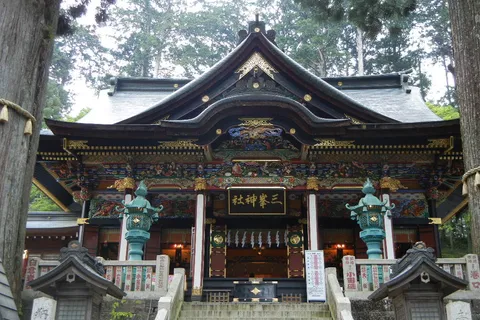
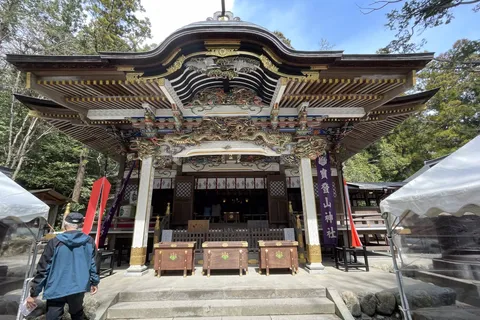
The main attraction is the main hall. According to its ridgepole tablet, the present hall was rebuilt in 1863 (Bunkyu 3) and is carved over its entire surface. Satte City describes carvings of ascending and descending dragons, lions, phoenixes, amanojaku, hawks and pines, along with a “four seasons of farming” scene that shows farm work from plowing to harvest in fine detail. These “carvings of the Sachinomiya Shrine main hall” are designated a Satte City tangible cultural property (sculpture); the city’s list gives the designation date as April 1, 1991. The TV program’s page adds that the carvings include subjects from the Genpei War such as the Battle of Ishibashiyama. Sources disagree on the wood of the hall: the city’s page says cypress (hinoki), while an encyclopedia says zelkova (keyaki).
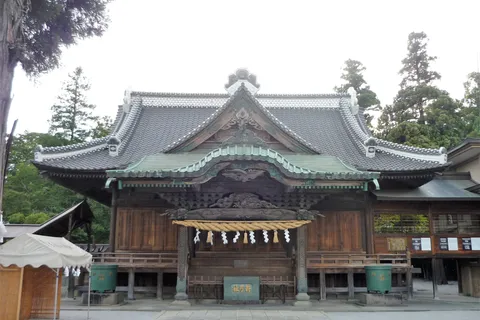
The worship hall displays a pair of ema (votive paintings) by the Edo-period painter Somon. The grounds also have a maidono (dance stage) and subsidiary shrines: Osugi Shrine, Yasaka Shrine and an Inari shrine. The shrine says Yasaka Shrine enshrines Susanoo no Mikoto, whose deity was invited from Musashi Ichinomiya Hikawa Shrine.
Visiting Tips
Hours and fees: The grounds are free to enter, with no admission fee. The shrine office is listed as open 9:00-16:00. The monthly rite is held on the 1st of each month, and the shrine says anyone may attend.
Goshuin: These are offered. For the fee, a visitor account lists 300 yen while another record says 500 yen, so it is unconfirmed. The hours are probably those of the shrine office, and advance phone contact may be needed in some cases, so please call the shrine office (0480-43-3151) before you go.
Prayers and other services: The shrine says it handles prayers such as miyamairi and shichi-go-san, purification, off-site ceremonies (such as groundbreaking rites), and naming and house-direction consultations. Please ask the shrine office for details.
Access and parking: It is about a 5-7 minute walk from Satte Station on the Tobu Nikko Line. By car it is about 10 minutes from Satte IC on the Ken-O Expressway, and visitor parking is said to be available. One visitor account mentions about 10 spaces, but the number is unconfirmed.
Annual Festivals
- Annual festival (Reisai; September 15): The shrine’s main festival. The Saitama Shrine Agency page lists the festival period as September 14-15. Content and dates can change from year to year, so please check the latest schedule with the shrine.
- Satte Summer Festival (July): The festival of the on-site Yasaka Shrine, which the shrine says has more than 300 years of history and tradition. One large mikoshi, ten children’s mikoshi and seven floats appear over a week in July. The shrine’s page places the mikoshi procession in early July and the float procession in mid-July, while the encyclopedia says the floats come out on the third Saturday and Sunday of July. Dates vary by year, so please check the latest schedule with the shrine or local announcements.
- Osugi-sama (June 20): An event tied to the on-site Osugi Shrine, noted in the encyclopedia (details of the schedule are unconfirmed).
- Monthly rite (1st of each month): The shrine says anyone may attend.
Nearby Food & Sightseeing
- Old Nikko Kaido (Satte-juku): The old highway of the post town for which Sachinomiya Shrine has been the chief guardian. It was introduced at No. 2 in the March 11, 2023 “Saitama Satte” broadcast of “Shutsubotsu! Ad-machic Tengoku” (according to the program’s official page). A good place for a stroll before or after your visit.
- Raiden Shrine: A shrine near Sachinomiya Shrine, easy to add to a shrine walk around Satte Station.
- Manpuku-ji: A temple near the shrine, handy for a historical walk through Satte-juku.
- Gongendo Tsutsumi (Gongendo embankment): An embankment known for cherry blossoms and red spider lilies, in a different area from the shrine. It was introduced at No. 1 in the same broadcast (according to the program’s official page). It is far from Satte Station, and sources give anywhere from 30 to 45 minutes on foot, so consider a bus or car and check the latest access information first.
Frequently Asked Questions
- Q. Has the shrine been featured on TV?
- A. Yes. TV Tokyo's "Shutsubotsu! Ad-machic Tengoku" (出没!アド街ック天国) featured Sachinomiya Shrine at No. 3 in its Satte, Saitama episode broadcast on Saturday, March 11, 2023 (according to the program's official page). The page describes it as the chief guardian shrine of Satte with more than 400 years of history, and notes that the main hall, built in 1863 (Bunkyu 3), carries intricate carvings based on subjects such as the Genpei War's Battle of Ishibashiyama (information as of 2023).
- Q. Can I get a goshuin here?
- A. Yes, goshuin are offered (the shrine's introduction page says goshuin are available). The shrine office is listed as open 9:00-16:00. For the fee, a visitor account lists 300 yen while another record says 500 yen, so the amount is unconfirmed. Advance phone contact may be needed in some cases, so please check with the shrine office (0480-43-3151).
- Q. When are the annual festival and the summer festival?
- A. The annual festival (Reisai) is on September 15 (the Saitama Shrine Agency page lists the festival period as September 14-15). The shrine also introduces the "Satte Summer Festival," the festival of the on-site Yasaka Shrine, held in July with one large mikoshi, ten children's mikoshi and seven floats. The mikoshi procession is said to be in early July and the float procession in mid-July, but dates vary from year to year, so please check the latest schedule with the shrine or local announcements.
- Q. How do I get there, and is there parking?
- A. The shrine is at 4-11-30 Naka, Satte, Saitama, about a 5-7 minute walk from Satte Station on the Tobu Nikko Line (sources say either 5 or 7 minutes). By car it is about 10 minutes from Satte IC on the Ken-O Expressway, and parking for visitors is said to be available (one visitor account mentions about 10 spaces, but the number is unconfirmed).
- Q. Is the shrine a designated cultural property of Satte?
- A. Its main-hall carvings, "the carvings of the Sachinomiya Shrine main hall," are designated as a Satte City tangible cultural property (sculpture); the city's list gives the designation date as April 1, 1991 (Heisei 3). The current main hall dates from 1863, and the city's page describes carvings including ascending and descending dragons, lions, phoenixes, amanojaku (imp), hawks and pines, plus a "four seasons of farming" scene showing farm work from plowing to harvest. The shrine as a whole is not designated.
Plan Your Visit
Before you go, you can book a stay and get your shrine-visit items ready.
Amazon links open Amazon.co.jp (Japan) in English; whether an item ships overseas depends on the product.
※ Contains ads (PR). Links open external sites such as Amazon, Rakuten, Trip.com and Booking.com.