
History
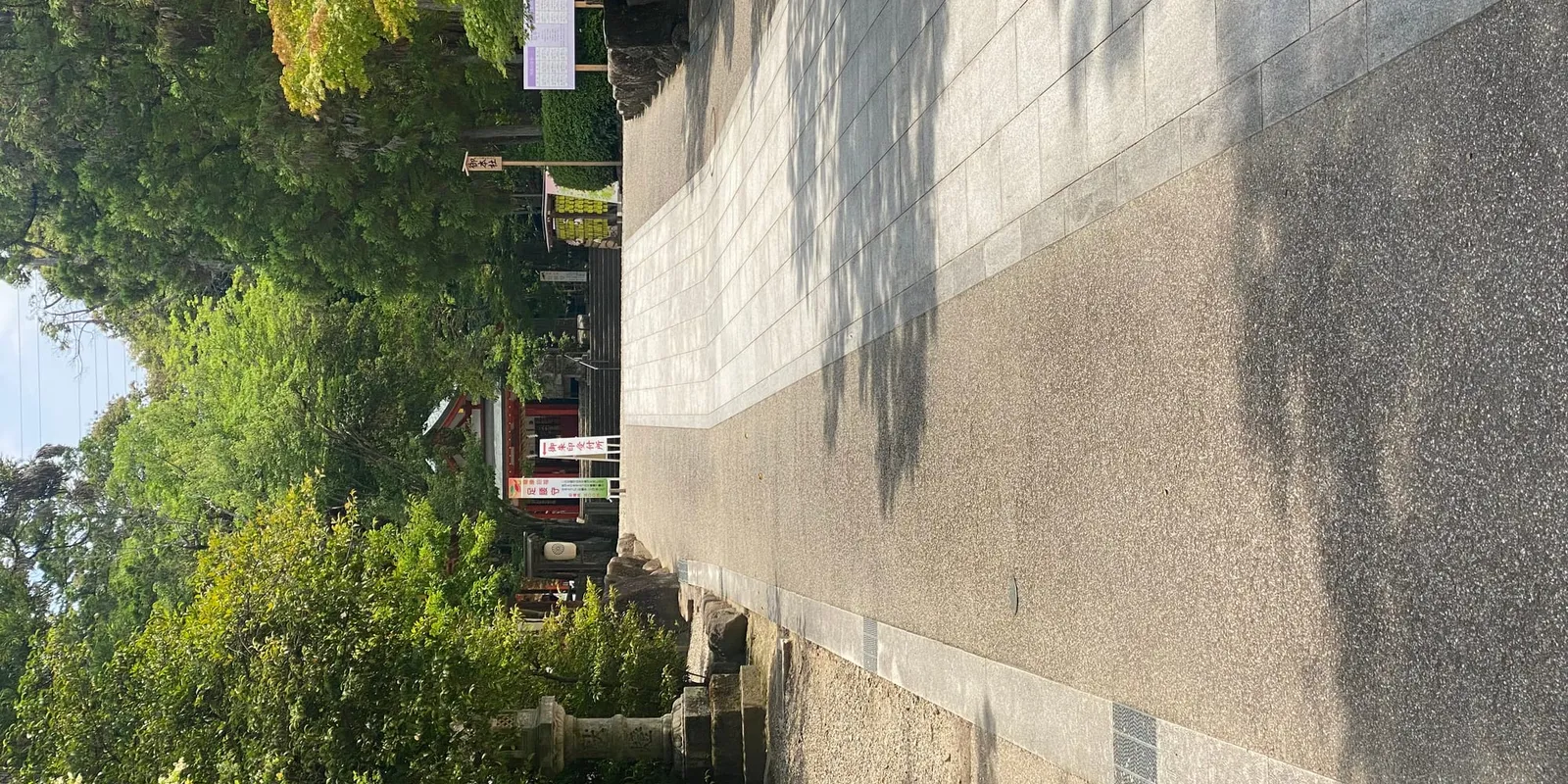
Ōagata Jinja stands in the Miyayama area of Inuyama, Aichi Prefecture, and has long been venerated as the Ninomiya — the second-ranked shrine — of old Owari Province. Its principal deity, Ōagata-no-Ōkami, is traditionally regarded as the ancestral deity who opened up the Owari region for settlement, though the exact identity behind the name is debated, with various theories (Kunisazuchi-no-Mikoto, Amatsuhikone-no-Mikoto, Sukunahikona-no-Mikoto, among others) and no firm consensus. According to shrine tradition, the deity was originally enshrined atop Mount Hongū, the peak that rises directly behind the current main hall, before being moved to the present site in the 27th year of the legendary reign of Emperor Suinin. This date belongs to tradition rather than documented history, but the shrine is listed as a Myōjin Taisha in the Engishiki, the register of shrines compiled in the Heian period, and it formerly held the rank of Kokuhei-chūsha (a mid-tier state-sponsored shrine) under the modern shrine ranking system, today belonging to the special list (beppyo jinja) of the Association of Shinto Shrines — a mark of its standing among the most important shrines in the old Owari province.
The current honden (main hall) was built in 1661 under Tokugawa Mitsutomo, the second lord of the Owari domain. It is constructed in the rare “hiyoku-irimoya-zukuri” style and, together with its ceremonial hall (saimonden) and east and west corridors, is designated an Important Cultural Property of Japan (designated in 1981).
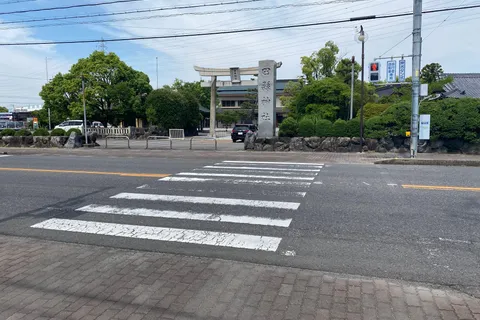
Within the grounds, the sub-shrine Himenomiya enshrines Tamahime-no-Mikoto, and has long been an object of devotion — particularly among women — for safe childbirth, the blessing of children, relief from women’s ailments, and good relationships. Ōagata Jinja’s Himenomiya, honoring female symbolism, is traditionally paired with the nearby Tagata Shrine in Komaki, which honors male symbolism; the two shrines are widely regarded locally as complementary counterparts.
Highlights
The shrine’s plum grove holds more than 300 weeping plum trees in red and white, including varieties donated from renowned plum gardens and shrines across Japan. The blossoms are typically at their best from mid-February to late March, and during the “Ume Matsuri” (Plum Festival) the grounds also host potted-plum displays, ikebana exhibitions, and a free Noh performance.
Behind the main hall lies the “Musubi-ike” (Bonding Pond), fed by water from the sacred mountain itself. Visitors write a wish on a slip of paper, place a coin on it, and float it on the pond — the way it sinks is said to reveal how the wished-for connection will unfold. Trying it costs a ¥100 offering.
The honden, saimonden, and corridors form a rare and well-preserved example of early Edo-period shrine architecture, their heavy cypress-bark roofs and balanced proportions visible up close as a nationally designated Important Cultural Property.
Visiting Tips
Visitors praying for safe childbirth, the blessing of children, relief from women’s ailments, or good relationships are encouraged to visit the sub-shrine Himenomiya in addition to the main hall, and to try the paper-fortune ritual at the Musubi-ike pond behind the shrine.
For those with the energy, a hiking path leads from behind the main hall up Mount Hongū (elevation 292m) to Ōagata Jinja’s Okumiya (inner shrine) at the summit. The trail is well maintained and easy to walk, and the lookout near the top offers sweeping views over the Nōbi Plain.
Annual Festivals
- Hōnen Matsuri (Himenomiya Hōnen Matsuri) (the Sunday before March 15): A spring festival centered on the sub-shrine Himenomiya, praying for an abundant harvest, national peace, and fertility and safe childbirth. Floats and a portable shrine bearing female symbolism are paraded through the precincts, mirroring the male-symbolism festival at the neighboring Tagata Shrine; together the two are said to bring spring to Owari and draw hundreds of thousands of visitors.
- Ume Matsuri (Plum Festival) (mid-February to late March): Held to coincide with the peak bloom of the shrine’s 300-plus weeping plum trees, featuring potted-plum displays, ikebana, and Noh performances. A limited plum-themed goshuin is issued during the festival.
- Reisai (Grand Festival) (October 10, with the “Chigo-yama” float paraded on the first Saturday and Sunday of October): The shrine’s principal annual festival, in which parishioners from the surrounding district parade a float known as the Chigo-yama, forming the community’s major autumn celebration.
Nearby Food & Sightseeing
Ōagata Jinja sits at the foot of Mount Hongū, and a maintained trail runs from behind the main hall up to the Okumiya at the summit. Many visitors combine a look at the plum grove and Musubi-ike with a short hike up the mountain after paying their respects.
Inuyama’s best-known landmark, the National Treasure Inuyama Castle and its surrounding castle town, lies about 20–25 minutes away by car — not within easy walking distance, but a popular pairing for visitors spending a full day in Inuyama. The castle town is lined with street-food stalls and long-established sweet shops, and offers fine views along the Kiso River.
- Mount Hongū & Ōagata Jinja Okumiya: The 292m sacred mountain rising directly behind the main hall, with the shrine’s inner sanctuary (Okumiya) at its summit and views over the Nōbi Plain from the trail.
- Inuyama Castle & Castle Town: One of Japan’s twelve original castle keeps, a National Treasure, with a lively castle-town district about 20–25 minutes away by car — a classic combination for a full day in Inuyama, with plenty of street food and souvenir shops.
Frequently Asked Questions
- Q. What are the visiting hours?
- A. The shrine grounds are open from 6:00 to 20:00, and visiting the shrine itself is free.
- Q. Can I get a goshuin (shrine stamp)?
- A. Yes, at the reception office just before the main hall, generally from 8:30 to 17:00, for ¥300. During the plum festival (mid-February to late March), a limited-edition plum-themed goshuin is also offered.
- Q. How do I get there?
- A. It's about a 20-minute walk from Gakuden Station on the Meitetsu Komaki Line, or about 8 minutes by the Inuyama City community bus.
- Q. Is there parking?
- A. Yes, free parking for roughly 500 cars is available, with temporary overflow parking added during busy periods such as New Year's and the Hōnen Matsuri. Expect heavy congestion during those times.
- Q. What is the Hōnen Matsuri here?
- A. Held on the Sunday before March 15 each year, centered on the sub-shrine Himenomiya, it's a spring festival praying for an abundant harvest, national peace, and safe childbirth and fertility. Floats and portable shrines bearing female symbolism are paraded, mirroring the male-symbolism Hōnen Matsuri at the nearby Tagata Shrine — together the two festivals are said to herald spring across the Owari region and draw hundreds of thousands of visitors.
Related Shrines
Aichi Prefecture, Komaki
Tagata Jinja
Tagata Jinja
- Bountiful Harvest
- Fertility
- Safe Childbirth
Shizuoka Prefecture, Fujinomiya
Fujisan Hongu Sengen Taisha
Fujisan Hongū Sengen Taisha
- Safe Childbirth
- Blessing of Children
- Fire Prevention
Aichi Prefecture, Nagoya
Atsuta Jingu
Atsuta-jingū
- Good Fortune
- Household Safety
- Victory in Competition