
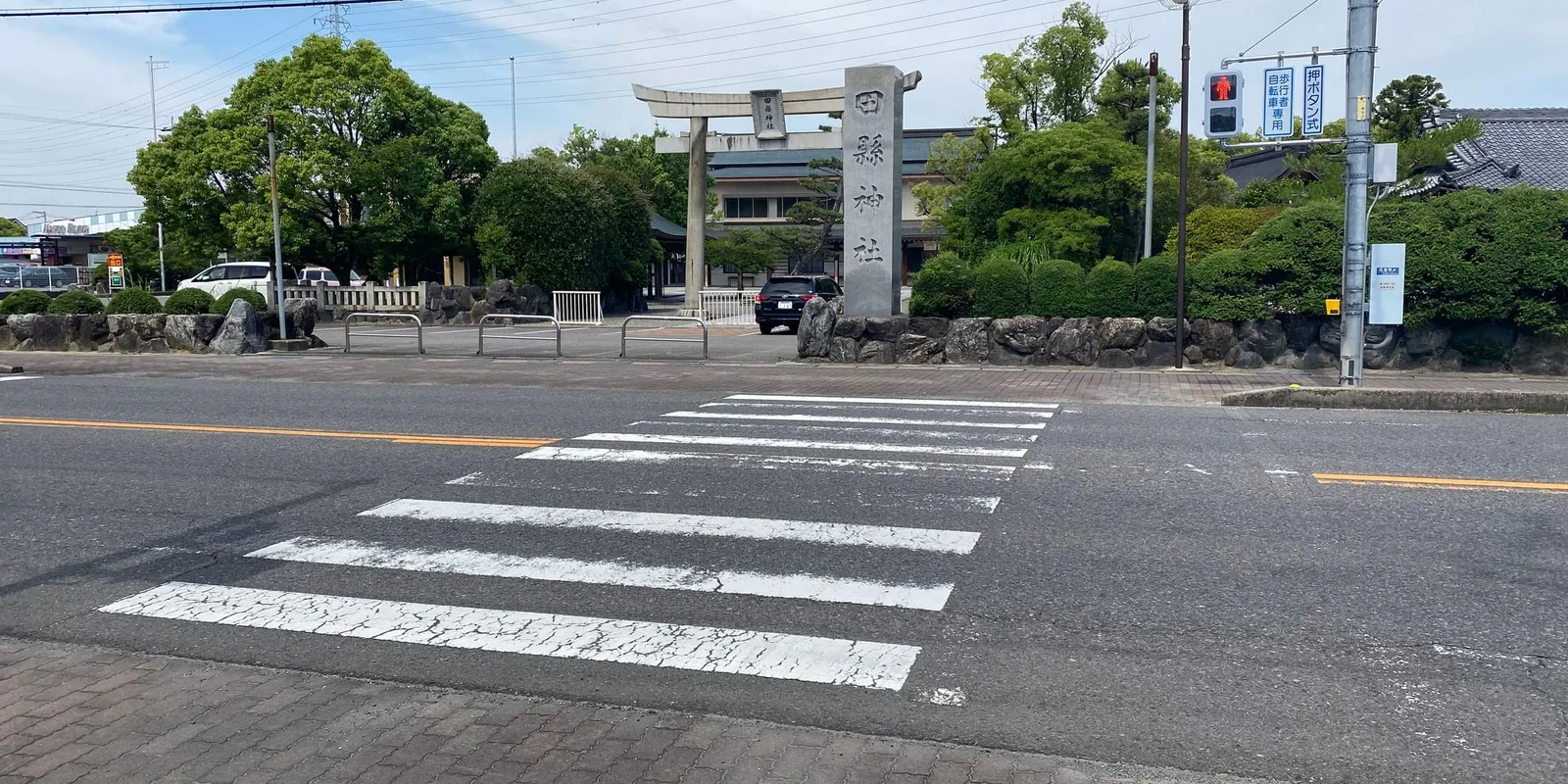
History
Tagata Jinja stands in Tagata-cho, Komaki City, Aichi Prefecture, and enshrines Mitoshi-no-Kami, an agricultural deity who governs bountiful harvests and the growth of all living things, alongside Tamahime-no-Mikoto, long venerated as a deity of fertility and safe childbirth.
The exact founding date is unknown, but the shrine already appears in the Engishiki, the register of shrines compiled in 927 during the Heian period, indicating an even older origin as a local agricultural shrine. Through the Edo period it was also known as Agata-no-Mori, later identified with the Engishiki-listed Tagata Jinja. The shrine reflects a distinctly agrarian form of faith, in which a rich rice harvest and the continuation of family and community are prayed for as two sides of the same wish.
Highlights
In keeping with an ancient belief that links the fruitfulness of the fields with the creation of new life, the shrine grounds display numerous carved offerings and votive plaques (ema) shaped like male genitalia. These are not simply curiosities: they are physical expressions of a prayer for abundant crops, the continuation of family lines, and life that carries on unbroken from one generation to the next. The shrine office also keeps materials explaining the origins of this tradition, along with related amulets.
Visiting Tips
Many visitors come praying for fertility and safe childbirth or a good harvest, while others pray for success in farming or business, and for household harmony. The grounds are modest in size, but the approach from the torii to the main hall is shaded by trees and quiet outside of festival days, making for an unhurried visit at most times of year. The shrine’s goshuin, including limited monthly designs, are also popular among visitors.
Annual Festivals
- Hounen Matsuri (Fertility Festival) (March 15): Believed to date back some 1,400 years, this is the shrine’s principal annual festival. A phallic symbol about 60cm in diameter and just over 2 meters long, freshly carved every year from Japanese cypress, is placed on a mikoshi and carried from the otabisho resting place to the main shrine, led by a Sarutahiko figure and accompanied by a palanquin bearing the deities’ images and a separate mikoshi for Take-inadane-no-Mikoto, said to be Tamahime-no-Mikoto’s consort deity. Rooted in old Koshogatsu-season rice-planting rituals and roadside-deity (dosojin) worship, the festival prays for abundant harvests, the growth of all things, and the prosperity of descendants. It draws around 40,000–50,000 visitors each year and has been reported on by international media as the “Honen Matsuri” fertility festival. A sister festival is held around the same time at Ōagata Jinja in nearby Inuyama, where a float shaped like female genitalia is paraded — though the two festivals are understood to have originated independently of one another rather than as a single paired rite.
Nearby Food and Sightseeing
There are places to eat within easy walking distance of Tagata Jinja-mae Station, convenient for a meal before or after visiting the shrine. A short trip further affords a visit to Komakiyama Castle, associated with the warlord Oda Nobunaga.
- CoCo Ichibanya Komaki-Tagata: A curry restaurant about a 4-minute walk from Tagata Jinja-mae Station, convenient for a meal after visiting the shrine.
- Komakiyama Castle: A museum on the site of the castle built by Oda Nobunaga, about a 10-minute drive from Tagata Jinja and a natural pairing for a day trip.
Frequently Asked Questions
- Q. What are the visiting hours?
- A. The shrine grounds are open 24 hours a day. The shrine office, where amulets and goshuin are handled, is open 9:00–17:00.
- Q. Can I get a goshuin here?
- A. Yes, available 9:00–17:00 for ¥500. Some months also offer a limited-edition design.
- Q. How do I get there?
- A. It's about a 5-minute walk (roughly 200m) from Tagata Jinja-mae Station on the Meitetsu Komaki Line. The neighboring station, Gakuden, is about 2km (a 25-minute walk) away, so Tagata Jinja-mae Station is the recommended stop.
- Q. Is parking available?
- A. Yes, there is free on-site parking for around 50 vehicles, including large buses. On March 15, the day of the Hounen Matsuri festival, ordinary car parking is not available on the grounds, so public transportation is recommended that day.
- Q. What is the Hounen Matsuri festival?
- A. Held every year on March 15, this is the shrine's principal annual festival. A wooden phallic symbol roughly 60cm in diameter and just over 2 meters long — freshly carved each year from Japanese cypress — is carried on a portable shrine (mikoshi) in procession from the resting place (otabisho) to the main shrine, accompanied by men of the traditional unlucky age (yakudoshi). Rooted in old rice-planting and roadside-deity rituals, the festival prays for a bountiful harvest, the growth of all living things, and the continuation of family lines. Believed to date back some 1,400 years, it draws around 40,000–50,000 visitors annually and has been covered internationally as the 'Honen Matsuri' fertility festival. A related Hounen Matsuri is held around the same time at Ōagata Jinja in nearby Inuyama, where a float shaped like female genitalia is paraded — though the two festivals are understood to have arisen independently rather than as a single paired tradition.
Related Shrines
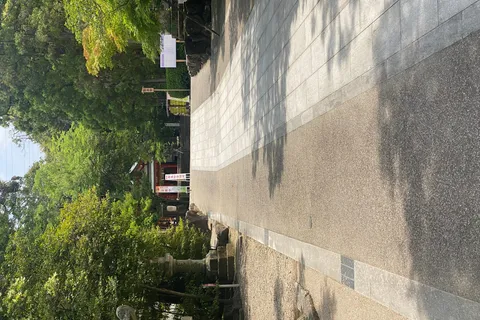
Aichi Prefecture, Inuyama
Ōagata Jinja
Ōagata Jinja
- Safe Childbirth
- Blessing of Children
- Good Matches / Relationships
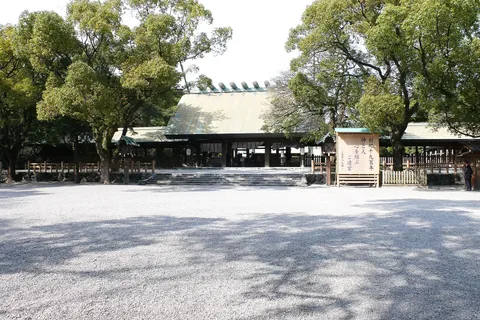
Aichi Prefecture, Nagoya
Atsuta Jingu
Atsuta-jingū
- Good Fortune
- Household Safety
- Victory in Competition
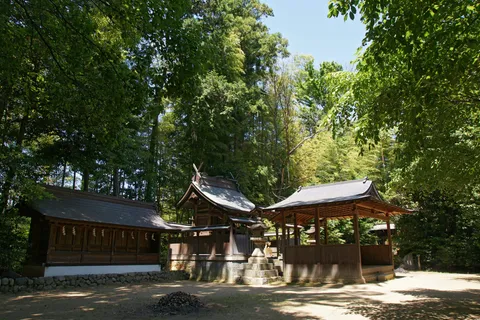
Nara Prefecture, Asuka Village
Asuka Niimasu Jinja
Asuka-niimasu-jinja
- Matchmaking (Enmusubi)
- Conceiving Children
- Safe Childbirth