History
Sakatsura Isosaki Jinja traces its founding to December 29, 856, according to shrine tradition. A salt maker working on the coast of what is now Oarai, in Kashima District of ancient Hitachi Province, is said to have become possessed by a divine spirit that proclaimed: “I am Onamuchi and Sukunahikona. Having completed the creation of this land, I departed for the eternal realm, but I have returned to save the people.” This miraculous event is said to have led to the near-simultaneous founding of two shrines on opposite banks of the Naka River: Oarai Isosaki Jinja on the north bank, enshrining Onamuchi, and Sakatsura Isosaki Jinja on the south bank, in what is now Isozaki, Hitachinaka, enshrining Sukunahikona. The following year, in 857, the Imperial court granted both shrines official state-shrine status and the divine title “Sakatsura Isosaki Yakushi Bosatsu Myojin.” Sakatsura Isosaki Jinja was later ranked among the Myojin Taisha of the Engi system, and in 1885 was designated a Kokuhei Chusha (national shrine of middle rank).
Like many shrines, it fell into disrepair amid the conflicts of the medieval period, but was restored during the Edo period under the patronage of the Mito domain. Tokugawa Mitsukuni, the domain’s second lord, is credited with having camellias planted along the approach as part of the shrine’s restoration — trees that survive today as a grove of specimens over 300 years old.
The shrine’s principal deity is Sukunahikona no Mikoto, with Onamuchi no Mikoto enshrined alongside as a secondary deity. Sukunahikona is honored as a god of medicine, sake brewing, and hot springs, worshipped for centuries for blessings of recovery from illness and long, healthy life. As the shrine facing Oarai Isosaki Jinja across the mouth of the Naka River, sharing a common founding legend, the two are often described as “brother shrines,” and many visitors make a point of paying respects at both.
Highlights
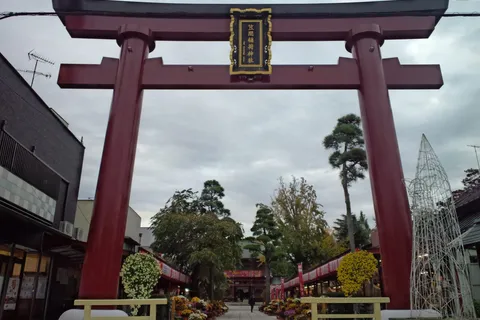
One of Sakatsura Isosaki Jinja’s most distinctive features is its roughly 300-meter approach, lined on both sides with camellia and tabu trees said to have been planted on the orders of Tokugawa Mitsukuni, the second lord of the Mito domain. Trees over 300 years old form a tunnel-like canopy overhead, and this broadleaf grove — including camellia, tabu, and chinquapin trees — was designated an Ibaraki Prefecture Natural Monument in 2005. The camellias bloom from winter into early spring, drawing visitors and photographers to walk beneath the flowering canopy.
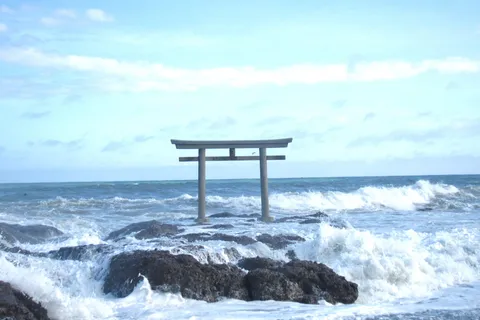
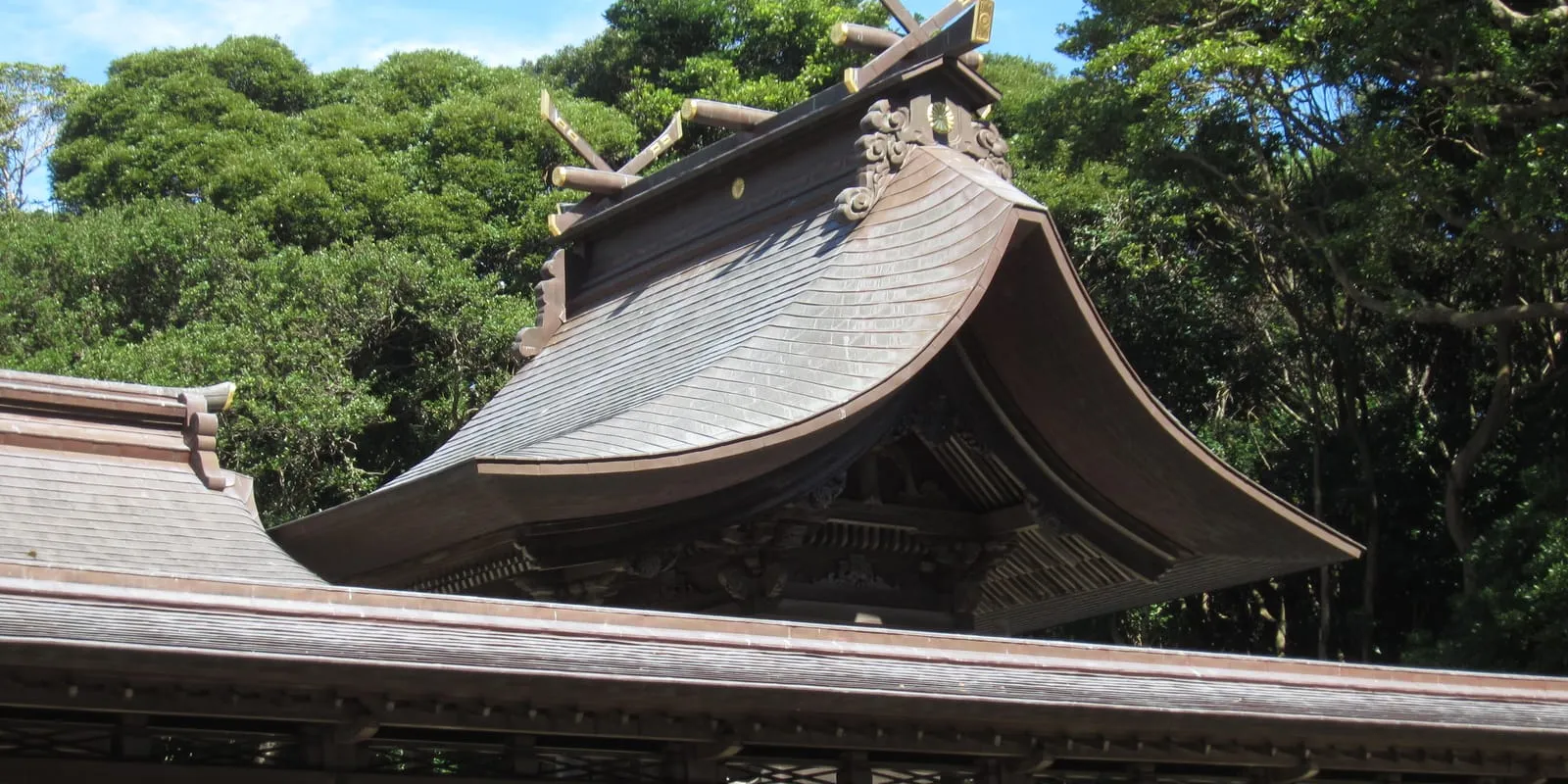
The stone “Lucky Turtle” statue in front of the worship hall is another highlight not to be missed. Tradition holds that it was donated by a visitor who went on to win a large lottery prize after praying here, and touching the turtle is now widely believed to bring financial luck — a reputation that has made the shrine a frequent subject of television and magazine features as one of Japan’s foremost “money luck” power spots. The shrine hall also features carvings of a squirrel and grapes attributed to Hidari Jingoro, the master sculptor famed for the “Sleeping Cat” at Nikko Toshogu, showcasing the refined woodcarving of the Edo period. The grounds include two torii gates facing the Pacific and several sites tied to the Mito domain, including a stone said to have been used as a seat by the ninth lord, Tokugawa Nariaki, during a horse-racing ritual.
Visiting Tips
The grounds have no closing time and can be visited at any hour, but the shrine office for amulets and goshuin is open 8:00–16:00. Prayer requests (gokito) are accepted 9:00–15:00, and same-day requests are welcome. Free parking for about 60 vehicles is available on the east side of the grounds, though it can fill up during the New Year period, Setsubun, Shichi-Go-San, and the hydrangea and camellia blooming seasons, so allowing extra time is a good idea. Visitors combining a trip with neighboring Oarai Isosaki Jinja should allow about 15–20 minutes to drive between the two, across the Naka River.
Annual Festivals
- Reitaisai Grand Festival (typically August 25): The shrine’s most important festival, held with an envoy from the Association of Shinto Shrines; some years include additional celebrations such as Noh performances.
- Setsubun Festival (around February 3): A ritual to drive away misfortune and pray for good health in the year ahead.
- Hiraiso Sansha Festival (once every three years, in August): A joint palanquin procession held together with the other shrines of the Hiraiso district, one of the area’s largest community festivals.
Nearby Food & Sightseeing
- Hitachi Seaside Park: A vast national park famous nationwide for its spring nemophila and autumn kochia displays, about a 10-minute drive from Sakatsura Isosaki Jinja.
- Nakaminato Fish Market: A bustling market selling fresh seafood landed at Nakaminato fishing port, with food stalls serving seafood rice bowls and grilled fish.
- Hiraiso Coast: A rocky shoreline just steps from Sakatsura Isosaki Jinja, popular with locals for tide-pool exploring and beachcombing.
Frequently Asked Questions
- Q. How is Sakatsura Isosaki Jinja related to Oarai Isosaki Jinja?
- A. According to shrine tradition, on December 29, 856, the deities Onamuchi and Sukunahikona descended together onto the coast at Oarai, near the mouth of the Naka River. This is said to have led to the simultaneous founding of Oarai Isosaki Jinja on the north bank, enshrining Onamuchi, and Sakatsura Isosaki Jinja on the south bank in what is now Isozaki, Hitachinaka, enshrining Sukunahikona. The two are regarded as "brother shrines" sharing a single act of worship across two sites.
- Q. What are the goshuin hours and fee at Sakatsura Isosaki Jinja?
- A. The shrine office is open 8:00–16:00, and the standard goshuin costs ¥500. Limited-edition goshuin with a different design each month are also offered, some priced at ¥1,000.
- Q. How do I get to Sakatsura Isosaki Jinja?
- A. It's about a 10-minute walk from Isozaki Station on the Hitachinaka Seaside Railway Minato Line, roughly 25 minutes by rail from JR Katsuta Station. By car, it's about 10 minutes (4 km) from the Hitachinaka IC on the Higashi-Mito Road, or about 10 minutes from Hitachi Seaside Park.
- Q. When is the best time to see the camellia-lined approach at Sakatsura Isosaki Jinja?
- A. The approach is lined with camellia and tabu trees said to be over 300 years old, planted on the orders of Tokugawa Mitsukuni, the second lord of the Mito domain, during the Edo period. The camellias are typically in bloom from winter into early spring (roughly January to March), and the grove is designated an Ibaraki Prefecture Natural Monument.
- Q. Why is Sakatsura Isosaki Jinja known as a shrine for financial luck?
- A. A stone turtle statue in front of the worship hall, known as the "Lucky Turtle," is said to have been donated by a visitor who won a large lottery prize, and touching it is now popularly believed to bring financial luck. Because Sukunahikona is also revered as a god of medicine, the shrine has long been worshipped for recovery from illness and good health, drawing visitors seeking both fortune and wellbeing.