History
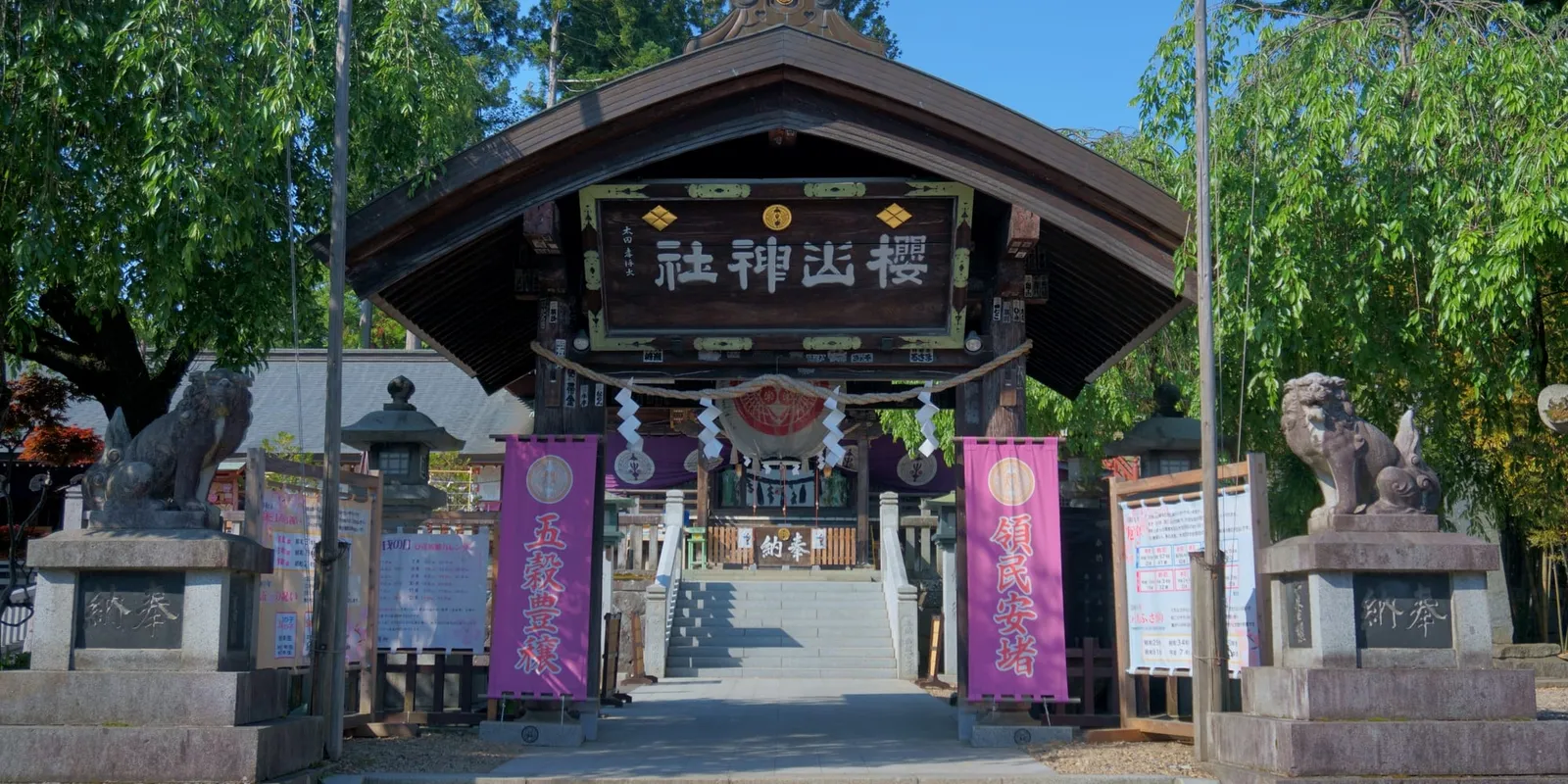
Sakurayama Shrine (Sakurayama-jinja) stands in Uchimaru, Morioka, Iwate, on part of the former Morioka Castle grounds. The official site does not give a reading of the name; the reading “Sakurayama-jinja” follows Japanese Wikipedia. It is a different shrine from Morioka Hachimangu in the same city and from Sakurayama Hachimangu in Takayama, Gifu.
According to the official history, in 1749 (Kan’en 2), the 150th anniversary of the death of Nanbu Nobunao, first lord of the Morioka domain, the domain built a shrine building in the Awajimaru area inside the castle to honor his memory. This was the “Awajimaru Daimyojin,” the beginning of Sakurayama Shrine. Because Awajimaru was thick with cherry trees and known as “Sakurayama,” it was later renamed “Sakurayama Daimyojin.” (The official site writes the founding era name two ways, Kan’en 2 and Kan’ei 2, but the year 1749 is the same; this page uses Kan’en 2.)
When the Edo period ended and the new government took over Morioka Castle, the shrine moved out of the castle. In Meiji 4 it was temporarily relocated to Myosenji-yama in Kagano village, and in Meiji 10 it was moved again to a newly built hall in Kitayama; in Meiji 14 it was raised to prefectural-shrine rank. After the former castle site was transferred to the Nanbu family, calls grew to return the shrine to the old castle grounds. In Meiji 32 the site on the former third bailey (Hatomori-shita Kuruwa) was prepared, the present main hall, worship hall and gate were completed, and the shrine was enshrined there the following year, where it stands today.
The enshrined deities are four figures of the Nanbu family. According to the official site, Nanbu Mitsuyuki, first head of the clan, was enshrined in Bunka 15, and Nanbu Toshinao, second lord, and Nanbu Toshitaka, eleventh lord, were added in Taisho 1. The official site describes Mitsuyuki as the “god of continuity,” Nobunao as the “god of pioneering,” Toshinao as the “god of stability,” and Toshitaka as the “god of learning.”
Highlights
The grounds lie on the former third bailey and Hatomori-shita Kuruwa of Morioka Castle, with the worship hall behind the gate. The official site says the castle’s grand stone walls and the Eboshi Rock stand unchanged since the castle was built (the official site writes the name as 鳥帽子岩; the stone marker in front of the rock and Japanese Wikipedia write 烏帽子岩). Japanese Wikipedia’s article on Morioka Castle says the rock was found when Nanbu Toshinao leveled the third bailey, and that it remains on the site and is revered as a treasure of Sakurayama Shrine.
The official history page also shows the “Sakurayama Daimyojin main hall site monument” (erected in May of Taisho 9), which marks the old main hall. On the first day of the annual festival, the head of the Nanbu family, led by mounted warriors, and the portable shrine are said to parade through the city, and a Yuisho-sai is held at the old main hall site inside the castle grounds.
Visiting Tips
The shrine office and amulet counter are open 9:00 AM–5:00 PM. Prayer services run from 9:00 AM until about 4:00 PM, and you book by phone (019-622-2061). The fee is ¥10,000 per service (check by phone for multiple services), and for Shichi-Go-San it is ¥8,000 for one child and ¥12,000 for two. A service takes about 20 minutes, or 30–40 minutes including reception (the prayer guide page says about 30 minutes). The official site asks visitors to avoid jerseys, T-shirts and shorts. Its prayer menu includes yakubarai and happo-yoke (protection from misfortune and from unlucky directions), safe childbirth, household safety, and, for groups, business prosperity.
The goshuin costs ¥500 at the amulet counter, open 9:00 AM–5:00 PM. At New Year’s and busy times you may receive a pre-written sheet. The shrine’s goshuin books (inscription already written) come in two designs at ¥2,200 each. The goshuin of Mitsuishi Shrine is also handled at this counter.
Japanese Wikipedia gives about 10 minutes by bus plus about 3 minutes on foot, or about 20 minutes on foot from Morioka Station. The road in front of the shrine is one-way, and the official site urges care about driving the wrong way. There are first and second lots on the grounds, about 20 spaces, free of charge.
Annual Festivals
Main events per the official site. Dates may be changed or shortened.
- Saitan-sai (January 1, 10:00 AM): A New Year rite praying for the well-being of parishioners and supporters.
- Donto-sai and Hadaka-mairi (January 26): The Donto-sai starts at 1:00 PM, burning old amulets, charms and pine decorations. In the evening (from about 5:30 PM) Morioka City volunteer fire corps squads 3 and 6 hold the Hadaka-mairi (it may be cancelled).
- Setsubun-sai (February 3, 4:00 PM): Held at the worship hall.
- Annual grand festival (May 25–27): The Yuisho-sai with the portable-shrine procession on the 25th, and the main festival on the 26th, which includes the 蛇沼相米の儀, a rite handed down in the Morioka domain (kept in kanji here because its reading could not be confirmed).
- Nagoshi no Harae (June 26): A purification rite involving passing through a ring of reeds.
- Niiname-sai (November 26): Held on November 26 at this shrine; the official site says participants receive an “Inaho-mamori” charm.
- Toshikoshi no Harae (December 26): The year-end great purification.
Nearby Food & Sightseeing
- Morioka Castle Ruins Park (Iwate Park): The castle site where the shrine stands. According to Japanese Wikipedia, the ruins were designated a national historic site in 1937 (Showa 12).
- Morioka History and Culture Museum (Morioka Rekishi Bunkakan): A facility introducing the history and culture of the castle town (1-50 Uchimaru, Morioka). Per the museum’s official site, it is open 9:00 AM–7:00 PM from April to October and 9:00 AM–6:00 PM from November to March, and closed on the third Tuesday of each month and on December 31 and January 1.
- Mitsuishi Shrine: A shrine in Nasukawa-cho, Morioka. According to Japanese Wikipedia, a legend says a demon (Rasetsuki) was bound to three great stones and left handprints as it fled, and the story is linked to the origin of the name “Iwate.” Its goshuin is handled at Sakurayama Shrine’s counter.
Frequently Asked Questions
- Q. What are the visiting hours?
- A. According to the official site, the shrine office and amulet counter are open 9:00 AM–5:00 PM. Prayer services run from 9:00 AM until about 4:00 PM, and you tell the office your preferred date, time and name by phone (019-622-2061). The official site does not state hours for entering the grounds themselves, so visiting during the amulet counter's hours is the safe choice.
- Q. Can I get a goshuin at Sakurayama Shrine?
- A. Yes. The official goshuin notice (dated August 8, 2024, Reiwa 6) lists the fee at ¥500, whether handwritten in your book or on a pre-written sheet. The counter is open 9:00 AM–5:00 PM, and at New Year's and other busy times (irregular) you may be given a pre-written sheet. The shrine's own goshuin books (inscription already written) come in two designs at ¥2,200 each. The goshuin of Mitsuishi Shrine in Morioka is also handled at this shrine's counter (Mitsuishi Shrine itself does not issue them).
- Q. How do I get there, and is there parking?
- A. Japanese Wikipedia gives about 10 minutes by bus from Morioka Station (Morioka Bus Center-bound) to "Kencho-Shiyakusho-mae" plus about 3 minutes on foot, or about 20 minutes on foot from Morioka Station (the official site's access page is a map only, with no travel times). The official site says the road in front of the shrine is one-way. There are first and second parking lots on the grounds, about 20 spaces in total, free of charge.
- Q. What is the Eboshi Rock?
- A. It is a large rock on the grounds. The official site says it stands unchanged since the castle was built, together with the castle's grand stone walls (the official site writes the name as 鳥帽子岩). Japanese Wikipedia's article on Morioka Castle says it was found when Nanbu Toshinao leveled the third bailey, and that it remains on the site and is revered as a treasure of Sakurayama Shrine.
- Q. When are the annual festival and the Donto-sai?
- A. According to the official site, the annual grand festival runs May 25–27: the Yuisho-sai with the portable-shrine procession on the 25th, and the main festival on the 26th. The Donto-sai bonfire is held every year on January 26 from 1:00 PM on the grounds, and that evening (from about 5:30 PM) a Hadaka-mairi, a procession in loincloths by the Morioka City volunteer fire corps, takes place. Schedules may be changed or shortened and the procession may be cancelled, so check the official site's news page.
Plan Your Visit
Before you go, you can book a stay and get your shrine-visit items ready.
Amazon links open Amazon.co.jp (Japan) in English; whether an item ships overseas depends on the product.
※ Contains ads (PR). Links open external sites such as Amazon, Rakuten, Trip.com and Booking.com.