History
Samuhara Jinja Okunomiya is the original shrine from which Samuhara Jinja in Nishi Ward, Osaka, takes its name and its faith — a small shrine in the mountains of Kamo, Tsuyama City, Okayama Prefecture. Its founding date is unknown; tradition holds that a small shrine has stood on this mountainside since ancient times.
The person who revived this old, neglected shrine was Tanaka Tomisaburo, a native of Kamo who ran a fountain-pen business. Tanaka carried a Samuhara amulet with him through the First Sino-Japanese War and the Russo-Japanese War, and credited it with helping him survive numerous close calls and return home safely — an experience that left him deeply devoted to the deity. In 1935, using his own money, Tanaka rebuilt the dilapidated shrine, and in 1946 he further reconstructed its main hall.
Wanting to share Samuhara’s blessings more widely, Tanaka went on to enshrine a divided spirit of the deity as a subsidiary of Hokoku Shrine on Nakanoshima in Osaka in 1950, and in 1961 moved that shrine to its present site in Itachibori, Nishi Ward, Osaka, where it continues today as Samuhara Jinja — the shrine nationally known for its ring-shaped “goshinkan-mamori” amulets.
Back at the site of origin, the Okayama mountain shrine suffered typhoon damage to its structures and approach path in 2005, prompting its relocation to its current site on the grounds of the neighboring Kamo Kotohira Shrine, where worship continues to this day. The shrine enshrines three deities — Amenominakanushi no Okami, Takamimusubi no Okami, and Kamimusubi no Okami — collectively known as “Samuhara.” According to the Kojiki, these were the very first deities to come into being at the dawn of creation, and they are credited with the power to protect the body from harm, bring prosperity to the household, ward off injury and illness, and grant long life.
Highlights
The Okunomiya’s defining feature isn’t the shrine building itself so much as the climb required to reach it. Visitors pass through the torii of the neighboring Kamo Kotohira Shrine and climb a stone stairway of some 300 steps through the trees before arriving at the shrine, and the hush of that wooded ascent is part of the experience. Along the way, stone markers and plaques carved with the sacred “Samuhara” characters appear here and there, a reminder that this mountainside is where the faith began.
A short climb further up from the shrine leads to the “Hizumeyama Observation Deck,” a steel-framed platform overlooking the quiet, rural landscape of Kamo below — a view reserved for those who make the full climb, especially striking on a clear day.
Because the shrine sits deep in the mountains, far from town, with little signage and no staff on hand, it has picked up an online reputation as a power spot that “only those called by the gods can reach” — a story that has become one of the Okunomiya’s own claims to fame.
Visiting Tips
Reaching the shrine grounds means climbing a mountain path that includes stone stairs, so wear sturdy, broken-in shoes rather than sandals or heels. Walking sticks are left at the trailhead for anyone who wants extra support on the climb. There is no purification basin (temizuya) on site, so plan to cleanse your hands beforehand if that’s part of your practice.
The grounds can be visited at any time, but because there is no shrine office and no resident staff, goshuin and amulets are not something you can reliably obtain here on the spot — the ring-shaped “goshinkan-mamori” and other amulets are best sought at the main shrine in Nishi Ward, Osaka. Avoid visiting after dark or in bad weather, since the mountain path can be hazardous underfoot; a bright daytime visit is recommended. Car navigation keyed to the address alone can misdirect drivers toward Tsugawa Dam, so heading for the adjacent Kamo Kotohira Shrine (899 Nakahara, Kamo-cho, Tsuyama) as a landmark makes the approach much easier to find.
Nearby Food & Sightseeing
- Yamashina: A long-established confectionery in Kamo known for its handmade warabi mochi, made from just bracken starch, water, and sugar — a popular stop for visitors heading home from the shrine.
- Dodo Onsen Megumi-sou: A hot-spring bathhouse in Kamo that welcomes day visitors — a good way to rest tired legs after the climb up to the shrine.
- Okonomiyaki Kokoro: A locally loved diner in Kamo serving okonomiyaki and noodle dishes, convenient for a meal before or after visiting the shrine.
Frequently Asked Questions
- Q. Is Samuhara Jinja Okunomiya really unmanned? Can I get a goshuin there?
- A. Yes — there is no resident priest and no shrine office of any kind, though the grounds themselves can be visited freely at any time. Goshuin and amulets, including the famous ring-shaped "goshinkan-mamori" charm, are not reliably available on site. The sure way to obtain them is at the main shrine, Samuhara Jinja in Nishi Ward, Osaka (tel. 06-6538-2251), which can also arrange postal delivery for those unable to visit in person.
- Q. How is this different from the Samuhara Jinja in Osaka?
- A. The Samuhara Jinja in Itachibori, Nishi Ward, Osaka — famous for its ring-shaped amulets — is the actively staffed "main shrine," with a resident priest and a shrine office offering goshuin and amulets. The Okunomiya in Kamo, Tsuyama, by contrast, is the original mountain shrine where the Samuhara faith began, and it is entirely unmanned. Both enshrine the same three Samuhara deities, but they differ greatly in facilities and what a visitor can actually do there, so it's worth not confusing the two.
- Q. How do I get to Samuhara Jinja Okunomiya?
- A. It's about a 35-minute walk from JR Mimasaka-Kamo Station on the Kishin Line, or roughly 35–40 minutes by car from Tsuyama IC on the Chugoku Expressway. Car navigation using the address alone can misdirect drivers toward Tsugawa Dam, so aim for the neighboring Kamo Kotohira Shrine (899 Nakahara, Kamo-cho, Tsuyama) as a landmark. Free parking for about 10 cars is available at the trailhead, along with walking sticks for the climb.
- Q. Why is it said that "only those called by the gods" can reach this shrine?
- A. The shrine sits deep in the mountains away from town, with few signs marking the way and no staff on site, and visitors who struggled to find it — or who felt unexpectedly guided there — have shared those stories widely on social media and blogs. That's the origin of its reputation as a power spot that "only those called by the gods can reach." It's a piece of visitor folklore, not an official teaching of the shrine.
- Q. Why are Samuhara's amulets so famous?
- A. The characters for "Samuhara" have long been believed to hold protective power against disaster, and it's widely said that many soldiers carried amulets bearing them as "bullet-proofing charms" when sent off to fight in World War II. In the postwar era, the ring-shaped "goshinkan-mamori" amulet distributed at the Osaka main shrine became a social-media sensation alongside accounts of wearers escaping traffic accidents and other misfortune, and demand grew so intense that the shrine at one point had to suspend its regular distribution.
Related Shrines
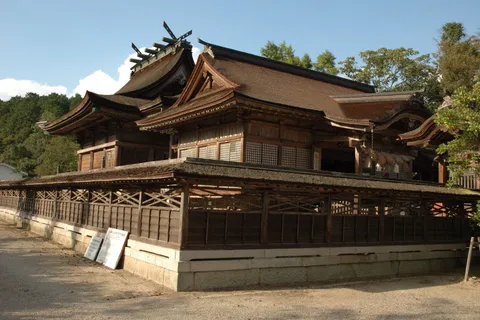
Okayama Prefecture, Tsuyama
Nakayama Jinja
Nakayama Jinja
- Industrial Prosperity
- Bountiful Harvest
- Protection from Misfortune
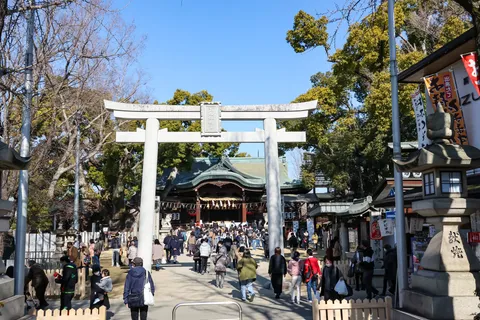
Osaka, Higashiosaka
Ishikiri Tsurugiya Jinja
Ishikiri Tsurugiya-jinja
- Good Health
- Protection from Misfortune
- Household Safety
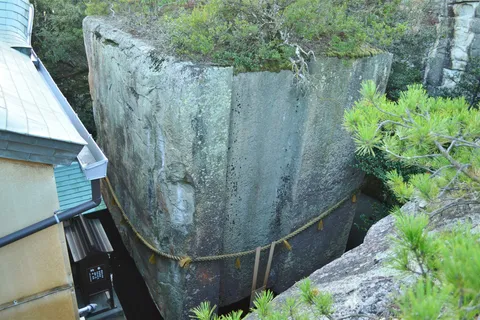
Hyogo, Takasago
Oushiko Jinja
Oushiko Jinja
- Protection from Misfortune
- Good Health
- Peace of the Nation