History
Seimei Jinja is dedicated to Abe no Seimei (921–1005), the celebrated onmyoji (yin-yang diviner) of the mid-Heian period. Serving as court astronomer and onmyoji to six successive emperors — Suzaku, Murakami, Reizei, En’yu, Kazan, and Ichijo — Seimei was relied upon by the imperial court for astronomical observation, calendar-making, and divination and ritual under the practice of onmyodo. He died on September 26, 1005, at the age of 85, and two years later, in 1007, Emperor Ichijo ordered a shrine built on the very site of Seimei’s former residence to enshrine his spirit — the founding of Seimei Jinja.
The shrine originally held extensive grounds, but these were reduced over the centuries amid the wars that swept through Kyoto, and the buildings seen today date to more recent restoration. The grounds still preserve numerous sites tied to Seimei’s legend. Ichijo Modoribashi, the bridge over the Horikawa river just south of the shrine, is closely associated with Seimei and is equally famous as the site where Watanabe no Tsuna, one of Minamoto no Yorimitsu’s four legendary retainers, is said to have severed the arm of a demoness. The bridge railing preserved on the shrine grounds today was reconstructed using parts salvaged from the bridge’s earlier structure before it was rebuilt.
Highlights
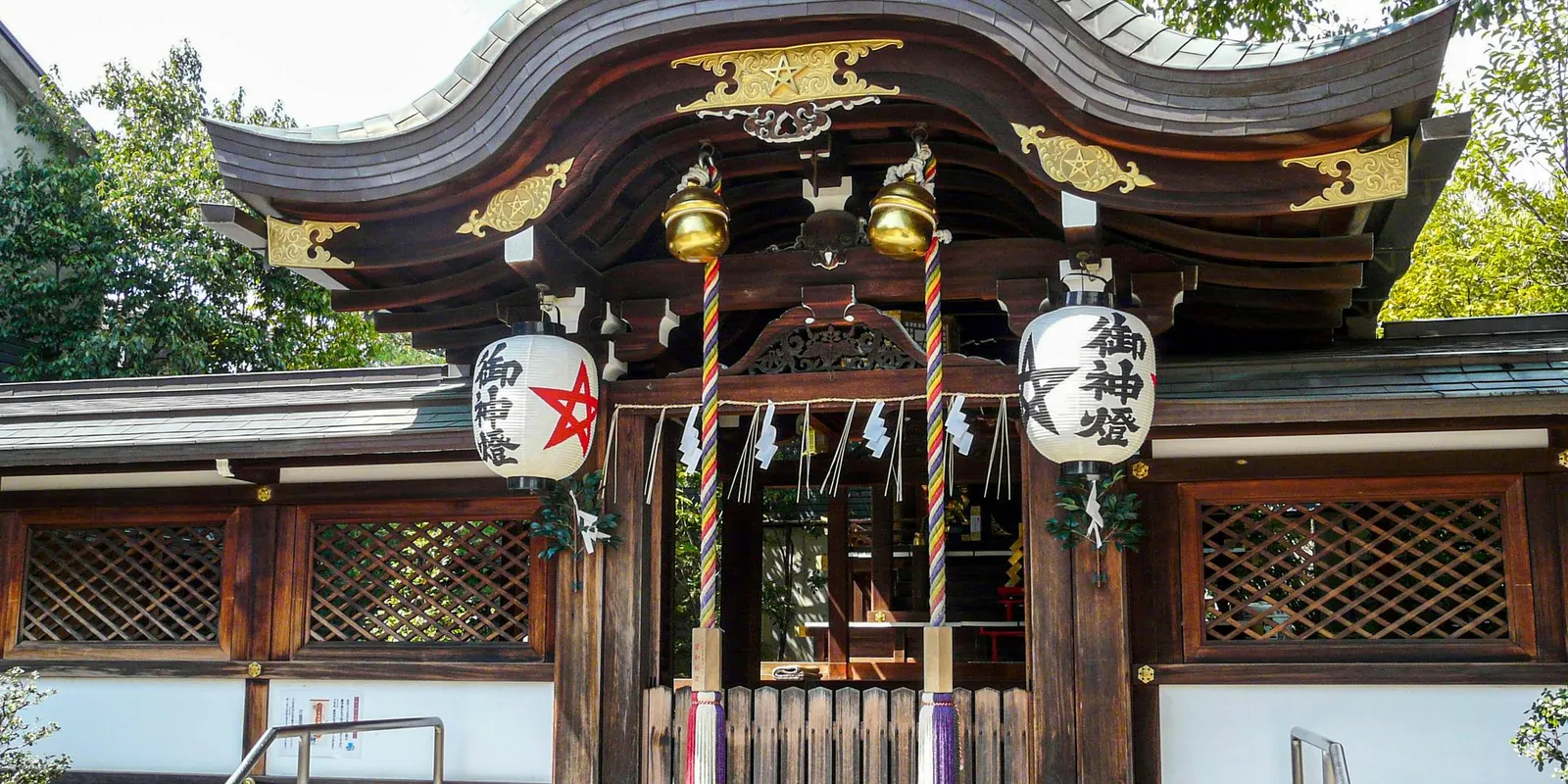
The shrine’s defining symbol is its crest, the Seimei-kikko, popularly known as the pentagram or “seiman.” Drawn in a single unbroken line, this five-pointed star represents the five elements of Chinese cosmology — wood, fire, earth, metal, and water — and is said to have been used by Seimei in onmyodo ritual; it appears throughout the grounds, atop the torii gate and on lanterns and ema alike. Where most shrine torii display a plaque bearing the shrine’s name, Seimei Jinja’s instead bears this pentagram crest, a distinctive touch.
The grounds also hold the Seimei Well, said to have been summoned forth by Seimei’s spiritual power; its water is believed to cure illness, and the direction its spout faces is changed each Risshun (the first day of spring) to align with that year’s auspicious direction. The Yakuyoke Momo, a peach-shaped charm carved with the pentagram in place of the more usual citrus motif, is said to ward off misfortune when touched. A bronze statue of Abe no Seimei and the shrine’s sacred camphor tree, estimated at some 300 years old, are also worth seeking out.
Visiting Tips
The grounds are not large, but the amulets and charms bearing the pentagram are plentiful, and the informational panels recounting Seimei’s legends are detailed enough to lose track of time reading. The honden stands just past the first torii facing Horikawa-dori, and the reconstructed span of Ichijo Modoribashi to the south is not to be missed. The shrine is within walking distance of both the Kyoto Imperial Palace and Nijo Castle, making it easy to fold into a day of sightseeing in central Kyoto.
Annual Festivals
- Setsubun Hoshi-matsuri (around February 2–3): Held on Setsubun, the day onmyodo tradition marks as the boundary between yin and yang, to pray for good health through the coming year.
- Seimei-sai (autumnal equinox): The shrine’s most important annual rite, opening with an eve-of-festival service the night before, followed on the day itself by the regular festival in the morning and a portable-shrine procession through the parish in the afternoon.
- Saga Bosho-sai (September 26): Held on the anniversary of Abe no Seimei’s death at his traditionally attributed tomb site in Saga, where shrine priests conduct a memorial rite.
Nearby Food & Sightseeing
Seimei Jinja sits in the Nishijin district, long known for traditional textile weaving, where restaurants and sweets shops housed in renovated machiya townhouses are scattered throughout the neighborhood.
- Tondaya: A few minutes on foot from the shrine, this roughly 140-year-old machiya townhouse now serves as a museum and offers kaiseki-style Kyoto cuisine.
- The area around Ichijo Modoribashi just south of the shrine makes for a pleasant stroll along the Horikawa river, tracing sites tied to Seimei’s legend along the way.
- Both the Kyoto Imperial Palace and Nijo Castle are within walking distance, making the shrine an easy addition to a day of sightseeing in central Kyoto.
Frequently Asked Questions
- Q. What does the pentagram (seiman) at Seimei Jinja mean?
- A. The Seimei-kikko crest, a five-pointed star said to have been used by Abe no Seimei, represents the five elements of wood, fire, earth, metal, and water drawn in a single unbroken line, as a ward against evil. It appears throughout the grounds, from the torii gate to the lanterns.
- Q. What are the hours and admission fee?
- A. 9:00–17:00 (the amulet office closes around 16:30). Visiting the grounds is free.
- Q. Can I receive a goshuin here?
- A. Yes, 9:00–17:00, for ¥500.
- Q. Is there parking?
- A. There's no dedicated parking lot, but a coin-operated parking lot sits just south of the shrine.
- Q. How do I get there?
- A. Get off at the "Ichijo Modoribashi/Seimei Jinja-mae" stop on Kyoto city bus route 9; the shrine is right there.
Related Shrines
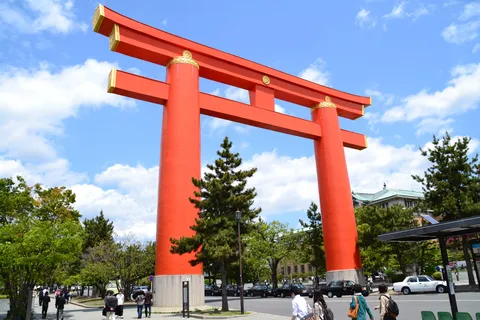
Kyoto Prefecture, Sakyo-ku, Kyoto
Heian Jingu
Heian-jingū
- Good Fortune
- Protection from Misfortune
- Household Safety
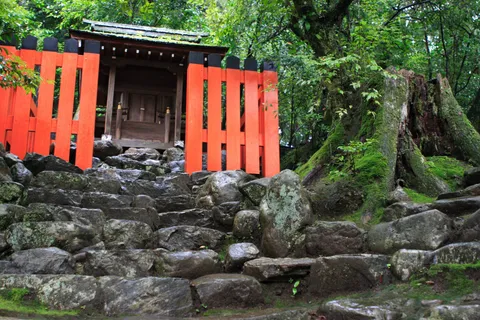
Kyoto Prefecture, Kita Ward, Kyoto
Kamigamo Jinja
Kamigamo-jinja
- Protection from Misfortune
- Protection from Lightning
- Protection from Bad Directions
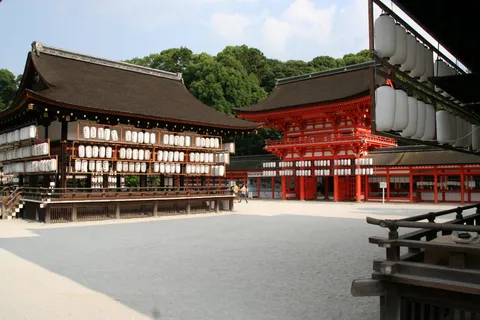
Kyoto Prefecture, Sakyo Ward, Kyoto
Shimogamo Jinja
Shimogamo-jinja
- Good Relationships
- Safe Childbirth
- Protection from Misfortune