History
Sumida Inari Jinja stands in Sumida 4-chome, Sumida Ward, Tokyo. Its name is read “Sumida Inari Jinja” (per the Sumida Ward website). Its formal shrine name is simply “Inari Jinja,” and the Tokyo Shrine Association lists it as 【Sumida Inari Jinja】. The enshrined deity is Ugano-mitama no Mikoto. According to the Sumida tourism association, it is also called “Zenzaemon Inari,” and in older times “Hachiso (Eight Monks) Inari.”
According to the Tokyo Shrine Association’s history, in the Tenbun era a retainer of the Horigoe Kubo Masatomo, Egawa Zenzaemon Masakado, fled from Izu and opened up this land, and is said to have enshrined the Fushimi Inari deity as the local guardian. The Sumida tourism association’s introduction says that on a pilgrimage to Ise, Zenzaemon was saved from a string of misfortunes by eight monks, and that on returning home he joined the villagers in enshrining the Fushimi Inari deity; this appears to be the origin of the name “Hachiso Inari.” The old Zenzaemon Village ceased to exist in 1889 (Meiji 22) when the municipal system took effect, but this shrine had been its guardian.
The Sumida tourism association explains that the shrine was moved to its present site because of the excavation of the Arakawa River. The year of the move differs between sources: the shrine’s own records give 1913 (Taisho 2), while the local history Sumida-cho-shi gives 1916 (Taisho 5) (per the personal website goshuin.net). A site introducing historic places (tesshow.jp), drawing on monuments in the grounds and other sources, lists a rebuilding of the shrine buildings in 1830 (Bunsei 13), promotion to village-shrine rank in 1932 (Showa 7), and another rebuilding in 1943 (Showa 18). All of these come from secondary sources rather than the shrine’s own announcements.
Note that Sumidagawa Jinja in Tsutsumidori, in the same Kanegafuchi area (also listed on this site), is a separate shrine with a different address, deities and history.
Highlights
The main highlight is the “Shinryu-zu” (Divine Dragon) painting on the worship hall ceiling. Sumida Ward’s list of registered cultural properties includes an ink painting on board by Kamoshita Choko, owned by Sumida Inari Shrine, as a tangible cultural property (painting), registered on December 7, 2000. A personal blog (Jinja Memo) describes it as the ceiling painting of the worship hall.
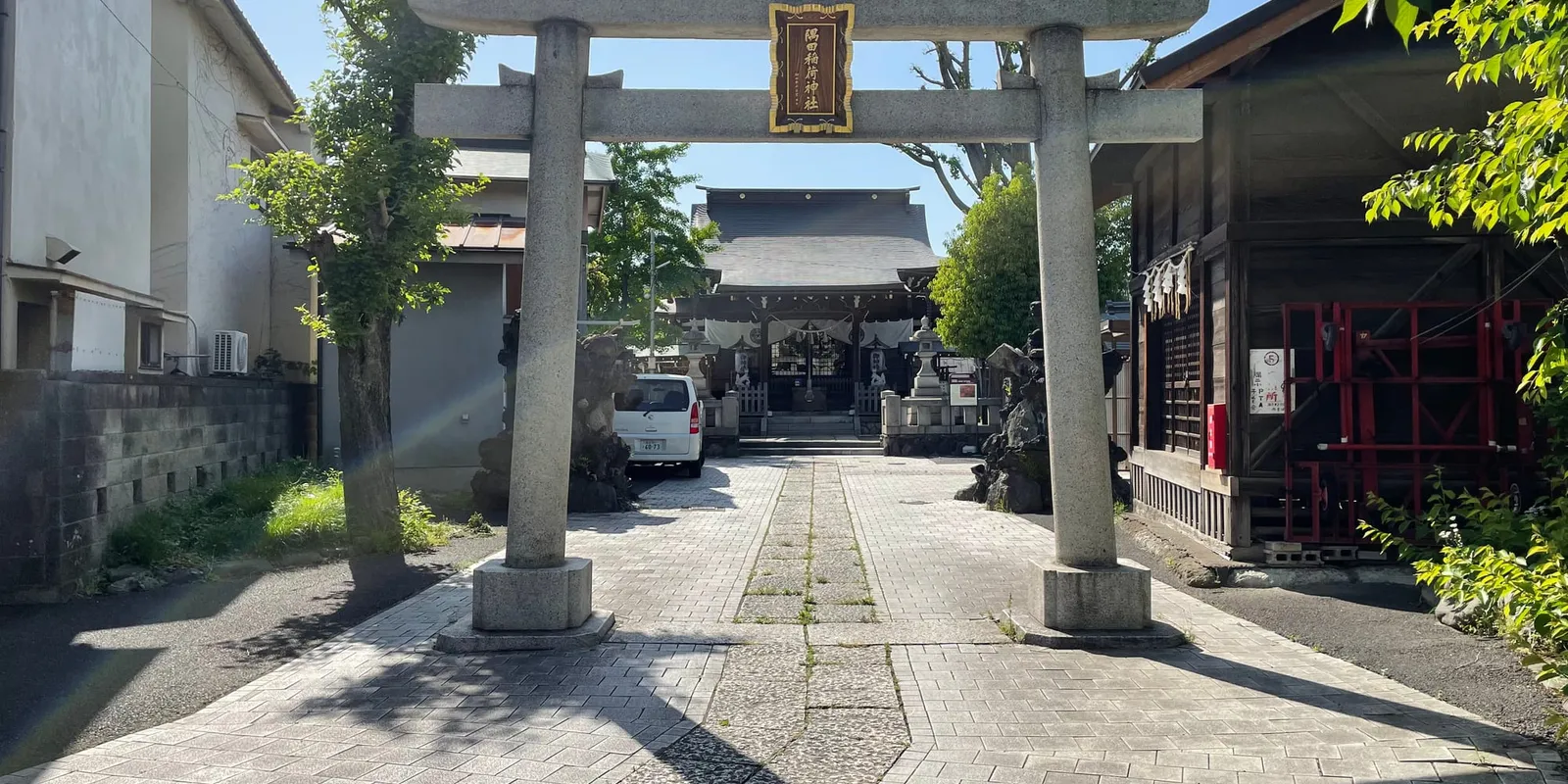
A torii stands at the entrance to the grounds, with a straight approach leading to the worship hall. According to personal blogs and a site on historic places, a pair of fox statues stands before the hall, and the purification fountain still uses a large stone basin carved with the date 1847 (Koka 4). The grounds also hold three auxiliary shrines (Hachiman, Shirahige and Kamimusubi shrines) and a kagura hall (information from personal sites).
Another distinguishing feature is the “manto mikoshi.” The Tokyo Shrine Association describes the shrine as the birthplace of the manto mikoshi, saying it began in the Genji era with villagers praising Zenzaemon’s virtue and was revived in 1975 (Showa 50). The Sumida tourism association explains it as a mikoshi made by turning the legend of the eight monks into a lantern-decorated float.
Visiting Tips
Visiting hours and shrine-office hours are not given on the Tokyo Shrine Association or Sumida tourism association pages, and an official shrine website could not be found. The phone number is 03-3611-7846.
According to a personal blog (Jinja Memo), the goshuin costs ¥300 and is issued at the shrine office. During the annual festival a festival inscription may be added, but this is sometimes not possible because of the rites. The shrine’s own official notice could not be confirmed, so calling ahead is the surest option. No official information on parking availability or fees could be confirmed, so public transport is recommended.
The Tokyo Shrine Association gives about 7 minutes on foot from either Kanegafuchi Station (Tobu Isesaki Line) or Yahiro Station (Keisei Oshiage Line); the Sumida tourism association page says 6 minutes from Kanegafuchi Station.
Annual Festivals
- Annual festival (June 15): The Tokyo Shrine Association gives June 15 as the festival day, and the manto mikoshi is introduced as appearing at the festival. Dates may change from year to year, and one personal site describes the festival as the weekend before June 15, so check with the shrine for the latest.
- Hatsuuma-sai (first Horse day of February): According to personal blogs and other sources, konnyaku talismans are distributed, said to be a charm for throat ailments.
Other annual events are not listed here because they could not be confirmed from reliable sources.
Nearby Food & Sightseeing
- Tamonji Temple: A temple in Sumida 5-chome. According to the Sumida tourism association, it enshrines Bishamonten, which was added to the Sumidagawa Seven Lucky Gods pilgrimage in the Bunka era, and its thatched gate is considered the oldest surviving structure in the ward.
- Sumidagawa Jinja: A separate shrine in Tsutsumidori, affectionately known as “Suijin-sama” (the water god). Its buildings are designated tangible cultural properties of Sumida Ward. According to the Tokyo Shrine Association, its deities are Hayaakitsuhiko no Kami and three others, and it is about 10 minutes on foot from Kanegafuchi Station.
Frequently Asked Questions
- Q. What are the visiting hours?
- A. Neither the Tokyo Shrine Association page nor the Sumida tourism association page gives visiting hours or shrine-office hours (an official shrine website could not be found). The Shrine Association page lists the phone number 03-3611-7846. If timing matters, it is safest to call ahead.
- Q. Can I get a goshuin at Sumida Inari Jinja?
- A. It is reported to be available. According to a personal blog (Jinja Memo), the goshuin costs ¥300 and is issued at the shrine office. The same blog says that during the annual festival a festival inscription may be added, though this is not always possible because of the rites. The shrine's own fee notice and goshuin hours could not be confirmed, so the amount and times may change. Calling ahead is recommended.
- Q. How do I get there, and is there parking?
- A. According to the Tokyo Shrine Association, it is about a 7-minute walk from either Kanegafuchi Station (Tobu Isesaki Line) or Yahiro Station (Keisei Oshiage Line). The Sumida tourism association page says 6 minutes from Kanegafuchi Station, so the pages differ. Neither page mentions parking, so going by public transport is the safer choice.
- Q. Does the shrine have any cultural properties?
- A. Yes. Sumida Ward's list of registered cultural properties includes, as a tangible cultural property (painting) owned by Sumida Inari Shrine, an ink painting on board titled "Shinryu-zu" (Divine Dragon) by Kamoshita Choko (one panel). It was registered on December 7, 2000. According to a personal blog (Jinja Memo), the painting is on the ceiling of the worship hall.
- Q. When is the annual festival, and what is a "manto mikoshi"?
- A. The Tokyo Shrine Association gives the festival day as June 15. Its page says the manto mikoshi (a portable shrine decorated with lanterns) is said to have begun in the Genji era (1864–65) with villagers praising Zenzaemon's virtue, and was revived in 1975 (Showa 50). The Association also describes the shrine as the birthplace of the manto mikoshi. Actual ceremonies and procession dates may vary by year, so check with the shrine.
Plan Your Visit
Before you go, you can book a stay and get your shrine-visit items ready.
Amazon links open Amazon.co.jp (Japan) in English; whether an item ships overseas depends on the product.
※ Contains ads (PR). Links open external sites such as Amazon, Rakuten, Trip.com and Booking.com.