History
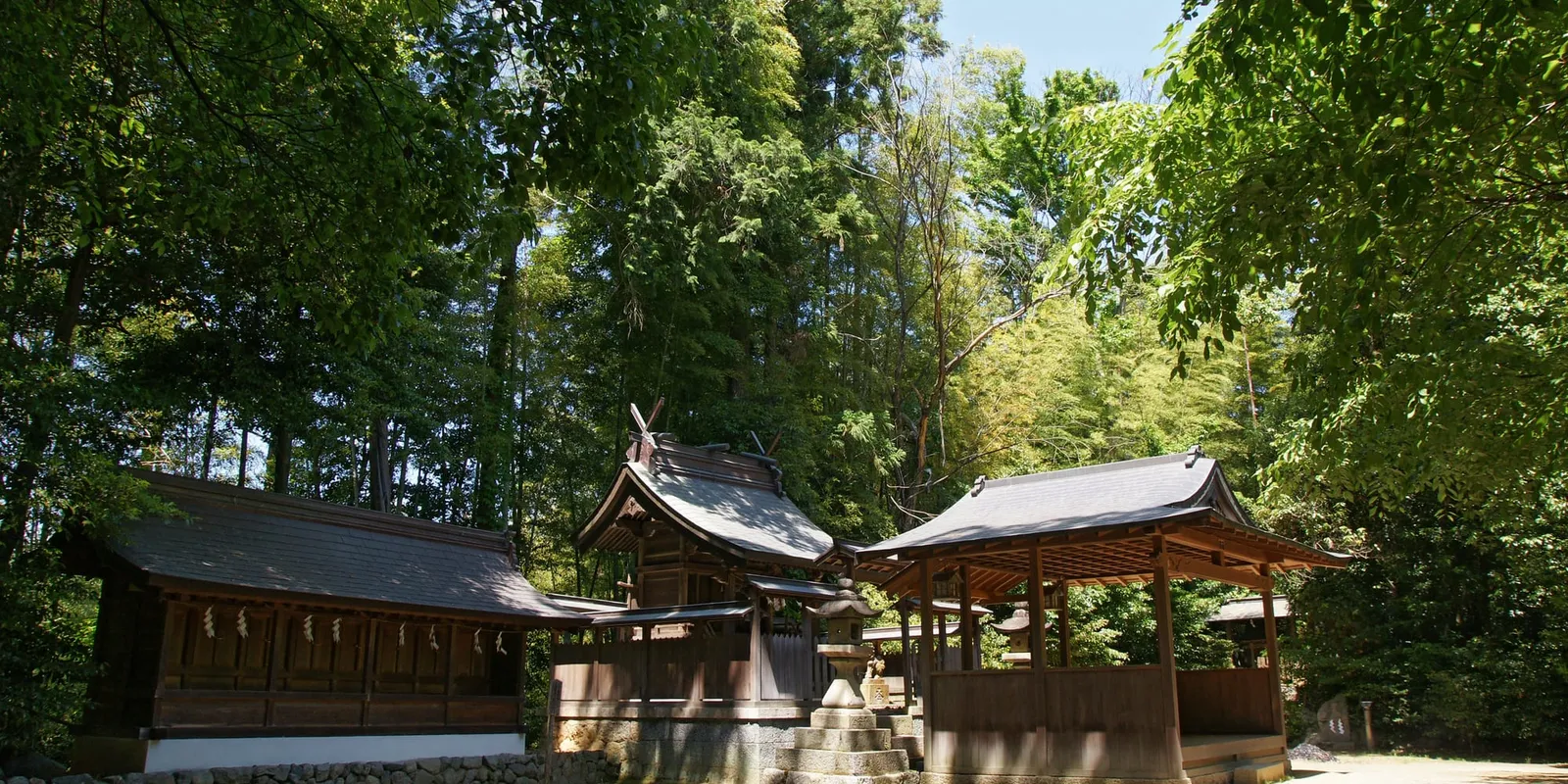
Asuka Niimasu Jinja stands in Asuka Village, Nara Prefecture, in the heart of the ancient Asuka region — one of Japan’s earliest imperial capitals. The exact circumstances of its founding are unknown, but the Nihon Shoki records a tradition that Kotoshironushi-no-Kami, eldest son of the deity Okuninushi, gathered the myriad deities at the “Heavenly Takechi” (present-day Asuka) at the time of the mythical Transfer of the Land, ascended to heaven, and was revered there as a leading, unifying deity. The same chronicle records, under the 7th month of 673, the deity declaring “I dwell at the Takechi shrine; my name is Kotoshironushi,” and under the 7th month of 686, that the imperial court presented offerings to the shrine to pray for Emperor Tenmu’s recovery from illness — evidence that the shrine already commanded deep reverence from the court in the Asuka period.
The 8th-century liturgical text known as the Izumo no Kuni no Miyatsuko no Kanyogoto also records that the spirit of Kotoshironushi was enshrined at Unate, and the spirit of Kayanarumi-no-Mikoto was enshrined at the sacred grove (kannabi) of Asuka, as a close guardian of the imperial line. According to the Nihon Kiryaku, on the 10th day of the 3rd month of 829, early in the Heian period, the shrine was relocated by oracle from its original site on a sacred hill to its present location on Torigata-yama, within the same district. Because Torigata-yama is said to have briefly enshrined Amaterasu-Omikami before she was installed at Ise, it is also known as “Moto-Ise” (“original Ise”), and Amaterasu is enshrined today in the shrine’s secondary hall (Oku-no-Yashiro).
The Engishiki shrine registry of 927 records “Asuka Niimasu Jinja, four shrines, all ranked Myojin Taisha, receiving the Tsukinami, Ainame, and Niiname offerings” — an exceptionally prestigious designation. Of Japan’s 3,132 shrines listed in the Engishiki, only 71 received the Ainame-sai offering of new rice from the imperial court, and of those, only four shrines — including this one — held that status across all four of their halls.
Today, the shrine enshrines several deities across three halls. The main hall (Honsha) enshrines Yae-Kotoshironushi-no-Mikoto, Shitateru-hime-no-Mikoto (worshipped together with her spirit Kayanarumi-no-Mikoto under the name Asuka-Kannabi-Mihime-no-Kami), Takateru-hikari-hime-no-Mikoto, and Takeminakata-no-Mikoto; the secondary hall (Naka-no-Yashiro) enshrines Omononushi-no-Kami and Susanoo-no-Mikoto; and the inner hall (Oku-no-Yashiro) enshrines Takamimusubi-no-Kami and Amaterasu-Omikami. Kotoshironushi, the principal deity, is revered as a leading god who guides the other kami toward the nation’s welfare, while Takamimusubi, one of Japan’s three primordial creator deities, is deeply venerated as a “musubi” (binding) deity who brings fitting things — and people — together, cares for them, and helps them grow.
Unusually, the shrine has no parishioner (ujiko) community of its own; instead, it has been kept by a single hereditary priestly family since antiquity, when its first priest, Taiso Naohiko-no-Mikoto, was granted the surname “Omiwa no Ason Asuka no Atai” and the family name “Asuka.” The current chief priest is said to be the 87th in that line.
Highlights
One of the shrine’s most distinctive sights greets visitors along the approach, up the stone steps beyond the torii gate: stones known as “yoseki” (literally “yang stones”), set throughout the grounds as part of a tradition of welcoming the mountain deity through a fine stone serving as its sacred seat, in prayer for the arrival of warm spring weather. Together with the custom of enshrining an “ubuishi” (birth stone) during safe-childbirth prayers, this is part of why the shrine has long been known for blessings related to conceiving children, safe childbirth, and good relationships. From the shrine grounds, visitors can also take in views of Mount Nijo, Mount Unebi, and Amakashi-no-oka Hill, in a setting that still evokes the atmosphere of ancient Asuka.
What has made Asuka Niimasu Jinja famous nationwide is its principal annual festival, the Onda Matsuri, held every year on the first Sunday of February. Ranked as one of western Japan’s three great unusual festivals (kisai), the ceremony opens with tengu, Otafuku, an elderly man, and a bull chasing worshippers along the approach with split bamboo wands to ward off misfortune. A ritual performance at the kagura hall then depicts a sequence of farming tasks — tilling the fields, sowing seed, and planting rice — before culminating in a comic skit in which the tengu and Otafuku characters act out a wedding and marital harmony, drawing laughter from the crowd. Afterward, paper known as “fuku no kami” (“paper of good fortune”) is scattered among the spectators, and catching a piece is said to bring the bearer good fortune in conceiving a child. Praying for a bountiful harvest alongside fertility, good relationships, and the safe growth of children, this good-humored yet deeply traditional rite is one of the Asuka region’s signature cultural events (in recent years, public viewing of the tengu-and-elder performance has sometimes been suspended due to reconstruction work on the shrine’s reception hall).
Visiting Tips
The shrine grounds may be visited freely at any time, but the shrine office where goshuin and amulets are available is open 9:00–17:00. A standard goshuin can be received for a fee of ¥500, and during February, when the Onda Matsuri is held, a limited-edition goshuin featuring the festival’s tengu and Otafuku characters is also offered.
Kintetsu Asuka Station, the nearest train station, is still about a 30-minute walk from the shrine, so it’s more convenient to take a loop bus bound for sites around Asuka Village from the east exit of Kintetsu Kashiharajingu-mae Station and get off at the “Asuka Daibutsu-mae” stop, about a 3-minute walk away. Free parking is available on the shrine grounds, making it an easy stop by car as well. Right next door stands Asuka-dera Temple, home to the Asuka Daibutsu — one of Japan’s oldest Buddhist statues — and many visitors combine both sites in a single trip.
Annual Festivals
- Onda Matsuri (first Sunday of February): The shrine’s principal annual festival, praying for a bountiful harvest and the prosperity of future generations. Ranked as one of western Japan’s three great unusual festivals, it features tengu, Otafuku, an elderly man, and a bull performing rites to ward off misfortune, a ritual re-enactment of rice planting, and a comic skit portraying marital harmony — a nationally known celebration.
- Nagoshi-no-Oharae Purification (June 30, from 4:00 pm): A rite in which the impurities accumulated over the preceding six months are transferred to paper effigies (hitogata), followed by passage through a great ring of woven grass (chinowa) to pray for good health.
- Toshikoshi-no-Oharae Purification (New Year’s Eve, from 4:00 pm): A purification rite mirroring the Nagoshi purification, performed to cleanse mind and body before the new year.
- New Year’s Day Festival (from midnight on January 1): A rite celebrating the start of the new year and praying for national peace and for parishioners’ household safety and business prosperity.
Nearby Food & Sightseeing
The Asuka region is one of Japan’s premier destinations for exploring ancient history, with historic sites scattered within easy walking distance of one another.
- Asuka-dera Temple (Asuka Daibutsu): Located right next to Asuka Niimasu Jinja, this is considered Japan’s first full-scale Buddhist temple, founded under the patronage of the statesman Soga no Umako during the reign of Empress Suiko. It houses the Asuka Daibutsu, a seated Shaka Nyorai statue believed to be Japan’s oldest surviving Buddhist image.
- Ishibutai Kofun: Within walking distance of the shrine, this is one of Japan’s largest surviving megalithic burial chambers, traditionally identified as the tomb of Soga no Umako. Visitors can walk right up to its massive stacked stones.
- Amakashi-no-oka Hill: A scenic overlook of the Asuka region. From the summit, visitors can take in the Yamato Sanzan (Three Mountains of Yamato) and the villages of Asuka below, making it a popular spot for a short hike.
Frequently Asked Questions
- Q. Can I get a goshuin here?
- A. Yes, at the shrine office, open 9:00–17:00 (it's best to arrive by around 16:00), for a fee of ¥500. During February, when the shrine's Onda Matsuri festival is held, a limited-edition goshuin featuring the festival's tengu and Otafuku characters is also offered.
- Q. What is the Onda Matsuri festival?
- A. It's the shrine's principal annual festival, held every year on the first Sunday of February. Ranked as one of western Japan's three great unusual festivals (kisai), it opens with tengu, Otafuku, an elderly man, and a bull chasing worshippers with split bamboo wands to ward off misfortune, followed by a ritual performance at the kagura hall depicting rice farming — tilling, sowing, and planting — and culminating in a comic skit performed by the tengu and Otafuku characters that portrays marital harmony. It's a nationally known festival that prays for a bountiful harvest along with fertility, good relationships, and safe growth for children, all carried out with good humor. In recent years, public viewing has sometimes been suspended due to reconstruction work on the shrine's reception hall, so check the official website for the current year's status before visiting.
- Q. What are the 'yoseki' stones on the shrine grounds?
- A. Stones known as yoseki ("yang stones") are enshrined throughout the grounds, based on a tradition of welcoming the mountain deity through a fine yoseki stone as a sacred seat, in prayer for the arrival of warm spring weather. Together with the custom of enshrining an "ubuishi" (birth stone) during safe-childbirth prayers, this is part of why the shrine is known for blessings related to conceiving children and safe childbirth.
- Q. How do I get to Asuka Niimasu Jinja?
- A. Take a loop bus from the east exit of Kintetsu Kashiharajingu-mae Station bound for sites around Asuka Village, and get off at the "Asuka Daibutsu-mae" stop, about a 3-minute walk from the shrine. From Kintetsu Asuka Station it's about a 30-minute walk, or roughly 20 minutes if you take a bus partway, so the route via Kashiharajingu-mae Station is more convenient.
- Q. Is parking available?
- A. Yes, free parking is available on the shrine grounds, just to the left of the torii gate and in front of the shrine office. Asuka-dera Temple, home of the famous Asuka Daibutsu, is right next door, and many visitors combine a visit to both.
Related Shrines
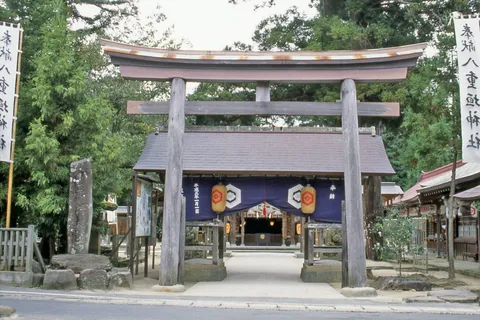
Shimane Prefecture, Matsue
Yaegaki Shrine
Yaegaki Jinja
- Matchmaking (Enmusubi)
- Marital Harmony
- Safe Childbirth
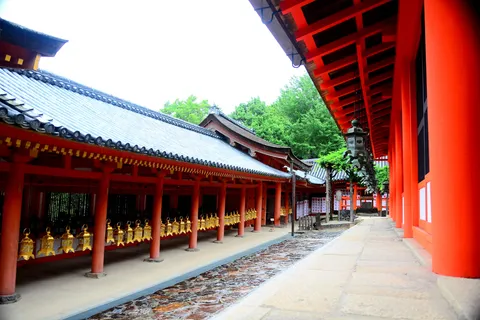
Nara Prefecture, Nara
Kasuga Taisha
Kasuga-taisha
- Protection from Misfortune
- Good Fortune
- Good Relationships
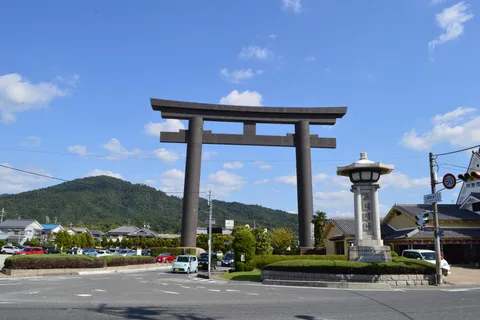
Nara Prefecture, Sakurai
Omiwa Jinja
Ōmiwa-jinja
- Good Relationships
- Good Health
- Business Prosperity