History
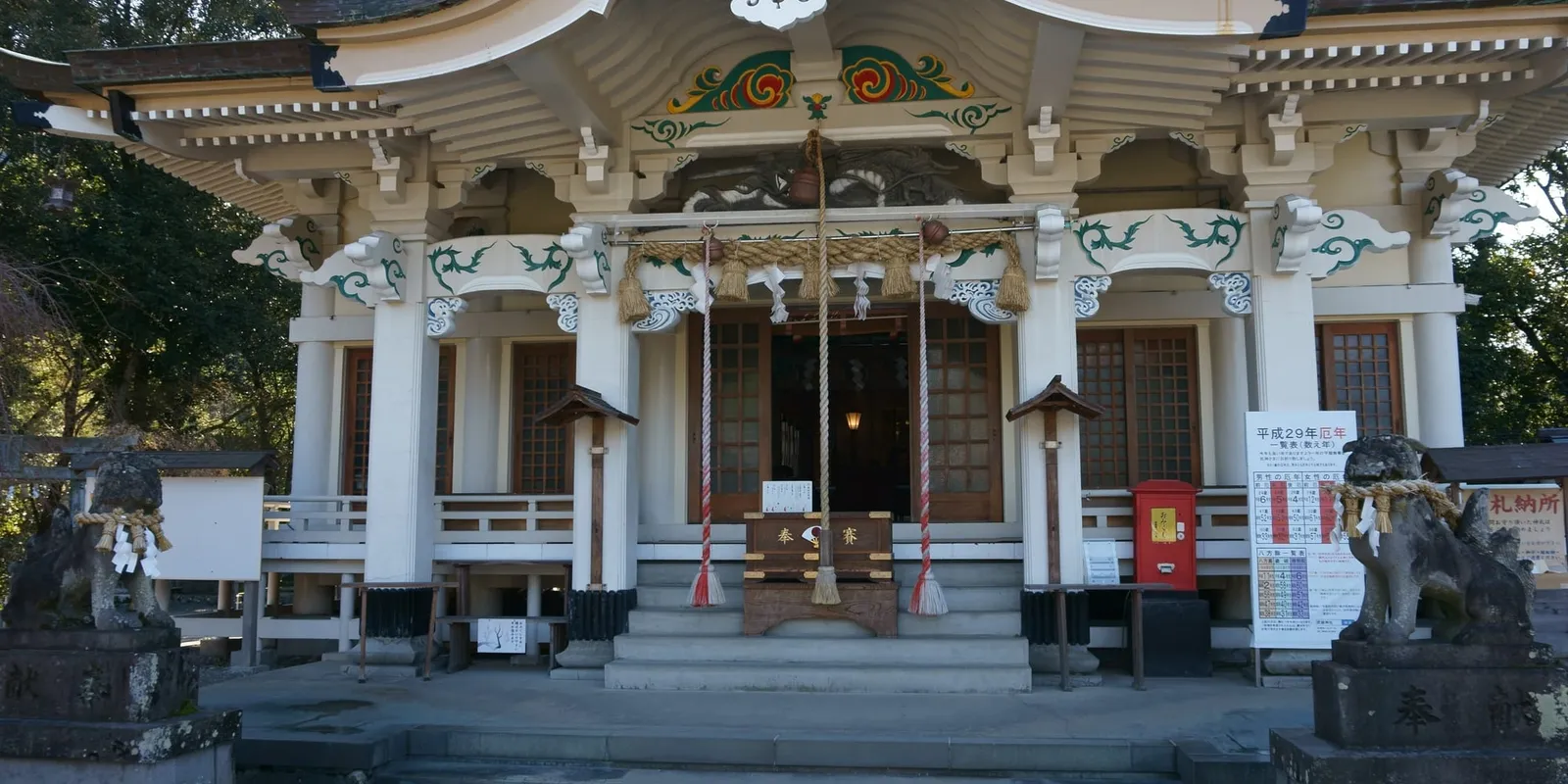
Takeo Jinja (Takeo Shrine) stands at the eastern foot of Mt. Mifune in Takeo-machi, Takeo City, Saga Prefecture. According to the official site, five deities are enshrined and collectively called “Takeo Daimyojin”: Takeuchi no Sukune (the main deity), Takeo Kokoro no Mikoto, Emperor Chuai, Empress Jingu and Emperor Ojin. The official site presents Mt. Mifune, rising in front of the shrine, as a sacred mountain where deities dwell (a kannabi).
The shrine’s history on the official site says that, according to the “Takeo Jinja Honki,” Empress Jingu’s fleet anchored at Takeo on her return from the Three Han campaign and the ship became Mt. Mifune, with Sumiyoshi Okami and Takeuchi no Sukune enshrined on its southern peak. As for the founding, in 735 (Tenpyo 7) the first chief priest, Ban no Yukiyori, is said to have received an oracle and moved the deities to the northern foot of the mountain, creating “Takeo-gu.” In the Heian period it was under Dazaifu’s administration and served as the chief shrine of Kishima District. In the Genei era (about 1118–1120), Go Shigemochi, the second lord of Takeo, is said to have petitioned the court and had the shrine moved to its present site at the eastern foot of Mt. Hetsuo. The official site also notes that Minamoto no Yoritomo prayed here before the 1185 Battle of Dan-no-ura, that Emperor Fushimi issued a decree for prayers during the Mongol invasion threat in the Kamakura period, and that the Nabeshima clan patronized the shrine in the Edo period, when stone torii and subsidiary shrines were built. It also lists the shrine as a “fusha” (a rank said to have been directly managed by Dazaifu) and counted among the “Five Shrines of Kyushu.” All of this is the shrine’s own account of its history.
Old documents are also preserved. The “Takeo Jinja Monjo” is a national Important Cultural Property (designated June 6, 1979). According to the Takeo City cultural property page, it consists of documents from the mid-Heian period to the end of the Muromachi period, originally 218 items and now 25 scrolls after conservation. The 951 land survey record (Shiji Jikken-jo) is described as the oldest surviving old document in Saga Prefecture. The documents are currently deposited at the Saga Prefectural Library.
Highlights
The great attraction is the sacred camphor “Takeo no Okusu,” standing behind the main hall, beyond a bamboo grove. The shrine’s official site describes it as an estimated 3,000 years old, 27 m tall, with a root circumference of 26 m and a hollow at its base about 12 tatami mats in size, ranked 6th among Japan’s giant trees in a 1989 Environment Agency survey. The Takeo City cultural property page, on the other hand, lists it as a Takeo City Natural Monument (designated July 15, 1970) with a height of 30.0 m, a trunk circumference of 20.0 m, and 7th place nationwide, so the figures differ. Please note that it is a city designation, not a national one, and that sources disagree. In April 2022 the city announced that the no-entry area around the tree would be expanded to protect it. Check signs on site and official information for the current viewing area.
On the approach stand the “Hizen torii.” According to the Takeo City cultural property page, the first torii was built in 1641 (Kan’ei 18) by Nabeshima Shigekazu, lord of Takeo, and the third torii was rebuilt in 1617 (Genna 3) by Nabeshima Shigetsuna. Both are Takeo City Important Cultural Properties (designated February 20, 1973). The style, found mainly around Saga Prefecture, is described as having the top beam, secondary beam, pillars and tie beam assembled in three pieces.
The shrine is also known as a matchmaking spot thanks to the “Meoto Hinoki” (couple cypress). According to the official site, two cypresses are said to be joined at the root, with their branches rejoining partway up, and the shrine ties this to the blessings of Emperor Chuai and Empress Jingu: marital harmony, and connections of all kinds, whether with people, work or money. The “Horai-suzu” wish bell costs ¥300, and its ribbon color sets the wish: red (good marriage and love), yellow (business prosperity and better money luck), or white (heartfelt wishes).
Visiting Tips
The official site gives no visiting hours. Prayer services are accepted at the shrine office from 9:00 AM to 5:00 PM, with guideline offerings from ¥5,000 for individuals and from ¥10,000 for companies, and take about 20 minutes after reception. Since priests are sometimes away at off-site ceremonies, booking by phone is recommended (0954-22-2976).
A goshuin is ¥500, a double-page goshuin is ¥500, and a limited-period double-page goshuin is ¥800. There are editions for January–February, March–April, May–June, July–September and October–November, and the October–November design is a Takeo yabusame, according to the official site. The goshuin book is accordion-style at ¥1,800. There is also a donation-linked “Hosan no Sho” goshuin (from ¥1,500 or ¥1,000). Hours are not stated, so avoid arriving late in the day, or call to check.
Amulets include the Okusu-mamori (¥1,500), Katsu-mamori (¥1,000), Meoto-mamori (couples’ amulet, ¥1,500) and a mother-and-child safe-childbirth amulet (¥1,500), per the official site.
It is about 5 minutes by bus or taxi from Takeo-Onsen Station on the JR Sasebo Line, or about 25 minutes on foot. The visitor car park holds 28 standard cars, and no fee is stated.
Annual Festivals
The official site’s festival page lists only some of the year’s rites. The following are from that page and from news posts on the official site, with dates based on the usual schedule.
- New Year’s Day rites (January 1): First prayers and kagura at midnight, the New Year’s Day festival at 11:00 AM, and a Tsukasaki taiko offering at noon.
- Archery rite, 歩射祭 (February 17): 2:00 PM.
- Yoi no Matsuri (Eito) (October 22): At about 7:00 PM.
- Annual festival and yabusame offering (October 23): The festival is at 10:00 AM and the yabusame at 2:00 PM.
- Niiname-sai (November 23): Described in an official-site news post as a rite offering the year’s new rice.
- Ohitaki-sai (December 5): From 8:00 PM.
- Shichi-Go-San: Per the official-site news, prayers including the kiban-no-gi (go board) ceremony are accepted.
Details can change from year to year, so check the official site for the latest.
Nearby Food & Sightseeing
- Mifuneyama Rakuen: A garden in Takeo Onsen. Per its official site it is a nationally designated monument, said to have been created in the late Edo period by Nabeshima Shigeyoshi, lord of Takeo. Open 8:00 AM–5:00 PM, admission ¥500 for adults. The 2026 Autumn Foliage Festival is announced for November 6 to December 6.
- Takeo Onsen Romon Gate and Shinkan: According to the Takeo City cultural property page, the “Takeo Onsen Shinkan and Romon” are a national Important Cultural Property (designated 2005). The Shinkan was completed in 1915 (Taisho 4), and the Tatsuno & Kasai office, linked to the architect Tatsuno Kingo, is said to have handled the design.
Frequently Asked Questions
- Q. What are the visiting hours?
- A. The official site does not state visiting hours. Prayer services are accepted at the shrine office window and by phone from 9:00 AM to 5:00 PM. The guideline offering is from ¥5,000 for individuals and from ¥10,000 for companies, and because priests are sometimes away at off-site ceremonies, the official site recommends booking by phone (0954-22-2976) first.
- Q. Can I get a goshuin at Takeo Jinja?
- A. Yes. According to the official site's amulet page, a goshuin is ¥500, a double-page goshuin is ¥500, and a limited-period double-page goshuin is ¥800, with seasonal editions for January–February, March–April, May–June, July–September and October–November (a design of Takeo's yabusame). The goshuin book is accordion-style at ¥1,800. Hours for goshuin are not given on the official site, so please check with the shrine office.
- Q. How do I get there, and is there parking?
- A. It is about 5 minutes by bus or taxi from Takeo-Onsen Station on the JR Sasebo Line, or about 25 minutes (2 km) on foot. By Yutoku Bus, get off at "Takeo Koko-mae" and walk 3 minutes. By car it is about 10 minutes from Takeo-Kitagata IC on the Nagasaki Expressway, and the visitor car park holds 28 standard cars (all per the official site; no fee information given).
- Q. Is the Takeo Great Camphor a national natural monument?
- A. No. It is a Takeo City Natural Monument (designated July 15, 1970), according to the city's cultural property page. The camphor designated a national natural monument (December 9, 1924) is a different tree in the same city, the "Kawako no Kusu" in Wakagi-cho (per the Agency for Cultural Affairs database). Figures also differ by source: the shrine's official site gives a height of 27 m, a root circumference of 26 m and 6th place in a survey by the Environment Agency, while the city page gives a height of 30.0 m, a trunk circumference of 20.0 m and 7th place. In April 2022 the city also announced that the no-entry area around the tree would be expanded to protect it, so please check the current situation before you go.
- Q. When are the annual festival and the yabusame?
- A. According to the official site's festival page (which lists only some of the year's rites), the annual festival is on October 23 at 10:00 AM, with the "Yoi no Matsuri (Eito)" at about 7:00 PM on October 22 and the yabusame (mounted archery) offering at 2:00 PM on the festival day. An archery rite (歩射祭) is held on February 17 at 2:00 PM. The shrine describes Takeo's yabusame as an event its parishioners have kept up for more than 800 years. Details can change from year to year, so check the official site for the latest.
Plan Your Visit
Before you go, you can book a stay and get your shrine-visit items ready.
Amazon links open Amazon.co.jp (Japan) in English; whether an item ships overseas depends on the product.
※ Contains ads (PR). Links open external sites such as Amazon, Rakuten, Trip.com and Booking.com.