History
Terukuni Jinja is unusual among Shinto shrines in that its enshrined deity was a real historical figure. Terukuni Daimyojin is none other than the deified Shimazu Nariakira, the 28th head of the Shimazu clan and 11th lord of the Satsuma domain. Nariakira is remembered as one of the great reformist lords of the late Edo period: at the Shuseikan, an industrial complex he built at Iso in Kagoshima, he introduced a stream of advanced Western technologies — reverberatory furnaces for casting iron cannon, shipbuilding, the cut-glass craft known as Satsuma kiriko, gas lighting, photography, and telegraphy — transforming Satsuma, in just seven years of rule, into one of the most industrially advanced domains in all of late-Edo Japan. This Shuseikan project was inscribed as part of the UNESCO World Heritage site “Sites of Japan’s Meiji Industrial Revolution” in 2015, and Nariakira continues to be honored today as a pioneer of Japan’s industrialization and modernization.
Nariakira died suddenly in 1858 (Ansei 5) at the age of 49. In recognition of his achievements, the imperial court granted him the title Terukuni Daimyojin on May 11, 1863 (Bunkyu 3). The following year, in 1864 (Genji 1), shrine buildings were constructed on the former site of Nansen-in temple, west of Tsurumaru Castle, and the deity was formally enshrined as Terukuni Jinja. The shrine buildings were destroyed by fire during the Satsuma Rebellion of 1877, rebuilt in 1882 as a specially ranked government shrine, and destroyed again in an air raid in August 1945. The current main hall, oratory, and shrine gate were rebuilt between 1958 and 1967.
Highlights
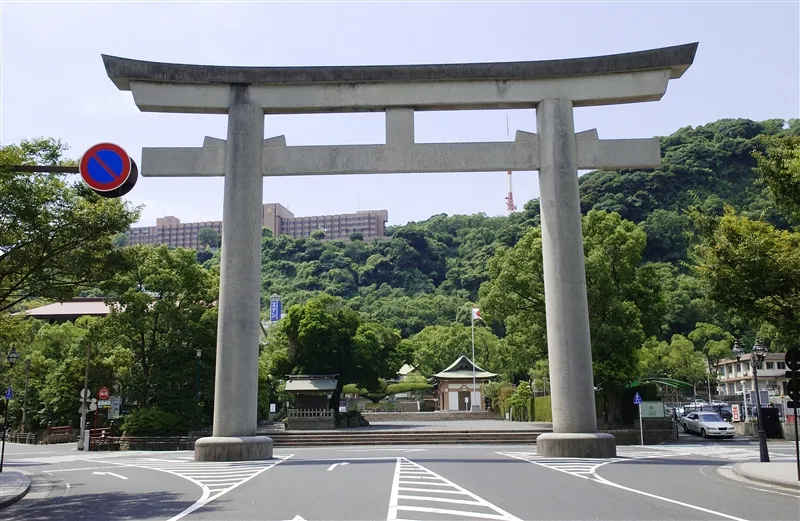
The single greatest landmark of Terukuni Jinja is its towering main torii gate, standing about 20 meters tall and serving as one of central Kagoshima’s most recognizable landmarks. Rising near both the Tenmonkan entertainment district and Kagoshima-Chuo Station, it can be spotted from a considerable distance. On the grounds stands a bronze statue of Nariakira, the work of sculptor Fumio Asakura, positioned so that his gaze falls toward the city streets and Sakurajima he worked to modernize.
Though the current shrine buildings are relatively recent postwar reconstructions, their clean lines and pale, unfinished-wood tones evoke something of Nariakira’s own reputation for integrity. The grounds occasionally receive a dusting of ash carried over from Sakurajima across the bay, a distinctly Kagoshima detail that ties the shrine’s history to the landscape around it.
Visiting Tips
The shrine grounds are open to visitors at all times, with prayer requests and goshuin stamps received from 9:00 to 16:30. The goshuin fee is ¥500, available at the reception desk to the left of the main hall. Free parking is available on the grounds (24 spaces on weekdays, 40 on weekends and holidays, plus 2 bus spaces) between 8:30 and 17:00. It’s roughly a 20-minute walk from JR Kagoshima-Chuo Station, though taking the tram or a bus to the Tenmonkan-dori stop cuts that down to about 5 minutes on foot. The grounds get very crowded during the Rokugatsu-do lantern festival on July 15–16, so it’s best to allow extra time if visiting then.
Annual Festivals
- Rokugatsu-do Lantern Festival (July 15–16): Timed to Nariakira’s death anniversary on July 16, this is the largest of Kagoshima’s traditional “rokugatto” summer lantern festivals. About 800 lanterns painted by local kindergarten, elementary, and high school students light up the grounds, alongside food stalls and fireworks that draw roughly 100,000 visitors each year.
- Annual Grand Festival (October 28): The most solemn and important rite of the year, honoring the divine virtue of Nariakira as the shrine’s enshrined deity.
- Memorial Service for the Founder (August 16): A ceremony held in gratitude for Nariakira’s achievements and in memory of his legacy.
- New Year’s Festival (from January 1): One of Kagoshima city’s most popular hatsumode destinations, drawing large crowds for the first prayers of the new year.
Nearby Food & Sightseeing
- Tenmonkan Mujyaki: The long-established shop credited with inventing Kagoshima’s famous “shirokuma” shaved ice dessert, found in the Tenmonkan district a short walk from the shrine.
- Kumasotei: A Tenmonkan restaurant serving authentic Satsuma regional cuisine, including Kagoshima’s famous kurobuta (black pork) shabu-shabu.
- Sengan-en: The Shimazu family’s own villa garden, built around the Shuseikan industrial complex Nariakira founded. Visitors can take in sweeping views of Sakurajima alongside historic sites like the ruins of the reverberatory furnace.
Frequently Asked Questions
- Q. What are the visiting hours?
- A. The grounds are open to visitors at all times. Prayer requests and amulet reception run 9:00–16:30.
- Q. When is the goshuin office open?
- A. 9:00–16:30, for ¥500.
- Q. Is there parking?
- A. Yes, free parking is available on the grounds (24 spaces on weekdays, 40 on weekends/holidays, plus 2 bus spaces; 8:30–17:00).
- Q. Who is the deity enshrined at Terukuni Jinja?
- A. It enshrines Shimazu Nariakira, the 11th lord of the Satsuma domain, who introduced advanced Western technology through his Shuseikan industrial complex and modernized Satsuma. That project was inscribed as a UNESCO World Heritage site in 2015.
- Q. How do I get there?
- A. About a 20-minute walk from JR Kagoshima-Chuo Station, or by tram/bus to the Tenmonkan-dori stop, about a 5-minute walk from there.
Related Shrines
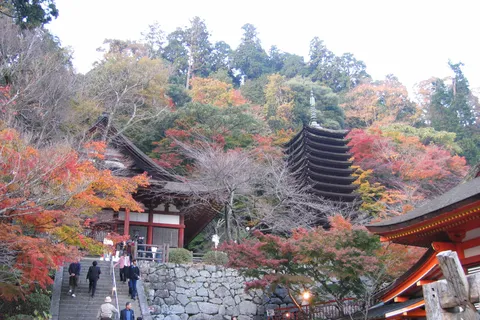
Nara Prefecture, Sakurai
Tanzan Jinja
Tanzan-jinja
- Academic Success
- Good Fortune
- Protection from Misfortune
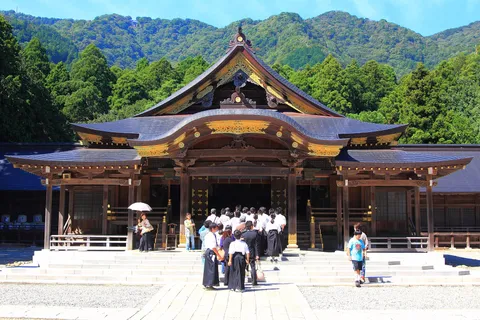
Niigata Prefecture, Yahiko, Nishikanbara District
Yahiko Jinja
Yahiko-jinja
- Good Fortune
- Industrial Prosperity
- Protection from Misfortune
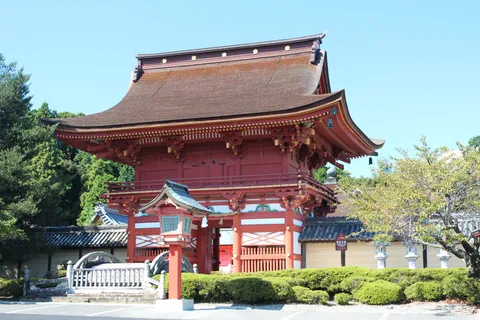
Gifu, Tarui
Nangu Taisha
Nangū Taisha
- Industrial Prosperity
- Business Prosperity
- Good Fortune