History
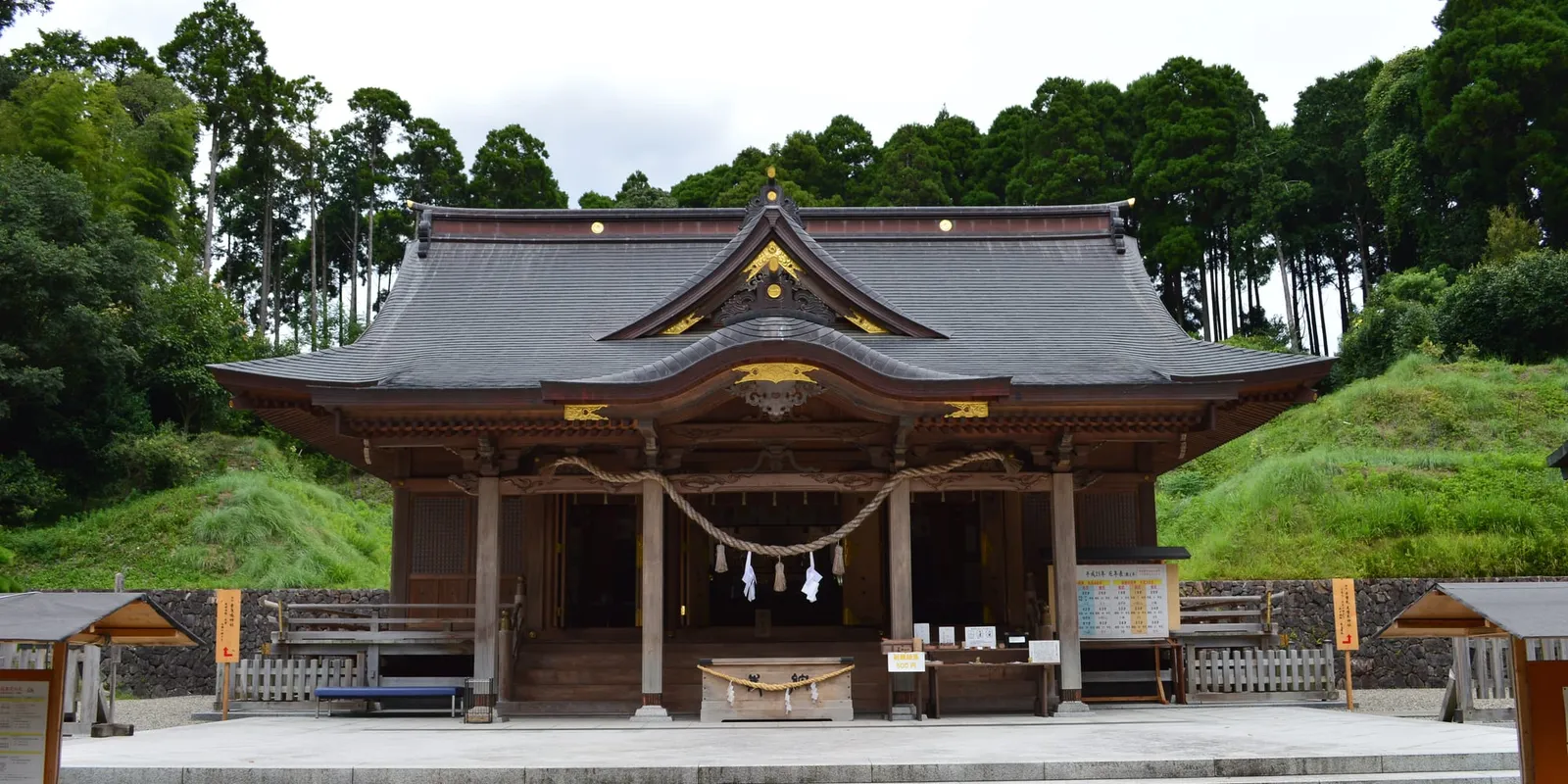
Tsuno Jinja stands in Tsuno, Koyu District, Miyazaki Prefecture, just off Route 10, and holds the distinction of being the ichinomiya — the highest-ranked shrine — of the former Hyuga Province. According to shrine tradition, it was founded six years before Emperor Jimmu’s enthronement, when he prayed here for peace in the land and success in battle before departing Hyuga on his legendary eastward expedition. The enshrined deity, Onamuchi-no-Mikoto (also known as Okuninushi-no-Kami), is one of the most prominent of Japan’s earthly kami — best known from the myth in which he heals the White Hare of Inaba — and has long been venerated here as a god of good relationships and recovery from illness.
The Heian-era Engishiki shrine registry lists Tsuno Jinja as an official shrine (shikinaisha) of Koyu District, Hyuga Province, and shrine records show it was elevated to government-shrine status in 837 and continued rising in court rank in the decades that followed. By the Muromachi period, it had become recognized as Hyuga Province’s ichinomiya, a status still reflected in its local nickname, “Ichinomiya Jinja.”
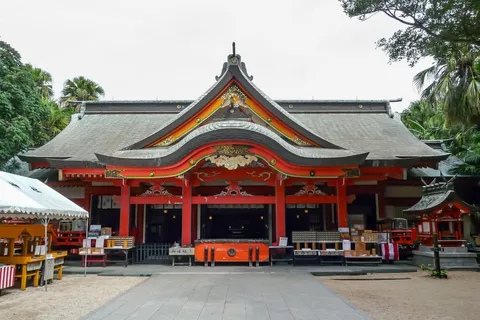
The shrine’s fortunes were not always secure, however. In 1578, fighting between the Otomo and Shimazu clans set fire to the shrine, destroying its buildings, treasures, and historical records, and by the 1670s it had reportedly fallen into serious disrepair. Recovery came in 1692, when Akizuki Tanemasa, lord of the Takanabe Domain, funded its reconstruction; in 1701 he further endowed it with rice-producing land, and the domain continued to support the shrine afterward. In 1871, under the Meiji-era State Shinto system, Tsuno Jinja was ranked as a national shrine of the third class (Kokuhei Shosha), and its grounds were expanded during 1934’s nationwide commemorations marking 2,600 years since Japan’s legendary founding. The current shrine hall dates to a 2007 rebuilding.
Highlights
Among the shrine’s most distinctive features are its “Nade Daikoku” statue, believed to grant blessings to those who touch it, and a small rabbit statue recalling the shrine deity’s role in the White Hare of Inaba myth. Tsuno Jinja’s monthly limited-edition goshuin is also well known among collectors: it depicts the hare that Okuninushi healed together with a mouse from another episode in his myth cycle, positioned to flank the unlucky “kimon” (demon gate) direction — a nod to the shrine’s location relative to the old Hyuga provincial capital (in what is now Saito City), which the shrine is traditionally said to guard against misfortune.
The shrine grounds themselves are shaded by a grove of old-growth trees, including large camphor (kusunoki), and the surrounding area holds ancient burial mounds from the Tsuno Kofun cluster, testifying to the site’s significance long before the shrine’s own founding legend.
Visiting Tips
The shrine grounds can be visited freely at any time, but the shrine office where goshuin and amulets are available closes at 5:00 PM. A free parking area along Route 10 holds about 25 cars, making a visit by car convenient, though Tsuno Station is also about a 25-minute walk away. The shrine gets busiest during its December Reitaisai and its August summer festival, so a quiet weekday visit is recommended for those who prefer to avoid crowds.
Annual Festivals
- Winter Grand Festival (December 4–5): Tsuno Jinja’s most important annual festival, featuring both days’ performances of Tsuno Kagura by the shrine’s kagura preservation society — a sacred dance tradition said to have once been performed before the imperial court in the Nara period.
- Summer Festival (August 1–2): One of the town’s largest summer festivals, centered on a grand mikoshi procession through Tsuno. Lion dances and the Urayasu dance are performed at stops along the route, and neighborhood drum floats parade through town alongside the palanquin.
Nearby Food & Sightseeing
- Michi-no-Eki Tsuno: A roadside station just minutes from the shrine along Route 10. Its produce hall sells Tsuno’s noted tomatoes and locally made Tsuno Wine, while the restaurant serves regional dishes like shiitake nanban and a three-color seafood rice bowl using fish from the Hyuga Sea.
- Tsuno Winery: A local winery producing internationally award-winning wines made entirely from grapes grown on the slopes of nearby Mount Osuzu. Vineyard and cellar tours, along with tastings, are available.
Frequently Asked Questions
- Q. What are the visiting hours and is there an admission fee?
- A. The shrine grounds are open to visitors at any time, free of charge. The shrine office, where goshuin and amulets are available, is open 8:00 AM–5:00 PM.
- Q. Can I get a goshuin here?
- A. Yes, at the shrine office, open 8:00 AM–5:00 PM, for a fee of ¥500. Tsuno Jinja also distributes a monthly limited-edition goshuin featuring a rabbit and a mouse.
- Q. How do I get to Tsuno Jinja?
- A. It's about a 25-minute walk, or roughly 5 minutes by taxi or car, from Tsuno Station on the JR Nippo Main Line. By car, it's also about 5 minutes from the Tsuno Interchange on the Higashi-Kyushu Expressway.
- Q. Is parking available?
- A. Yes, there's a free parking area along Route 10 with space for about 25 vehicles.
- Q. Why is Tsuno Jinja known as the Ichinomiya of Hyuga Province?
- A. Tsuno Jinja is listed as an official shrine (shikinaisha) of Koyu District, Hyuga Province, in the Heian-era Engishiki shrine registry, and by the Muromachi period it had come to be recognized as the highest-ranked shrine (ichinomiya) in Hyuga Province. Locals still refer to it by the nickname "Ichinomiya Jinja."