History
Ube Jinja is traditionally said to have been founded in 648, during the reign of Emperor Kotoku, and serves as the ichinomiya (chief shrine) of the former Inaba Province. It was the sole Myojin Taisha listed for Tottori in the Heian-era Engishiki records. Its enshrined deity, Takenouchi no Sukune no Mikoto, is a legendary loyal retainer said to have served five successive emperors and to have lived to the age of 360 — a hill just behind the main hall, known as Kamegane-no-oka, is traditionally revered as the site of his passing, and the shrine has long been venerated as a deity of longevity.
The shrine buildings were burned down in 1581 during Toyotomi Hideyoshi’s siege of Tottori Castle, but were later restored under the patronage of the Ikeda clan, lords of the Tottori domain, during the Edo period; the present main hall dates from 1898.
What truly sets Ube Jinja apart is its unique connection to Japanese currency. On April 1, 1899, it became the first shrine in the country to be depicted on a Bank of Japan note, when a portrait of Takenouchi no Sukune together with the shrine appeared on the five-yen note. The deity and shrine were then featured again on a subsequent five-yen note issued in 1916 and on a one-yen note issued in 1943, spanning the Meiji, Taisho, and Showa eras. This history has earned Ube Jinja a nationwide reputation as a “shrine connected to money,” drawing visitors who pray for financial luck and business prosperity alongside longevity.
Highlights
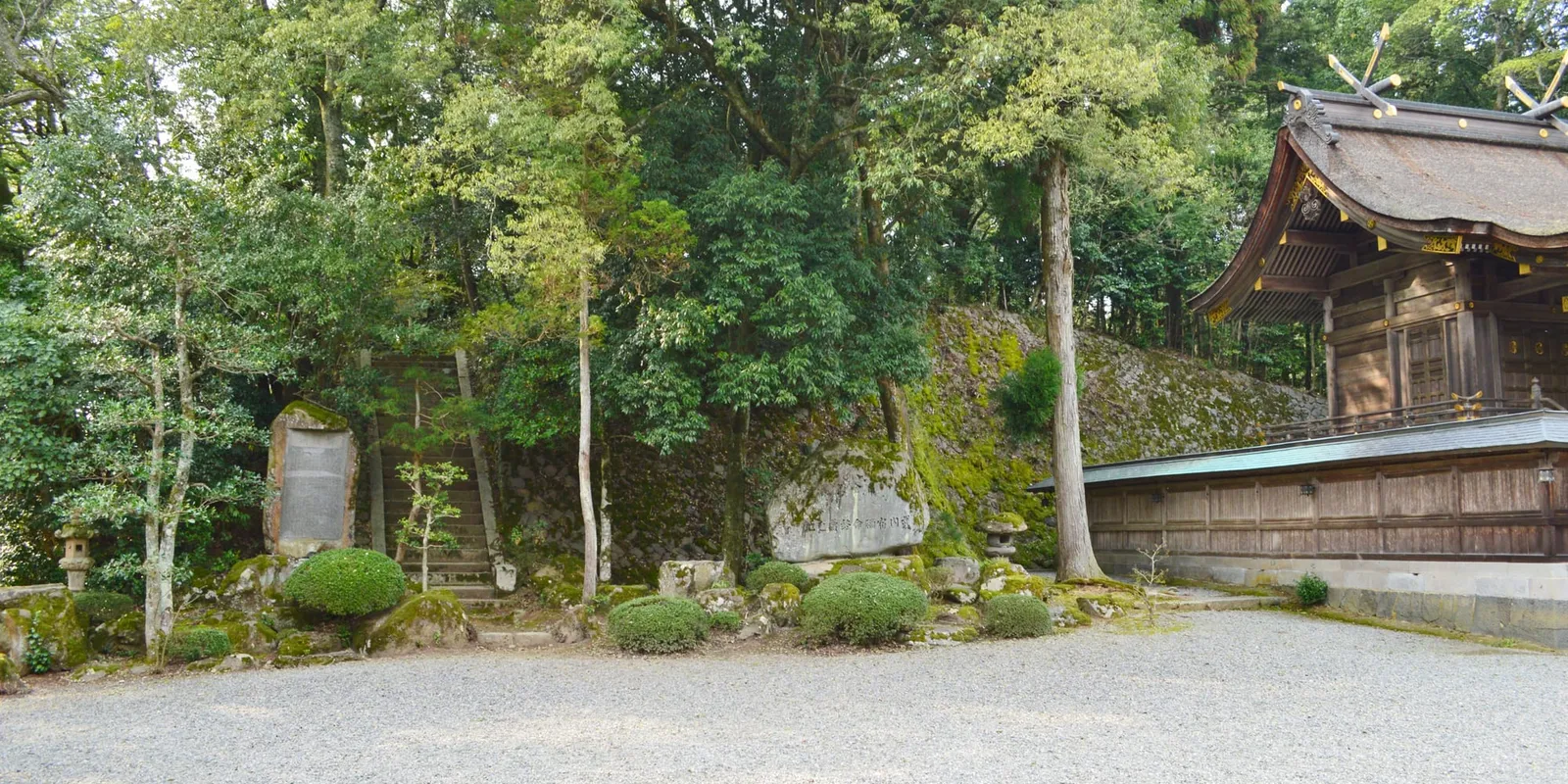
The shrine sits at the southwestern foot of Mt. Inaba, and its Meiji-era main hall and worship hall retain a dignified, formal presence. Behind the main hall, on the hill called Kamegane-no-oka, stands a large moss-covered stone monument marking the traditional site of Takenouchi no Sukune’s passing, set among towering cedars that lend the spot an air of deep antiquity. The shrine’s subsidiary Kokufu Jinja, tucked among the trees and watched over by a pair of weathered komainu and stone lanterns, is a modest but beautiful stop well worth including in a visit.
Rising behind the shrine, Mt. Inaba (about 248 meters) was celebrated in classical poetry included in the Hyakunin Isshu anthology, and its slopes hold the burial ground of the successive lords of the Ikeda clan who ruled the Tottori domain, now a nationally designated historic site. The mountain is also a popular cherry blossom spot, with the approach to the shrine coming alive with blossoms each spring.
Visiting Tips
Ube Jinja is a compact shrine that can be visited in about 30 minutes if you stick to the main hall, but allow around an hour if you also want to see Kamegane-no-oka and the subsidiary shrines. Goshuin stamps are available at the shrine office from 9:00 to 17:00 for ¥300, and an original goshuin book featuring the region’s famous Kirin Lion Dance design is also available (¥2,000, including the first stamp) — a popular keepsake among visitors. Charms tied to financial fortune, including some referencing the shrine’s five-yen note history, are also popular.
Annual Festivals
- New Year’s Festival (January 1): A ritual welcoming the new year and praying for peace throughout the coming twelve months.
- Tondo Festival (January 14): A fire ritual of thanks in which the previous year’s charms, amulets, and New Year decorations are ceremonially burned.
- Grand Festival (April 20–21): The shrine’s most important festival, featuring the prefecturally designated Kirin Lion Dance and a grand portable shrine procession through the surrounding community.
- Tanabata Festival (July 1–7): Bamboo branches are set up on the grounds for visitors to tie on strips of paper bearing their wishes.
- Autumn Festival (September 21): A rite of thanksgiving for the bountiful harvest of the season.
Nearby Food & Sightseeing
- Inaba Manyo Historical Museum: A short trip from Ube Jinja, this museum explores the history of the ancient Inaba provincial capital and its connections to the Manyoshu poetry anthology.
- Mt. Inaba: The roughly 248-meter mountain at whose foot Ube Jinja stands. The summit offers sweeping views of the Tottori plain and the Sea of Japan, and the mountain is a beloved spot for cherry blossoms in spring.
- Sumibi-yaki Jujuan: A charcoal-grill restaurant with more than 30 years of history in Tottori City, serving carefully selected Tottori wagyu, including the local “Manyo beef,” grilled over charcoal.
Frequently Asked Questions
- Q. What are the visiting hours?
- A. The grounds are open to visitors at all times; the shrine office is open 9:00–17:00.
- Q. When is the goshuin office open?
- A. 9:00–17:00, for ¥300.
- Q. Is there parking?
- A. Yes, free visitor parking is available on the grounds (tour buses should call ahead).
- Q. Why is it called the "money shrine"?
- A. Its enshrined deity, Takenouchi no Sukune, and the shrine buildings were repeatedly featured on Meiji-era 5-yen and 1-yen banknotes.
- Q. How do I get there?
- A. About a 20-minute bus ride from JR Tottori Station, getting off at Miyanoshita.
Related Shrines
Saga, Kashima
Yutoku Inari Jinja
Yūtoku Inari-jinja
- Business Prosperity
- Household Safety
- Financial Luck
Hyogo, Nishinomiya
Nishinomiya Jinja
Nishinomiya-jinja
- Business Prosperity
- Household Safety
- Financial Luck
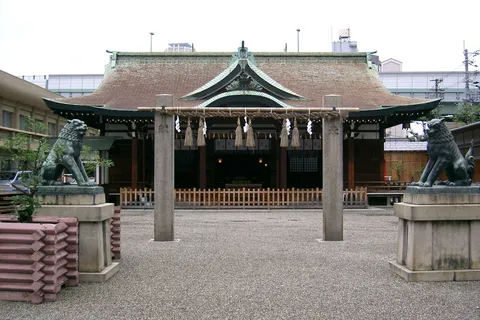
Osaka, Osaka (Naniwa-ku)
Imamiya Ebisu Jinja
Imamiya Ebisu-jinja
- Business Prosperity
- Household Safety
- Financial Luck