
Featured Guides / Hatsumode 2027 Guide: When to Go, How to Pray, Avoiding Crowds and Returning Old Charms
Hatsumode 2027 Guide: When to Go, How to Pray, Avoiding Crowds and Returning Old Charms
New Year's Day 2027 falls on a Friday. Based on official announcements from Ise Jingu, Meiji Jingu, Tsurugaoka Hachimangu, Sumiyoshi Taisha and others, this guide covers how long you can wait to make your first shrine visit of the year, the washing and bowing etiquette, crowded times, amulets and goshuin, and where to return old talismans.
- 1
Meiji Jingu in Shibuya, Tokyo, enshrines Emperor Meiji and Empress Shoken. Its official hatsumode page (2026 edition) says the shrine can be visited all night from New Year's Eve into New Year's Day, and that vehicles cannot enter the grounds during the first three days. Temporary counters are set up for amulets, and old talismans can be returned at a collection point (koshinpu osamedokoro).
- 2
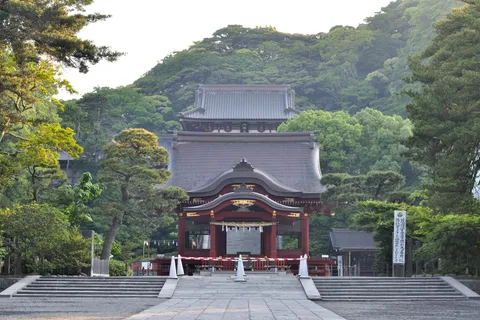
In its "Reiwa 8 Hatsumode Information" notice, Tsurugaoka Hachimangu in Kamakura, Kanagawa, said the shrine could be visited 24 hours a day from December 31 to January 3. A live camera on its official website shows how crowded the grounds are. It notes that traffic control may be in place when it is crowded, and asks visitors not to bring pets.
- 3
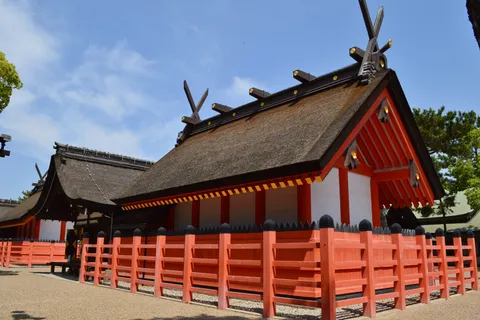
Sumiyoshi Taisha in Sumiyoshi Ward, Osaka, introduces "Hattatsu-san" (Nankunsha), associated with household safety and business prosperity, in its official hatsumode information (2026 edition). The special New Year Hattatsu goshuin was offered from January 1 to 18 for 1,000 yen. From December 31 to January 4 it did not offer the stone-picking and pouch for its Godairiki amulet, to prevent crowd accidents.
- 4
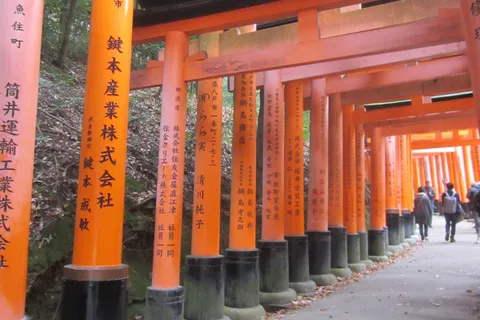
On the access page of its official website, Fushimi Inari Taisha in Fushimi Ward, Kyoto, says the roads around the shrine parking lot become very crowded and asks visitors to use public transport. It says the on-site parking lot is closed from December 30 to January 6, and refers visitors to the Kyoto Prefectural Police website for temporary traffic restrictions during hatsumode.
- 5
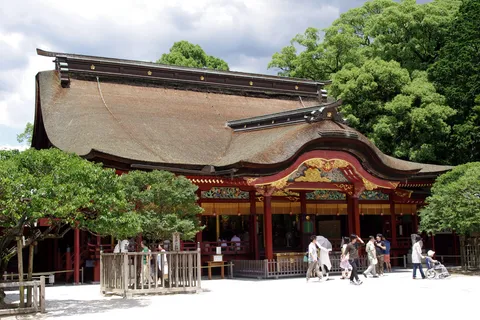
The top page of Dazaifu Tenmangu in Dazaifu, Fukuoka, lists its opening and closing times by season (closing at 6:30 PM from December to March) and links to a page announcing temporary visiting hours. Please check the official website for New Year hours before you go.
New Year’s Day 2027 falls on a Friday
January 1, 2027 (Reiwa 9) is a Friday. The first three days of the year, January 1 to 3, are Friday, Saturday and Sunday.
“Hatsumode” is the first shrine visit of the new year. This guide uses announcements that Meiji Jingu, Tsurugaoka Hachimangu, Sumiyoshi Taisha, Ise Jingu and others have published on their official websites. Times, amulets and traffic restrictions for New Year are taken from the announcements for New Year 2026 (Reiwa 8); the announcements for New Year 2027 had not been published as of November 2026. Shrines usually post them closer to the end of the year, so please always check the official website before you go.
How long can you wait for hatsumode?
None of the shrine announcements we checked sets a deadline for the first visit. In the closing line of its Reiwa 8 hatsumode notice, Tsurugaoka Hachimangu says (in Japanese) that visitors need not limit themselves to the New Year period and are welcome whenever their health and schedule allow.
Meiji Jingu divides the reception hours for its New Year first prayer ceremony as follows (2026): on January 1, from 1:00 AM to 5:00 PM; from January 2 to 7, from 9:00 AM to 4:30 PM; and from January 8, from 9:30 AM to 4:00 PM.
Some people aim to visit within “matsu no uchi,” the period when New Year pine decorations are displayed (often said to run to January 7 in eastern Japan and to January 15 in western Japan). This is mostly a custom of daily life, and we could not confirm it as an official deadline set by shrines. If you have a particular shrine in mind, check its official website for the dates of its New Year ceremony and amulet distribution.
Some shrines hold a ritual on January 15 at which New Year decorations and old talismans are burned (Tsurugaoka Hachimangu’s Sagicho ritual and Sumiyoshi Taisha’s old-talisman burning ceremony; see “Returning old amulets and talismans” below).
How to visit: from washing your hands to praying
The steps below follow the official pages of Ise Jingu (“Etiquette and manners for visiting”) and Meiji Jingu (“For visitors”).
1. Purify your hands and mouth at the temizu basin
The Ise Jingu website explains that washing your hands and mouth is a simplified form of misogi, a purification rite. The steps are:
- Take a generous scoop of water with the ladle in your right hand and wash your left hand.
- Switch the ladle to your left hand and wash your right hand.
- Take the ladle in your right hand again, pour water into your left hand and rinse your mouth. Do not put the ladle directly to your mouth.
- Wash your left hand once more.
- Use the remaining water to rinse the handle of the ladle, then put it back.
Meiji Jingu’s instructions are: first wash both hands, then pour water into your hands and rinse your mouth, then wash both hands again. Some shrines set up temporary flowing-water basins without ladles for the New Year period (Meiji Jingu’s hatsumode page says it adds temporary flowing-water basins). Follow the signs on site.
2. Go before the sanctuary and make an offering
Meiji Jingu’s guidance gives the first step of worship as “first offer a coin, and straighten your posture.” For clothing, it asks visitors to dress in a way suited to visiting a shrine and to spend their time quietly.
3. Bow and clap: two bows, two claps, one bow
The steps published on the Ise Jingu website are:
- Step before the sanctuary and straighten your posture.
- With a flat back, bend at the waist to about 90 degrees and bow deeply twice.
- Bring your hands together at chest height, with your right fingertips slightly lower.
- Open your hands to about shoulder width and clap twice.
- Bring your fingertips back together and bow deeply once more.
The site explains that a deep bow is called “hai” and clapping is called “hakushu,” and asks visitors to pray with a heart of gratitude. Meiji Jingu also describes the same flow of an offering, two bows, two claps and one bow.
Some shrines have their own etiquette
Etiquette is not the same at every shrine. In its FAQ, Izumo Taisha says that the common form is two bows, two claps and one bow, but that its own formal worship is two bows, four claps and one bow, and asks visitors to use this form at the other sanctuaries as well as the main hall.
Ise Jingu also gives guidance specific to its grounds, such as walking on the left side at the Geku (Outer Shrine) and the right side at the Naiku (Inner Shrine). When in doubt, follow the signs in the grounds or the shrine’s official website.
Tips for avoiding crowds
Know the busy times
On its hatsumode page, Meiji Jingu says that “from 10:00 PM on New Year’s Eve to 3:00 AM on New Year’s Day” and “after 10:00 AM during the first three days” are usually crowded, and asks visitors to spread out their visits. Even at the same shrine, how crowded it is changes a lot with the time of day.
Some shrines can be visited all night from New Year’s Eve into New Year’s Day. For 2026, Meiji Jingu announced New Year’s Eve 6:40 AM to 12:00 midnight, and New Year’s Day from 12:00 midnight to 6:30 PM. Tsurugaoka Hachimangu announced 24-hour visiting from December 31 to January 3, midnight to 8:00 PM on January 4, and 6:00 AM to 8:00 PM from January 5.
You do not have to go in the first three days
As noted above, Tsurugaoka Hachimangu closes its hatsumode notice by saying visitors are welcome whenever their health and schedule allow. If crowds worry you, you can shift your visit to a weekday in January.
Take public transport, not a car
Meiji Jingu announced that vehicles cannot enter the grounds during the first three days (2026) and that from January 5 only the Yoyogi entrance (north entrance) is open to them. Some roads around the shrine are also under traffic control during the New Year period.
On the access page of its official website, Fushimi Inari Taisha asks visitors to use public transport and says the on-site parking lot is closed from December 30 to January 6. It refers visitors to the Kyoto Prefectural Police website for temporary traffic restrictions during hatsumode.
Sumiyoshi Taisha also announced that, because of traffic control around the shrine, visitors could not come by car from December 31 to January 3 (2026).
Check crowding in advance
Tsurugaoka Hachimangu streams live camera images on its official website, so you can check how crowded the grounds are from home. It also says that police and guards may control traffic when it is crowded, that strollers may not be taken up the main stone steps at busy times, and it asks visitors not to bring pets.
Amulets and goshuin you can receive at New Year
Zodiac items
2027 is the Year of the Sheep. For the New Year of Reiwa 8 (Year of the Horse), Meiji Jingu offered a zodiac clay bell (eto suzu) and a zodiac votive plaque (eto ema) at 1,000 yen each. They are limited in number and the design changes every year. The 2027 (Sheep Year) items and their prices will be announced by each shrine around the end of the year.
For shrines and festivals connected to the Year of the Sheep, see our featured guide “2027 Year of the Sheep Shrine Guide.”
Special New Year goshuin
Some shrines offer goshuin (shrine stamps) only at New Year.
- Meiji Jingu: In 2026 it offered a limited goshuin from the start of the year, featuring the “Meiji Jingu Painting” dedicated in 1930 (Showa 5) by the painter Yokoyama Taikan.
- Sumiyoshi Taisha: It offered the “Hattatsu goshuin” as a special New Year item from January 1 to 18 (1,000 yen). From January 1 to 17, the goshuin of all four shrines are given out at Nankunsha (Hattatsu-san).
Special goshuin and arrangements, such as pre-written sheets only (kakioki), differ from shrine to shrine and from year to year. Some shrines also stop writing directly into goshuin books for a period, so please check the official website beforehand.
Returning old amulets and talismans
Some shrines collect the previous year’s talismans and amulets at a dedicated collection point. Here are two examples from official announcements.
- Meiji Jingu: Old items are returned at the “koshinpu osamedokoro.” Items accepted are ofuda (talismans), omamori (amulets), guardian arrows and kaburaya, and ema; dolls, household shrines, rakes (kumade) and New Year decorations are not accepted. The location changes by day: the one beside the south temizu hall is permanent, and the ones at each approach entrance were available until January 12 (2026). Remove paper and bags and take them home. Meiji Jingu also says it accepts only its own ofuda and omamori, not lucky charms from elsewhere.
- Ise Jingu: The FAQ on its official website says to return old talismans and amulets to the “furufuda osamedokoro.” At the Geku it is across from the temizu hall on the main approach, and at the Naiku it is in front of the Hiyokebashi bridge. It says it cannot take shimenawa ropes, ornaments or anything other than talismans and amulets.
Both shrines limit what they accept to ofuda, omamori and similar items. New Year decorations and ornaments have to be disposed of in another way, so check the announcement of the shrine you plan to visit before bringing them. Where to return items and when they are accepted differ by shrine.
Returning them to the shrine where you received them
The Kitano Tenmangu website explains that amulets and talismans are sacred because they carry the spirit of the deity, and asks visitors to return old ones to its collection point (nosatsusho). It says that returning them to the shrine where you received them is the basic rule, but that people who live far away may ask a nearby shrine and return them there.
On timing, the same site says the following. Amulets for exams or safe childbirth are returned with thanks when the wish has been fulfilled. For other amulets and talismans there is no set date, but since it has long been the custom to welcome the New Year deity at New Year and pray for a happy year, there is a custom of receiving new amulets and talismans every year at New Year.
Burning them at a dondo-yaki (Sagicho) fire ritual
Some shrines burn New Year decorations and old talismans in a fire ritual around January 15. Here are two examples from the annual-events pages of their official websites.
- Tsurugaoka Hachimangu: It announces a Sagicho ritual at 7:00 AM on January 15, beside Genji Pond. The shrine describes Sagicho as a folk event commonly called Tondo-yaki or Dondon-yaki, and says that New Year shimekazari ornaments, kadomatsu pine decorations and other items brought to the shrine are piled up and burned in a purifying fire.
- Sumiyoshi Taisha: It announces an old-talisman burning ceremony (“Tondo”) at 9:00 AM on January 15. It describes it as a ritual in which old talismans and amulets that protected you over the past year, New Year shimenawa ropes and decorations are burned in a sacred fire, and says that being touched by the smoke of this fire is said to bring good health.
Dates can change from year to year, and what is accepted differs by shrine (the collection points of Meiji Jingu and Ise Jingu introduced above do not accept New Year decorations or ornaments). If you plan to bring items to a fire ritual, check the latest announcement of that shrine.
Visiting a shrine during mourning
For New Year visits in a year when a family member has died, the FAQ on the Kitano Tenmangu website and the Q&A of the Tokyo Shrine Association (Tokyo-to Jinjacho) explain the usual way of thinking. Both also note that customs can differ by shrine and region.
- Kitano Tenmangu: It says customs differ by region and periods can vary, but that generally the period up to the 50th-day memorial (the Shinto counterpart of the Buddhist 49th day) is regarded as “imi” (a period of restraint), and the period up to the first-year memorial as “fuku” (mourning). During the “imi” period, visits to a shrine and the care of a household shrine should wait until the period has passed. In the later “fuku” period, people express their grief, but visiting a shrine is not a problem. It also asks visitors not to visit a shrine on the day they attended a funeral, visited a grave or held a memorial service.
- Tokyo Shrine Association: It explains that today, for the death of a parent (the heaviest case), people refrain from visiting shrines and from caring for a household shrine for 50 days. It also notes that Ise Jingu, following the imperial household’s example, asks people to refrain from visiting for one year.
The guideline for the “imi” period depends on the relationship with the person who died. Kitano Tenmangu gives 50 days for parents; 30 days for a husband, parents-in-law, grandparents and great-grandparents; 20 days for a wife, children, siblings, and uncles and aunts; 10 days for grandchildren; and 3 days for nephews, nieces and cousins (not applied to children under 7). The Tokyo Shrine Association’s table differs for some relationships (for example, 20 days for great-grandparents). Because the way of counting differs by shrine, it is safest to ask the shrine you plan to visit.
If New Year falls within the “imi” period, the idea in the official announcements above is to visit after the period has passed. Kitano Tenmangu writes that the period of restraint is ultimately a matter of each person’s own heart, and should be taken as one guideline for marking the point at which one overcomes grief and returns to everyday life.
Official announcements from popular shrines
The list above shows examples of shrines that publish hatsumode information on their official websites. It is not a ranking; it introduces what they announce. For the history, access and goshuin details of each shrine, see its own page.
Frequently asked questions
Do I have to visit during the first three days?
None of the shrine announcements we checked says you must. Tsurugaoka Hachimangu says visitors are welcome whenever their health and schedule allow. If crowds are a concern, you can also shift your timing (Meiji Jingu says “10:00 PM on New Year’s Eve to 3:00 AM” and “after 10:00 AM during the first three days” are usually crowded).
What should I do if I am unsure about the etiquette?
Ise Jingu and Meiji Jingu both describe purifying your hands and mouth at the temizu basin, making an offering, and then two bows, two claps and one bow. However, some shrines, such as Izumo Taisha, use two bows, four claps and one bow as their formal form. Follow the signs in the grounds and the shrine’s official website.
Where do I return old talismans and amulets?
Meiji Jingu and Ise Jingu accept them at collection points in their grounds (koshinpu osamedokoro and furufuda osamedokoro). Items are limited to ofuda, omamori and similar things, and some shrines accept only their own. The location can change by day, so check the official website beforehand.
When is the dondo-yaki (Sagicho) fire ritual?
Tsurugaoka Hachimangu announces a Sagicho ritual at 7:00 AM on January 15, and Sumiyoshi Taisha announces an old-talisman burning ceremony (Tondo) at 9:00 AM on January 15, on their annual-events pages. For other shrines, check each official website.
Can I make a New Year visit while in mourning?
Kitano Tenmangu says that generally the period up to the 50th-day memorial is the “imi” period, that visits should wait until it has passed, and that visiting a shrine is not a problem in the later “fuku” period. The Tokyo Shrine Association says that for the death of a parent people refrain from visiting for 50 days. Thinking differs by relationship and by shrine, so please check with the shrine you plan to visit.
Can I go by car?
Meiji Jingu announced that vehicles cannot enter the grounds during the first three days, and Sumiyoshi Taisha announced that visitors could not come by car from December 31 to January 3 (both 2026). Fushimi Inari Taisha closes its on-site parking from December 30 to January 6. Public transport is recommended.
Can I get a goshuin?
It depends on the shrine. Meiji Jingu and Sumiyoshi Taisha offered special New Year goshuin (2026). Some shrines offer only pre-written sheets, or stop writing directly into goshuin books for a period, so check the official website beforehand.
About this information
- Times, amulets and traffic restrictions are those that each shrine announced on its official website for New Year 2026 (Reiwa 8). The announcements for 2027 (Reiwa 9) come out at the end of the year, so please always check the latest official website.
- Etiquette and the return of old talismans are based on the official websites of Ise Jingu, Meiji Jingu and Izumo Taisha (checked in November 2026).
- Returning amulets to the shrine where you received them, dondo-yaki and mourning are based on the official websites of Kitano Tenmangu, the Tokyo Shrine Association, Tsurugaoka Hachimangu and Sumiyoshi Taisha (checked in November 2026). We could not find an official rule on the length of “matsu no uchi” set by shrines.
- Last checked: November 21, 2026.