History
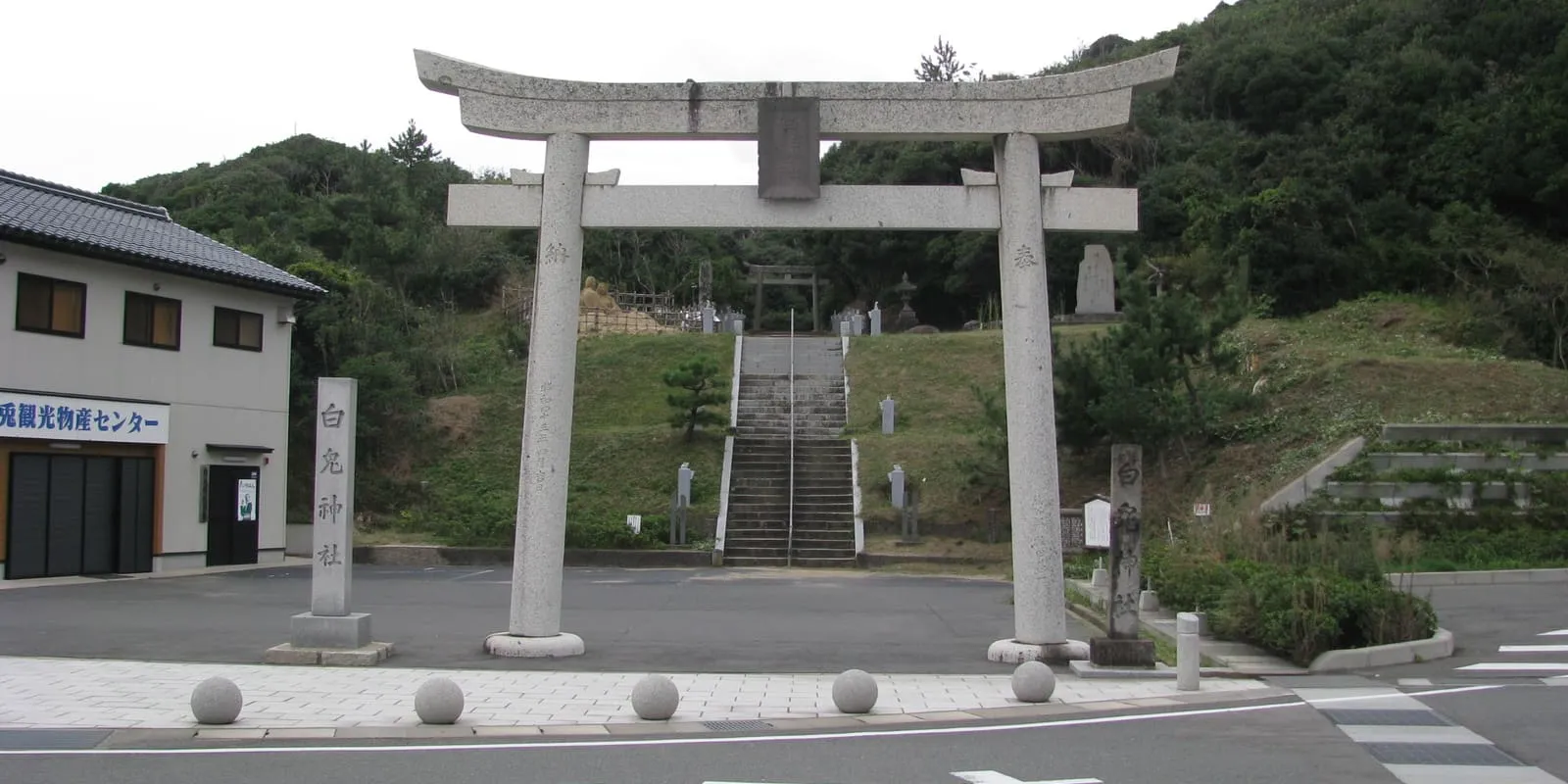
Hakuto Jinja is an ancient shrine of clear historical standing, referenced in Japan’s oldest chronicle, the Kojiki, which records: “此稲羽之素兎者也、於今者謂兎神也” (“this hare of Inaba is now called the hare deity”). The shrine stands on the shore said to be the very stage of the “White Hare of Inaba” myth, making it the birthplace of what is often called Japan’s oldest love story.
According to the Kojiki, a hare on Oki Island wished to cross the sea to the land of Inaba. It tricked a line of wanizame — sea creatures described as sharks or crocodile-like dragons — into lining up across the water by claiming it wanted to compare whose clan was larger, then hopped across their backs as a bridge. Just short of the far shore, however, the hare gave away the trick, and the last wani tore off its fur in anger. As the injured hare lay in pain, a group of eighty gods (yasogami) — brothers of Onamuchi no Kami, all travelling through Inaba to court Princess Yagami — passed by and cruelly told it to bathe in seawater and dry itself in the wind, advice that only worsened its wounds. Finally Onamuchi no Kami (who would later be known as Okuninushi), trailing behind his brothers carrying their baggage, told the hare instead to wash in fresh river water and roll in the pollen of cattail reeds. The hare’s wounds healed at once, restoring it to its true form as a deity. In gratitude, the hare prophesied that Princess Yagami would choose Onamuchi — the lowliest of the brothers — rather than any of the eighty gods, and so it came to pass. The healed hare was later venerated as a deity in its own right.
The shrine’s precise founding date is unknown, but tradition holds that its buildings were destroyed by warfare in antiquity and the shrine fell into long decline. During the Keicho era (1596-1615), Kamei Shigenori, lord of nearby Kano Castle, rebuilt the shrine after an auspicious dream and donated shrine lands yielding 20.2 koku of rice. The present main hall dates to 1670. Ukemochi no Kami was enshrined alongside the hare deity at some point thereafter, and in 1912 the sea deity Toyotama-hime no Mikoto joined the shrine when nearby Kawashimo Jinja was merged into it, bringing the enshrined deities to their present three. The shrine’s sacred grove was designated a National Natural Monument in 1937, and in 2010 the shrine was named one of Japan’s official “Sacred Places for Lovers” in recognition of its ties to the country’s oldest love story.
Highlights
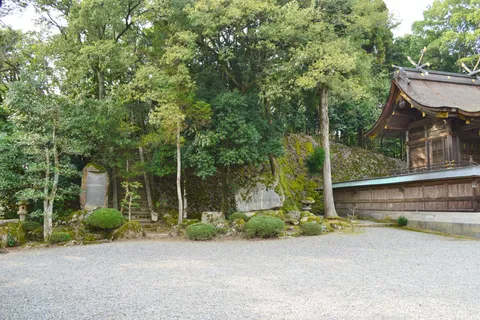
From the rise behind the shrine hall, looking out over the Sea of Japan, visitors can take in the sweep of Hakuto Beach and spot Oki-no-shima, a small offshore island said in the myth to be where the hare once lived. Beside the approach path lies Mitarai Pond, whose water level is said never to rise or fall regardless of rain or drought — earning it the nickname “the pond of neither increase nor decrease” — and which is regarded as sacred ground closely tied to the hare’s story.
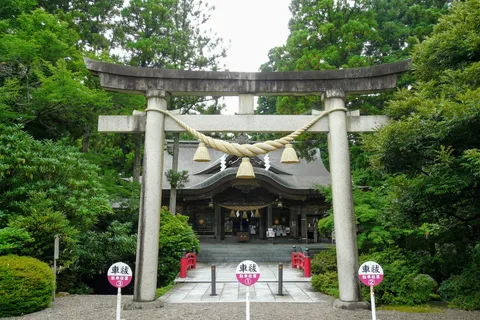
In place of the usual guardian lion-dogs, the shrine grounds are dotted with rabbit statues, some polished smooth from years of visitors’ hands. The shrine office sells “musubi-ishi” binding stones, each tied to one of five wishes — good relationships, children, prosperity, advancement, and health — which visitors try to balance on the torii gate’s crossbeam or on one of the rabbit statues in hopes of seeing the wish fulfilled. At the entrance to the adjoining Michi-no-Eki Shinwa-no-Sato Shirousagi roadside station, a sand sculpture depicting the White Hare of Inaba myth lets visitors enjoy the story’s imagery alongside their visit to the shrine itself.
Visiting Tips
The grounds can be visited at any time, but goshuin, amulets, and prayer requests are handled only while the shrine office is open, 9:00-16:00. Goshuin cost ¥300. If you’d like a formal prayer (kigan), calling ahead (0857-59-0047) the day before lets you skip the wait, though same-day requests are also accepted at the office. Groups or bus tours planning a visit are encouraged to call in advance. Free parking (125 spaces) is available, shared with the adjacent Michi-no-Eki Shinwa-no-Sato Shirousagi roadside station, making a visit by car straightforward. Parts of the approach include steps and sandy ground, so comfortable walking shoes are recommended.
Annual Festivals
- New Year’s Festival (January 1): The first rite of the shrine’s year.
- Spring Grand Festival (Sunday nearest April 17): A festival praying for peace and safety through the year ahead.
- Autumn Grand Festival (Sunday nearest October 17): A festival of thanksgiving for the season’s harvest.
- Kawashimo Festival (August 1): Honors Toyotama-hime no Mikoto, the deity of Kawashimo Jinja, merged into Hakuto Jinja in 1912.
Nearby Food & Sightseeing
- Michi-no-Eki Shinwa-no-Sato Shirousagi: This roadside station sits right next to Hakuto Jinja and shares its parking lot. Its second-floor restaurant, Ginrin-tei, serves fresh Sea of Japan seafood such as white squid and sea bream alongside a live fish tank, and the shop stocks plenty of hare-mythology-themed snacks and souvenirs.
- Hakuto Beach: The stretch of coast said to be the setting of the White Hare of Inaba myth lies right in front of the shrine, and is also known as a popular spot for watching the sunset.
- Tottori Sand Dunes: One of Japan’s premier scenic spots and its largest coastal dune system, about a 20-minute drive from Hakuto Jinja — many visitors combine the two on the same trip.
Frequently Asked Questions
- Q. What are the goshuin hours and fee at Hakuto Jinja?
- A. Goshuin are available at the shrine office 9:00-16:00 for ¥300. Simply ask at the office after paying your respects.
- Q. Which deities are enshrined at Hakuto Jinja?
- A. The primary deity is Hakuto-no-Kami, the deified hare from the White Hare of Inaba myth. Ukemochi no Kami, a deity of food and grain, is also enshrined, along with the sea deity Toyotama-hime no Mikoto, who joined the shrine when Kawashimo Jinja was merged into it in 1912.
- Q. How do I get to Hakuto Jinja, and is there parking?
- A. It's about a 40-minute ride on the Hinomaru Bus (Hakuto Coast Line) from JR Tottori Station, alighting right at 'Hakuto Jinja-mae.' By car, it's about 20 minutes from the Tottori-Nishi Interchange on the San'in Expressway. Free parking (125 spaces) is available, shared with the adjacent Michi-no-Eki Shinwa-no-Sato Shirousagi roadside station.
- Q. What annual festivals are held at Hakuto Jinja?
- A. The year opens with the New Year's Festival on January 1, followed by the spring grand festival on the Sunday closest to April 17 and the autumn grand festival on the Sunday closest to October 17. A festival on August 1 honors Toyotama-hime, the deity of the merged Kawashimo Jinja.
- Q. What are the 'musubi-ishi' binding stones at Hakuto Jinja?
- A. These are stones sold at the shrine office, each associated with one of five wishes: good relationships, children, prosperity, advancement, and health. Visitors make a wish and try to balance the stone on the torii gate's crossbeam or on one of the rabbit statues in the grounds — success is said to bring the wish to fruition.