History
Hayatani Shrine is an old shrine in Kamihira (上平良), Hatsukaichi, Hiroshima Prefecture. Japanese Wikipedia gives the reading “Hayatani-jinja,” and the title of the shrine’s newsletter on the official site is also “Hayatani” (the introduction pages of the official site give no reading). The official site calls it the “Guardian of the Sanyodo Road and Head Shrine of Aki Province.” Note that the place name is 上平良 (Kamihira), not 下平良.
The official site names Akihayatama-o-no-mikoto as the enshrined deity, described as the ancestral deity who founded Aki Province. Another page also writes the name as “Akihayatama-no-mikoto,” and introduces him as the deity that the Kuji Hongi records as having been appointed provincial governor (kuni no miyatsuko) in the reign of Emperor Seimu. Japanese Wikipedia gives the reading “Akihayatama-o-no-mikoto.”
The date of enshrinement is not clear, but the official site calls it an old shrine of more than 1,800 years since its founding and says it is regarded as the oldest shrine in Aki Province. According to the official site, the Nihon Koki records that in 811 (Konin 2) the deities Hayatani of Aki and Itsukushima were ranked together as “Myojin,” which it says is the oldest record concerning a shrine in Hiroshima Prefecture. It also explains that in the Heian-period Engishiki the shrine was ranked as a Kanpei Taisha, receiving special treatment even among the three shrines of Aki Province (Hayatani Shrine, Itsukushima Shrine and 多家神社).
The official site says that in the early Edo period the shrine lost its landholdings and the buildings fell into disrepair, but that in 1646 (Shoho 3) Asano Mitsuakira, who had become lord of Hiroshima, confirmed its history and, two years later, built the shrine buildings at domain expense. In 1924 (Taisho 13) it was ranked a Kokuhei Chusha, and after the war it became a Beppyo shrine under the Association of Shinto Shrines. As for the old “Ichinomiya” (first shrine of the province), the official site says Itsukushima Shrine became Aki’s Ichinomiya, while Japanese Wikipedia calls Hayatani the Ninomiya (second shrine) of Aki and says it was once regarded as the Ichinomiya.
Highlights
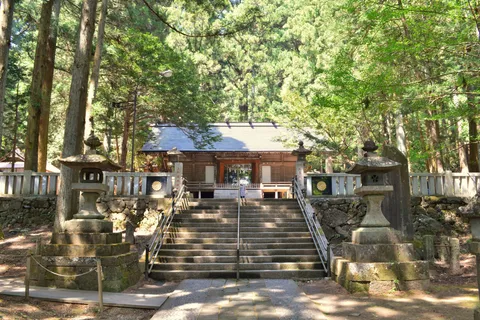
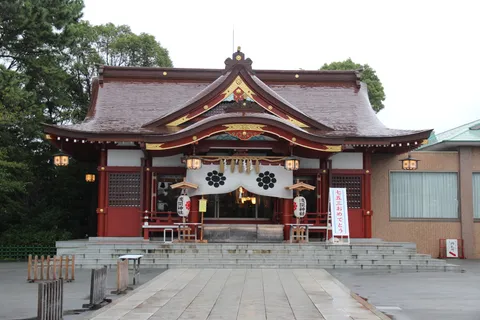
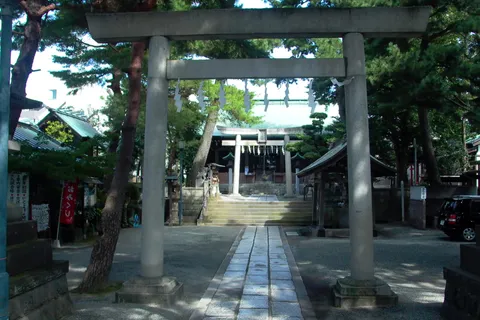
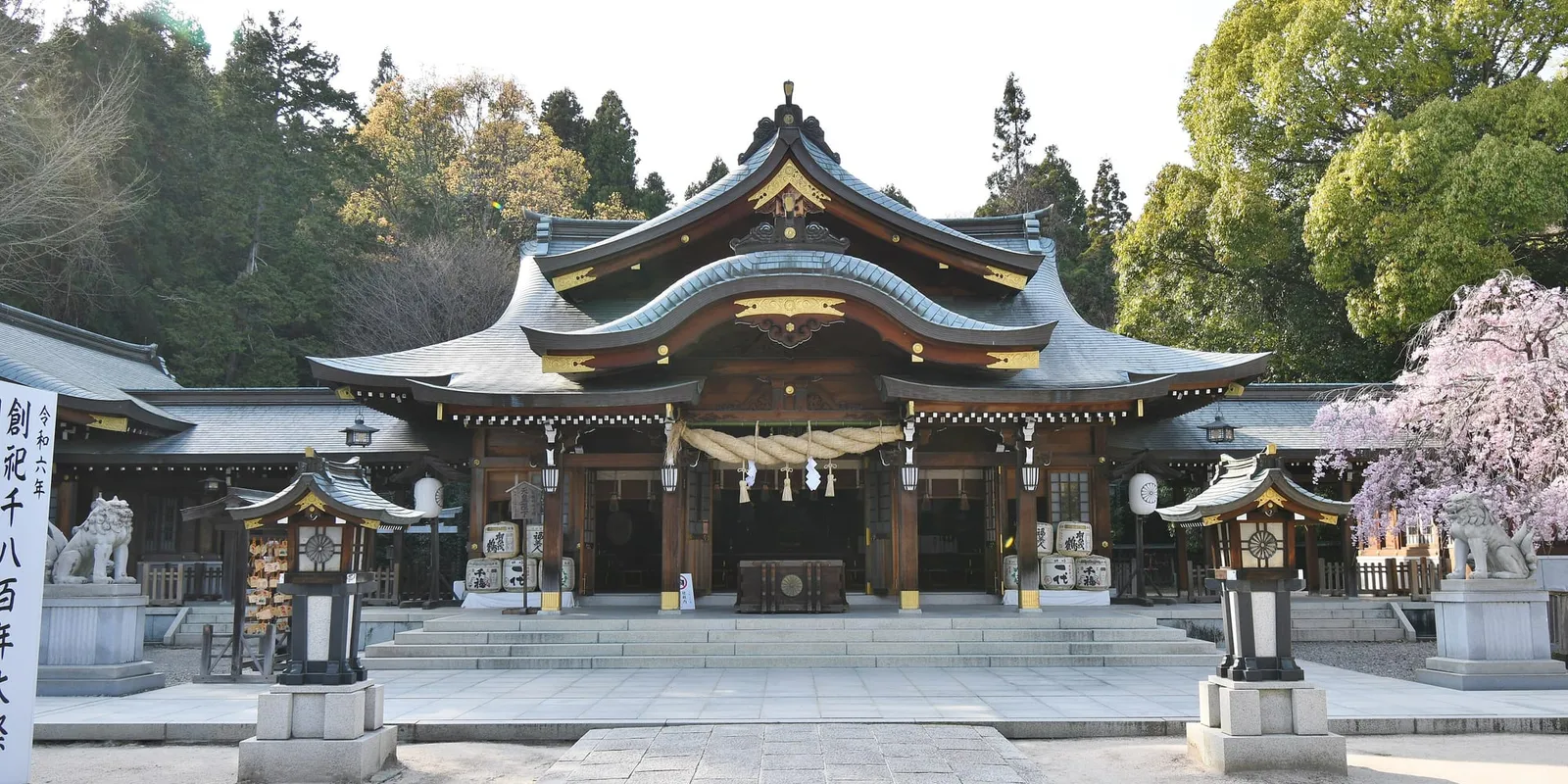
According to the official site’s grounds guide, the main buildings include the main hall (a shiraki-zukuri, copper-plate-roofed, nagare-zukuri, three-bay shrine), the worship hall, the kagura hall, the car purification area, the treasure hall, the two-story gate (romon) and the torii. The four large pillars supporting the romon are said to have been made by quartering a single huge cypress. The site also says 74 kinds of trees grow in the grounds.
On the official site’s cultural properties page, two of the shrine’s treasures are designated Hiroshima Prefecture Important Cultural Properties. One is the pair of wooden guardian dogs (komainu) from the mid-Muromachi period, finished with gold leaf on the heads and with the hair painted in different colors on the open-mouthed and closed-mouthed figures. The other is a scroll known as the “Sonkai Monjo,” written in Tenbun 16 (late Muromachi period) by the head priest of Daiganji, Sonkai, which records matters such as the repair of Hayata Daimyojin. They are said to be displayed in the treasure hall.
Within the grounds are the sessha Iwaki Shrine (deity of health, longevity and recovery from illness, Iwaki-no-Okina-no-kami) and the massha Inari Shrine (deity of bountiful harvests and business prosperity, Ukanomitama-no-kami). According to the official site, the Iwaki deity was the local god of the land before Hayatani Shrine was established here, and a legend survives that the man who was the model for the old man lived to be 163.
The car purification area also enshrines Haraedo-no-okami for the purification of cars, and the shrine is known as one of the nation’s leading guardians of traffic safety.
Visiting Tips
Prayer services run daily 8:00 AM–5:00 PM with no reservation needed (the official site says you may wait about 30 minutes when a regular festival or wedding is under way). The offering for an individual prayer is ¥5,000 or more per request, and the shrine accepts prayers for safe childbirth, first shrine visits for babies, Shichi-Go-San, protection from misfortune, protection from all directions, safe travel and more.
For a traffic-safety purification, give your address, the driver’s name, the license plate number and the car model; the driver’s prayer is performed in the main hall and the car is purified at the car purification area. The offering is ¥5,000 or more per car, and cars are parked facing forward. The official site says that people say “if you buy a car, go to Hayatani-san” and that drivers come from as far as the Kansai and Kyushu regions.
For goshuin, the official site’s FAQ says to come to the prayer reception by 5:00 PM, but the fee is not stated on the official site. Amulets are handed out from 8:00 AM to about 6:00 PM. The shrine buildings are barrier-free, and one wheelchair can be borrowed. Pets are not allowed into the shrine buildings or the shrine office.
By car, it is right next to the Miyajima SA Smart IC on the Sanyo Expressway (ETC vehicles), and the description text on the official site says the parking lot holds 200 vehicles. By bus, it is a 1-minute walk from the “Hayatani Jinja” stop on the Hatsukaichi Sakura Bus “Hara Route.”
Annual Festivals
These are the main events from the official site’s festival list. Dates are as written on the official site, and days of the week and times can change from year to year.
- Saitan-sai (January 1): The first festival of the new year, praying for the prosperity of the Imperial family and the nation.
- Traffic Safety Grand Festival (January 7): A grand festival unique to this shrine, loved as the guardian of the Sanyodo Road, praying for a year of traffic safety. The official site says such grand festivals for traffic-safety prayer are almost unheard of elsewhere in Japan.
- Tondo Matsuri (January 14): Old amulets and talismans enshrined over the past year are burned in a purifying fire.
- Setsubun-sai Tsuina Shinji and Yudate Shinji (February 3): Alongside the Setsubun bean-throwing that drives away evil, the special rite of Yudate Shinji is performed.
- Kinen-sai (March 17): Prayers for a bountiful harvest and the development of industry for the year.
- Nagoshi no Oharae (June 30): Purifies the sins and impurities of the past half year, and includes the rite of passing through a ring of reeds (chinowa).
- Annual festival, Akisai (October 12): A festival celebrating the founding of Aki Province and the shrine’s most important festival. According to the official site, around that day there are portable-shrine processions by parishioners and worshippers and offerings of kagura.
- Niiname-sai (November 23): A thanksgiving for the harvest, with the year’s new grain offered before the deity.
- Toshikoshi no Oharae (December 31): A purification rite held at the end of June and December.
On Saturday, October 12, 2024, the “Celebratory Grand Festival of the 1,800th Anniversary of the Founding” was held in the main hall on the day of the annual festival (per the official site).
Nearby Food & Sightseeing
- Itsukushima Shrine (Miyajima): One of the shrines that Hayatani Shrine’s official site lists, together with Hayatani, as the three shrines of Aki Province in the Engishiki. It stands on Miyajima, in Hatsukaichi.
- 多家神社 (Aki District): Also listed on the official site as one of the three shrines of Aki Province. It is located in Aki District, outside Hatsukaichi.
Frequently Asked Questions
- Q. What are the visiting and prayer hours at Hayatani Shrine?
- A. Per the official site, prayer services run daily from 8:00 AM to 5:00 PM with no closing day and no reservation needed (it also says reservations may be requested when it is crowded). The shrine office reception is 8:00 AM–5:00 PM, and amulets are handed out from 8:00 AM to about 6:00 PM. The offering for an individual prayer is ¥5,000 or more per request. Opening and closing times for the grounds themselves are not stated on the official site for ordinary periods.
- Q. Can I get a goshuin?
- A. The official site's FAQ has an entry asking by what time you must come to have a goshuin written, and it says to come to the prayer reception by 5:00 PM. It also says the shrine's own goshuin book is available. However, the goshuin fee is not stated on the official site, and no separate hours for goshuin alone are given. Calling ahead (0829-38-0822) is a safe idea.
- Q. How do I get there, and is there parking?
- A. The official site's access page says it is right next to the Miyajima SA Smart IC on the Sanyo Expressway (ETC vehicles) and 5 minutes from Hatsukaichi IC. By bus, it is a 1-minute walk from the "Hayatani Jinja" stop on the Hatsukaichi Sakura Bus "Hara Route." From JR Sanyo Line Miyauchi-Kushido or Hatsukaichi Station it is 8 minutes by taxi. The description text on that page says the parking lot holds 200 vehicles (no fee information found).
- Q. How do I get a car blessed (traffic-safety prayer)?
- A. Per the official site, you give your address, the driver's name, the license plate number and the car model; the driver's prayer is performed in the main hall, and the car is then purified one at a time at the car purification area in the grounds. The offering is ¥5,000 or more per car, daily 8:00 AM–5:00 PM (no reservation), and the site says the proper manner is to park the car facing forward. The official site introduces the saying "if you buy a car, go to Hayatani-san."
- Q. What was the 1,800th-anniversary festival?
- A. Per the official site, the "Celebratory Grand Festival of the 1,800th Anniversary of the Founding" was held in the main hall at 9:30 AM on Saturday, October 12, 2024. The site announced it as held on the day of the annual festival Akisai, which also marked 100 years since the shrine was ranked a Kokuhei Chusha in 1924, and planned celebratory events such as kagura, rice-cake throwing and a portable shrine procession. The annual festival, Akisai, is held every year on October 12.
Plan Your Visit
Before you go, you can book a stay and get your shrine-visit items ready.
Amazon links open Amazon.co.jp (Japan) in English; whether an item ships overseas depends on the product.
※ Contains ads (PR). Links open external sites such as Amazon, Rakuten, Trip.com and Booking.com.