History
The history of Hijiri Jinja begins in 708 CE (the 5th year of Keiun, later renamed the 1st year of Wado), when Japan’s first naturally occurring copper (nigi-akagane) was discovered in Chichibu District of ancient Musashi Province, in what is now the Kuroya area of Chichibu City. At the time, Japan relied on imported copper from the Korean peninsula, so the discovery of high-purity native copper that required no smelting was a major event for the Imperial Court. The find was presented to Empress Genmei, and the court commemorated it by renaming the era from “Keiun” to “Wado” (literally, “harmonious copper”). The court further appointed Tajihi no Mahito Miyakemaro as coin-minting magistrate, who oversaw the casting of Japan’s first fully-fledged circulating currency, the Wadokaichin.
Hijiri Jinja was founded on the very site of this historic discovery, enshrining the copper ore itself (said to be thirteen pieces) in its inner sanctuary, with Kanayamahiko-no-Mikoto — a deity of mining and metal — worshipped as the principal god. Kuninotokotachi-no-Mikoto, Oohirumemuchi-no-Mikoto (Amaterasu Omikami), and Kamuyamatoiwarehiko-no-Mikoto (Emperor Jinmu) were enshrined alongside him. When Empress Genmei, who had ordered the coin’s minting, passed away in 722, her spirit was enshrined here too, as Genmei-kin-no-Mikoto, bringing the shrine to its present five deities.
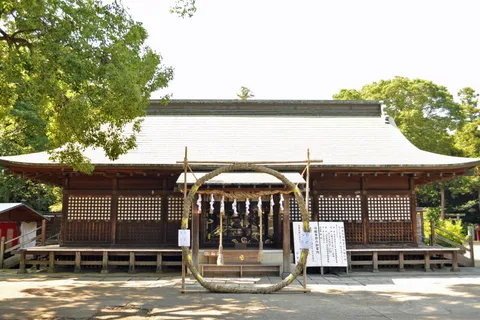
The main hall (honden) is built in the single-bay nagare-zukuri style, with carving details said to faintly echo the Azuchi-Momoyama period despite the building itself dating to the mid-Edo period — a rarity among Chichibu’s surviving historic architecture. It was designated a Chichibu City Tangible Cultural Property in 1965.
A Shrine of Money Luck: “Zenigami-sama”
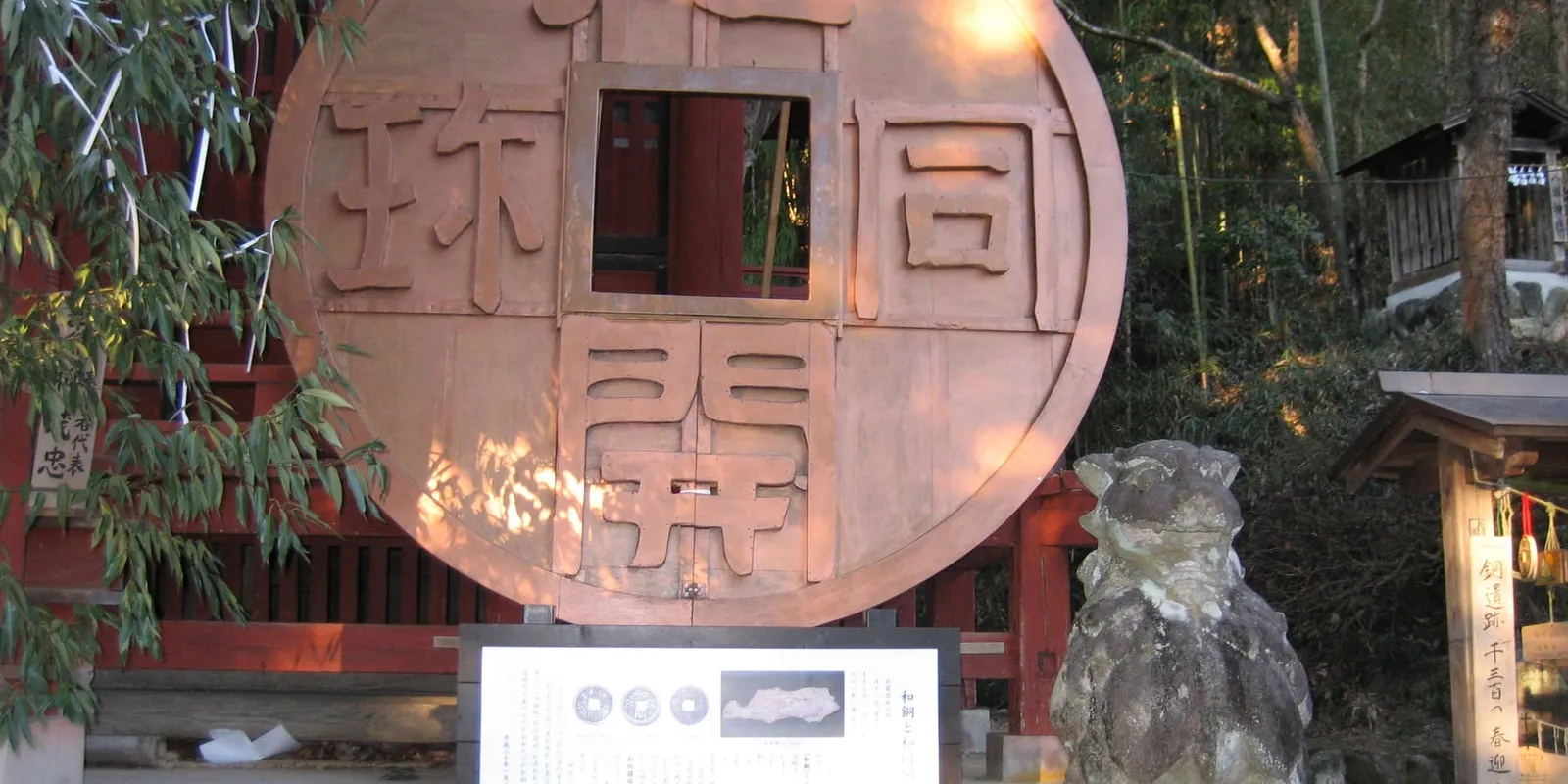
Because of its direct connection to the origin of Japan’s first circulating currency, Hijiri Jinja has long been affectionately known as “Zenigami-sama” — the Money God — and is celebrated as a power spot for financial fortune and business prosperity. Beside the shrine’s main hall stands a large monument shaped like the Wadokaichin coin, where visitors often pause to reflect on the dawn of Japan’s money economy while praying for financial luck.
About a 15-minute walk from the shrine lies the Wado Archaeological Site, the actual open-pit mine where the native copper was unearthed. Past a small wooded hill known as Iwaiyama, visitors find a roughly 5-meter-tall Wadokaichin monument, beside which flows a small stream called Dosenbori. According to local tradition, washing coins in this stream brings good financial fortune, and many visitors combine a trip here with their visit to the shrine itself.
Many of the shrine’s amulets and talismans also carry the money-luck theme, including a set of “Wadokaichin charms” (available in gold, silver, and copper versions), a “Zenigami charm,” and card-style money-luck amulets. The shrine’s goshuin book is likewise distinctively designed, featuring the worship hall on the front cover and the Wadokaichin coin alongside a pair of copper centipedes on the back — a motif tied to sacred treasures said to have been bestowed by Empress Genmei herself.
Visiting Tips
The shrine grounds have no gate, so the site itself can be visited at any time. However, because there is no resident priest, the office where goshuin and amulets are dispensed offers only pre-written (kakioki) goshuin, received in exchange for the fee, roughly between 9:00 and 17:00. Since the supply is limited on any given day, visitors hoping to receive one are advised to arrive earlier rather than later.
Free parking for about 5–6 cars is available directly in front of the shrine, though space is limited. Since Wado-Kuroya Station is only about a 5-minute walk away, public transport is a convenient option as well. Visitors planning to continue on to the Wado Archaeological Site should allow roughly 15 minutes each way for the walk.
Annual Festivals
- Spring Grand Festival (April 13): Hijiri Jinja’s main annual festival, at which the Kuroya Lion Dance (Kuroya no Shishimai), a Chichibu City-designated intangible folk cultural property, is performed and dedicated to the shrine.
- Autumn Grand Festival (November 3): A second annual festival at which the Kuroya Lion Dance is again performed.
- Kuroya no Shishimai (Kuroya Lion Dance): According to legend, the renowned Edo-period craftsman Hidari Jingoro once visited this area and carved a dragon-head mask, which he dedicated to the shrine. The dance itself, known as the “Okazaki-Shimozuma style,” is said to have been taught to local performers by a master invited from Okazaki in Mikawa Province around the end of the Genroku era (1688–1704). It has been preserved ever since by the Kuroya Lion Dance Preservation Society and was designated a Chichibu City intangible folk cultural property in 1957.
Nearby Food & Sightseeing
- Wado Archaeological Site: About a 15-minute walk from Hijiri Jinja, this is the actual open-pit mine where Japan’s first native copper was discovered, marked today by a roughly 5-meter-tall Wadokaichin monument on a wooded hill visible from Wado-Kuroya Station.
- Chichibu Shrine: The venerable guardian shrine of the wider Chichibu region. Many visitors combine a visit here with a tour of Hijiri Jinja and the area’s other historic shrines.
- Chichibu Muse Park: A nature park reachable by car from Wado-Kuroya Station, with an observation tower and hot-spring facilities — a popular stop for visitors exploring the Chichibu area.
Frequently Asked Questions
- Q. Why is Hijiri Jinja known as a "money-luck" shrine?
- A. In 708 CE, Japan's first naturally occurring copper was discovered on this very site (in what is now Chichibu's Kuroya area) and presented to the Imperial Court. The discovery was significant enough that the court renamed the era "Wado," and the court went on to cast Japan's first official circulating coin, the Wadokaichin. Hijiri Jinja was founded to commemorate this discovery and enshrines the original copper ore as its sacred object, earning it the nickname "Zenigami-sama" (the Money God) and drawing visitors from across Japan who come to pray for financial fortune and business prosperity.
- Q. Can I receive a goshuin here?
- A. Yes, for a fee of ¥500 at the shrine's dispensing office. Since there is no resident priest, goshuin are available only in pre-written (kakioki) form, left out for visitors to take in exchange for the fee (roughly 9:00–17:00). A special goshuin book is also available, decorated with the Wadokaichin coin and a pair of copper centipedes said to have been bestowed by Empress Genmei.
- Q. How do I get to Hijiri Jinja?
- A. It's about a 5-minute walk from Wado-Kuroya Station on the Chichibu Railway's Chichibu Main Line. The Seibu Kanko Bus Haraya Line also serves the area. By car, it's roughly 40 minutes from the Hanazono IC on the Kan-etsu Expressway toward Chichibu.
- Q. Is parking available?
- A. Yes, there's free parking directly in front of the shrine, with space for about 5–6 cars. Since capacity is limited, visitors during busy periods may want to consider nearby lots or public transport.
- Q. Is there anything to see besides the Wadokaichin monument at the shrine itself?
- A. The shrine grounds feature a large monument shaped like the Wadokaichin coin. About a 15-minute walk away is the Wado Archaeological Site, the actual open-pit mine where the copper was discovered, home to a roughly 5-meter-tall Wadokaichin monument and a small stream called Dosenbori, where visitors traditionally wash coins for good fortune. Every April 13 and November 3, the shrine also hosts the Kuroya Lion Dance (Kuroya no Shishimai), a city-designated intangible folk cultural property performed with a dragon-head mask said to have been carved by the legendary craftsman Hidari Jingoro.