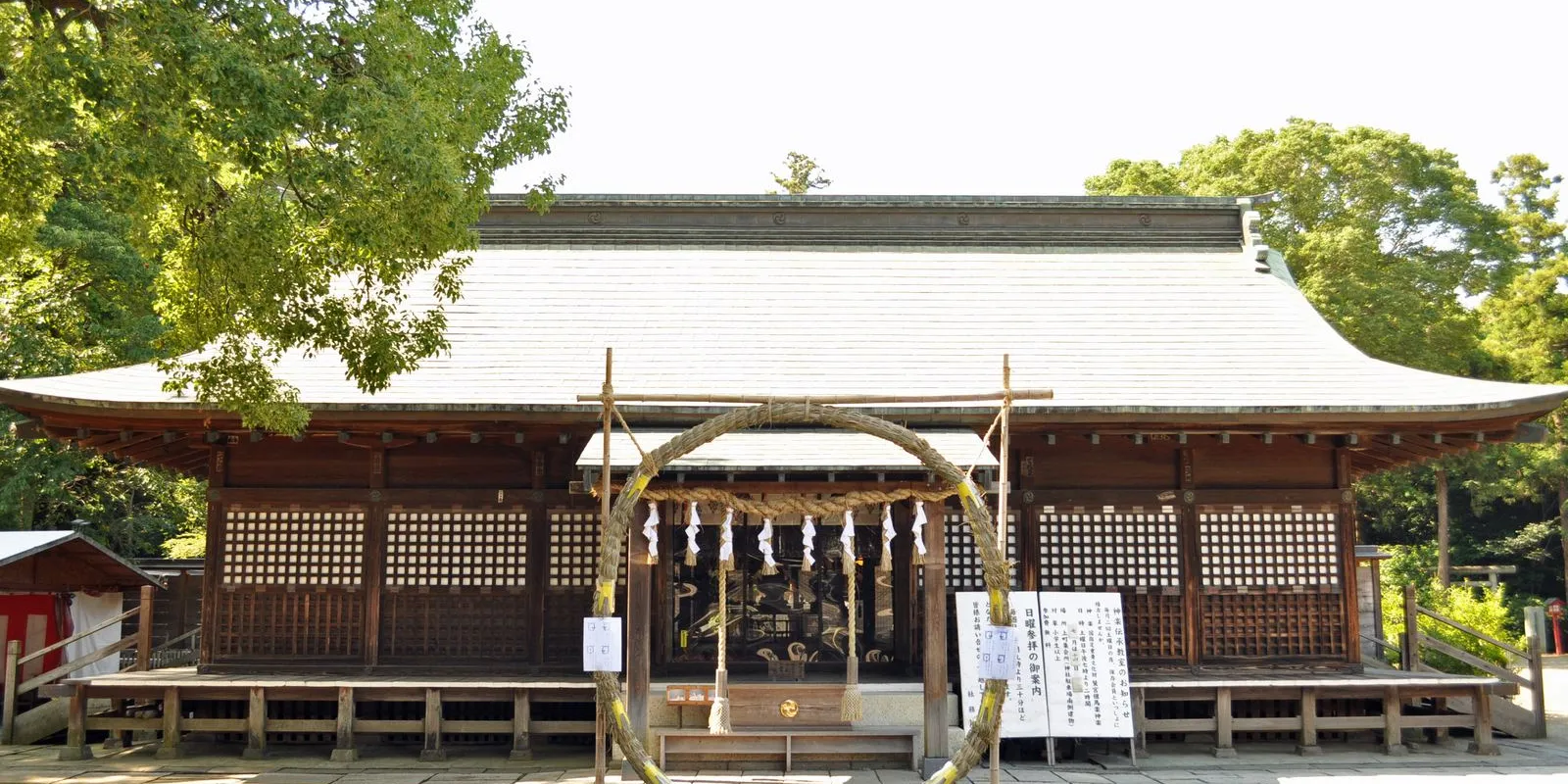
History
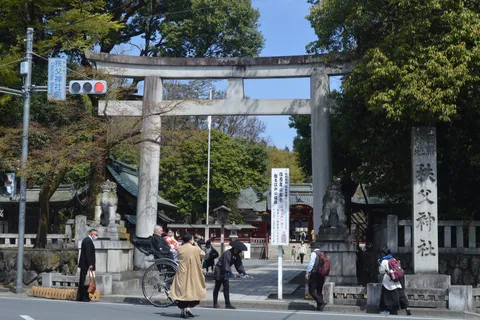
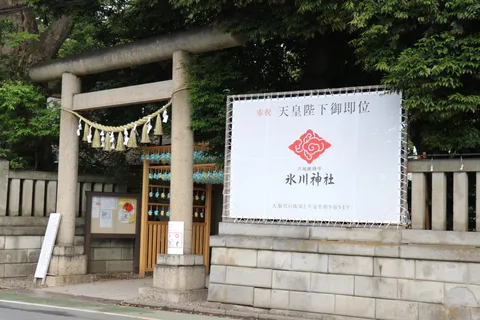
Washinomiya Jinja is an ancient shrine in Kuki, Saitama Prefecture that its own official history describes as “a great shrine, said to be the oldest in the Kanto region, founded by the Izumo clan.” According to shrine tradition, Amenohohi no Mikoto and his son Takehinatori no Mikoto led a clan of some thirty people to this area in the age of the gods and built Kanzaki Jinja to enshrine Onamuchi no Mikoto (Okuninushi). A secondary shrine later built to honor the spirit of Amenohohi no Mikoto is said to be the origin of the shrine’s present main hall.
Tradition holds that during the reign of Emperor Sujin, Ota Taneko no Mikoto served as chief priest while several imperial princes offered ritual tributes, and that during the reign of Emperor Keiko, Yamato Takeru revered the shrine’s divine power, rebuilt its halls, and enshrined Takehinatori no Mikoto alongside the existing deity. Later, during the reign of Emperor Kanmu, the shogun Sakanoue no Tamuramaro is said to have prayed here for military success and to have founded a branch shrine in the Washinosu area of what is now Tohoku.
From the medieval period onward, Washinomiya Jinja was revered as a leading shrine of the Kanto region and a guardian of its warrior class. An extraordinary roster of historical figures is recorded as having donated land, rebuilt shrine buildings, or prayed here for military fortune, including Fujiwara no Hidesato, Minamoto no Yoshiie, Minamoto no Yoritomo, Minamoto no Yoshitsune, Hojo Tokiyori, Nitta Yoshisada, generations of the Ashikaga clan, the Koga kubo, generations of the Kanto kanrei Uesugi clan, and Tokugawa Ieyasu. During the Edo period the shogunate granted the shrine an extraordinary 400 koku of land, confirmed by successive shoguns’ officially sealed documents. In the Meiji era, the shrine was designated one of Tokyo-area’s “jun-chokusaisha” (quasi-imperially-designated shrines), received offerings via imperial messenger, and was visited in person by Emperor Meiji; Emperor Showa also sent offerings in his reign.
Today the shrine enshrines three deities — Amenohohi no Mikoto, Takehinatori no Mikoto, and Onamuchi no Mikoto — and is known for blessings ranging from business prosperity and good fortune to good relationships, household safety, and traffic safety. It is also known as the head shrine of “Otori-sama,” associated with the November Tori-no-ichi rake fairs held on the “Day of the Rooster.”
Washinomiya Saibara Kagura
The Washinomiya Saibara Kagura (formally “Haji-ryu Saibara Kagura”) handed down at this shrine is considered one of the wellsprings of the sacred dance traditions found throughout the Kanto region, and it was designated a national Important Intangible Folk Cultural Property on May 4, 1976. Performed to the accompaniment of large and small drums and a flute, dancers holding ceremonial props chant sacred songs and saibara verses through a repertoire of twelve core pieces plus one additional piece, including “Shin-ei,” “Sakaki,” “Kunigatame,” and “Sarutahiko.”
The kagura is performed six times a year — on January 1, February 14, April 10, July 31, October 10, and the first Day of the Rooster in December — at the shrine’s kagura hall, and visitors may watch free of charge. It remains a treasured piece of living folk heritage, carefully preserved and performed by the local community to this day.
The Modern Lucky Star Pilgrimage
Alongside its ancient history, Washinomiya Jinja is nationally known as the real-world model for the shrine in the 2007 television anime Lucky Star (Raki☆Suta). Because the series’ creator was from Saitama, the shrine that appears in the story as the home of the heroines’ family closely matches the real Washinomiya Jinja, right down to its torii gate. Within just a few months of the broadcast’s start, fans from all over Japan began visiting the shrine as a form of pilgrimage — an episode now widely cited in Japanese tourism research as one of the formative moments of the modern “anime pilgrimage” (seichi junrei) phenomenon.
The shrine’s grounds are lined with hundreds of “ita-ema” — wooden prayer plaques hand-painted with anime characters by visiting fans — and Washinomiya Jinja is often credited as the birthplace of this now-widespread practice. In 2008, members of the local Haji Festival mikoshi association and fan volunteers built a dedicated “Lucky Star mikoshi,” which debuted on September 7, 2008 at the 26th Haji Festival with roughly 120 fan carriers from across the country; the festival’s usual crowd of about 30,000 swelled to an estimated 50,000 spectators that year. The mikoshi tradition has continued ever since, moving to the shrine’s summer Yasaka Festival from 2018 onward, and the surrounding Washinomiya shopping district still carries Lucky Star merchandise and hosts related events. It remains a striking, well-documented example of a historic Shinto shrine and a modern pop-culture fandom coexisting and genuinely supporting one another — even as the shrine’s much older identity as a center of ancient Kanto history and nationally designated kagura remains its core character.
Visiting Tips
The grounds themselves can be visited at any time, but the shrine office — for goshuin, amulets, and ritual prayers — is open 9:00–16:00. Beyond the historic main hall and shrine gate, be sure to look for the ema board covered in fan-painted “ita-ema.” Timing a visit to coincide with a Saibara Kagura performance offers a rare chance to see this centuries-old tradition firsthand. Free parking for about 60 vehicles is available on the grounds, making the shrine an easy stop by car as well as by train.
Annual Festivals
- Spring Festival (April 10) and Reitaisai (October 10): Two of the year’s largest festivals, both featuring performances of the Washinomiya Saibara Kagura.
- Otori Festival (first Day of the Rooster in December): A major year-end festival reflecting the shrine’s role as the head shrine of “Otori-sama,” drawing large crowds of worshippers.
- Yasaka Festival (July): The shrine’s summer festival, which has hosted the fan-built “Lucky Star mikoshi” every year since 2018.
Access and Parking
The nearest station is Washinomiya Station on the Tobu Isesaki Line (Tobu Skytree Line), an 8-minute walk from the shrine. From Higashi-Washinomiya Station on the JR Utsunomiya Line, take an Asahi Motor Coach bus and get off at the “Washinomiya Jinja-iriguchi” stop, just a minute’s walk away. Visitors arriving by car can use the free on-site parking lot, which holds about 60 vehicles.
Nearby Food & Sightseeing
- Washinomiya Shopping Street: The approach-road shopping street near the shrine, home to several shops carrying Lucky Star merchandise and a gathering point for fans and local residents alike.
- Shobu Castle Ruins Hydrangea Garden: A seasonal flower garden elsewhere in Kuki, best known for its hydrangeas in early summer.
- Tobu Zoo: A large leisure complex combining a zoo, amusement park, and pool, a popular day-trip destination easily reached by train or car from Washinomiya Jinja.
Frequently Asked Questions
- Q. What are the goshuin hours and fee at Washinomiya Jinja?
- A. Goshuin are available 9:00–16:00. The standard goshuin costs ¥500, and special goshuin themed around the Washinomiya Saibara Kagura or shrine festivals are sometimes offered for ¥1,000. Goshuin are given as pre-printed paper (goshuin-gami) rather than written directly into your goshuin book.
- Q. Is there parking at Washinomiya Jinja?
- A. Yes. Free parking for about 60 vehicles is available on the shrine grounds. The shrine is also an easy 8-minute walk from Washinomiya Station on the Tobu Isesaki Line, making it convenient to reach by train as well.
- Q. Why is Washinomiya Jinja called one of the oldest shrines in the Kanto region?
- A. The shrine's own history describes itself as "a great shrine, said to be the oldest in the Kanto region, founded by the Izumo clan." This claim rests on a founding legend set in the age of the gods rather than on documentary proof, so it should be understood as a long-held tradition rather than an established historical fact. That said, Washinomiya Jinja is verifiably ancient and important: it appears repeatedly in the 13th-century chronicle Azuma Kagami and was revered for centuries by prominent samurai clans, including the Kamakura and Ashikaga shoguns and Tokugawa Ieyasu.
- Q. What is the connection between Washinomiya Jinja and the anime Lucky Star?
- A. Washinomiya Jinja served as the real-world model for the shrine in the 2007 anime Lucky Star (Raki☆Suta), whose heroines' family runs a shrine closely modeled on this one. Within just a few months of the broadcast, fans from across Japan began visiting as a form of "anime pilgrimage" (seichi junrei), and the shrine is widely regarded as one of the sites that helped establish this now-nationwide phenomenon. Visitors can see hundreds of hand-painted "ita-ema" prayer plaques featuring anime characters, and since 2008 a fan-built "Lucky Star mikoshi" portable shrine has been carried each year at the shrine's summer festival. Washinomiya Jinja's much older identity as a historic Shinto shrine and the home of the nationally designated Saibara Kagura remains its primary character; the anime pilgrimage is a genuinely significant but more recent chapter of its story.
- Q. How do I get to Washinomiya Jinja?
- A. The easiest route is an 8-minute walk from Washinomiya Station on the Tobu Isesaki Line (Tobu Skytree Line). Alternatively, from Higashi-Washinomiya Station on the JR Utsunomiya Line, take an Asahi Motor Coach bus and get off at the "Washinomiya Jinja-iriguchi" stop, a 1-minute walk from the shrine.