History
Hoju Inari Shrine is a small Inari shrine on a street in 3-chome, Ginza, Chuo, Tokyo (Kobiki-cho-dori). Its reading is given as “ほうじゅいなりじんじゃ” (Hoju Inari Jinja) on the “Ginza Hatcho Shrine Pilgrimage 2019” page of the Ginza community information site GINZA OFFICIAL. (We could not find an official site for the shrine and could not confirm the reading from another source.) In the site’s column series “Visiting Ginza’s Inari Shrines” it appears under the spelling 宝珠稲荷. Note that “Hodo Inari Shrine” (4-3-14 Ginza) in Ginza is a different shrine.
The pilgrimage page says: “In 1615, enshrined inside the residence of Itakura Naizen-no-sho Shigemasa as a deity for household safety and fire protection; after the Meiji Restoration, donated to Kobiki-cho 3-chome” (the personal name is as written in the source). The same site’s column, “Visiting Ginza’s Inari Shrines, Vol. 14,” says this was once part of old Kobiki-cho, a district that was also home to timber workers, so a fire-protection deity would have mattered. According to the column, an Edo map from Kanbun 6 shows the Itakura name around Kobiki-cho 3-chome, which may be where the shrine first stood. The column goes on to say the land passed to the Kamei family in 1760 and was sold to the Okazaki family in the Taisho era, after which the shrine and its grounds were donated to the parishioners of Kobiki-cho 3-chome. In Showa 25, adjacent land was bought and the hall and shrine office were built, and a Showa 16 map of Kyobashi Ward already shows the shrine at its present location. The pilgrimage page’s “donated after the Meiji Restoration” and the column’s account do not line up in every detail, so the sources differ.
The sources checked do not name the enshrined deity. This page does not assert any deity name and lists it simply as an Inari deity.
Highlights
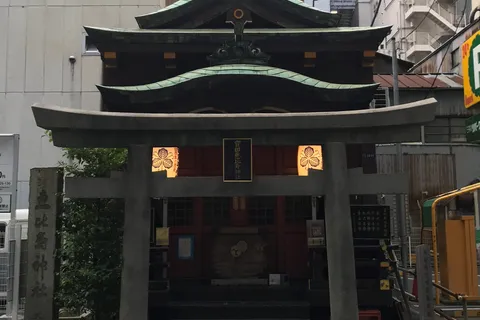
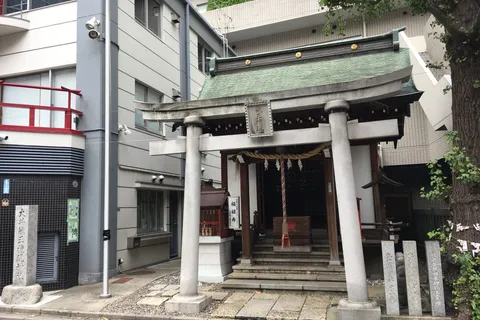
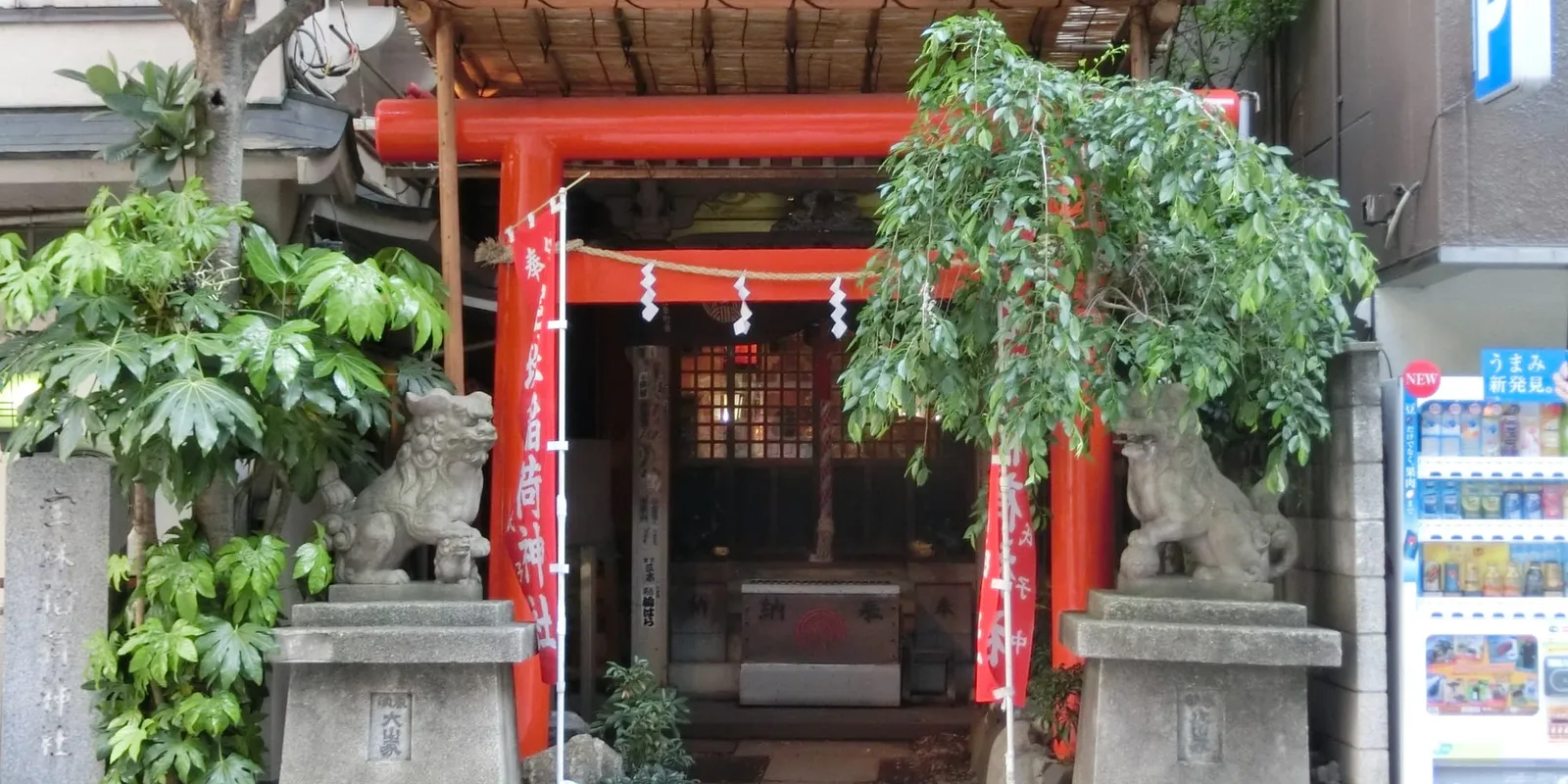
The shrine faces a street lined with buildings, with a red torii gate and a small hall, a very Ginza sight. The column describes the torii, a shrine office on the left with the hall visible behind it, and fox statues in front of the hall, one holding a jewel and the other a key. It adds that Inari shrines associated with business prosperity often feature a fox holding a storehouse key.
The photos on this page (Wikimedia Commons) also show a torii and hall facing the road and a small precinct squeezed between buildings.
Visiting Tips
There is no official site, and the sources checked give nothing about visiting hours, shrine office staffing or amulets. It is therefore safest to visit in daylight expecting to pay your respects from the road. Whether a goshuin is offered is also unconfirmed.
The nearest station is Higashi-Ginza, which the column places in the area behind the Kabukiza Theatre. Nothing is said about parking, and as it is in central Ginza, going by train and on foot is the practical choice. The precinct is small and surrounded by buildings.
Annual Festivals
No festival dates of the shrine’s own are given in the sources checked. The column mentions two events.
- Teppozu Inari Shrine’s grand festival procession (once every three years, May): According to the column, Teppozu Inari Shrine holds its grand festival in May once every three years, and the route of its portable shrine and phoenix palanquin procession includes Hoju Inari. Parishioners of Kobiki-cho wear matching happi coats, and the route goes west and loops around old Kobiki-cho without crossing the former Sanjikken-bori canal line. Dates and cycles can change, so whether it is being held is unconfirmed.
- Hatcho Shrine Pilgrimage (autumn): According to the column, Hoju Inari joined this event only relatively recently. The 2019 edition ran from November 1 to 3, 12:00–4:00 PM, collecting commemorative stamps at each shrine (per the Ginza community information site). The current format and participating shrines are unconfirmed.
Nearby Food & Sightseeing
- Kabukiza Theatre: The column places Hoju Inari near Higashi-Ginza Station, in the area behind the Kabukiza Theatre.
- Asahi Inari Shrine: Another Inari shrine in 3-chome, Ginza, at 3-8-12 Ginza (per the Ginza Hatcho Shrine Pilgrimage 2019 page).
- Hodo Inari Shrine: A different shrine with a similar name, at 4-3-14 Ginza (per the Ginza Hatcho Shrine Pilgrimage 2019 page). It is not Hoju Inari, so take care not to confuse them.
Frequently Asked Questions
- Q. What are the visiting hours of Hoju Inari Shrine?
- A. There is no official site that we could find, and the sources checked give no visiting hours. It is a small shrine on a street in central Ginza, and in the photos on this page the torii gate and hall can be seen from the road. Whether the hall is opened and whether the shrine office is staffed is unconfirmed, so it is best to visit in daylight and expect to pay your respects from the street.
- Q. Can I get a goshuin at Hoju Inari Shrine?
- A. The sources checked do not mention a goshuin for Hoju Inari Shrine, so whether one is offered, the fee and the hours are all unknown. In 2019, the Ginza Hatcho Shrine Pilgrimage, which covered 12 shrines in Ginza, provided commemorative stamps and a stamp book at each shrine (per the Ginza community information site), but those are not goshuin. Check the current status of the event.
- Q. How do I get there, and is there parking?
- A. The address is 3-14-15 Ginza, Chuo, Tokyo (Kobiki-cho-dori). According to a column on the Ginza community information site, the nearest station is Higashi-Ginza, in the area behind the Kabukiza Theatre (no walking time is given). The sources checked say nothing about parking, and as it is in central Ginza, public transport is the practical choice.
- Q. When and how did Hoju Inari Shrine begin?
- A. The Ginza community information site says that in 1615 it was enshrined inside the residence of Itakura Naizen-no-sho Shigemasa (as written in the source) as a deity for household safety and fire protection. A column on the same site says the land later passed to the Kamei family and then the Okazaki family, was afterward donated to the parishioners of Kobiki-cho 3-chome, and that in Showa 25 adjacent land was bought and a hall and shrine office were built. The accounts differ slightly in how they tell the timeline.
- Q. Is Hoju Inari Shrine the same as Hodo Inari Shrine?
- A. No, they are different shrines. On the Ginza community information site's "Ginza Hatcho Shrine Pilgrimage 2019" page, Hoju Inari Shrine (ほうじゅいなりじんじゃ) is listed at 3-14-15 Ginza (Kobiki-cho-dori) and Hodo Inari Shrine (ほうどういなりじんじゃ) at 4-3-14 Ginza, at separate addresses. Because the names are similar, check both the address and the reading when searching on a map.
Plan Your Visit
Before you go, you can book a stay and get your shrine-visit items ready.
Amazon links open Amazon.co.jp (Japan) in English; whether an item ships overseas depends on the product.
※ Contains ads (PR). Links open external sites such as Amazon, Rakuten, Trip.com and Booking.com.