History
Hotokusan Inari Taisha (Hōtokusan Inari Taisha) stands on a hill in Iizuka, Nagaoka, Niigata. The reading comes from Japanese Wikipedia, not the official site. On its “Guide” page the official site gives the formal name as Hotokusan Inari Taisha, and says it may also be written or called “Hotoku Inari Taisha” or “Hotoku Taisha” for short. The Ministry of Land, Infrastructure, Transport and Tourism’s guide and the Niigata Tourism Association’s photo captions use the variant spelling 寶徳山, and the official site’s Shinkosai page uses 寳徳山. The official site says locals call it “the Inari of Iwatsuka” and also “the candle Inari.”
According to the official site, three deities are enshrined: Amaterasu Shirogiku Hotoku Inari no Okami, described as the god governing human happiness (a bountiful harvest, business prosperity, household safety and so on); Yamato Furumine no Okami, a god of purification (protection from misfortune, traffic safety, recovery from illness and so on); and Yagokoro Omoikane no Okami, a god of culture and learning (academic progress, entrance-exam success and so on).
On its history, the official site says it goes back “to the distant Jomon era.” According to old records, it is “said” to have continued ever since Mononobe no Minowahime no Mikoto built the Hi no Miya shrine (today’s Okunomiya) in the village of Nuna; in the reign of Empress Jito, imperial permission was obtained to build a shrine hall, and the shrine was granted the standing of “Koshi no Kuni Sochinju Ichinomiya.” In the Bunsei era it was moved to the present Okunomiya site; the Naiku hall was built in Showa 49, the Hongu hall in Showa 54, and the vermilion-lacquered Okunomiya Daiseido was completed in Heisei 5. All of this is the shrine’s own tradition and records, and this page does not present it as verified historical fact.
Highlights
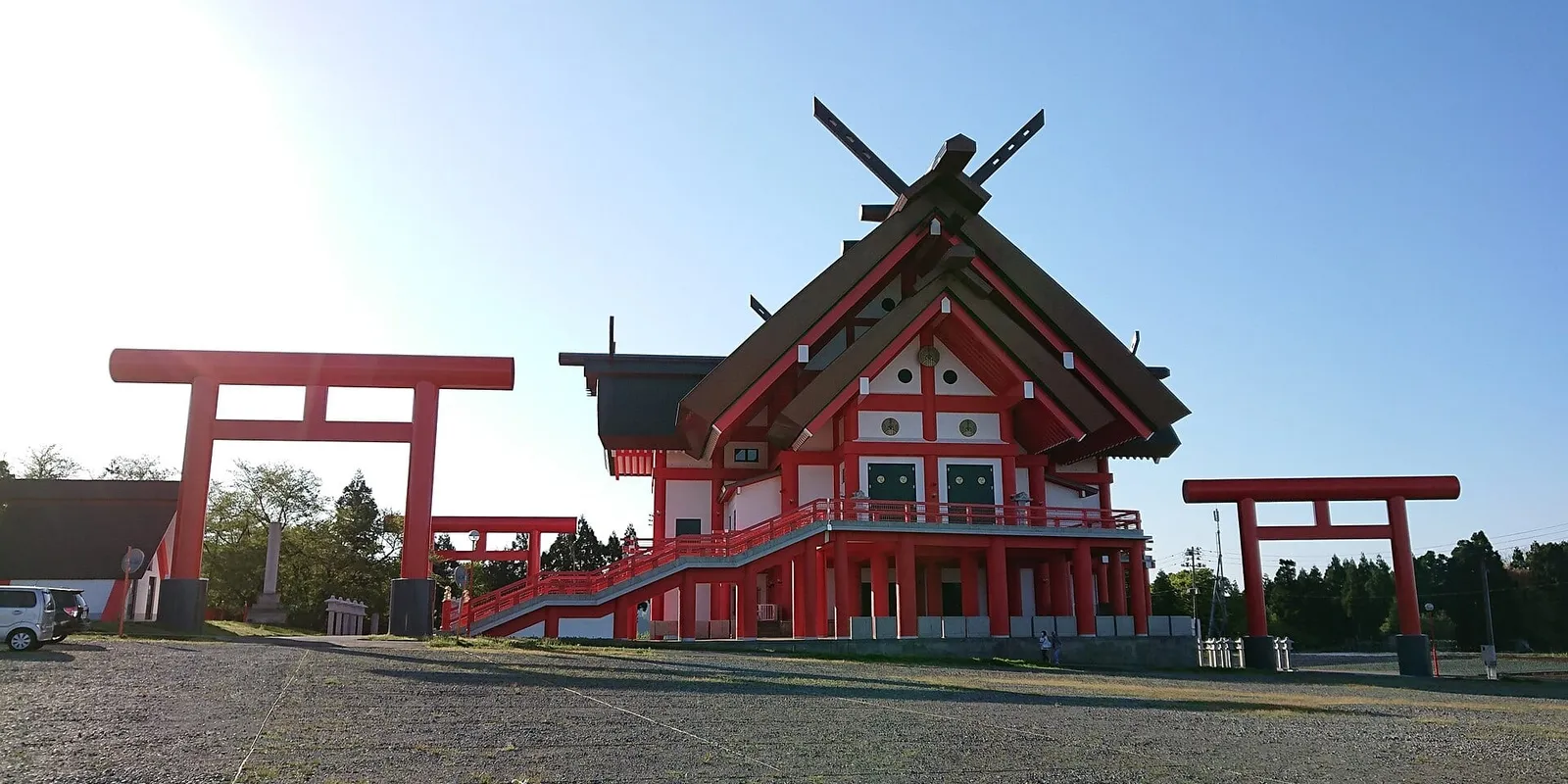
As you pass Echigo-Iwatsuka on the Shinetsu Line, the official site says, a large sanctuary seems to float up on the hilltop on the mountain side. The grounds have a Hongu (main shrine) and a Naiku (inner shrine), and prayer services are held at the Hongu from April 22 to November 5 and at the Naiku from November 6 to April 21. In 2026 the move from the Hongu to the Naiku took place on November 6, and the Naiku is the shrine right inside the parking lot (official site notice dated November 3, 2026). Take care not to head for the Hongu in winter.
The shrine’s distinguishing feature is its “candle prayer,” in which you stand five-colour candles to worship. The official site says that standing candles is a greeting to the parent deities, and that each of the five colours has a meaning (see the FAQ below). Signs and the priests and miko explain how to do it.
According to the Ministry of Land, Infrastructure, Transport and Tourism’s multilingual guide database (an English text created in 2020), the main buildings are made of concrete rather than wood, with a large complex about halfway up the hill and a hilltop complex used only twice a year for local festivals. Next to the hilltop is a small stone shrine, described as the oldest remaining part; its age is unknown, and the speculation that it dates from the late Jomon period is not corroborated. Entry is free, and buying amulets helps with upkeep, the same page says.
Visiting Tips
According to the official site, prayer services run 9:00 AM–3:00 PM, with no reservation needed and no days off. You register at the reception, wait in the waiting room, and are guided to the altar by announcement or by a miko. Many kinds of prayers are listed, including business prosperity, household safety, traffic safety, academic progress, good matches, protection from misfortune and recovery from illness, and car purification, first shrine visits for babies and Shichi-Go-San are also accepted. Shichi-Go-San and first visits run on the hour from 10:00 AM to 3:00 PM (the Shichi-Go-San offering is ¥5,000 per person), and are not held on December 30, February 3, May 8, June 30 and November 2; from December 31 to January 31 they become New Year festival prayers (notice dated November 12, 2026).
General visiting hours are not stated on the official site. Goshuin are not mentioned on the official site either; only the Niigata Tourism Association’s guide page lists “6:00 AM–6:00 PM, ¥300” (a single source that also conflicts with the official prayer hours, so please confirm). The shrine prohibits bringing pets, drone photography, and smoking, eating and drinking, or using fire outside designated places (notice dated November 7, 2024). Photography inside buildings is discouraged.
It is about a 5-minute walk from Echigo-Iwatsuka Station on the JR Shinetsu Line, or about 10 minutes by car from Nagaoka-Minamikoshiji Smart IC (ETC only) (official site). Roads are very crowded with traffic controls from December 31 to January 3 and November 2–3. For inquiries, call 0258-92-3341 (reception 9:00 AM–3:00 PM).
Annual Festivals
The main events from the official site’s annual events page follow (dates can change from year to year).
- Joya-sai, Saitan-sai and Ganjitsu-sai (December 31–January 1): In 2026 the Joya-sai is at 11:00 PM on December 31, the Saitan-sai at 12:00 AM on January 1, and the Ganjitsu-sai at 9:00 AM. Attending both the Joya-sai and Saitan-sai counts as a “two-year visit,” and traffic controls apply from December 31 to January 3.
- Setsubun-sai (February 3) and Hatsuuma-sai (a horse day in February): Purification for unlucky years and bean-throwing, and prayers for business prosperity and more.
- Spring Grand Festival (May 7 and 8): Described as the birth month of Hotoku Okami, with a procession and a children’s procession.
- Nagoshi no Oharae (June 30) and Toshikoshi no Oharae (December 30): The summer rite includes a chinowa (reed ring) ritual, and the 2026 Toshikoshi no Oharae starts at 10:30 AM on December 30.
- Shinkosai (Yomatsuri) (late night, November 2): A festival said to gather the eight million kami, at which wishes are written on red candles and offered. In 2026 it ran from November 2 to 3.
- Shinkoku Kansha-sai (November 23) is held, along with a monthly festival on the 8th, a traffic-safety prayer festival on the 15th and Jorei-sai on the 25th of each month.
Nearby Food & Sightseeing
- Seizo Farm (清造農園): According to the Niigata Tourism Association’s blog, a farm-produce shop you can drop in at after visiting, popular for its Beniharuka roasted sweet potatoes (the blog gives the address as 2188-3 Iizuka, Nagaoka, and says it closes over the New Year holidays; please confirm current hours).
- Echigo-Iwatsuka Station: The JR Shinetsu Line station that the official site gives as the nearest. As the train approaches the station, the official site says, a large sanctuary can be seen on the hill on the mountain side.
Frequently Asked Questions
- Q. What are the visiting hours?
- A. According to the official site, prayer services run 9:00 AM–3:00 PM (last registration 3:00 PM; aim to register by about 2:30 PM), no reservation is needed, and the shrine is open every day of the year. A notice dated August 21, 2026 says amulet sales and prayer registration start at 9:00 AM, with prayers beginning around 9:30 AM. General visiting hours are not stated on the official site, and the Niigata Tourism Association's guide page lists "general visits 7:00 AM–5:00 PM," so for early morning or late afternoon it is safest to call ahead (0258-92-3341, reception 9:00 AM–3:00 PM).
- Q. Can I get a goshuin?
- A. The official site does not appear to mention goshuin. The Niigata Tourism Association's "Niigata Kanko Navi" guide page lists goshuin hours of 6:00 AM–6:00 PM and a fee of ¥300, but this conflicts with the official prayer hours (9:00 AM–3:00 PM) and is a single source, so please call the shrine before visiting (0258-92-3341, reception 9:00 AM–3:00 PM).
- Q. How do I get there, and is there parking?
- A. According to the official site, it is about a 5-minute walk from Echigo-Iwatsuka Station on the JR Shinetsu Line (other guides say about 10 minutes), about 6 minutes by taxi from Raigoji Station, and about 25 minutes by taxi from JR Nagaoka Station. By car, it is about 10 minutes from Nagaoka-Minamikoshiji Smart IC (ETC only), about 15 minutes from Nagaoka IC and about 25 minutes from Ojiya IC on the Kan-etsu Expressway. A parking lot is available, but no number of spaces or fee is given, and roads get very crowded with traffic controls during the major festival and New Year periods (November 2–3 and December 31–January 3).
- Q. What are the five-colour candles?
- A. Hotokusan Inari Taisha is a "candle-prayer shrine." According to the "Worship procedure" page on the official site, visitors stand five-colour candles when they pray. The candles are given out at the offering box; one box holds 10, two of each colour, and you stand five colours on the right and five on the left facing the altar. The meanings given are: green for sound health, traffic safety and academic progress; red for business prosperity and smooth finances; yellow for protection from fire and a bountiful harvest; white for household safety; and purple for the fulfilment of heartfelt wishes. The price is not stated on the official site.
- Q. When is the Shinkosai (Yomatsuri), and what is it?
- A. In the official annual events, the Shinkosai (Yomatsuri) is held late at night on November 2, and in 2026 it ran from November 2 to 3. Worshippers write a wish on a pair of red candles and offer them; the 2026 offering fee was ¥2,000, and the candles at the Okunomiya candle field were lit at 7:00 PM. The Ministry of Land, Infrastructure, Transport and Tourism's multilingual guide says the night festival uses 50,000 to 60,000 red candles in its main ritual. Check the official site's notices for the next dates.
Plan Your Visit
Before you go, you can book a stay and get your shrine-visit items ready.
Amazon links open Amazon.co.jp (Japan) in English; whether an item ships overseas depends on the product.
※ Contains ads (PR). Links open external sites such as Amazon, Rakuten, Trip.com and Booking.com.