History
Inaba Shrine stands at the foot of Mt. Inaba (Mt. Kinka) in Gifu, Gifu Prefecture. The Agency for Cultural Affairs’ Japan Heritage portal lists it with the reading “Inaba-jinja,” and the official site writes the name as 「伊奈波神社」. The principal deity is Inishikiirihiko no Mikoto, described by the official site as a son of Emperor Suinin and an elder brother of Emperor Keiko. Four further deities are enshrined alongside him: Nunoshihime, Hibasuhime, Hikotatsuhiko and Mononobe no Tochine.
According to the official history, the principal deity was enshrined at Maruyama in “Keiko 14,” the year after his death, with Takeuchi no Sukune presiding (no Western-calendar year is given). The shrine’s account continues that in 1539 (Tenbun 8), when Saito Dosan made Mt. Inaba his castle, it was moved to its present site at the foot of the mountain. Gifu City’s official page likewise says it is traditionally held that around 1539, with the building of Gifu Castle, Saito Dosan moved Inaba Shrine from Mt. Inaba (Mt. Kinka) to its current location. At Maruyama, on the summit of the old site on the mountain, Maruyama Shrine stands (per the official precinct guide).
The website of Kogane Shrine, also in Gifu, describes its principal deity Nunoshihime no Mikoto as the consort of Inishikiirihiko no Mikoto, the principal deity of Inaba Shrine (Inaba Shrine’s own site lists her under the spelling 渟熨斗媛命 as one of the accompanying deities). These are all the shrines’ own accounts of their history, and this page does not present them as established fact.
Highlights
The Agency for Cultural Affairs’ Japan Heritage portal lists Inaba Shrine as one of the 27 constituent cultural properties of the Japan Heritage story “Gifu, the Warlord Town where Lord Nobunaga’s Hospitality Lives On.” The same list includes Gifu Castle Ruins and the Gifu Festival.
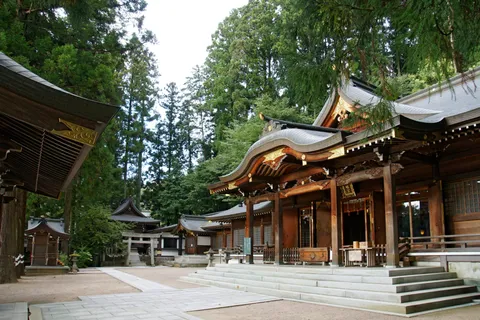
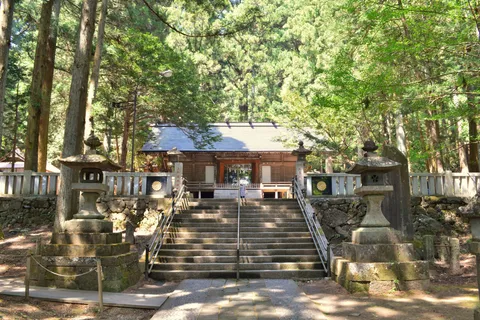
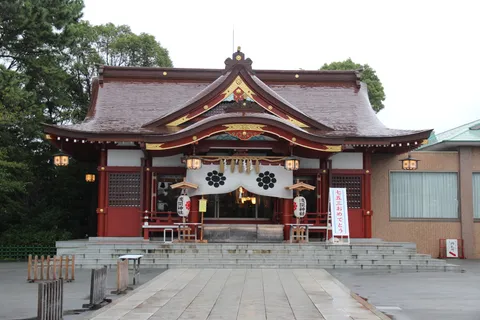
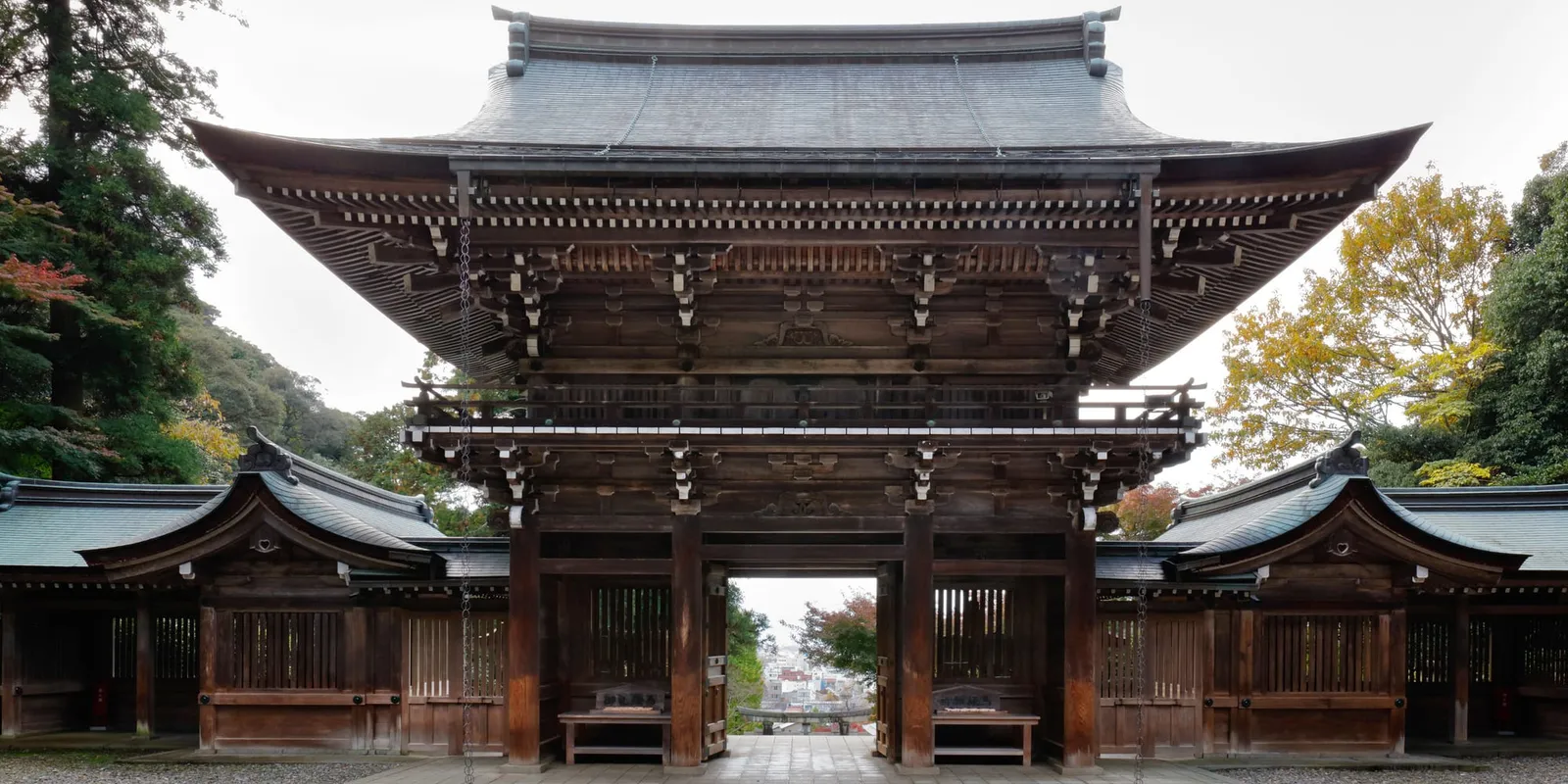
According to the official precinct guide, the main hall is in the irimoya style and enshrines five deities. There are 7 subsidiary shrines on the right side and 6 on the left, and the grounds include Kuroryu Shrine with its Ryuzugan rock (said to have been here before the 1539 move), the Waka Three Deities Shrine, Susanoo Shrine, a Tenmangu, Kaede Inari Shrine, Kibi Shrine, Kanayama Shrine, Atago Shrine, Akiba Shrine and Matsuo Shrine. Matsuo Shrine’s building stands in the middle of the pond below the shrine, and a haiku monument to Matsuo Basho is nearby.
Gifu Tosho-gu, which enshrines Tokugawa Ieyasu, is described as having been worshipped at the Gifu magistrate’s office in the Edo period before being moved to the shrine in the Meiji era, with a new shrine built and the deity moved in the third year of Reiwa (2021). The Inaba Daikoku Shrine is said to have been enshrined in 1709 (Hoei 6), and its image is said to be the work of Sawada Juzo. The grounds also hold a monument honoring the 3,873 war dead of the Russo-Japanese War.
Visiting Tips
The official site says the main hall and subsidiary shrines can be visited 24 hours a day. Prayer services are accepted daily 9:00 AM–4:00 PM, with offerings of ¥6,000, ¥8,000 or ¥10,000 (at your discretion); individuals do not need to book and go to the reception on the first floor of the Sanshuden. The site lists prayers for safe childbirth, first shrine visits for newborns, protection from misfortune, car purification, Shichi-Go-San and more. Because parking is limited, it suggests carpooling.
The goshuin include “Inaba Shrine” and “Tosho-gu” as well as paper-cut goshuin (“Shinko-sai,” “Yoimiya” and “Kuroryu Shrine”), and the goshuin books come in four designs (blue, yellow, pink and “Shinko-sai”). Prices and goshuin-only hours are not stated; the amulet counter is open 9:00 AM–4:30 PM. A notice dated October 16, 2026 announces a seasonal special goshuin with autumn and winter pictures in gold leaf.
By car, there are 30 free spaces on the grounds, and the official site asks you to enter “伊奈波通1-6” in the car navigation. By public transport, tourist sites say to take a Gifu Bus from in front of Gifu Station to the “Inabadori” stop. The official transport map is an image only, so check it for the detailed route.
Annual Festivals
- Shinko-sai (Gifu Festival) (first Saturday of April): The deity’s spirit is moved into a portable shrine and carried in procession through the city. The official site mentions float processions, mechanical-doll performances, mikoshi rushes and fireworks.
- Annual festival (April 5): The official site calls it the most important festival of the year.
- Maruyama Shrine Festival (April 25): Held at Maruyama Shrine on the summit of Maruyama on Mt. Inaba, the shrine’s old site.
- Tosho-gu Festival (June 1): The festival of Gifu Tosho-gu; the official home page gives 10:00 AM.
- Kuroryu Shrine Festival (July 24): A yearly festival at the subsidiary Kuroryu Shrine.
- Misogi purification (July 30): A rite to cleanse the sins and impurities of the past six months and pray for a safe summer.
- Monthly rite (1st and 15th of each month): On the 1st a first-of-the-month prayer service is held (advance registration required; none on January 1).
- New Year’s festival (January 1), Tsutogayu Shinji (January 15), Sagicho Shinji (January 17): Tsutogayu divines the year’s harvest and natural disasters, and in Sagicho last year’s amulets and charms are burned.
Dates may change from year to year, so check the monthly events pages on the official site for the latest.
Nearby Food & Sightseeing
- Gifu Castle (Gifu Castle Ruins): The Japan Heritage portal lists both the Gifu Castle Ruins and the Gifu Castle reconstructed keep in the same story. Inaba Shrine is the shrine traditionally said to have been moved when Gifu Castle was built.
- Kogane Shrine: Another shrine in Gifu. Its official site describes it as a shrine revered for industrial prosperity, treasure and good fortune with money, and business prosperity.
Frequently Asked Questions
- Q. What are the visiting hours?
- A. Per the official site, the main hall and subsidiary shrines can be visited 24 hours a day, year-round. Prayer services are accepted daily 9:00 AM–4:00 PM; individuals do not need to book and simply go to the reception on the first floor of the Sanshuden (groups such as companies need to reserve). The amulet counter is open 9:00 AM–4:30 PM.
- Q. Can I get a goshuin at Inaba Shrine?
- A. Yes. The official site's amulet and goshuin page lists the goshuin "Inaba Shrine" and "Tosho-gu," plus paper-cut goshuin ("Shinko-sai," "Yoimiya" and "Kuroryu Shrine"). The fee and separate goshuin-only hours are not stated on the official site, so use the amulet counter hours (9:00 AM–4:30 PM) as a guide and go early. A notice dated October 16, 2026 announces a seasonal special goshuin with autumn and winter pictures in gold leaf, but gives no price or period.
- Q. How do I get there, and is there parking?
- A. The official access page shows its transport map only as an image, so no travel times from stations are given in text. Tourist sites describe taking a Gifu Bus from in front of JR or Meitetsu Gifu Station to the "Inabadori" stop; the walk from the stop is given as anywhere from about 5 to about 10 minutes depending on the source. By car, there are 30 free spaces on the grounds (per the official site). Enter "伊奈波通1-6" in the car navigation; the plaza in front of the park below the grounds is a no-parking zone.
- Q. Is it really part of a Japan Heritage story?
- A. Yes. On the Agency for Cultural Affairs' Japan Heritage portal, Inaba Shrine (read "Inaba-jinja") is listed as one of the 27 constituent cultural properties of "#006: Gifu, the Warlord Town where Lord Nobunaga's Hospitality Lives On." (Its other designation status on the portal is "undesignated.") The Gifu Festival is also on the list.
- Q. When is the Gifu Festival (Shinko-sai)?
- A. The official site's April events page gives the Shinko-sai (also called the Gifu Festival) as the first Saturday of April and the annual festival (Reisai) as April 5. In the Shinko-sai the deity's spirit is moved into a portable shrine and carried in procession through the city, with float processions, mechanical-doll performances, mikoshi rushes and fireworks described. According to Gifu City, the four surviving floats and three mikoshi are City Important Tangible Folk Cultural Properties, and the festival itself is a City Important Intangible Folk Cultural Property. Details may change from year to year, so check the official site.
Plan Your Visit
Before you go, you can book a stay and get your shrine-visit items ready.
Amazon links open Amazon.co.jp (Japan) in English; whether an item ships overseas depends on the product.
※ Contains ads (PR). Links open external sites such as Amazon, Rakuten, Trip.com and Booking.com.