
History
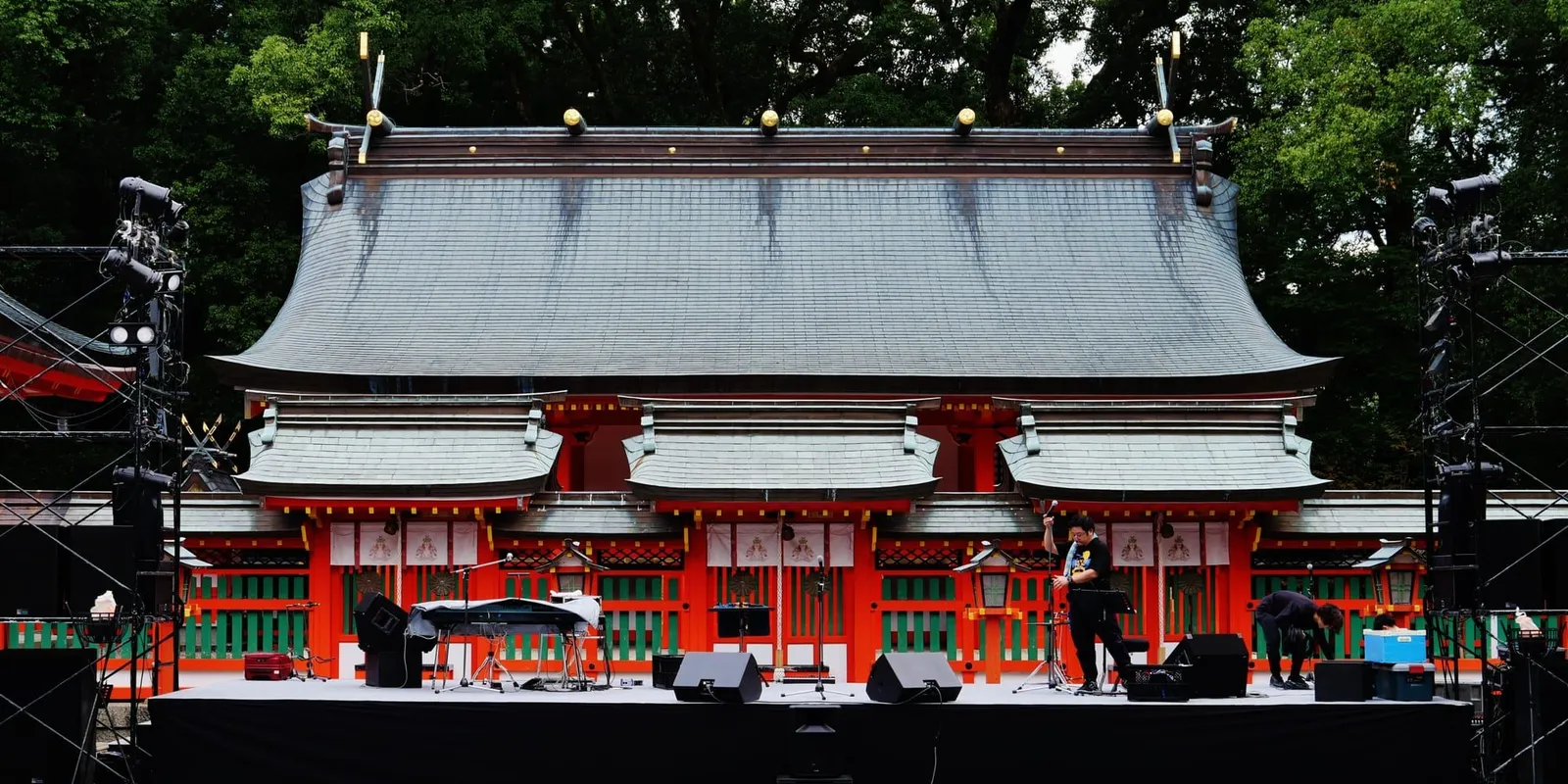
Kumano Hayatama Taisha, together with Kumano Hongu Taisha and Kumano Nachi Taisha, forms the “Kumano Sanzan,” and stands among the central shrines of the roughly 3,000 Kumano shrines found across Japan. Shrine tradition holds that in ancient, mythic times, the deities Kumano Hayatama-no-Okami and Kumano Fusumi-no-Okami descended onto Gotobiki-iwa, a sacred boulder on Mt. Kamikura, and were first worshipped there. Tradition further holds that in the 58th year of Emperor Keiko’s reign, the shrine was relocated to its present site near the mouth of the Kumano River — earning it the name “Shingu” (new shrine), in contrast to the “old shrine” on Mt. Kamikura, a name that later gave rise to the city of Shingu itself.
By the early Heian period, the shrine complex had grown to house twelve deities, becoming known as the “Kumano Junisho Gongen” (Twelve Shrines of Kumano) — a center of syncretic Shinto-Buddhist worship visited by pilgrims of every rank, from emperors to commoners, in numbers so great that the pilgrimage was called the “ant pilgrimage to Kumano.” The chief deities are the married pair Kumano Hayatama-no-Okami and Kumano Fusumi-no-Okami, with Ketsumimiko-no-Okami also enshrined here. In July 2004, the shrine was registered, together with the pilgrimage routes linking it to Kumano Hongu Taisha and Kumano Nachi Taisha, as part of the UNESCO World Heritage Site “Sacred Sites and Pilgrimage Routes in the Kii Mountain Range.”
Highlights
The vermillion shrine buildings stand beside the Kumano River, and the grounds are dominated by a giant nagi (Asian bayberry) tree said to be over 1,000 years old, reportedly planted by the late-Heian-period warrior Taira no Shigemori. Designated a natural monument, the tree’s leaves have long been prized as amulets for lasting relationships, since their parallel veins make them notably resistant to tearing.
The sub-shrine Kamikura Jinja marks the site where the Kumano deities are said to have first descended to earth, reached by climbing 538 steep stone steps to the sacred boulder Gotobiki-iwa. Every year on February 6, the “Otou Matsuri” fire festival sees men in white robes carry torches down this precipitous stairway in a dramatic, high-speed descent — a rite said to call the arrival of spring to the Kumano region.
Visiting Tips
Kumano Hayatama Taisha is easily reached — about a 20-minute walk from JR Shingu Station — making it the most accessible of the three Kumano Sanzan shrines from a town center. The grounds are open from sunrise to sunset, and the shrine office generally opens around 8:00. After visiting the main hall, it’s well worth continuing on foot to the Kamikura Jinja sub-shrine, though sturdy, comfortable footwear is a good idea given the steepness of its 538 stone steps. If you’re visiting all three Kumano Sanzan shrines, starting from Kumano Hayatama Taisha makes for an easier itinerary, thanks to its convenient public transport links from Shingu Station.
Annual Festivals
- Otou Matsuri (February 6): A dramatic fire festival held at the Kamikura Jinja sub-shrine. Men dressed in white, known as “noboriko,” carry torches down the steep stone stairway in a rush that is said to herald the arrival of spring in Kumano.
- Main Grand Festival / Funa Matsuri (October 15–16): The shrine’s largest festival, designated a national Important Intangible Folk Cultural Property. It opens on the 15th with a procession of sacred horses, and on the 16th the spirit of Kumano Fusumi-no-Okami is carried by mikoshi to Mifune-jima island in the “Funa Matsuri” boat festival, accompanied by a spirited boat race on the Kumano River.
Nearby Food & Sightseeing
- Jofuku Sushi (Ekimae): A long-established restaurant near Shingu Station serving the local specialty “sanma-zushi” (mackerel pike sushi), made with lean, firm-bodied fish cured in a citrus-based vinegar.
- Tankaku Castle Park (Shingu Castle Ruins): A hilltop Edo-period castle ruin overlooking the mouth of the Kumano River. The surviving stone walls offer free, sweeping views of the Kumano Sea and the town of Shingu.
- Kamikura Jinja: A sub-shrine of Kumano Hayatama Taisha, marking the site where the Kumano deities are said to have first descended. Its sacred boulder, Gotobiki-iwa, sits atop a stairway of 538 stone steps.
- Asuka Jinja: An outer sub-shrine of Kumano Hayatama Taisha, about a 20-minute walk away, known for its association with the legend of Jofuku.
Frequently Asked Questions
- Q. What are the visiting hours?
- A. The grounds are open from sunrise to sunset. The shrine office, which issues the goshuin, is generally open from around 8:00 until sunset.
- Q. When is the goshuin office open?
- A. Around 8:00–17:00, for ¥500.
- Q. Is there parking?
- A. Yes, free parking is available for about 40 vehicles, with an overflow lot opening during busy periods.
- Q. How do I get there?
- A. About a 20-minute walk, or a 5-minute bus ride, from JR Shingu Station on the Kinokuni Line.
- Q. How does this shrine relate to the Kumano Sanzan?
- A. Kumano Hayatama Taisha is one of the three Kumano Sanzan shrines, together with Kumano Hongu Taisha and Kumano Nachi Taisha. The pilgrimage routes linking all three are registered as part of the UNESCO World Heritage Site "Sacred Sites and Pilgrimage Routes in the Kii Mountain Range."
Related Shrines
Wakayama, Wakayama
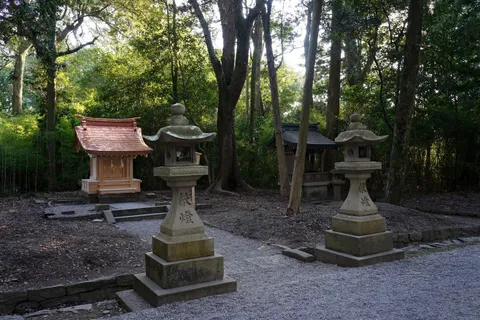
Hinokuma Jingu and Kunikakasu Jingu
Hinokuma Jingu and Kunikakasu Jingu
- Good Relationships
- Household Safety
- Good Fortune
Wakayama, Tanabe
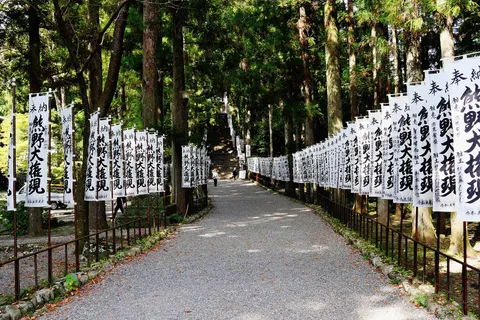
Kumano Hongu Taisha
Kumano Hongū Taisha
- Good Fortune
- Good Health
- Good Relationships
Wakayama, Nachikatsuura
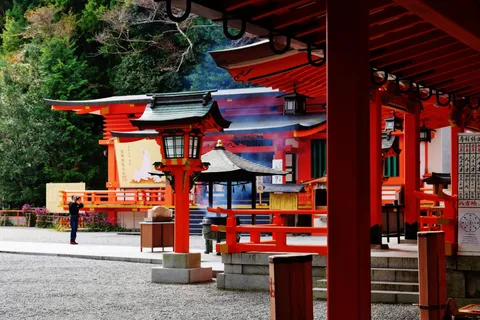
Kumano Nachi Taisha
Kumano Nachi Taisha
- Good Relationships
- Good Fortune
- Good Health