History
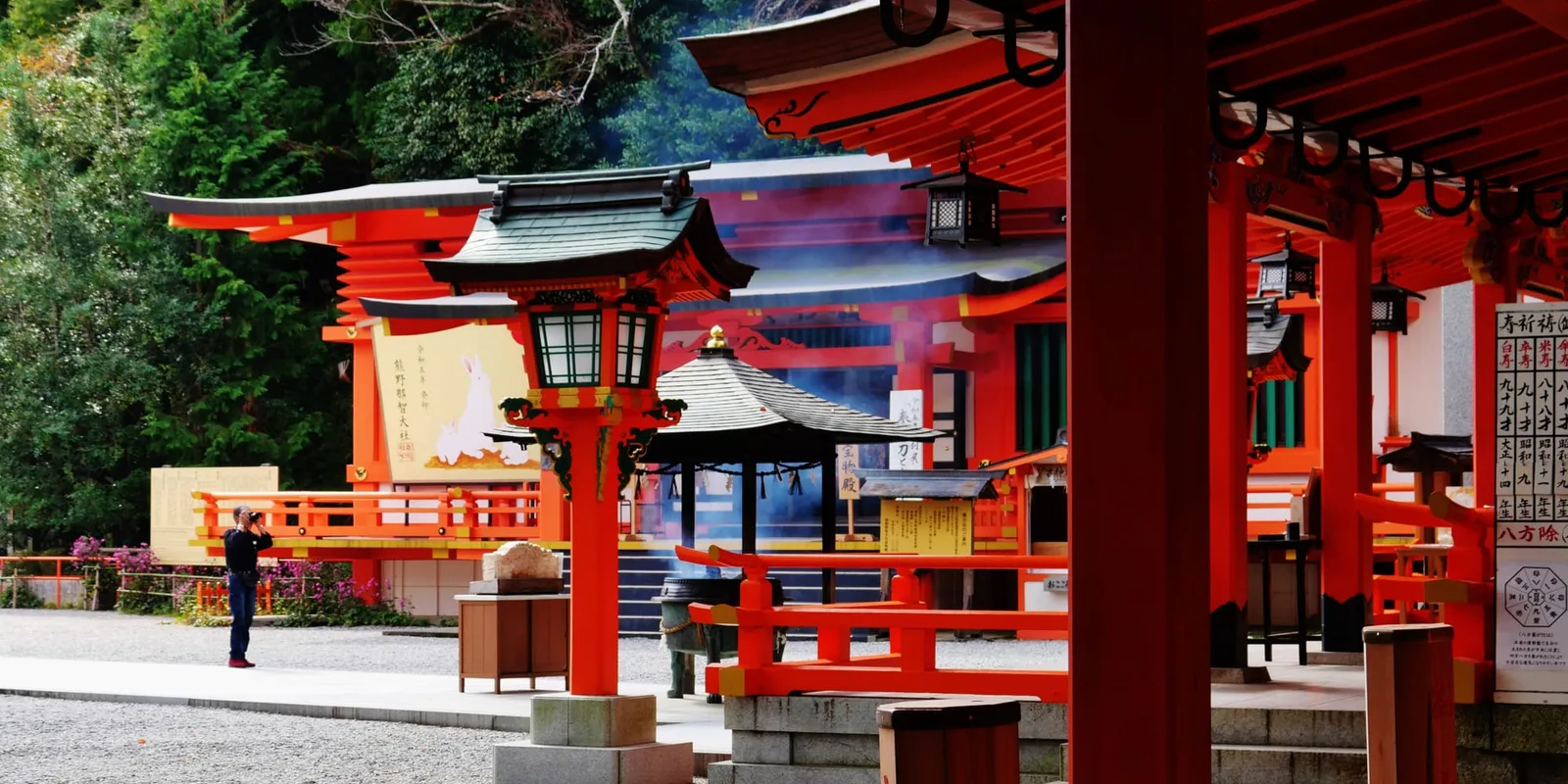
Kumano Nachi Taisha is one of the three Kumano Sanzan shrines, together with Kumano Hongu Taisha and Kumano Hayatama Taisha, but unlike its two sister shrines it traces its origins not to a shrine building but to primitive worship of Nachi Falls itself as a sacred body. According to shrine tradition, a shrine hall was first built on the slope overlooking the falls in the 5th year of Emperor Nintoku’s reign (337 CE), enshrining the Kumano deities alongside the spirit of the falls. Today, Hirou Jinja, dedicated to Nachi Falls, stands near the base of the falls at what is believed to be the original shrine site, preserving the origin point of Nachi worship to this day.
The principal deity, Kumano Fusumi no Okami, is worshipped as a kami of creation and growth and, in particular, of “musubi” — bonds and connections — making the shrine a long-standing center of devotion for good relationships. As described in the entry for Kumano Hongu Taisha, the Heian period saw frequent “Kumano Gyoko” pilgrimages by retired and cloistered emperors, and so many ordinary pilgrims walked the mountain paths linking the three shrines that the endless line of visitors was likened to a procession of ants. A visit to Nachi Taisha traditionally marked the culmination of a pilgrimage through all three Kumano shrines, and together with the adjoining Seiganto-ji — the first temple on the 33-temple Saigoku pilgrimage — it remains a revered site where Shinto and Buddhist devotion have long intertwined.
In 2004, Kumano Nachi Taisha was registered, along with the pilgrimage routes connecting it to Kumano Hongu Taisha and Kumano Hayatama Taisha, as part of the UNESCO World Heritage Site “Sacred Sites and Pilgrimage Routes in the Kii Mountain Range.” The Kumano Kodo trails linking the three shrines remain walked today by pilgrims and travelers alike.
Highlights
The single greatest highlight of Kumano Nachi Taisha is its famous view: the shrine’s vermillion buildings, the adjoining three-storied pagoda of Seiganto-ji, and Nachi Falls — at 133 meters, Japan’s tallest single-drop waterfall — all captured together in one frame. The composition of the white ribbon of falling water framed beside the crimson pagoda is one of the most photographed and recognizable landscape images in Japan, drawing photographers and pilgrims alike. The shrine grounds also open onto sweeping views of the Kumano Sea, conveying the full grandeur of a sacred precinct cradled by the mountains of Nachi.
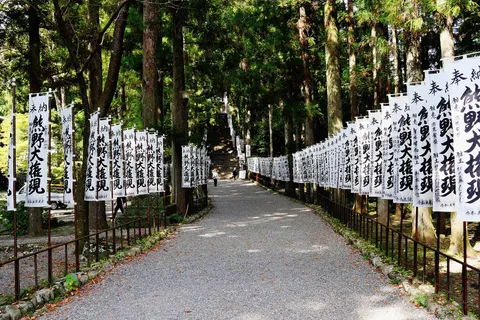
Daimonzaka, one of the approaches to the shrine, is a roughly 600-meter stone-paved path lined with cedar trees said to be 800 years old, considered one of the most beautiful stretches of the entire Kumano Kodo pilgrimage network. Visitors can rent Heian-period costumes to walk the path in the spirit of pilgrims from centuries past. The grounds also hold a sacred stone known as “Karasu-ishi” (crow stone), associated with the three-legged crow Yatagarasu, the divine messenger of Kumano — a figure also familiar as the symbol of the Japan Football Association.
Visiting Tips
Because Kumano Nachi Taisha sits partway up Mount Nachi, reaching it by public transport takes about 30 minutes by bus from JR Kii-Katsuura Station. If you plan to visit not just the main hall but also the neighboring Seiganto-ji and Nachi Falls (Hirou Jinja), allow 1.5–2 hours for the full visit. Reaching the falls involves a roughly 20-minute descent down stone steps from the main shrine, so comfortable walking shoes are recommended. Climbing up via Daimonzaka is a proper trek along the old pilgrimage road, taking about 50 minutes on foot to reach the main hall, so plan your schedule with extra time to spare.
Annual Festivals
- Grand Festival “Nachi Fan Festival (Nachi Fire Festival)” (July 14): The most important festival at Kumano Nachi Taisha, a dramatic rite in which twelve large fan-shaped mikoshi and blazing pine torches are carried in procession along the approach. Designated a national Important Intangible Folk Cultural Property.
- Nachi Dengaku (July 14): A centuries-old ritual dance performed alongside the Grand Festival, also inscribed on the UNESCO Intangible Cultural Heritage list.
- Setsubun Festival (February 3): A rite praying for good health and protection from misfortune in the year ahead.
- New Year’s Eve Festival (December 31): A closing rite for the year, drawing many visitors who spend the turn of midnight on the shrine grounds.
Nearby Food & Sightseeing
- Daimonzaka: A roughly 600-meter stone-paved pilgrimage path lined with 800-year-old cedars, widely considered one of the most beautiful and historic stretches of the Kumano Kodo.
- Nachi Falls: At 133 meters, Japan’s tallest single-drop waterfall, venerated since ancient times as the sacred body of Hirou Jinja.
- Miyamatei: A restaurant and souvenir shop right beside Nachi Falls, known for its black-caramel soft-serve ice cream and light meals — a convenient rest stop during your visit.
Frequently Asked Questions
- Q. What are the visiting hours?
- A. 6:00–16:30. Visiting the grounds is free.
- Q. When is the goshuin office open?
- A. Around 7:30–16:30, for ¥300.
- Q. Is there parking?
- A. Yes — paid parking below the shrine office (¥800 per car), or free parking at the entrance to the Daimonzaka pilgrimage path (about a 50-minute walk to the main hall).
- Q. How close is Nachi Falls?
- A. Hirou Jinja, which enshrines the falls, is about a 20-minute walk down a stone staircase from the main hall.
- Q. How do I get there?
- A. About a 30-minute bus ride from JR Kii-Katsuura Station, getting off at Nachisan.