History
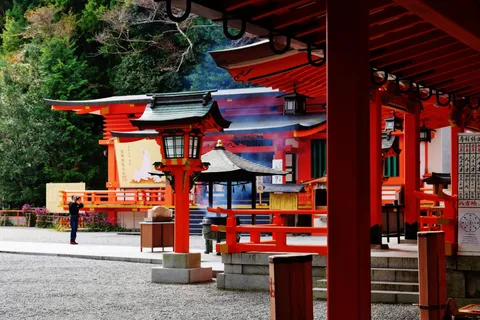
Kumano Hongu Taisha, together with Kumano Hayatama Taisha and Kumano Nachi Taisha, forms the “Kumano Sanzan,” and it serves as the head shrine of roughly 3,000 Kumano shrines across Japan. Its exact founding date is unknown, but shrine tradition holds that it was established in the 65th year of Emperor Sujin’s reign on “Oyunohara,” a sandbar at the confluence of the Kumano, Otonashi, and Iwata rivers. During the Heian period, retired emperors made repeated pilgrimages known as “Kumano Gyoko,” with some records suggesting over 100 imperial visits, reflecting the depth of devotion the shrine commanded.
The chief deity is Ketsumimiko-no-Okami (identified with Susanoo-no-Mikoto), with Izanami-no-Okami enshrined in the first hall, Izanagi-no-Okami in the second, and Amaterasu-Okami in the fourth. As “Kumano Gongen,” the site also became a center of syncretic Shinto-Buddhist worship, regarded as a gateway to the Pure Land, and pilgrims of every social rank flocked here in numbers so great the procession was described as the “ant pilgrimage to Kumano.”
A great flood in 1889 swept away much of the shrine complex that had stood at Oyunohara, and in 1891 the four main halls were relocated to the current site. Today, the pilgrimage routes linking Kumano Hongu Taisha, Kumano Hayatama Taisha, and Kumano Nachi Taisha are registered as part of the UNESCO World Heritage Site “Sacred Sites and Pilgrimage Routes in the Kii Mountain Range.”
Highlights
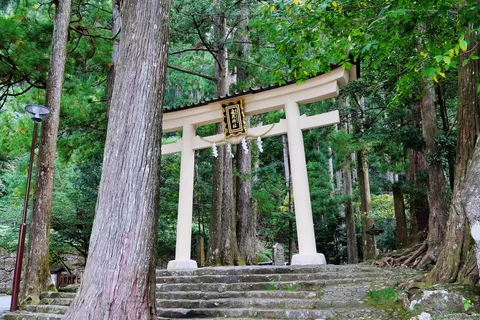
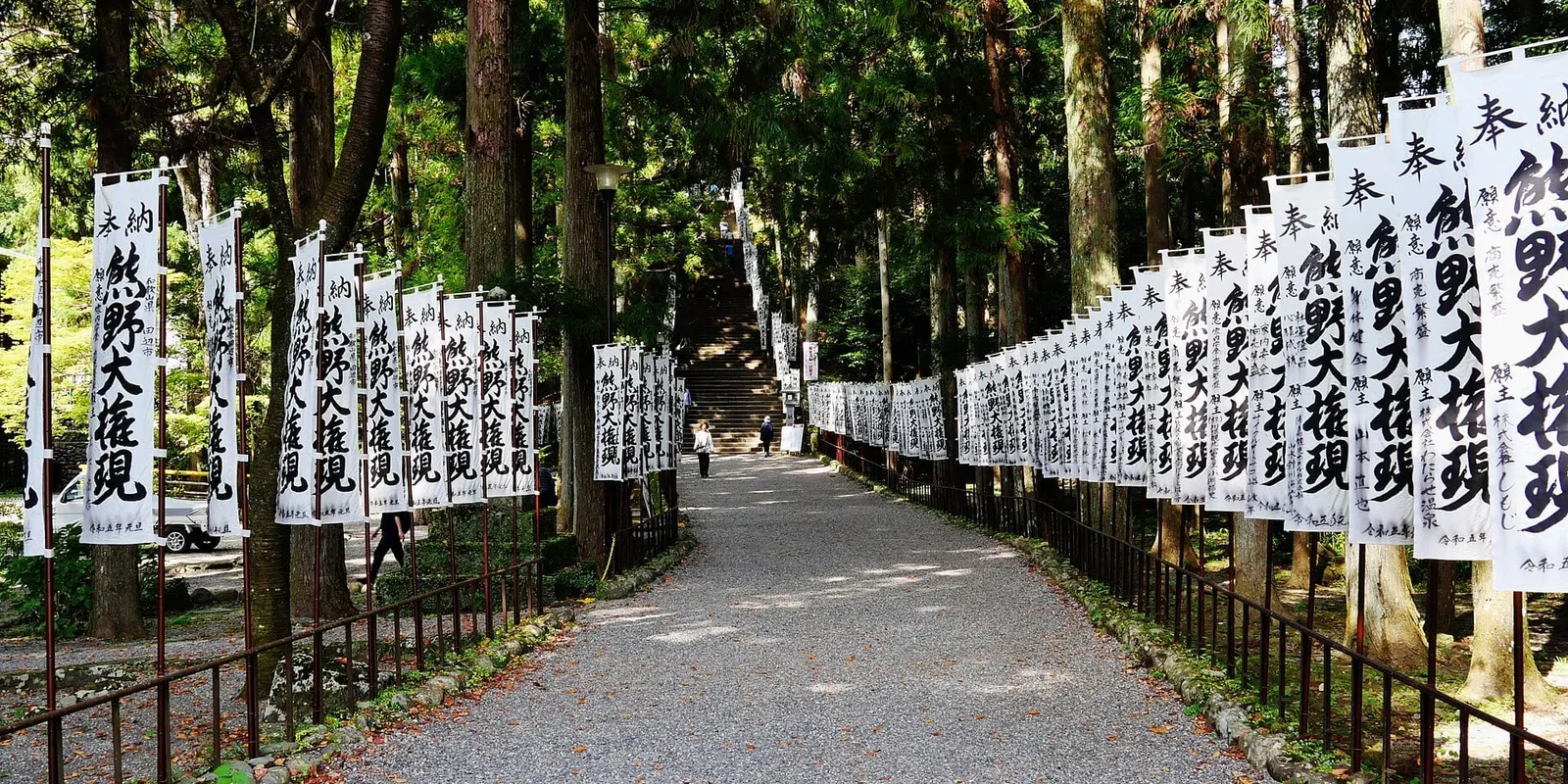
The approach to the main hall climbs 158 stone steps lined with ceremonial banners and tall cedar trees, creating a solemn atmosphere as visitors ascend toward the sacred precinct. The grounds also feature a stone monument to Yatagarasu, the three-legged crow familiar as the symbol of the Japan Football Association, along with a Yatagarasu-shaped post box that draws the eye of many visitors.
Oyunohara, the shrine’s original site, lies about a 10-minute walk from the current shrine. Standing amid rice paddies, its great torii gate is the largest in Japan at 33.9 meters tall and 42 meters wide. Built in 2000, it has become the symbol of Kumano Hongu and one of the most popular photo spots for pilgrims and tourists alike.
Visiting Tips
Kumano Hongu Taisha sits deep in the mountains, and reaching it by public transport takes around two hours by bus from either Kii-Tanabe or Shingu Station. Beyond the main shrine, it’s well worth the short walk to Oyunohara, the former shrine site; visiting both at a relaxed pace takes about an hour and a half. The area is also home to celebrated hot springs such as Yunomine Onsen and Kawayu Onsen, so pairing your visit with a soak — whether a day trip or an overnight stay — is a wonderful way to experience the spirit of the old Kumano pilgrimage.
Annual Festivals
- Yatagarasu Ritual (January 7): A ceremony marking the first use of the year’s sacred seal, also known as the “Treasure Seal Ritual.” Prayers are offered for national peace and protection from epidemics, and participants receive a goo talisman.
- Main Grand Festival (April 13–15): The shrine’s most important festival. It begins on the 13th with the Yunobori purification ritual, and on the 15th the deities make their once-a-year “return visit” to the former shrine site at Oyunohara in a procession that draws large crowds.
- Yata Fire Festival (mid-October): Held throughout Hongu town, the festival moves from a stately period-costume procession to a rousing celebration of taiko drumming, dancing, and fireworks.
- Lantern Festival for the Ancestors (August 15): Lanterns are lit along the Kumano River to console the spirits of ancestors, creating a dreamlike scene.
Nearby Food & Sightseeing
- Chinchoan: A restaurant just steps from the main shrine, known for its soba and mochi set — a perfect stop after paying your respects.
- Yunomine Onsen / Tsuboyu: Said to be Japan’s oldest hot spring and part of the World Heritage listing, the tiny Tsuboyu bath is famous for changing color up to seven times a day; hot-spring-boiled eggs and mochi are local specialties.
- Kawayu Onsen: An unusual hot spring where warm water bubbles up directly from the riverbed; in winter, a section of the river is dammed to form the famous open-air “Sennin-buro” bath.
- Oyunohara: The shrine’s former site, marked today by Japan’s largest torii gate rising from the surrounding rice fields — a place with an unmistakably sacred atmosphere.
Frequently Asked Questions
- Q. What are the visiting hours?
- A. 7:00–17:00. The grounds are free to enter.
- Q. When is the goshuin office open?
- A. Around 8:00–17:00, for ¥500.
- Q. Is there parking?
- A. Yes, free parking is available at about 6 lots nearby.
- Q. What is Oyunohara?
- A. The shrine's former site, about a 10-minute walk from the current shrine, marked by Japan's largest torii gate at 33.9 meters tall.
- Q. How do I get there?
- A. About a 2-hour bus ride from JR Kii-Tanabe Station or Shingu Station, getting off at "Hongu Taisha-mae."