History
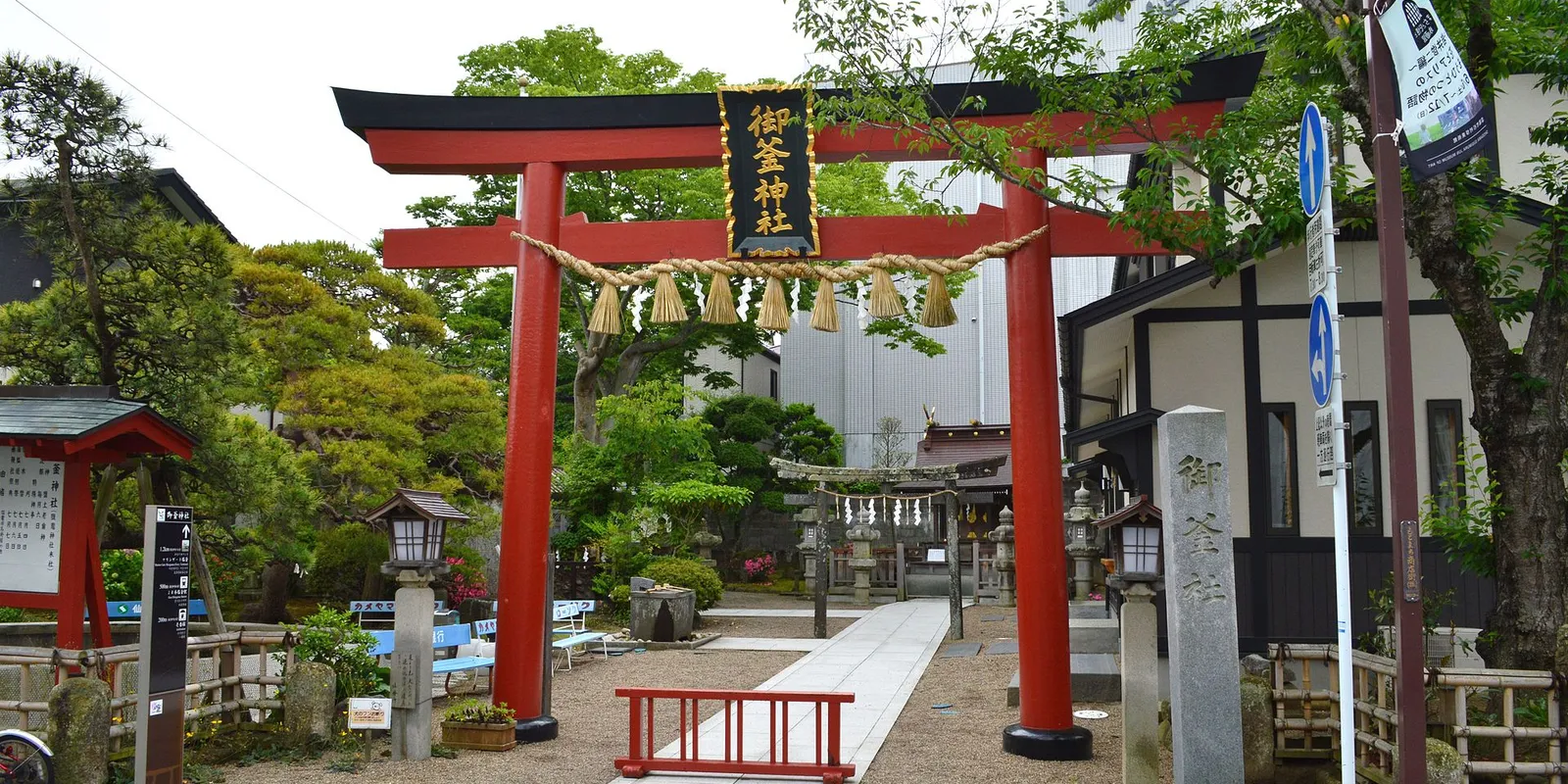
Okama Jinja is a subsidiary shrine of Shiogama Jinja (Shiwahiko Jinja and Shiogama Jinja), known as the ichinomiya, or highest-ranked shrine, of the old province of Mutsu. Like the main shrine, it enshrines Shiotsuchi no Oji no Kami, a deity traditionally said to have taught the local people the art of making salt from seawater. The exact date of its founding is unknown, but the area was once known as Hode-no-Hama, a beach associated with ancient salt production, and tradition holds that Shiotsuchi no Oji no Kami taught the method of boiling seawater here. The place name “Shiogama” — literally “salt cauldron” — is itself said to derive from the sacred cauldrons enshrined at this site.
Inside the shrine hall stand four iron cauldrons known as shinkama, or “sacred cauldrons.” Their water is said to never overflow or run dry, and legend holds that its color changes whenever something extraordinary is about to happen in the world; during the Edo period, the shrine is said to have been required to report any such color change to the rulers of the Sendai domain. Together with the “Ishi-no-Hoden” stone monument at Oushiko Jinja in Takasago, Hyogo Prefecture, and the “Amanosakahoko” spear at Kirishima Togu in Miyazaki Prefecture, these cauldrons are counted among the “Three Mysteries of Japan” (Nihon Sanki), a classification first proposed by the Edo-period physician and traveler Tachibana Nankei. The haiku poet Matsuo Basho is also recorded as having visited and paid his respects to the sacred cauldrons during his travels, an episode noted in his travelogue Oku no Hosomichi (The Narrow Road to the Deep North).
Highlights
The main attraction is the shrine’s four sacred cauldrons, housed inside the shrine hall. For a small viewing fee (¥100), visitors can view them up close and see the water itself. The legend that the water changes color before disaster strikes is a long-documented tradition, recorded as far back as the Edo period. In more recent years, it has often been said that the water appeared to change color on the day of the 2011 Great East Japan Earthquake and tsunami — but it’s worth noting clearly that this is not a scientifically verified event, only an anecdote passed down and widely repeated rather than an established fact.
Though the grounds are modest in size, Okama Jinja sits just a short walk from Shiogama Jinja’s main approach, carrying an air of quiet mystery befitting one of Japan’s “Three Mysteries.” Every July, the shrine’s Moshioyaki salt-making ritual lets visitors witness an ancient method of salt production using seaweed, a tradition closely tied to the deity Shiotsuchi no Oji no Kami enshrined here.
Visiting Tips
Because no calligrapher is stationed on-site, only pre-written goshuin are available at Okama Jinja itself; visitors wanting a goshuin written to order should ask at the main Shiogama Jinja’s goshuin office instead. The sacred cauldrons can be viewed 6:00–18:00 from March to October and 6:00–17:00 from November to February, with no closed days — but it’s worth allowing extra time, as viewing may not always be possible during certain hours. There is no parking for visitors on the grounds, so anyone arriving by car should use a nearby coin-operated lot. Since Okama Jinja is only a few minutes’ walk from Shiogama Jinja’s main approach, visiting both together is recommended.
Annual Festivals
- Moshioyaki Salt-Making Ritual (July 4–6): A ritual reenacting the ancient method of salt production, beginning with the harvest of hondawara seaweed, continuing with refilling the sacred cauldrons with seawater drawn at high tide, and concluding with boiling that seawater down with the seaweed to produce salt offered to the deity. Designated an Intangible Folk Cultural Property of Miyagi Prefecture.
- Shiogama Jinja Annual Festival (July 10): The main annual festival of Shiogama Jinja, the shrine to which Okama Jinja belongs; Okama Jinja is considered closely connected to the rites of this festival as well.
Nearby Food & Sightseeing
- Shiogama Jinja & Shiwahiko Jinja: The ichinomiya shrine that Okama Jinja serves as a subsidiary of, just a few minutes’ walk away. Highlights include the imposing 202-step Omote-zaka stone stairway and an impressive complex of shrine buildings.
- Marine Gate Shiogama: A passenger port terminal about a 10-minute walk from Hon-Shiogama Station, where sightseeing boats (about 50 minutes) depart for Matsushima, one of Japan’s Three Scenic Views. The terminal also has restaurants serving sushi and seafood rice bowls.
- Shiogama Fish Wholesale Market: A market famed for its fresh tuna landings, symbolizing Shiogama’s reputation as a “town of sushi.” Visitors can build their own seafood rice bowl from the fresh catch on offer.
Frequently Asked Questions
- Q. How is Okama Jinja related to Shiogama Jinja?
- A. Okama Jinja is a subsidiary shrine (keigai-massha) of Shiogama Jinja (formally Shiwahiko Jinja and Shiogama Jinja), one of Miyagi Prefecture's most important shrines and the first-ranked shrine (ichinomiya) of the old Mutsu Province. Both shrines enshrine the same deity, Shiotsuchi no Oji no Kami, and Okama Jinja stands just a few minutes' walk from Shiogama Jinja's main approach. Because no calligrapher is stationed at Okama Jinja itself, goshuin written to order are handled at the main shrine's goshuin office.
- Q. What are the sacred cauldrons (shinkama) at Okama Jinja?
- A. Four iron cauldrons enshrined in the shrine hall, traditionally said to be the origin of the place name "Shiogama" (salt cauldron). Their water is said to never overflow or dry up, and legend holds that its color changes before something extraordinary happens; during the Edo period, the shrine was reportedly required to notify the Sendai domain of any such change. Together with the "Ishi-no-Hoden" stone at Oushiko Jinja in Takasago, Hyogo, and the "Amanosakahoko" spear at Kirishima Togu in Miyazaki, the cauldrons are counted among Japan's "Three Mysteries" (Nihon Sanki).
- Q. What is the Moshioyaki salt-making ritual?
- A. Held every year from July 4 to 6, this ritual reenacts the ancient method of making salt taught by Shiotsuchi no Oji no Kami. It begins with the harvesting of hondawara seaweed, followed by refilling the sacred cauldrons with seawater drawn at high tide, and concludes with boiling that seawater down with the seaweed to produce salt, which is then offered to the deity. It is designated an Intangible Folk Cultural Property of Miyagi Prefecture.
- Q. Is it true that the water in the cauldrons changed color before the 2011 earthquake and tsunami?
- A. It is widely reported and repeated in the media that on the morning of March 11, 2011, two of the four cauldrons were seen to hold unusually clear water rather than their normal murky color. However, this rests on eyewitness accounts passed down and reported after the fact, not on any scientifically verified or officially documented record — unlike the Edo-period practice of formally reporting color changes to the Sendai domain. It should be understood as a popular legend and anecdote rather than an established fact.
- Q. What are the viewing hours and access for Okama Jinja?
- A. The sacred cauldrons can be viewed 6:00–18:00 from March to October and 6:00–17:00 from November to February, with no closed days throughout the year. The shrine is a 5-minute walk from Hon-Shiogama Station on the JR Senseki Line. There is no parking for visitors on the grounds, so anyone arriving by car should use a nearby coin-operated lot.
Related Shrines
Miyagi, Iwanuma
Takekoma Jinja
Takekoma-jinja
- Business Prosperity
- Bountiful Harvest
- Household Safety
Tokyo, Chuo Ward
Namiyoke Inari Jinja
Namiyoke Inari Jinja
- Business Prosperity
- Maritime Safety
- Protection from Misfortune
Fukuoka, Soeda, Tagawa District
Hikosan Jingu
Hikosan Jingu
- Good Fortune
- Protection from Misfortune
- Household Safety