History
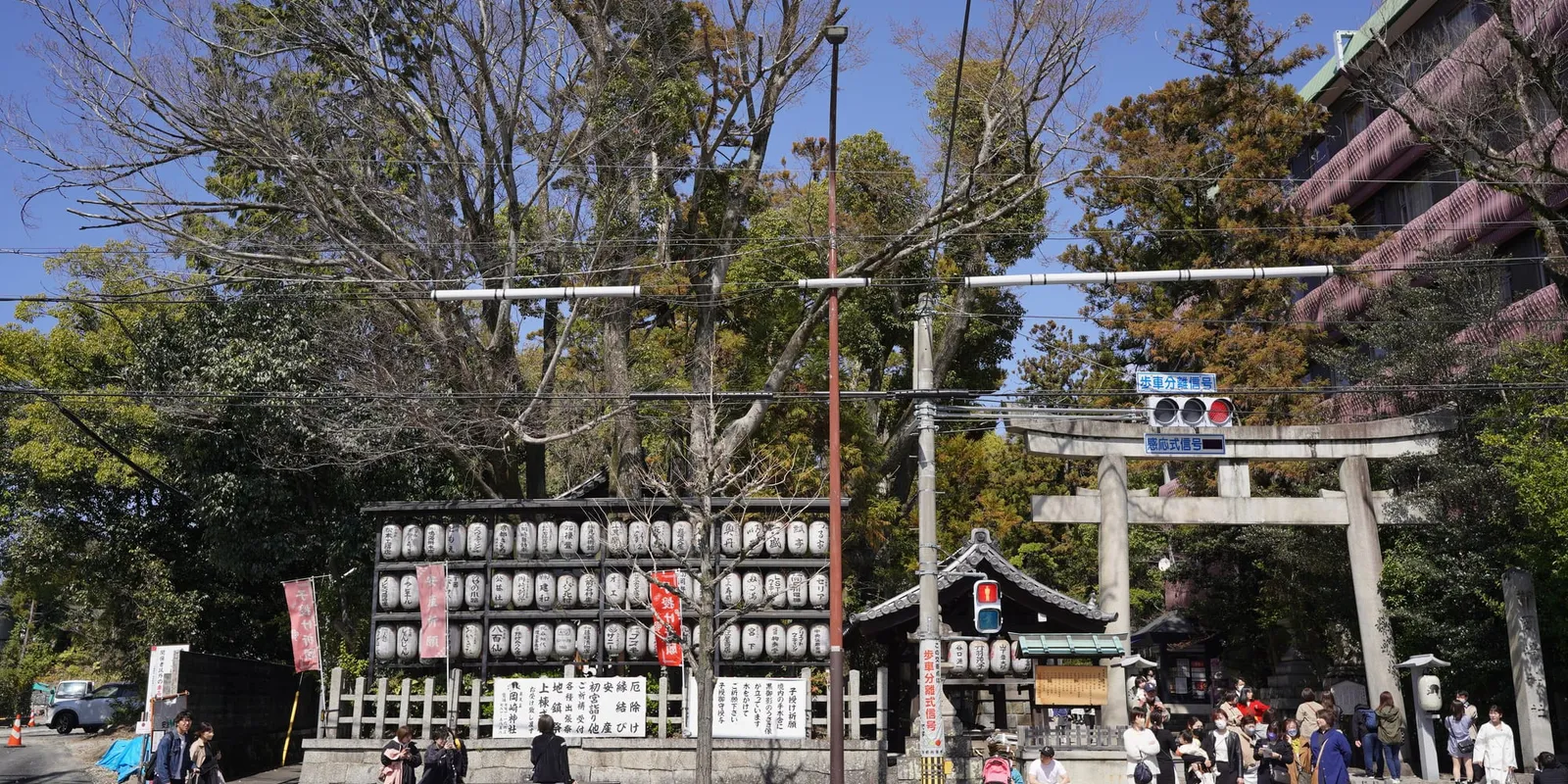
Okazaki Jinja is traditionally said to have been founded in 794, when Emperor Kanmu established the new capital of Heian-kyo, as one of four guardian shrines built to protect the capital in each cardinal direction. Standing to the east of the city, it came to be called “Toten’o” (Eastern Heavenly King) and has long been venerated as a guardian against misfortune protecting the capital’s eastern approach. The four-directions founding story comes down through shrine tradition, and some historical details are debated among scholars, but the shrine’s roots reaching back to the earliest years of Heian-kyo are widely accepted.
Records show that in 869, by order of the court of Emperor Seiwa, the shrine was rebuilt and Gozu Tenno — a deity identified with Susanoo — was invited from Hiromine in Harima Province (present-day Himeji, Hyogo Prefecture), an event sometimes treated as the shrine’s effective founding. In 1178, offerings were dedicated to the shrine on behalf of Empress Kenreimon-in (Taira no Tokuko), consort of Emperor Takakura, in prayer for a safe delivery; after she safely gave birth to a prince (the future Emperor Antoku), the shrine’s reputation as a deity of safe childbirth grew markedly.
Highlights
Okazaki Jinja is affectionately known across Kyoto as the “Rabbit Shrine,” and rabbit motifs can be found throughout the grounds. At the purification fountain stands a black granite “child-blessing rabbit” statue, depicted gazing up at the moon with its body filled with the moon’s power; tradition holds that pouring water over the statue and gently rubbing its belly while making a wish brings blessings of fertility and safe childbirth. Behind the worship hall sits a pair of “beckoning rabbits” with a raised paw, said to invite good fortune and money on one side and good relationships on the other. Near the shrine’s entrance, a pair of guardian “komausagi” rabbits — one with mouth open, one closed — stand in for the lion-dog guardians (komainu) found at most shrines.
The grounds also include two smaller subsidiary shrines: Ame-no-Yashiro, a rare shrine dedicated to a dragon deity associated with rain-calling rituals and healing of eye ailments, and Miyashige Inari Jinja, a deity of business prosperity said to have been relocated here from the grounds of the former Sento Imperial Palace.
Visiting Tips
A typical visit begins by passing through the torii gate and pouring water over the child-blessing rabbit at the purification fountain, then paying respects at the main hall before finishing with a wish for good relationships or good fortune at the beckoning rabbits behind the worship hall. The charms, fortune slips (omikuji), and votive plaques (ema) sold on the grounds are all designed with an endearing rabbit motif, making the shrine especially popular with women and couples. It gets particularly crowded during New Year visits in a Year of the Rabbit and on weekends, so a weekday morning is recommended for a quieter visit.
Annual Festivals
- Reitaisai (Grand Festival), “O-Suzumi” (July 16): The shrine’s most important annual festival, held in prayer for the peace and prosperity of the local parish.
- Setsubun Festival (February): A festival for warding off misfortune that draws large numbers of visitors.
- Nagoshi no Oharae (June 30): A purification rite that clears away the first half-year’s impurities and prays for continued health and safety.
- Ujiko Taisai (Parish Grand Festival) (October 16): An autumn festival celebrated by the shrine’s local parish community.
- Numerous other rites are held throughout the year, including the New Year’s Saitan-sai (January 1), a prayer festival for the harvest, the Hitaki-sai fire ritual (November 16), a Niiname-sai harvest thanksgiving festival, and a year-end purification rite (December 31).
Nearby Food & Sightseeing
Okazaki Jinja sits just east of the Okazaki cultural district, home to Heian Jingu, the Kyoto City KYOCERA Museum of Art, and the National Museum of Modern Art, Kyoto — making it easy to combine with sightseeing. A number of long-established restaurants and cafes are also scattered around the neighborhood.
- Heian Jingu: A vividly vermillion shrine within walking distance of Okazaki Jinja, built to commemorate the 1,100th anniversary of the founding of Heian-kyo. Many visitors pair it with Okazaki Jinja as another site tied to the birth of the ancient capital.
- LA VOITURE: A patisserie founded in 1971, within walking distance of Okazaki Jinja, famous for its glossy tarte tatin and a garden-view tea salon.
- Kyo-udon Namasoba Okakita: A long-established udon restaurant founded in 1940, known for its refined dashi broth — a convenient stop for a meal after visiting the shrine.
Frequently Asked Questions
- Q. What are the visiting hours?
- A. The shrine is open 9:00–17:00. Entry to the grounds is free.
- Q. Can I get a goshuin here?
- A. Yes, at the shrine office from 9:00–17:00 for ¥500. Rabbit-themed goshuin and charms are especially popular, including special designs released for the Year of the Rabbit.
- Q. How do I get there?
- A. Get off right outside the 'Okazaki-jinja-mae' bus stop (city bus routes 32, 93, 203, 204), or about a 3-minute walk from the 'Higashi-Tennocho' stop (route 5). It's about a 20-minute walk from Keage Station on the subway Tozai Line, or about 25 minutes from Jingu-Marutamachi Station on the Keihan line. It's also within easy walking distance of Heian Jingu.
- Q. Is parking available?
- A. There is a small free parking area for visitors on the grounds, with room for about 6 cars (9:00–17:00). It fills up quickly on weekends and holidays, so it's worth having nearby paid parking as a backup.
- Q. Why is it known as the 'Rabbit Shrine'?
- A. The wooded hillside behind the shrine was once home to wild rabbits, which came to be regarded as the messengers of the enshrined kami. Because rabbits are prolific breeders, and because the shrine's deities include many divine children, rabbits also became a symbol of fertility and safe childbirth. At the purification fountain stands a black granite 'child-blessing rabbit' statue, said to hold the moon's power within it — visitors pour water over it and rub its belly while making a wish. Elsewhere on the grounds are guardian 'komausagi' rabbit statues and a pair of 'beckoning rabbits,' and even the amulets and fortune slips are designed with a rabbit motif.
Related Shrines
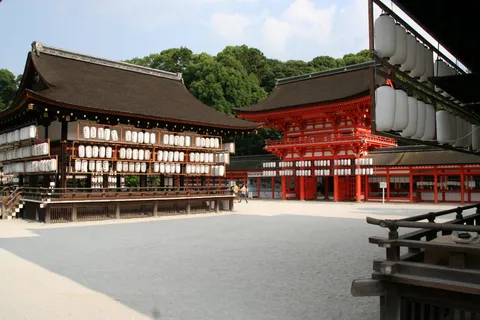
Kyoto Prefecture, Sakyo Ward, Kyoto
Shimogamo Jinja
Shimogamo-jinja
- Good Relationships
- Safe Childbirth
- Protection from Misfortune
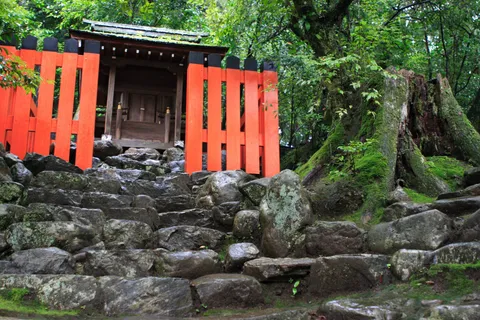
Kyoto Prefecture, Kita Ward, Kyoto
Kamigamo Jinja
Kamigamo-jinja
- Protection from Misfortune
- Protection from Lightning
- Protection from Bad Directions
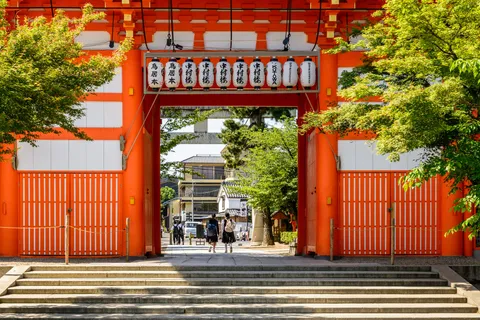
Kyoto Prefecture, Higashiyama Ward, Kyoto
Yasaka Jinja
Yasaka-jinja
- Protection from Epidemics
- Protection from Misfortune
- Business Prosperity