History
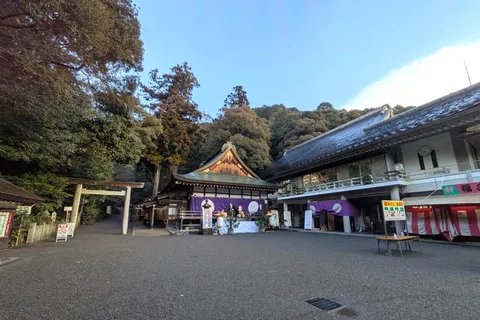
Tsukubusuma Jinja stands on Chikubushima, a small island roughly 2km in circumference in the northern part of Lake Biwa. Shrine tradition dates its founding to 459 AD, in the reign of Emperor Yuryaku, when a small shrine was first built to enshrine Azai-hime-no-Mikoto. In 724, Emperor Shomu is said to have received a divine message in a dream from Amaterasu Omikami instructing him to build a temple at this sacred site of Benzaiten, and the monk Gyoki is traditionally credited with founding Hogon-ji temple on the same island soon after. Ever since, the shrine and temple have stood side by side as a single sacred site shaped by shinbutsu-shugo, the syncretic blending of Shinto and Buddhist worship, and both have been devoutly venerated since the Heian period.
The island itself is regarded as the shintai (sacred body) of the enshrined deities, and Chikubushima in its entirety is designated a National Place of Scenic Beauty and Historic Site. Its dramatic setting rising from the lake has earned it the nickname “the Itsukushima of Omi,” and it is said to have drawn deep reverence even from the warlords of the Sengoku period.
The National Treasure Honden and Karamon
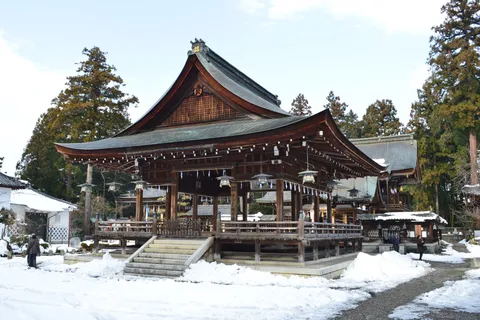
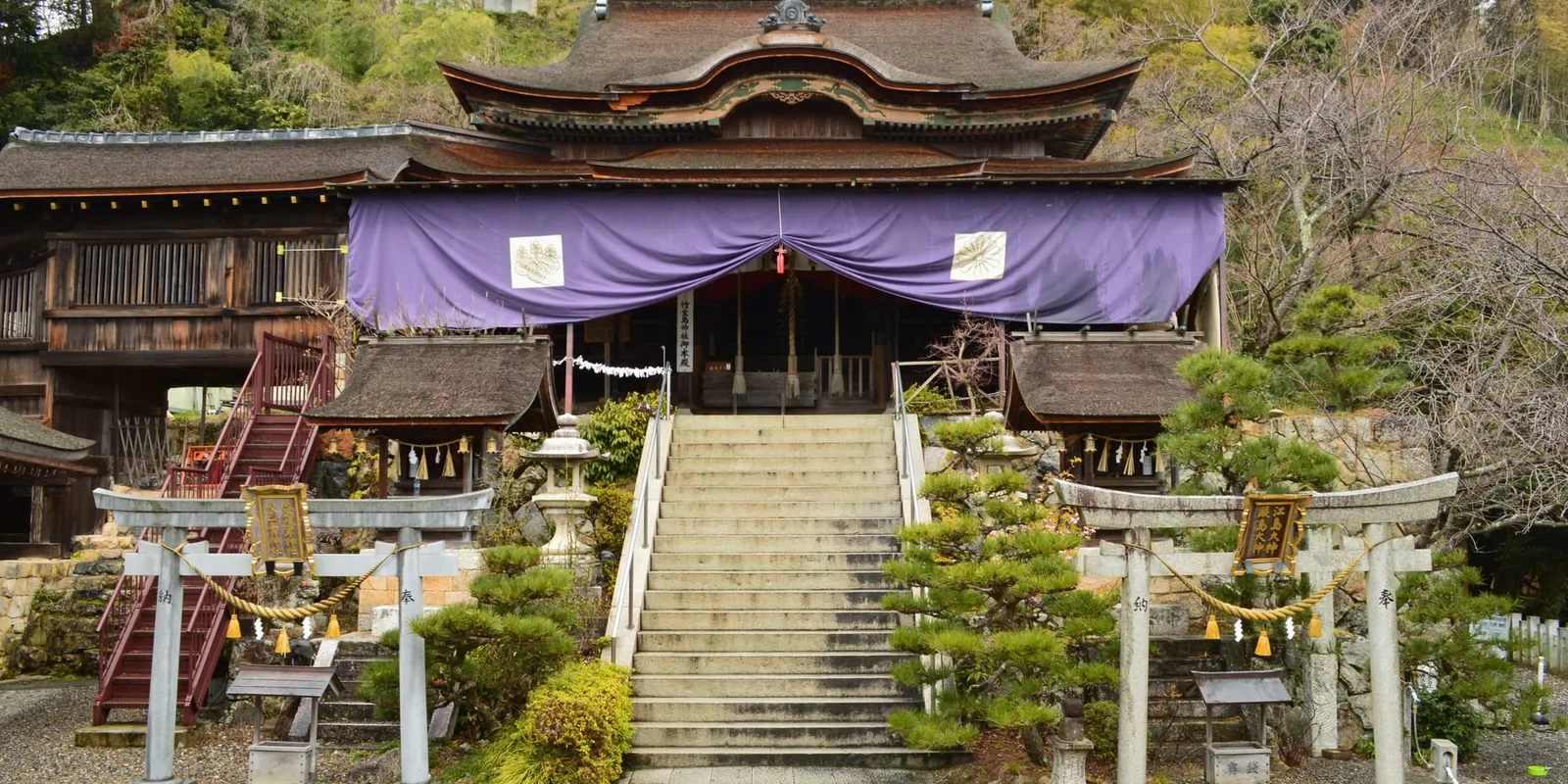
The honden (main hall) of Tsukubusuma Jinja is a National Treasure, so designated in 1953. Its core structure — three bays by three bays under an irimoya roof with karahafu gables — was rebuilt in 1567, and in 1602 Toyotomi Hideyori had a section of Fushimi Castle relocated and donated to complete the building: the Higure Goten, formerly used to receive imperial messengers at Kohata-yama Fushimi Castle. The result, covered in cypress-bark shingles and richly decorated inside with lacquer, gold maki-e, carved reliefs and gilded fittings, is considered one of the finest surviving examples of Momoyama-period architecture (the interior is not currently open for viewing).
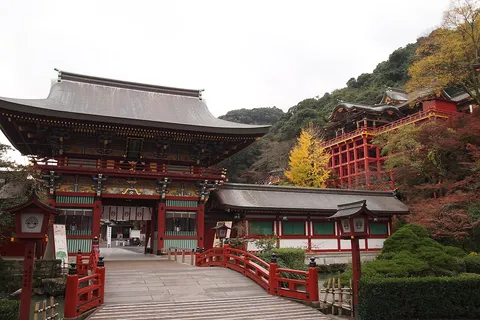
A covered boat corridor (Funaro, an Important Cultural Property) links the shrine grounds to the neighboring Hogon-ji temple’s Kannon-do hall, from which one reaches the temple’s own National Treasure, the Karamon gate — traditionally said to have been relocated, again on Hideyori’s orders, from Hokoku-byo, the mausoleum built for Toyotomi Hideyoshi. The Karamon, Kannon-do and Funaro underwent a full restoration between 2013 and spring 2020, re-shingling the cypress-bark roofs and restoring the original lacquer and pigment work. The honden belongs to the shrine and the Karamon to the temple, but the two structures are physically joined and together form one of Chikubushima’s signature sights.
Kawarake-nage
At the southern tip of the grounds, perched on a cliff overlooking the lake, the Ryujin-haisho (Dragon Deity worship hall) is Tsukubusuma Jinja’s other great attraction. From here, visitors take part in Kawarake-nage: throwing small unglazed clay discs called kawarake out toward the Miyazaki torii, a torii gate standing directly in the water below. The discs come in pairs — one for writing your name, one for your wish — and tradition holds that if your disc passes cleanly through the torii, your wish will come true. Kawarake are sold at the ticket office on the approach to the island, together with the island’s admission ticket.
Getting There: Boat Access Only
Chikubushima has no bridge, and the only way to set foot on it is by scheduled cruise boat. Biwako Kisen’s Chikubushima Cruise operates year-round from both Nagahama Port and Imazu Port, with a crossing of roughly 25–35 minutes each way from either port. Once ashore, visitors typically have about 70–90 minutes to see the shrine and Hogon-ji before re-boarding the same (or a designated) boat — there is no lodging anywhere on the island, so every visit must be a same-day round trip.
The Omi Marine route from Hikone Port has been suspended since August 14, 2025 for a vessel safety inspection, and as of this writing (September 2026) no restart date has been announced — check each operator’s official site for current sailing status before planning your trip. An island admission fee (¥600 for adults, ¥300 for children, shared with Hogon-ji) is charged on landing. Sailings are reduced in winter, so it is worth booking ahead and building some slack into your schedule.
Benefits (Goriyaku)
The primary deity, Ichikishima-hime-no-Mikoto, is one of the three Munakata goddesses and has long been venerated as a guardian of maritime and travel safety; once identified with Benzaiten, she also came to be worshipped for financial fortune and the arts. Uga-fukujin (Uga-Benzaiten) enshrined alongside her is associated with abundant harvests and business prosperity, Azai-hime-no-Mikoto as the tutelary deity of the Azai region of Omi, and the Ryujin (Eight Great Dragon Kings) as rulers of water, traditionally invoked for rain and a good catch. Sitting at a key crossing point of Lake Biwa’s water traffic, the shrine has drawn a steady stream of worshippers praying for safe travel since ancient times.
Nearby Food and Sightseeing
- Hogon-ji Temple: The 30th temple of the Saigoku Kannon pilgrimage, connected to Tsukubusuma Jinja by the Funaro boat corridor. Home to the National Treasure Karamon gate and its principal image, Benzaiten, one of Japan’s Three Great Benzaiten.
- Kurokabe Square: A popular sightseeing district of black-walled glass workshops and converted townhouse cafes, within walking distance of Nagahama Port, the main departure point for the Chikubushima Cruise — convenient for a meal or a stroll before or after your crossing.
- Nagahama Castle History Museum: A reconstruction of the castle built by Toyotomi Hideyoshi, standing on the shore of Lake Biwa a short walk from Nagahama Port.
Frequently Asked Questions
- Q. Can I get a goshuin here?
- A. Yes, at the Ryujin-haisho (Dragon Deity worship hall), but it isn't guaranteed on every visit — when only one staff member is on duty, priority goes to selling kawarake discs and amulets over writing goshuin. No fixed fee is posted; it is generally left to the visitor's discretion. If a goshuin matters to you, call ahead (0749-72-2073) to check staffing before you make the crossing.
- Q. How do I get to Chikubushima?
- A. There is no bridge to the island — the only way in is by boat. Biwako Kisen's Chikubushima Cruise sails from Nagahama Port and Imazu Port, each about a 25–35 minute crossing. The Omi Marine route from Hikone Port has been suspended since August 14, 2025 for a safety inspection, with no set restart date. There is no lodging on the island, so you land for about 70–90 minutes and must return by the same day's boat.
- Q. What is Kawarake-nage?
- A. At the Ryujin-haisho on the southern cliff edge of the grounds, visitors throw small unglazed clay discs (kawarake) out toward the Miyazaki torii gate standing in the lake below — if a disc passes cleanly through the gate, the thrower's wish is said to come true. The discs are sold in pairs (one to write your name on, one for your wish) at the ticket office on the approach to the island, together with the island's admission ticket.
- Q. What is the connection between the National Treasure honden and Fushimi Castle?
- A. The current honden combines a core structure rebuilt in 1567 with a section that Toyotomi Hideyori had relocated from Fushimi Castle (Kohata-yama Fushimi Castle) in 1602 — the Higure Goten, an imperial-messenger reception hall. Decorated with lacquer, gold maki-e, carving and gilded fittings, it is considered a masterpiece of Momoyama-period architecture and was designated a National Treasure in 1953 (the interior is not currently open to visitors). The adjacent Hogon-ji temple's own National Treasure, the Karamon gate, is separately said to have been moved from Hokoku-byo, Toyotomi Hideyoshi's mausoleum, and is physically linked to the shrine by the Important Cultural Property Funaro (boat corridor).
- Q. How does the shrine's deity relate to Benzaiten?
- A. The shrine's primary deity, Ichikishima-hime-no-Mikoto, is one of the three Munakata goddesses. Uga-fukujin (another name for Uga-Benzaiten), Azai-hime-no-Mikoto, and the Ryujin (Eight Great Dragon Kings) are enshrined alongside her. From the late Heian period, Ichikishima-hime-no-Mikoto came to be worshipped as identical with Benzaiten under the name "Chikubushima Gongen," and Chikubushima is counted as one of Japan's Three Great Benzaiten sites, alongside Itsukushima (Hiroshima) and Enoshima (Kanagawa). This is a legacy of shinbutsu-shugo (Buddhist-Shinto syncretism): the shrine remains physically joined by a boat corridor to the neighboring Hogon-ji temple (the 30th temple of the Saigoku Kannon pilgrimage, whose principal image is Benzaiten), but the two are separate religious institutions today, each with its own precincts and administration.