History
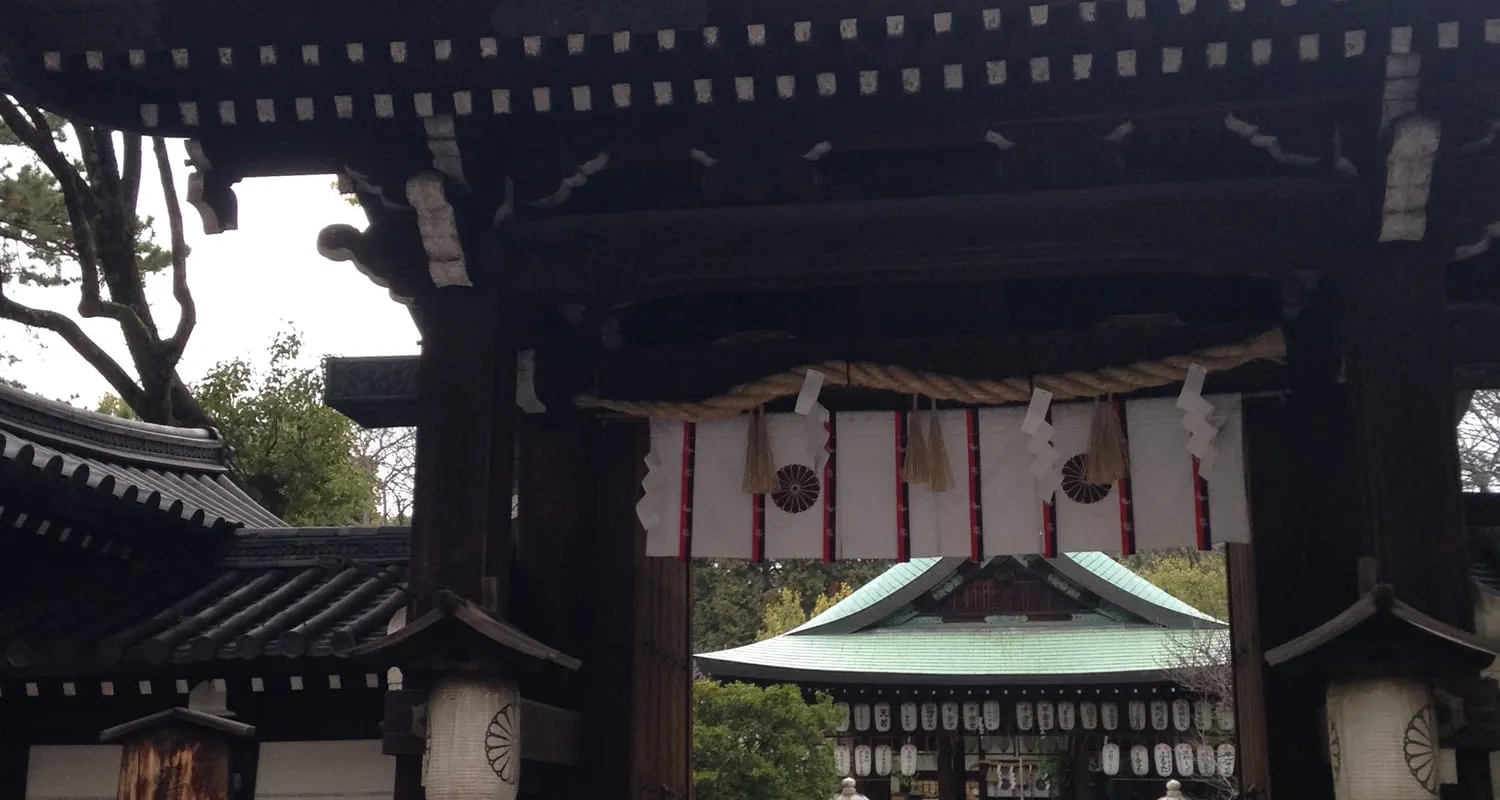
Shiramine Jingu was founded on September 6, 1868, the first year of the Meiji era, to enshrine the spirit of Emperor Sutoku, who died in despair after being exiled to Sanuki Province (present-day Sakaide, Kagawa Prefecture) following his defeat in the Hogen Rebellion. After his death, a series of great fires and conflicts struck the capital, and Emperor Sutoku’s spirit came to be feared as the source of this misfortune. Carrying out the wishes of his father, Emperor Komei, Emperor Meiji ordered that Sutoku’s spirit be brought back from his distant mausoleum at Shiramine in Sanuki and pacified in Kyoto as a new era began, and a shrine was built for this purpose on the former residence of the Asukai family, court nobles renowned as hereditary masters of kemari and waka poetry. The shrine’s name, “Shiramine,” comes directly from the name of Emperor Sutoku’s mausoleum, Shiramine no Misasagi.
In 1873, the spirit of Emperor Junnin was also brought from his mausoleum in Awaji and enshrined alongside Sutoku. Junnin, too, had been exiled — to Awaji Province, after being implicated in a political conspiracy — and died there without ever returning to the capital. Because both emperors were driven from Kyoto by political defeat and met tragic ends, reverently enshrining and pacifying their spirits stands as the central purpose behind the shrine’s founding.
Highlights
The on-site Jishu-sha sub-shrine enshrines Seidaimyojin, the guardian deity of kemari that the Asukai family had worshipped within their own residence for generations. Kemari, a Heian-period pastime in which players keep a deerskin ball aloft using only their feet, is often described as an ancestor of modern ball sports played on the ground, and Seidaimyojin has accordingly come to be revered not only as the guardian of kemari but of soccer, ball games in general, and sports as a whole.
Beside the shrine office, visitors will find numerous soccer balls and autographed shikishi boards donated by prominent athletes, including members of the Japan national team and players from the J.League and V.League, alongside an official match ball used at the FIFA World Cup. The worship hall displays autographs from famous athletes and banners cheering on Japan’s national team, and the shrine has even received visits from professional soccer club executives attending its festivals — a testament to its deep ties with the world of sports.
Visiting Tips
On the shrine grounds stands a stone ball known as “nade-mari” (stroking ball); tradition holds that spinning the ball on top with your hand while wishing for good fortune in ball games brings improvement in sports and victory in competition. Beyond athletes praying for success, the shrine is well known as a pilgrimage site for soccer fans, and it draws large crowds before and after Japan national team matches.
Annual Festivals
- Spring Grand Festival / Emperor Junnin Festival (April 14): A festival honoring Emperor Junnin. Following the main ritual, the Kemari Preservation Society offers an elegant kemari performance starting around 10:30 AM.
- Seidaimyojin Festival / Tanabata Festival (July 7): A festival honoring Seidaimyojin, featuring a kemari offering around 1:30 PM and a “Komachi Odori” dance performance around 4:00 PM.
Nearby Food & Sightseeing
About a 5-minute walk from the shrine, near the Ichijo Modoribashi bridge, stands Seimei Shrine, dedicated to the legendary onmyoji Abe no Seimei — a popular spot many visitors combine with their visit here. Near Karasuma-Ichijo, the historic wagashi maker Toraya, founded in the late Muromachi period, runs a tea house well suited to a rest after your visit.
- Seimei Shrine: About a 5-minute walk from Shiramine Jingu, standing beside the Ichijo Modoribashi bridge, this shrine is dedicated to the onmyoji Abe no Seimei.
- Toraya Karyo Kyoto Ichijo: A tea house run by Toraya, a wagashi maker founded in the late Muromachi period that once supplied confections to the imperial court, serving fine sweets and matcha overlooking a garden.
- Kyoto Gyoen National Garden: An expansive national park that includes the former Kyoto Imperial Palace, within easy walking distance of Shiramine Jingu and a pleasant place to stroll in any season.
Frequently Asked Questions
- Q. What are the visiting hours?
- A. The grounds are open 8:00–17:00. The shrine office, where goshuin and amulets are issued, is open 8:00–16:30.
- Q. Can I receive a goshuin here?
- A. Yes, for ¥500. It is offered as a pre-printed (kaki-oki) stamp only, available at the shrine office on the left just past the shrine gate, from 8:00 to 16:30.
- Q. How do I get there?
- A. Get off right at the 'Horikawa-Imadegawa' city bus stop (routes 51, 59, 201 and 203 stop directly in front), or walk about 8 minutes west from Exit 4 of Imadegawa Station on the Karasuma subway line.
- Q. Is there parking?
- A. There is a small visitor parking area on either side of the main entrance, but spaces are limited. On busy days, using public transport is recommended.
- Q. Why is this shrine associated with soccer and sports?
- A. The shrine stands on the former residence of the Asukai family, hereditary masters of kemari (an ancient court ball game) and waka poetry. It inherited the family's guardian deity of kemari, Seidaimyojin, enshrined in the on-site Jishu-sha. Today Seidaimyojin is revered as the guardian of soccer, ball games in general, and sports overall, drawing Japan national team players, J.League and V.League athletes, and sports fans who come to pray for victory.
Related Shrines
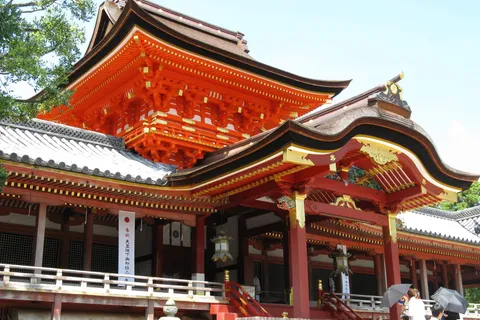
Kyoto Prefecture, Yawata
Iwashimizu Hachimangu
Iwashimizu Hachimangū
- Protection from Misfortune
- Victory in Competition
- Household Safety
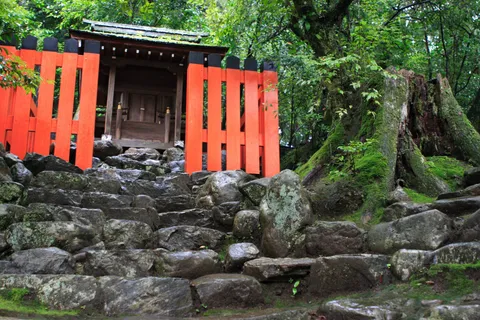
Kyoto Prefecture, Kita Ward, Kyoto
Kamigamo Jinja
Kamigamo-jinja
- Protection from Misfortune
- Protection from Lightning
- Protection from Bad Directions
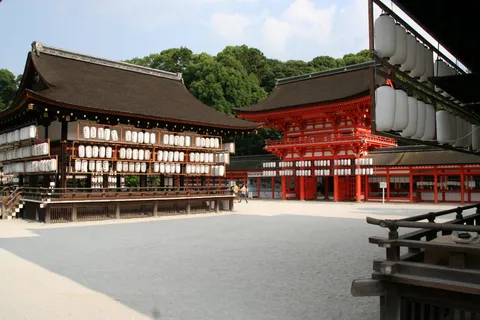
Kyoto Prefecture, Sakyo Ward, Kyoto
Shimogamo Jinja
Shimogamo-jinja
- Good Relationships
- Safe Childbirth
- Protection from Misfortune