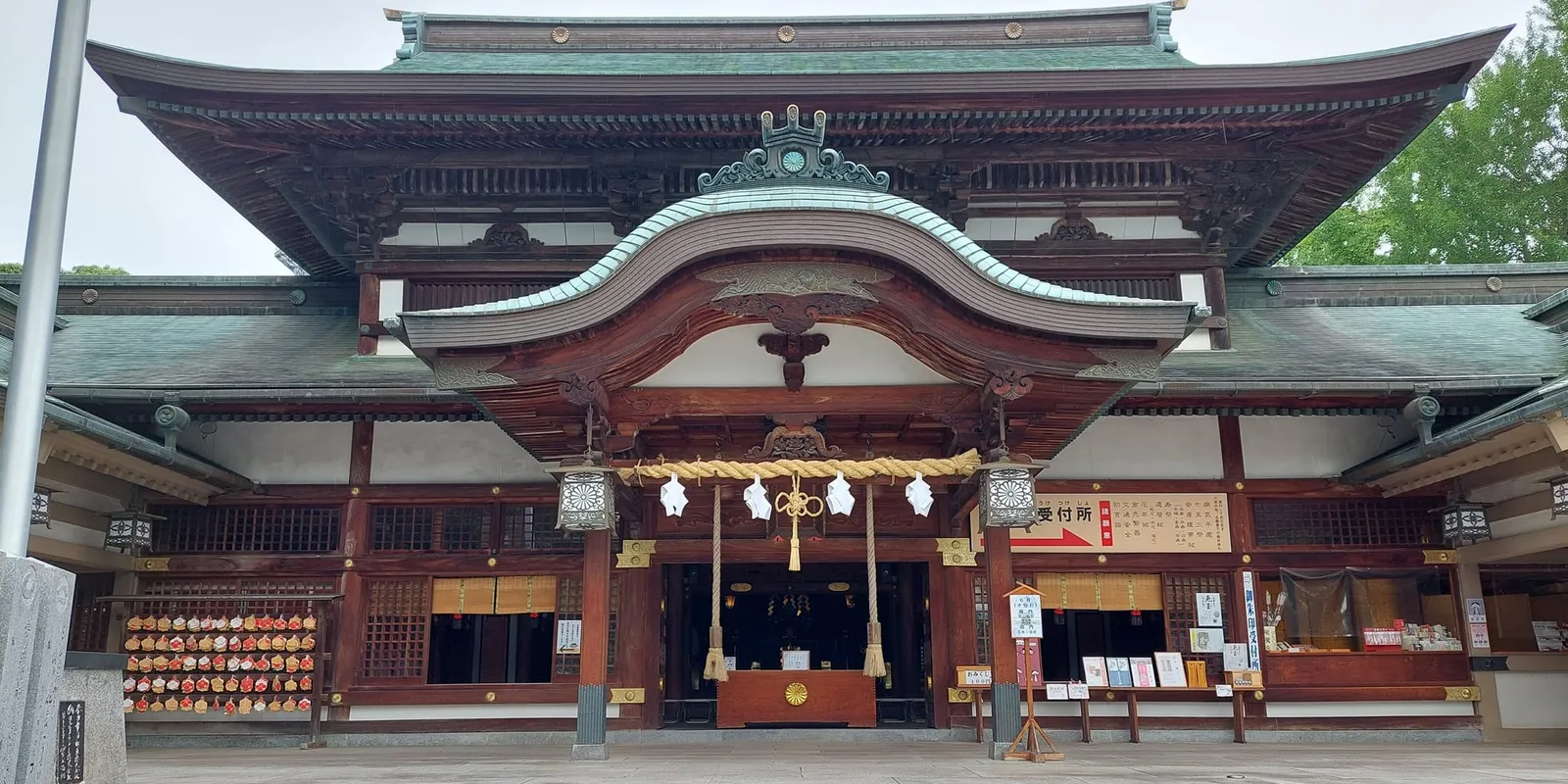
History
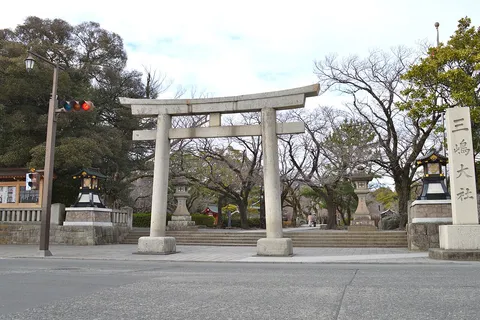
Tsubaki Jinja — officially Iyozuhiko-no-Mikoto Jinja — enshrines four kami: Iyozuhiko-no-Mikoto, Iyozuhime-no-Mikoto, Iyonushi-no-Mikoto, and Ehime-no-Mikoto. Known locally since ancient times as “Tsubaki Jinja” or “O-Tsubaki-san,” shrine tradition holds that it was founded during the reign of the 7th Emperor Korei, roughly 2,300 years ago, making it one of the oldest shrines anywhere in Shikoku.
According to the shrine’s founding legend, the two kami Iyozuhiko-no-Mikoto and Iyozuhime-no-Mikoto arrived by boat at a hill on what was then a stretch of coastline reaching inland to this very spot. There, a local deity, Shionari-Takutsuna-no-Okina-no-Kami, tied their boat’s mooring rope to welcome them ashore. The name “Tsubaki” (camellia), used for both the shrine and the surrounding area, is explained two ways in local tradition: as a corruption of “tsu-no-waki” (“beside the harbor,” reflecting the site’s coastal origins), or as a reference to the camellia trees that grew wild here.
Of the four enshrined kami, Ehime-no-Mikoto is the deity for whom Ehime Prefecture itself was named when the modern prefecture was established in the Meiji era — reportedly the only case in Japan of a prefecture taking its name directly from an enshrined deity.
Highlights
The subsidiary Komori Jinja, on the shrine grounds, is dedicated to watching over children’s healthy growth, and is known for the custom of “toshi-daiko,” in which a child beats a drum once for each year of their age when visiting. Standing nearby is a pair of wooden komainu (guardian lion-dogs) believed to date from the late Muromachi period, designated a Matsuyama City Tangible Cultural Property (sculpture) on March 25, 1977. Having watched over worshippers for centuries, they are among the grounds’ most notable cultural treasures.
The other subsidiary shrine, Shogun Hachiman Jinja, holds its annual festival every January 15 and is known as a place to pray for victory and success. A distinctive feature of Tsubaki Jinja is that all three shrines — the main shrine plus Shogun Hachiman Jinja and Komori Jinja — each offer their own dedicated goshuin.
Camellia trees, the flowering namesake of the shrine, are planted throughout the grounds and its surroundings, offering visitors a seasonal splash of color tied directly to the shrine’s own name.
Visiting Tips
Visiting hours shift with the seasons — 7:00–17:00 in the winter months of January and February, stretching to around 6:00–18:00 from April through September as sunrise and sunset times change. The shrine office where goshuin and amulets are available generally opens around 7:30 and closes with the grounds, so it’s worth allowing enough time.
After paying respects at the main hall, it’s worth visiting the subsidiary Komori Jinja and Shogun Hachiman Jinja as well, and picking up their individual goshuin. The pair of wooden komainu near Komori Jinja, a designated Matsuyama City cultural property, is also worth a close look.
Most visitors arrive by Iyotetsu bus, though the shrine is a convenient 10–15 minute drive from either JR Matsuyama Station or Matsuyama Airport. During the Tsubaki Matsuri, held over the 7th–9th days of the lunar New Year, the prefectural road around the shrine is closed entirely to traffic and the parking lots close as well, so public transport is strongly recommended during that period.
Annual Festivals
- Tsubaki Matsuri (lunar New Year, days 7–9): Tsubaki Jinja’s signature grand festival, held continuously for 72 hours from midnight. Known as “the festival that calls spring to Iyo,” it draws roughly 500,000 visitors from across Shikoku and beyond, with about 800 stalls lining the road to the shrine. On the evening of the second day, a solemn, silent mikoshi procession called “Oshinobi no Togyo” takes place. In 2026 the festival runs February 23 (Mon, national holiday) through 25 (Wed).
- Setsubun Festival (February 3): A ritual of bean-throwing and archery to drive away misfortune and pray for good luck.
- Autumn Grand Festival (October 6–7): The main festival is held on October 6, followed on the morning of the 7th by the “Shinkosai” mikoshi procession and, in the evening, the “Kangosai” procession returning the mikoshi to the shrine.
- Summer Purification (July 31): A ritual to purify half a year’s accumulated impurities, held alongside a ceremony to lay old amulets and dolls to rest.
- Shichigosan Festival (November 15): A celebration of children’s growth and prayers for their healthy future.
Nearby Food & Sightseeing
- Dogo Onsen Honkan: One of Japan’s three oldest hot spring resorts, about a 10–15 minute drive from Tsubaki Jinja. Many visitors combine a shrine visit with a stop at this landmark bathhouse.
- Matsuyama Castle: One of Japan’s twelve surviving original castle keeps, with a popular ropeway and chairlift offering views over the city. About a 15-minute drive from Tsubaki Jinja.
- Okaido Shopping Street: The main covered shopping arcade in central Matsuyama, lined with restaurants and souvenir shops — a convenient stop before or after visiting the shrine.
- Saka no Ue no Kumo Museum: A museum dedicated to Ryotaro Shiba’s novel “Saka no Ue no Kumo” (“Clouds Above the Hill”), exploring Matsuyama’s connections to modern Japanese history.
Frequently Asked Questions
- Q. Can I get a goshuin here?
- A. Yes, at the shrine office, generally open from around 7:30 until closing time, for a fee of ¥500. Besides the main shrine's own goshuin, the two subsidiary shrines — Shogun Hachiman Jinja and Komori Jinja — each offer their own goshuin at the same price, so three different goshuin are available in total. A goshuin book costs ¥1,500.
- Q. What is the Tsubaki Matsuri (O-Tsubaki-san) festival?
- A. It's a continuous 72-hour festival beginning at midnight on the 7th day of the lunar New Year and running until midnight on the 9th, known as 'the festival that calls spring to Iyo.' About 800 stalls line the prefectural road leading to the shrine, and the festival draws roughly 500,000 visitors over its three days — one of the largest festival crowds in Shikoku. On the evening of the second day, a solemn, silent mikoshi procession called 'Oshinobi no Togyo' takes place, and the festival is also known for the 'Kashisen Shinji' ritual, in which visitors borrow a small amount of money and pledge to return double the following year. In 2026 the festival runs February 23 (Mon, national holiday) through 25 (Wed).
- Q. How do I get to Tsubaki Jinja?
- A. Take an Iyotetsu bus from in front of Matsuyama-shi Station (Iyo Railway) for about 20 minutes to the 'Tsubaki-mae' bus stop, then walk about 10 minutes. By car, it's about 10 minutes from JR Matsuyama Station (6 km) or about 15 minutes from Matsuyama Airport (10 km). During the Tsubaki Matsuri, the prefectural road around the shrine is closed entirely to traffic, so public transport is recommended at that time.
- Q. Is parking available?
- A. Yes, free parking is available on the shrine grounds, with about 200 spaces combined between the area beside the main hall and the south lot (open 8:00–18:00). It closes during the Tsubaki Matsuri festival, so please use public transport during that period.
- Q. Why is this shrine known as 'Tsubaki Jinja' and revered for business prosperity?
- A. The shrine's common name, 'Tsubaki' (camellia), is said to come either from 'tsu-no-waki' (beside the harbor), reflecting the site's original location by the sea, or from camellia trees that grew wild here. Since its founding, the shrine's signature Tsubaki Matsuri has been dedicated to prayers for 'business prosperity and household safety,' drawing devoted worshippers from across Shikoku and beyond — which is why, especially among business owners, Tsubaki Jinja is so closely associated with business prosperity and good fortune.