History
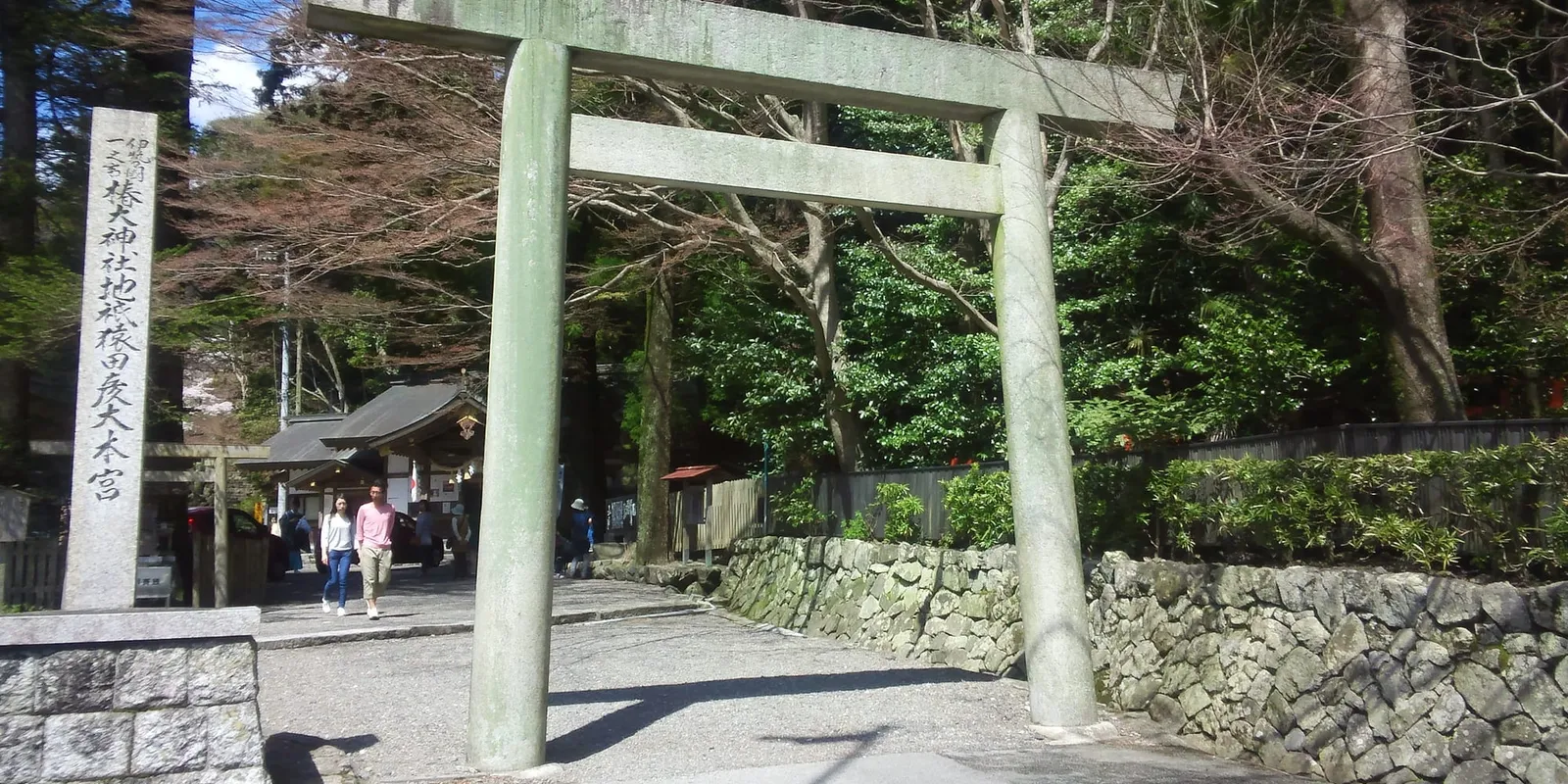
Tsubaki Grand Shrine enshrines Sarutahiko-no-Okami, revered as the “kami who opens the way,” as its principal deity. According to shrine tradition, a shrine hall was first established in the 27th year of Emperor Suinin’s reign (traditionally dated to 3 BCE) to enshrine Sarutahiko-no-Okami as “Michiwake-no-Okami,” the deity who divides the ways — making it one of the oldest shrines in Japan. The name “Tsubaki” (camellia) is said to have been fixed by divine oracle during the reign of the 16th emperor, Nintoku. The main hall also enshrines Ninigi-no-Mikoto and Takuhatachiji-hime-no-Mikoto alongside the principal deity.
The shrine stands at the foot of Mt. Takayama (also known as Nyudo-ga-take), where Sarutahiko-no-Okami is traditionally said to have died. Partway along the approach path stands the Takayama Tsuchigimi-no-Goryo, a keyhole-shaped burial mound traditionally revered as Sarutahiko-no-Okami’s own tomb. “Tsuchigimi” (literally “earth lord”) is a title reflecting the kami’s dominion over the land.
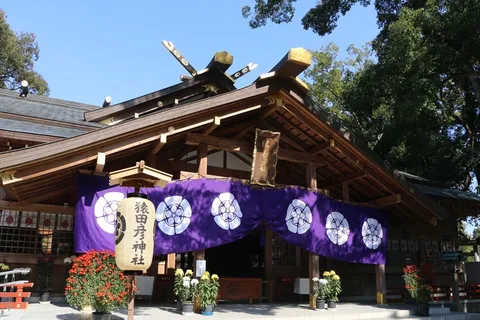
In 1935, a nationwide survey by the Home Ministry’s Bureau of Shrines designated Tsubaki Grand Shrine as the head shrine — the “Chigi Sarutahiko Daihongu” — for the roughly 2,000 shrines across Japan dedicated to Sarutahiko-no-Okami. On the strength of that survey, Tsubaki Grand Shrine is widely known today as the head shrine of Sarutahiko worship nationwide. At the same time, Sarutahiko Jinja, standing just steps from Ise Jingu’s Inner Shrine, carries its own direct lineage through Ota-no-Mikoto, a descendant of Sarutahiko who is said to have offered the land on which the Inner Shrine itself was founded — and it, too, is deeply venerated as central to the Sarutahiko tradition. It’s also worth noting that most of the roughly 2,000 shrines nationwide have no direct lineage or ritual tie to Tsubaki Grand Shrine itself; the designation reflects a shared principal deity across many independently founded shrines rather than a single organized network.
Highlights
The on-site subsidiary shrine Tsubaki-Kishi Jinja enshrines Ame-no-Uzume-no-Mikoto, wife of Sarutahiko-no-Okami. She is said to have greeted Sarutahiko during the heavenly descent and later married him, and is venerated for blessings in the performing arts, good relationships, and marital harmony — the shrine is also known by the alternate name “Uzume Hongu” (head shrine of Uzume worship) and draws many visitors from the world of entertainment.
The grounds also preserve a legacy connected to Matsushita Konosuke, the founder of Panasonic and often called “the god of management” in Japan. A devoted worshipper of Tsubaki Grand Shrine, Matsushita made large donations toward the construction of shrine buildings and the upkeep of the grounds, and in 1976 he donated a tea ceremony room, Reisho-an, together with its garden — its name drawing on “Suzu” from Suzuka and “Matsu” from Matsushita. It remains open to practitioners of any school of tea ceremony. Since his death, Matsushita has himself been venerated at the subsidiary Matsushita Konosuke Shrine, which draws worshippers praying for business prosperity.
Along the approach path stand the Sazareishi, the auspicious conglomerate rock immortalized in Japan’s national anthem “Kimigayo,” and the Takayama Tsuchigimi-no-Goryo burial mound — both popular stops for visitors making the rounds of the grounds.
Visiting Tips
The shrine grounds can generally be visited at any time, but the office where goshuin and amulets are available closes earlier, at 16:30, so it’s worth allowing enough time. With the main hall, the subsidiary Tsubaki-Kishi Jinja, and the Matsushita Konosuke Shrine spread across different parts of the grounds, it’s worth taking your time to see them all.
Because most visitors arrive by car, the Suzuka IC on the Higashi-Meihan Expressway or the Suzuka PA Smart IC on the Shin-Meishin Expressway are the most convenient routes. Public transport options are limited in frequency, so it’s a good idea to check bus times in advance if traveling by train and bus.
Annual Festivals
- Setsubun Festival (Setsubun day in February): A ritual to drive away misfortune and pray for good fortune.
- Spring Grand Festival (April 11–12): The main shrine’s Spring Grand Festival is held on April 11, followed by the Spring Grand Festival of the subsidiary Tsubaki-Kishi Jinja on April 12.
- Rice Planting Festival (last Sunday of May): A planting ritual praying for a bountiful harvest.
- Autumn Grand Festival (October 10–12): The largest festival of the year, opening with an eve festival on the 10th, followed by the main shrine’s Grand Festival on the 11th (held at 11:00, with a Shinkosai mikoshi procession from 15:00) and the subsidiary shrine’s Grand Festival on the 12th.
- Summer Purification (June 30): A ritual passage through a great chinowa ring of woven grass to purify the sins and impurities of the past six months.
Nearby Food & Sightseeing
- Suzuka Circuit: One of Japan’s premier international racing circuits and a Suzuka landmark, best known as the home of the Japanese Formula 1 Grand Prix. About a 30-minute drive from Tsubaki Grand Shrine.
- Mt. Nyudo-ga-take: A peak of the Suzuka mountain range rising behind Tsubaki Grand Shrine, with an okumiya (inner shrine) at its summit. Known for its colonies of katakuri (dogtooth violet) wildflowers, it’s also popular with hikers.
- Yunoyama Onsen: A hot spring area a short drive from the shrine, popular with visitors who combine a Tsubaki Grand Shrine visit with an overnight stay while touring the wider Suzuka and Yokkaichi area.
Frequently Asked Questions
- Q. Can I get a goshuin here?
- A. Yes, at the shrine office, open 8:00–16:30, for a fee of ¥300. Four types are available — for Tsubaki Grand Shrine itself, the on-site Tsubaki-Kishi Jinja, Jurojin, and the three dragon shrines (Konryu, Ryuja, and Tsubaki-Tachikumo) — all at the same price.
- Q. What are the visiting hours?
- A. The shrine grounds can generally be visited at any time. The office where you can receive a goshuin or amulets, and prayer reception, are open 8:00–16:30.
- Q. Is parking available?
- A. Yes, there's free parking around the shrine grounds with space for about 500 vehicles. During New Year's or the grand festivals, it's a good idea to arrive early.
- Q. How do I get to Tsubaki Grand Shrine?
- A. It's about 55 minutes to 1 hour by Mie Kotsu bus bound for 'Tsubaki Okami Yashiro' from Yokkaichi Station (Kintetsu Nagoya Line / JR Kansai Line). From Hirata-cho Station (Kintetsu Suzuka Line) or Kasado Station (JR Kansai Line), the Suzuka City community bus ('C-BUS') on the Tsubaki-Hirata line takes about 40–50 minutes. By car, it's about 10 minutes from the Suzuka IC on the Higashi-Meihan Expressway, or about 2 minutes from the Suzuka PA Smart IC on the Shin-Meishin Expressway (ETC vehicles only).
- Q. Why is Tsubaki Grand Shrine called the 'head shrine' for Sarutahiko worship nationwide?
- A. In 1935, a nationwide survey by the Home Ministry's Bureau of Shrines designated Tsubaki Grand Shrine as the head shrine — the 'Chigi Sarutahiko Daihongu' — for the roughly 2,000 shrines across Japan dedicated to Sarutahiko-no-Okami. That survey is the basis for the shrine's 'head shrine' status today. It's worth noting, though, that most of those 2,000 shrines have no direct lineage or ritual connection to Tsubaki Grand Shrine itself — the designation reflects a shared principal deity rather than an organized network.
Related Shrines
Mie Prefecture, Ise
Sarutahiko Jinja
Sarutahiko-jinja
- Directional Protection
- Good Fortune
- Good Relationships
Mie Prefecture, Futami-cho, Ise
Futami Okitama Jinja
Futami Okitama Jinja
- Marital Harmony
- Good Relationships
- Good Fortune
Mie Prefecture, Ise
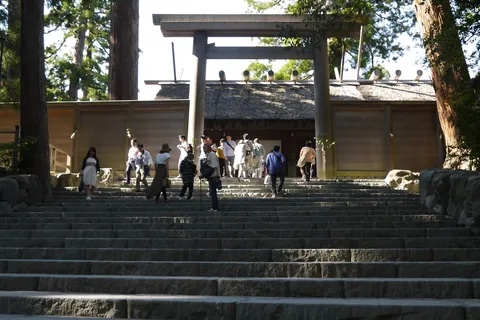
Ise Jingu
Ise-jingū
- Good Fortune
- Peace of the Nation
- Bountiful Harvest