History
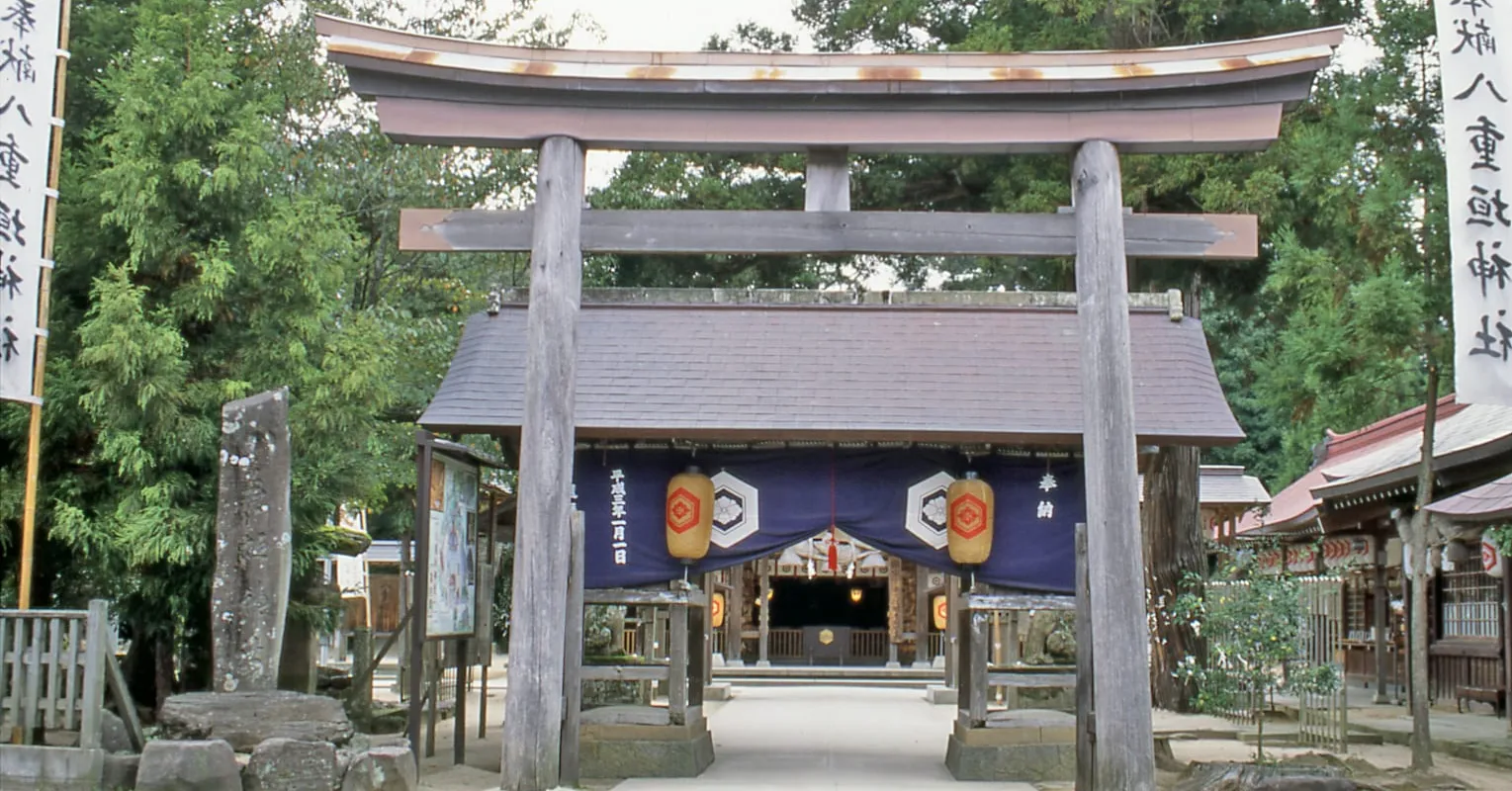
Yaegaki Shrine enshrines the divine married couple Susanoo-no-Mikoto and Inata-hime-no-Mikoto (also known as Kushinada-hime) as its principal deities, together with Okuninushi-no-Mikoto and the local guardian deity Aohata-Sakusa-hiko-no-Mikoto, who also appears in the Izumo no Kuni Fudoki. The shrine is closely tied to one of the most famous episodes in Japanese mythology, recorded in the Kojiki and Nihon Shoki: Susanoo’s defeat of the eight-headed serpent Yamata-no-Orochi to rescue and marry Inata-hime.
According to shrine tradition, as the serpent closed in, Susanoo protected Inata-hime by building an eightfold hedge, or “yaegaki,” around a great cedar tree in the sacred grove that still stands behind the present shrine, hiding her within it. After slaying the serpent, the couple built their new home at Suga, in what is now Unnan City, where Susanoo is said to have composed the verse “Yakumo tatsu Izumo yaegaki tsumagomi ni yaegaki tsukuru sono yaegaki wo,” regarded as the oldest waka poem in Japan. The shrine is said to have begun when Susanoo and Inata-hime came to be enshrined together with Aohata-Sakusa-hiko at the site associated with this legend.
The shrine, then known as Sakusa Shrine, was ranked a village shrine in 1872, elevated to prefectural shrine status in 1876, and took its present name, Yaegaki Jinja, in 1878. Because Susanoo and Inata-hime are regarded as Japan’s first divine married couple, the shrine has long been revered as one of the leading enmusubi (matchmaking) shrines in the San’in region.
Highlights
Within the sacred grove of Sakusame-no-Mori behind the main hall lies the Kagami-no-Ike, or Mirror Pond, said to be the very water Inata-hime drank from and used as a mirror while hidden from the serpent. Surrounded by ancient trees, the pond is not only the setting for the shrine’s famous matchmaking fortune-telling but is itself a striking, almost otherworldly landscape that keeps the memory of the myth alive for visitors today.
Inside the main hall are painted wooden panels depicting the enshrined deities, believed to date to the Heian period and designated a National Important Cultural Property — among the oldest surviving mural paintings in Japan (the originals are displayed in the shrine’s treasure hall). Elsewhere on the grounds, a pair of camellia trees known as the “Meoto-tsubaki,” or married-couple camellias, growing closely side by side, stand as another symbol of marital harmony.
Visiting Tips
Most visitors pay their respects at the main hall first before heading to the Mirror Pond in the inner grove. If you’d like a goshuin written on the spot rather than a pre-inscribed one, it can take a little time, so it’s worth taking your fortune-telling paper to the pond while you wait for your number to be called.
Fortune-telling papers are available at the shrine office for ¥100 each. Float the paper gently on the Mirror Pond and place a 10-yen or 100-yen coin on top, then watch how quickly and where it sinks. The ritual is used not only for romance but for all kinds of connections — work, friendship, and more — and many visitors perform it on behalf of someone important to them as well.
Annual Festivals
- Mikakushi Shinji & Kinen-sai (May 3): A festival rooted in the legend of Susanoo hiding Inata-hime within the yaegaki hedge from the serpent, featuring a portable-shrine procession from the main hall to the “married cedars” (Meoto-sugi) in the inner grove.
- Reisai (October 20): One of the shrine’s three great festivals and its most solemn annual rite.
- Niiname-sai & Kanko-sai (December 15): A harvest thanksgiving festival combined with the ceremony marking Inata-hime’s return to the main shrine from the inner grove, where she is said to have moved for the May festival.
- Additional festivals include the Go-hosha-sai in January, Setsubun-sai in February, and Komamane-sai in July.
Nearby Food & Sightseeing
Right next to the shrine grounds is Enmusubi Yae, a teahouse and souvenir shop serving udon, soba, and sweets — a popular stop before or after paying a visit. The shrine is also connected to Kamosu Jinja, home to Japan’s oldest-surviving taisha-zukuri style main hall (a National Treasure), by the “Haniwa Road,” a roughly 2 km, 40-minute walking path lined with haniwa figures — the two shrines together form a well-known matchmaking pilgrimage route.
- Enmusubi Yae: A teahouse and souvenir shop right beside Yaegaki Shrine, serving ginger-infused udon and soba along with sweets — popular for a break between visits.
- Kamosu Jinja: An ancient shrine with Japan’s oldest surviving taisha-zukuri main hall, a National Treasure, linked to Yaegaki Shrine by the Haniwa Road walking path.
Frequently Asked Questions
- Q. What are the visiting hours?
- A. The grounds are open at all times. The shrine office and treasure hall are open 9:00–16:30 (9:00–17:00 on weekends and holidays).
- Q. Can I get a goshuin (shrine stamp)?
- A. Yes, at the shrine office, accepted 9:00–16:30 (9:00–17:00 on weekends and holidays), for ¥300.
- Q. How do I get there?
- A. Take a Matsue City Bus from bus stop 4 at JR Matsue Station (about 20 minutes) and get off at the "Yaegaki Jinja" stop, right at the entrance. By car it's about 6 minutes (roughly 2 km) from the Matsue-Chuo Interchange on the Sanin Expressway.
- Q. Is there parking?
- A. Yes, free parking is available on the grounds for about 120 vehicles.
- Q. How does the Kagami-no-Ike (Mirror Pond) fortune-telling work?
- A. Buy a fortune-telling paper (¥100) at the shrine office, then float it on the surface of the Mirror Pond in the inner shrine grove and gently set a 10-yen or 100-yen coin on top. If it sinks within 15 minutes, a good match is said to come soon; if it takes 30 minutes or more, it will come later. Sinking close to you is said to mean your match is someone nearby, while sinking far away suggests someone from a distant place.
Related Shrines
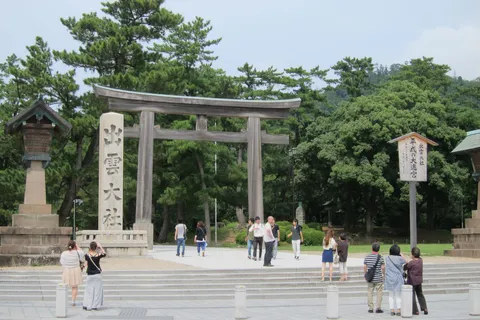
Shimane Prefecture, Izumo
Izumo Taisha
Izumo Ōyashiro
- Good Relationships
- Marital Harmony
- Business Prosperity
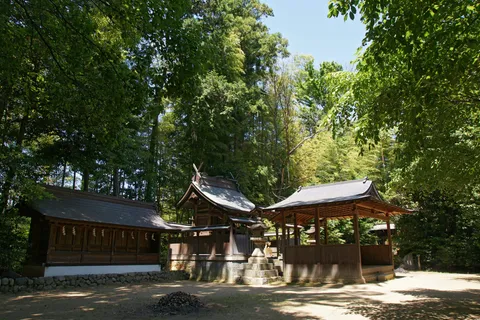
Nara Prefecture, Asuka Village
Asuka Niimasu Jinja
Asuka-niimasu-jinja
- Matchmaking (Enmusubi)
- Conceiving Children
- Safe Childbirth
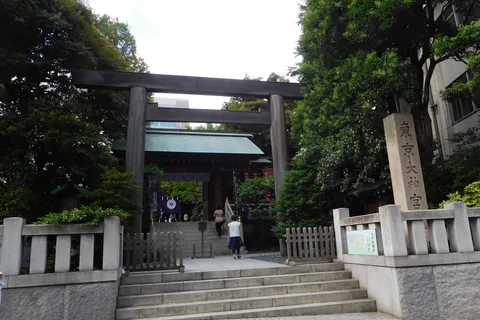
Tokyo, Chiyoda
Tokyo Daijingu
Tōkyō Daijingū
- Good Relationships
- Marital Harmony
- Safe Childbirth