History
Hofu Tenmangu enshrines Sugawara no Michizane, revered across Japan as the god of learning. In 901, after losing a political struggle at court, Michizane was ordered into exile to Dazaifu in Kyushu. On his journey west from the capital, he is said to have stopped at Kachima-no-ura, in what is now Hofu — his last port of call on Honshu before crossing to Kyushu. As he left, tradition holds that he promised the local people he would return to this place in spirit after his death. Michizane died in Dazaifu in 903, and the following year, in 904, a shrine hall was built here to fulfill that promise. This is the founding of Hofu Tenmangu — and because it predates any other shrine built to enshrine Michizane, Hofu Tenmangu is traditionally known as “Japan’s first Tenmangu.”
After Michizane’s death, a series of misfortunes in the capital was blamed on his vengeful spirit, leading to the founding of Kitano Tenmangu in Kyoto in 947, while Dazaifu Tenmangu was built over his grave in Kyushu. Both became major centers of devotion to Michizane, worshipped as “Tenjin-sama,” the god of learning. Hofu Tenmangu is counted alongside these two as one of Japan’s “Three Major Tenmangu,” and as the earliest-founded of the three, continues to draw worshippers from across the country today.
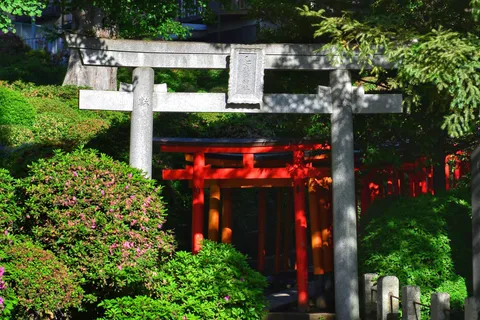
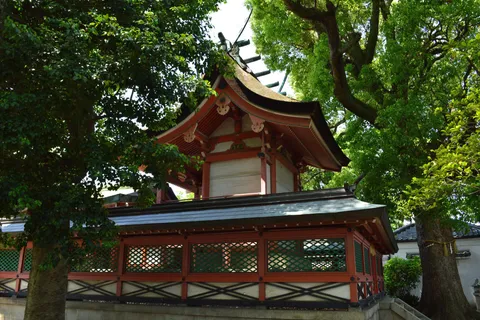
The grounds preserve a number of notable structures, including a vermillion Romon gate and the distinctively shaped Shunpu-ro, begun in the late Edo period as a five-story pagoda, left unfinished, and completed instead as a two-story tower building in 1873. The shrine also holds a set of six illustrated handscrolls from 1311 (the Kamakura period), the Matsuzaki Tenjin Engi Emaki, depicting Michizane’s life and the founding of the shrine — designated an Important Cultural Property of Japan.
Highlights
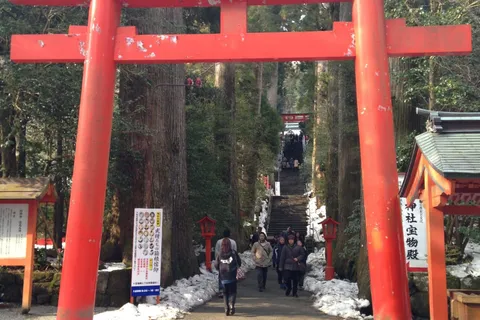
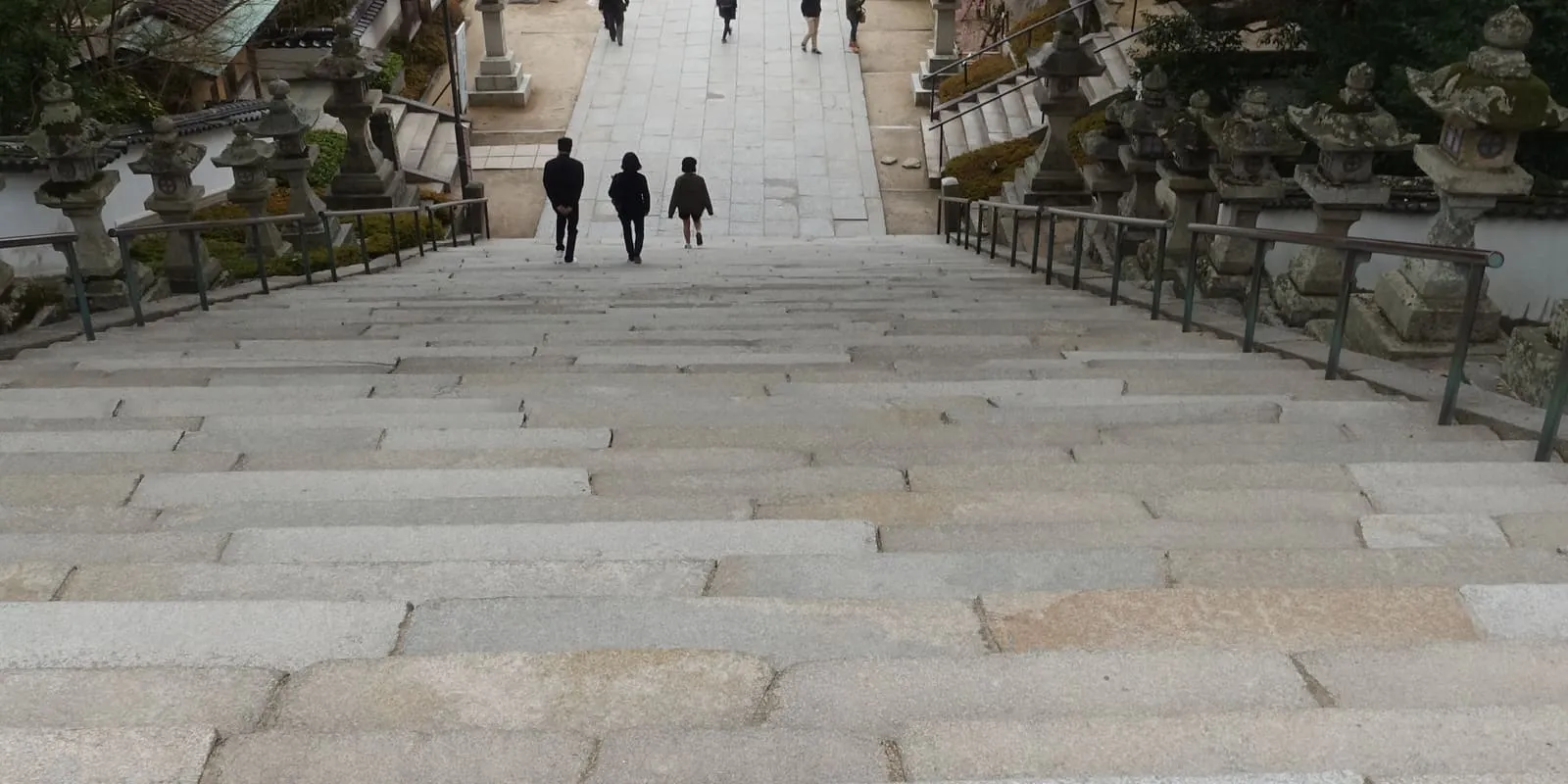
Climbing the shrine’s tall stone staircase and passing through the vermillion Romon gate reveals the unadorned, unpainted-wood main hall complex beyond. On a rise to the east of the grounds stands Shunpu-ro, a two-story tower building whose unusual form recalls its origins as an unfinished five-story pagoda; it also serves as a popular viewpoint over the city of Hofu toward the Seto Inland Sea.
The shrine’s plum garden holds around 1,100 trees of 16 varieties, a tribute to the plum blossoms Michizane himself loved. The trees typically bloom from mid-February to early March, when the shrine holds its Ume Matsuri (Plum Blossom Festival), featuring a children’s ceremonial dance and servings of amazake. The on-site history museum (Rekishikan) displays a reproduction of the Matsuzaki Tenjin Engi Emaki alongside other treasures relating to Michizane and the shrine’s founding.
Visiting Tips
As the shrine of the god of learning, Hofu Tenmangu gets especially busy during exam season with visitors seeking votive plaques and charms for academic success; an early morning visit is best for a quieter experience. Prayer reception runs 9:00–16:30, and goshuin are available during the same hours. A free parking area for roughly 500 vehicles, including large buses, makes visiting by car straightforward, while the shrine is also an easy 15-minute walk from JR Hofu Station or about 5 minutes by bus from the station’s Tenjin-guchi (north) exit.
Annual Festivals
- Setsubun Festival / Ushi-kawae Shinji (February 3): An unusual lottery ritual in which the ox that will accompany the annual Goshinkosai procession is chosen by lot. Local elementary schoolchildren draw the winning numbers, and gold, silver, and bronze ox figurines are among the many prizes distributed to the fortunate winners.
- Ume Matsuri, Plum Blossom Festival (mid-February to early March): Held when the garden’s roughly 1,100 plum trees, spanning 16 varieties, reach full bloom, with a children’s ceremonial dance and amazake offered to visitors.
- Gotanjosai (August 3–5): A festival celebrating Michizane’s birth, featuring the Mando-sai lantern festival, with more than 2,000 candles lighting the approach, and a fireworks display of about 4,000 shells lighting up the summer sky.
- Goshinkosai / Hadakabo Matsuri (fourth Saturday of November): Hofu Tenmangu’s largest festival, said to be over a thousand years old. About 5,000 men in white robes (hadakabo) parade a portable shrine to and from the Otabisho at Kachima-no-ura, shouting “kyodai wasshoi” along the way.
Nearby Food & Sightseeing
- Tentote: A sweets shop at the foot of the shrine’s grand stone staircase, known for its Tenjin-mochi rice cakes in flavors such as plain (sweet red bean), mugwort, and purple sweet potato, with seasonal varieties also available.
- Mori Museum: About a 10-minute drive from the shrine, this museum occupies the former main residence of the Mori family, lords of the Choshu domain, and holds four National Treasures — including a scroll painting by the master artist Sesshu — alongside nine Important Cultural Properties.
- Santoka Furusato-kan: A free museum devoted to Taneda Santoka, the free-verse haiku poet born in Hofu, often visited together with Hofu Tenmangu as part of a day out in the city.
Frequently Asked Questions
- Q. Why is Hofu Tenmangu called Japan's first Tenmangu?
- A. Sugawara no Michizane died in exile in Dazaifu in 903 (Engi 3). The following year, 904 (Engi 4), a shrine hall was built here on land associated with him — earlier than Kyoto's Kitano Tenmangu (founded 947) or Dazaifu Tenmangu (built over Michizane's grave). Because of this, Hofu Tenmangu is traditionally regarded as the very first shrine ever built to enshrine him as a deity.
- Q. What are Japan's 'Three Major Tenmangu'?
- A. This designation refers to the three most prominent shrines dedicated to Sugawara no Michizane: Hofu Tenmangu, Kitano Tenmangu in Kyoto, and Dazaifu Tenmangu in Fukuoka. Hofu Tenmangu is counted among them as the first Tenmangu ever founded.
- Q. How is Hofu Tenmangu connected to Michizane's exile?
- A. In 901 (Engi 1), when Michizane's exile to Dazaifu was ordered, Kachima-no-ura in what is now Hofu was his last port of call on Honshu before crossing to Kyushu. According to tradition, as he departed he promised to return to this place in spirit after his death — and when he died in 903, the shrine was founded the following year to fulfill that promise.
- Q. What are the goshuin hours and fee at Hofu Tenmangu?
- A. Goshuin are available roughly 9:00–16:30, in line with the shrine's prayer reception hours, for a fee of ¥500. Limited-edition goshuin, such as cut-paper (kirie) designs marking special anniversaries, are also released from time to time.
- Q. What is the Goshinkosai (Hadakabo Matsuri) festival?
- A. Held on the fourth Saturday of November each year (November 28 in 2026), this is Hofu Tenmangu's largest festival, said to have well over a thousand years of history. At 18:00 the doors of the main hall are thrown open, and about 5,000 men dressed in white robes (hadakabo) join a portable-shrine procession, shouting 'kyodai wasshoi' as they parade to and from the Otabisho at Kachima-no-ura, the site associated with Michizane's departure.