History
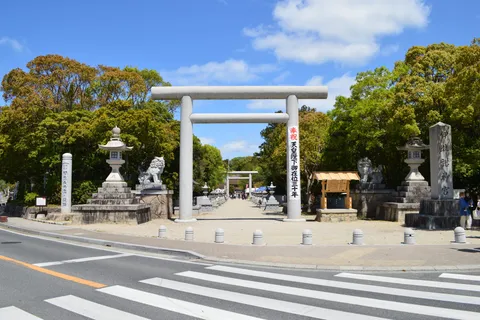
Izushi Jinja stands in Miyauchi, Izushi-cho, in Toyooka City, Hyogo Prefecture, and is one of former Tajima Province’s most historically significant shrines. Its founding date is unknown, but shrine tradition holds that it began when descendants of Amenohiboko — a legendary prince said to have come from Silla, an ancient kingdom on the Korean Peninsula — enshrined the eight sacred treasures he is said to have brought with him to Japan.
The shrine’s first confirmed appearance in a historical record comes from the Nara period, in the 737 CE Tajima Province tax register (Shozeicho), by which time it was already a major shrine of the province. The 927 CE Engishiki jinmyocho — an official register of recognized shrines compiled under the ritsuryo legal system — lists it as “Izushi-ni-masu-jinja, eight shrines, all ranked Myojin Taisha,” an exceptionally high distinction nationwide, since all eight of its component shrines were granted Myojin Taisha rank. The 1285 Tajima no Kuni Otabumi, a Kamakura-period land survey, records that the shrine’s holdings at that time exceeded 141 cho, far surpassing those of the shrines ranked second and third in the province — a sign that Izushi Jinja retained the foremost standing in Tajima throughout the medieval period.
During the Sengoku period, the shrine was burned down in 1504 amid internal conflict within the Yamana clan, and rebuilt around 1525; its landholdings were later sharply reduced during Toyotomi Hideyoshi’s pacification of Tajima in 1580. Under the Edo period, it was restored through the patronage of the lords of Izushi Domain, and under the modern shrine ranking system introduced after the Meiji Restoration it was designated Kokuhei-chusha (national shrine, middle rank). A fire destroyed its buildings in 1910; the current shrine buildings, rebuilt in 1914, are registered as a national Tangible Cultural Property. The shrine grounds also preserve a short sword (wakizashi) attributed to the Nanboku-cho-period swordsmith Kunimitsu, designated a national Important Cultural Property.
Enshrined Deities and the Legend of Amenohiboko
Izushi Jinja enshrines two deities: Amenohiboko-no-Mikoto, and Izushiyamae-no-Okami, the collective deity representing the eight sacred treasures Amenohiboko is said to have brought with him from Silla.
Amenohiboko is one of the rare deities recorded in both the Kojiki and the Nihon Shoki, Japan’s two oldest chronicles, as having come from across the sea. According to these accounts, Amenohiboko was a prince of Silla who crossed to Japan in pursuit of a wife who had settled there, and eventually made his home in Tajima Province. The Nihon Shoki records that he brought with him several treasures — jewels, a mirror, a sword, and a sacred branch, among them — and tradition also credits him with bringing artisans skilled in Sue ware pottery.
A distinctly local tradition in Tajima holds that Amenohiboko, as the deity of the region’s development, cut open a channel through the narrows at Tsuiyama, near the mouth of the Maruyama River, draining what was then a muddy, marsh-like basin into the Sea of Japan and transforming it into the fertile farmland seen in the Toyooka basin today. This legend has earned Amenohiboko lasting devotion as the “founding deity of Tajima’s development,” and Izushi Jinja in particular draws worship from civil engineers and construction workers seeking blessings for safety in their work. The legend is also notable as one of relatively few concrete episodes in Japan’s earliest chronicles describing a figure who crossed from the Korean Peninsula and left a documented mark on early Japanese history — a rare, factual thread connecting ancient Japan and the continent.
Status as Ichinomiya of Tajima
Izushi Jinja has long been revered as the ichinomiya — the highest-ranked shrine — of former Tajima Province, affectionately known to locals as “Ikkyu-san.” As noted above, all eight of its component shrines were ranked Myojin Taisha in the Engishiki jinmyocho, and the Kamakura-period Tajima no Kuni Otabumi recorded landholdings far exceeding those of the province’s second- and third-ranked shrines — documentary evidence that the shrine held the foremost rank in Tajima throughout the medieval period.
Connection to the Historic Castle Town of Izushi
Izushi Jinja stands to the northwest of Izushi, the historic castle town often called the “Little Kyoto of Tajima,” and has long been venerated by the local community as its spiritual center, sharing the same patron deity who is credited with developing the Tajima region. The castle town itself retains much of its Edo-period character, including Shinkoro, a wooden clock tower built in the Meiji era, the ruins of Izushi Castle, and a grid of streets laid out over two centuries ago; it also draws many visitors for its famous local dish, Izushi sara-soba (buckwheat noodles served on small plates). A visit to the shrine pairs naturally with time spent exploring the castle town.
Highlights
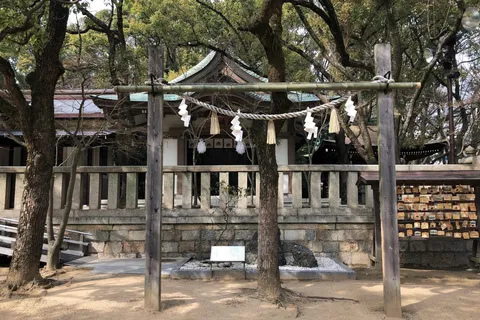
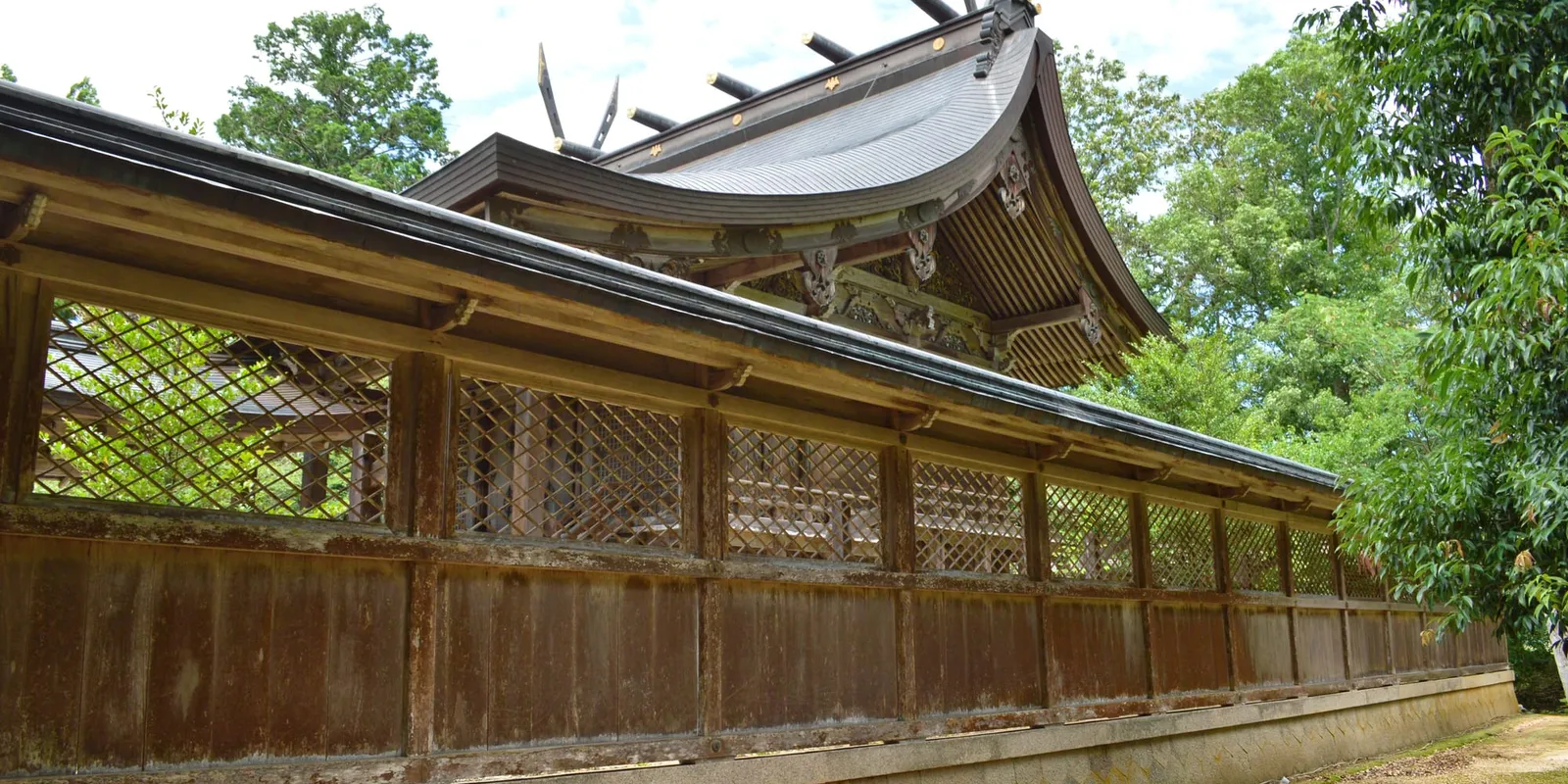
The main hall and worship hall, rebuilt in 1914, form a substantial wooden structure registered as a national Tangible Cultural Property, befitting one of Tajima’s foremost historic shrines. The grounds also preserve a short sword (wakizashi) attributed to the Nanboku-cho-period swordsmith Kunimitsu, designated a national Important Cultural Property. In one corner of the grounds lies a sacred precinct where, by ancient tradition, “not even a single tree or blade of grass may be cut” — a forbidden zone whose forest has remained untouched to this day.
Annual Festivals
- Reitaisai (Grand Festival) (October 20): Izushi Jinja’s most important annual rite, offering thanks to Amenohiboko-no-Mikoto and Izushiyamae-no-Okami, the founding deities of Tajima’s development, for the year’s blessings and the prosperity of parishioners and worshippers.
- Nobori-mawashi (Banner-Waving Festival) (May 5): A traditional event praying for children’s healthy growth, in which members of a local preservation society, dressed in green costumes, blow bamboo horns while hoisting and parading large banners around the shrine grounds.
- New Year’s Visit (January): As the ichinomiya of former Tajima Province, and a noted power spot for conceiving children, safe childbirth, and safety in construction work, Izushi Jinja draws large crowds during the first three days of the New Year.
Visiting Tips
The shrine grounds can be visited freely, but the office where goshuin and amulets are available is only open 9:00–16:30. The nearest stations are JR Toyooka Station and JR Ebara Station; from either, take the Zentan Bus bound for Izushi to the “Torii” stop, then walk about 7 minutes. Visitors arriving by car will find free parking for about 10 cars in front of the first torii gate, though tire chains are advisable in winter given the region’s heavy snowfall. Since the shrine stands a little apart from the castle town itself, it’s worth allowing half a day to combine a visit here with time exploring Izushi’s historic streets.
Nearby Food & Sightseeing
- Izushi Castle Ruins & Shinkoro Clock Tower: The heart of the Izushi castle town, often called the “Little Kyoto of Tajima.” Shinkoro, a wooden clock tower built in 1871, still stands watch over a grid of streets largely unchanged since the Edo period, and many visitors combine a stop here with a visit to Izushi Jinja.
- Izushi Sara-soba: Izushi’s signature local dish — buckwheat noodles served in small portions on Izushi-yaki pottery plates, meant to be compared and enjoyed plate after plate. Dozens of soba restaurants line the streets of the old castle town.
- Izushi Eirakukan: Said to be the oldest surviving kabuki playhouse in the Kinki region, opened in 1901. Still used for live performances today, it also welcomes visitors to tour its wooden interior.
Frequently Asked Questions
- Q. Can I get a goshuin at Izushi Jinja?
- A. Yes, at the shrine office just to the left of the worship hall, open 9:00–16:30, for a fee of ¥300. A pre-printed version featuring the Oriental white stork — a bird Toyooka City has worked for decades to protect and reintroduce — is also available.
- Q. What are the visiting hours, and is parking available?
- A. The shrine grounds can be visited freely at any time, but the office where goshuin and amulets are available is only open 9:00–16:30. Free parking for worshippers is available in front of the first torii gate, with room for around 10 cars. Winters bring heavy snow, so tire chains are a good idea if you're driving in that season.
- Q. How do I get to Izushi Jinja from the nearest station?
- A. From JR Toyooka Station or JR Ebara Station on the San'in Main Line, take the Zentan Bus bound for Izushi and get off at the "Torii" stop, then walk about 7 minutes. The bus ride from Toyooka Station takes roughly 20–25 minutes. By car, it's about 40 km (around 50 minutes) from the Fukuchiyama exit of the Maizuru-Wakasa Expressway.
- Q. Is Izushi Jinja really the ichinomiya (chief shrine) of Tajima Province?
- A. Yes. The 927 CE Engishiki jinmyocho lists the shrine as "Izushi-ni-masu-jinja, eight shrines, all ranked Myojin Taisha," and the 1285 Tajima no Kuni Otabumi land register records that its holdings at the time exceeded 141 cho — far more than the shrines ranked second and third in the province — reflecting its standing as the foremost shrine of former Tajima Province.
- Q. Who are the enshrined deities, and what is the legend of Amenohiboko?
- A. The shrine enshrines Amenohiboko-no-Mikoto, a legendary prince said to have come from Silla (an ancient kingdom on the Korean Peninsula), and Izushiyamae-no-Okami, the collective deity of the eight sacred treasures he is said to have brought with him. Both the Kojiki and Nihon Shoki record that Amenohiboko crossed the sea to Japan and eventually settled in Tajima Province. Local tradition holds that he then cut open a channel at Tsuiyama, at the mouth of the Maruyama River, draining the muddy waters of the Toyooka basin into the Sea of Japan and transforming it into fertile farmland — a legend of ancient land development that has earned him lasting devotion from civil engineers and construction workers, alongside blessings for conceiving children and safe childbirth.