History
Kagoshima Jingu is one of the most prominent ancient shrines in southern Kyushu, long venerated as the ichinomiya (chief shrine) of former Osumi Province. Tradition places its founding in the mythical age or the reign of Emperor Jinmu, and according to shrine records it moved to its present site in 708. It is recorded in the Engi Shiki as the sole Myojin Taisha (“Great Shrine of Renown”) of Osumi Province, and was historically known by names such as “Osumi Shotoku Hachimangu” and “Kokubu Hachimangu.” It was granted the title “Jingu” in 1874 and elevated to Kanpei Taisha rank, one of the highest imperially funded designations, in 1895.
The shrine’s principal deities, Hikohohodemi-no-Mikoto (also known as Yamasachihiko) and Toyotamahime-no-Mikoto, are the central figures of the “Umisachihiko and Yamasachihiko” (Sea Luck and Mountain Luck) myth recorded in the Kojiki. In the story, Yamasachihiko loses a fishhook he had borrowed from his brother Umisachihiko and travels to the palace of the sea god to recover it, where he meets and marries Toyotamahime-no-Mikoto, the sea god’s daughter, before settling and building a palace in the Kagoshima region. Their descendants are said to lead, several generations later, to Emperor Jinmu, Japan’s legendary first emperor — making Kagoshima Jingu a shrine of deep significance to the mythological origins of the imperial line, and one that has long received exceptional reverence as a result. Emperor Chuai, Emperor Ojin, Empress Jingu, and Nakatsuhime-no-Mikoto were later enshrined here as well.
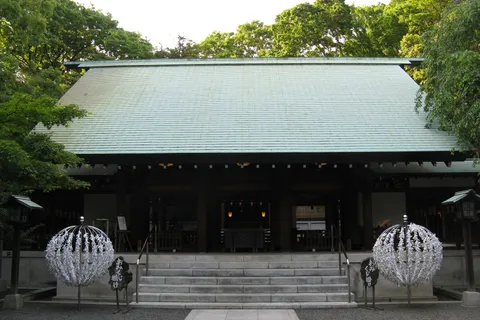
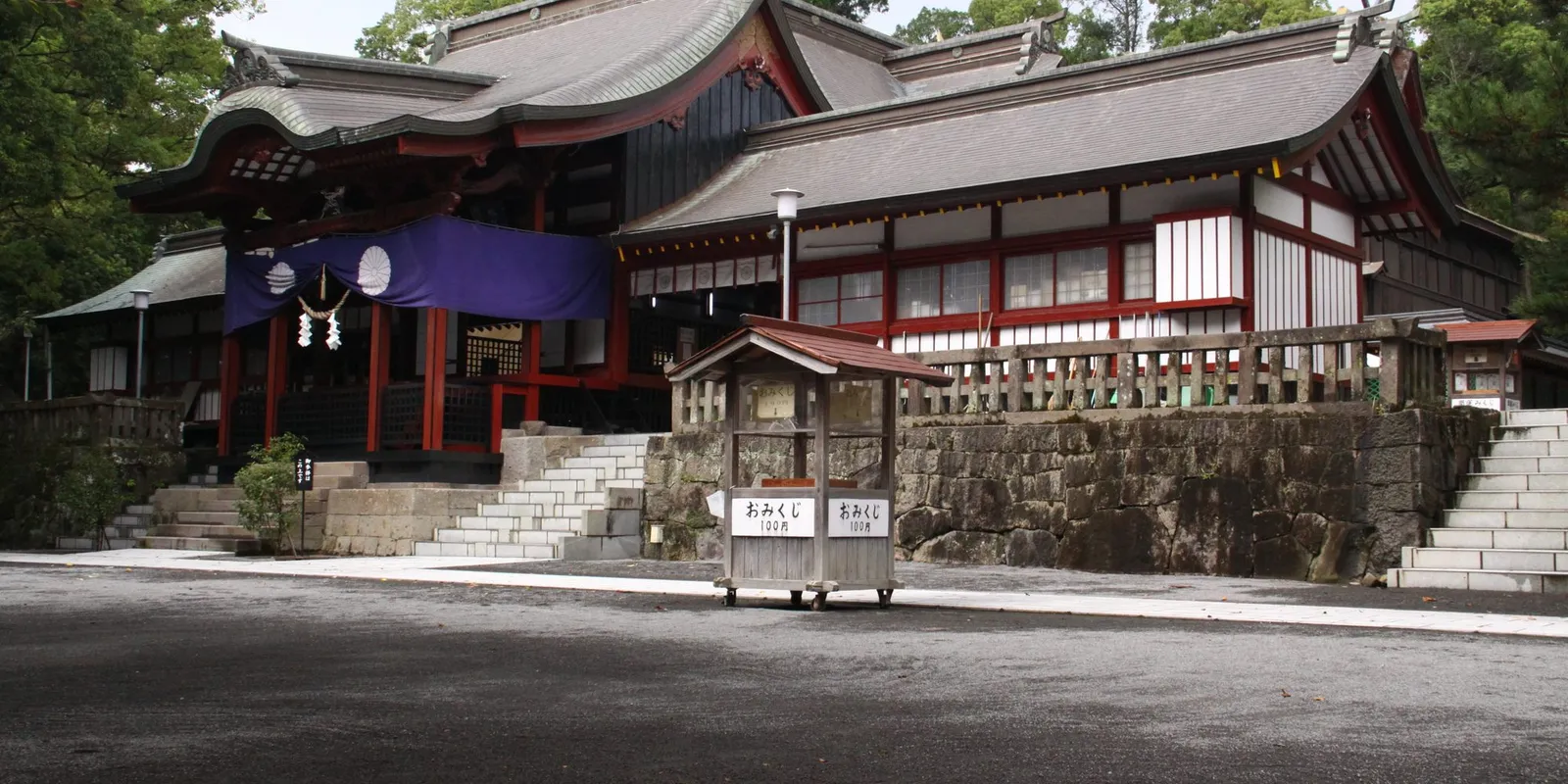
The current main hall and worship hall date to 1756, rebuilt during the mid-Edo period through a donation from Shimazu Shigetoshi, lord of the Satsuma domain. Together with the Imperial Messenger Hall and the main hall of the subsidiary Shisho Jinja, they are designated National Important Cultural Properties. Finished in vivid polychrome and lacquer, the main hall is unusually large and lavish for a shrine of this kind, with richly regional decorative touches such as dragons carved coiling around the pillars of its front porch.
Highlights
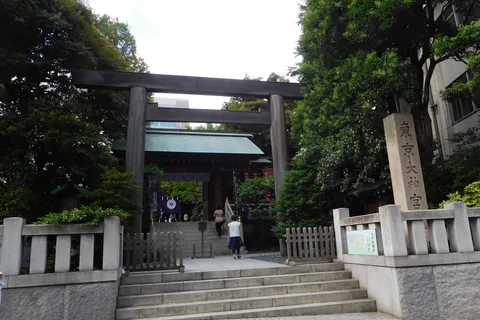
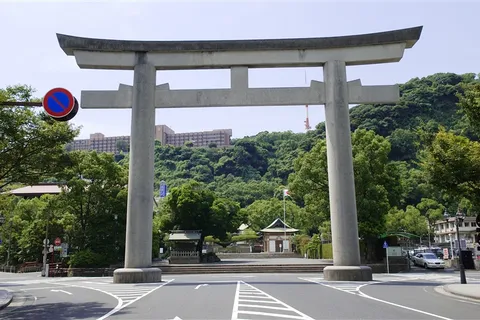
The shrine’s large stone otorii gate at the entrance to the approach is one of its most iconic sights. From there, a tree-lined path leads to the vividly painted main hall, worship hall, and Imperial Messenger Hall, where visitors can admire the intricate carving and decoration crafted by mid-Edo-period artisans up close. Set on high ground overlooking the town of Hayato, the shrine’s combination of dense forest and vermillion-lacquered buildings gives it a stately presence befitting one of Kyushu’s most important shrines.
Nearby stands Hayatozuka, a nationally designated historic site connected to Kagoshima Jingu’s own Hayato Hamakudari procession, believed to be the remains of a Heian-period Buddhist site. The surrounding Hayato area is also home to the Hinatayama hot spring district, a good spot to unwind after paying a visit to the shrine.
Visiting Tips
Drawing on the myth of Yamasachihiko and Toyotamahime-no-Mikoto’s marriage and the imperial lineage said to descend from their union, Kagoshima Jingu is known for blessings related to marital harmony and safe childbirth, and it draws visitors ranging from engaged couples to those hoping for a safe pregnancy.
While the grounds themselves are open at all times, goshuin and prayer services are only available 8:30–17:00, so it’s best to plan your visit accordingly. Free parking for roughly 200 vehicles makes arriving by car straightforward, though the shrine is also a manageable 15-minute walk from JR Hayato Station. During the Hatsuuma Festival each March, the shrine draws especially large crowds, so public transportation is worth considering at that time.
Annual Festivals
- Hatsuuma Festival (the first Sunday after the 18th day of the old lunar first month, typically around March): Kagoshima Jingu’s signature festival, with roughly 500 years of history. It traces back to a Muromachi-period episode in which a monk named Nisshu, the lord Shimazu Takahisa, and a priest of the shrine all reportedly shared the same dream of the deity Bato Kannon on the same night. Its highlight is the “suzukake-uma” dance, in which more than 20 horses decorated with bells and flowers step in time to festival music — a National Important Intangible Folk Cultural Property and one of Kagoshima Prefecture’s leading spring festivals.
- Regular Festivals: A full calendar of seasonal rites, befitting the shrine’s status as a Jingu, is observed throughout the year with deep support from the local community.
Nearby Food & Sightseeing
- Hayatozuka: A nationally designated historic site within walking distance of Kagoshima Jingu, featuring a cluster of stone monuments believed to date to the Heian period, with an adjacent museum offering more historical context.
- Hinatayama Onsen: A historic hot spring district near Kagoshima Jingu, home to inns dating back to the Taisho era — a relaxing way to unwind after a visit.
- The Hayato and Kirishima area is also known for some of Kagoshima’s signature foods, including kurobuta (Kagoshima black pork) and jidori chicken breeds such as Satsuma-jidori and Kuro-satsuma-dori, making it a good place to sample local cuisine before or after your visit.
Frequently Asked Questions
- Q. Who is enshrined at Kagoshima Jingu?
- A. The principal deities are Hikohohodemi-no-Mikoto (also known as Yamasachihiko) and his wife Toyotamahime-no-Mikoto, the central figures of the "Umisachihiko and Yamasachihiko" myth recorded in the Kojiki — a story closely tied to the mythological origins of the imperial line. Emperor Chuai, Emperor Ojin, Empress Jingu, and Nakatsuhime-no-Mikoto are also enshrined here.
- Q. What blessings is this shrine known for?
- A. The shrine is known for blessings related to marital harmony and safe childbirth, drawn from the myth in which Yamasachihiko and Toyotamahime-no-Mikoto marry and their descendants are said to lead, generations later, to the imperial line.
- Q. Can I receive a goshuin (shrine stamp) here?
- A. Yes, for ¥500, available 8:30–17:00. The goshuin is hand-written and features the inscription "Osumi no Kuni Ichinomiya" alongside the imperial chrysanthemum crest and the shrine's seal.
- Q. How do I get to Kagoshima Jingu?
- A. It's about a 15-minute walk from JR Hayato Station on the Nippo Main Line, or accessible by bus. By car, it's about 5 minutes from the Hayato-Higashi Interchange on the Kyushu Expressway, and free parking for about 200 vehicles is available.
- Q. What is the Hatsuuma Festival?
- A. Held on the first Sunday after the 18th day of the old lunar first month, the Hatsuuma Festival is Kagoshima Jingu's signature annual event, with roughly 500 years of history. Its highlight is the "suzukake-uma" dance, in which more than 20 horses decorated with bells and flowers step in time to music — designated a National Important Intangible Folk Cultural Property and drawing large crowds each year.