History
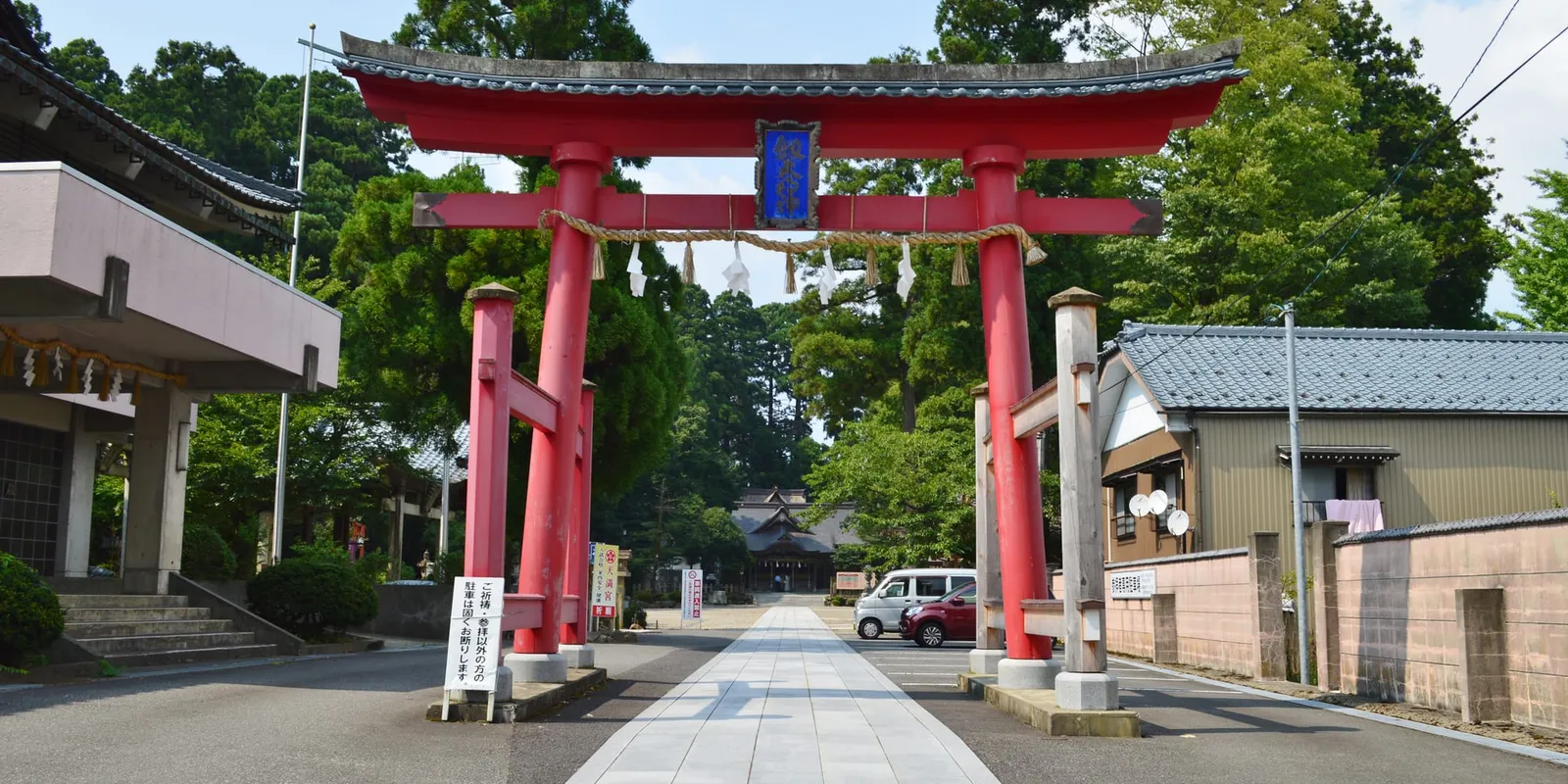
Shrine tradition traces the origins of Tsurugi Jinja back to the reign of Emperor Korei, when a descendant of the priestly family serving Kehi Shrine enshrined the spirit of Susanoo-no-Okami on the peak of nearby Mount Zagatake. Generations later, Prince Oshikuma, a son of Emperor Chuai, is said to have received the deity’s protection while pacifying the region, and in gratitude built a shrine hall at the present site, transferring the deity’s spirit there. This founding legend is why Susanoo-no-Okami remains the shrine’s principal deity today, enshrined together with Kehi-no-Okami and Prince Oshikuma.
The shrine has been venerated since the Nara period and was already listed in the Engishiki Register of Deities compiled in 927, ranked as the Ninomiya (“second shrine”) of Echizen Province, second in status only to Kehi Jingu in present-day Tsuruga. Shrine tradition holds that its buildings were burned in 1161 by forces under Taira no Kiyomori, and rebuilt in 1164 through the efforts of his eldest son, Taira no Shigemori. From the medieval period onward, the shrine received deep reverence and protection from successive rulers of Echizen Province, including the Shiba and Asakura clans.
The Oda Clan and Oda Nobunaga
Tsurugi Jinja’s best-known claim to fame is its documented connection to the Oda clan, ancestors of the Sengoku-period unifier Oda Nobunaga. The Oda family’s forebears served as hereditary priests of Tsurugi Jinja, and when the family later relocated to Owari Province, they are said to have taken “Oda” as their surname from Oda, the local place name of their home village — the district surrounding the shrine, still called Oda within present-day Echizen Town.
Because of this ancestry, Tsurugi Jinja held the status of ujigami (clan tutelary shrine) for Oda Nobunaga himself. Historical accounts record that even amid the upheavals of the Sengoku period, Nobunaga maintained deep reverence for the shrine of his forebears, donating shrine lands and funding the construction and repair of its buildings as part of his protection of the shrine and the security of its surrounding community. Shrine tradition holds that after Nobunaga’s death at Honno-ji in 1582, his spirit was enshrined at a subsidiary shrine on the grounds, Komatsutake Shrine. In the Edo period, Tsurugi Jinja continued to receive patronage from the lords of the Fukui and Ono domains, and later became a prayer site for the Fushimi-no-miya branch of the imperial family.
Highlights: The National Treasure Bell
Tsurugi Jinja’s most celebrated treasure is its bronze temple bell (bonsho), designated a National Treasure. The bell bears a cast inscription dated to the fourth year of the Jingo-Keiun era (770 CE), making it the third-oldest surviving inscribed bell in Japan, and tradition holds it was donated by Emperor Konin. Standing 109.9 cm tall with a mouth diameter of 73.9 cm, it has long been revered as a “fire-ward” bell believed to protect against disaster. The bell, along with other cultural properties once held at the shrine, was transferred on deposit to the adjacent Echizen Town Oda Culture & History Museum, where it remains on permanent public display. The shrine’s main hall and the subsidiary Oda Jinja are themselves designated Fukui Prefecture Cultural Properties.
Visiting Tips
Set within a quiet grove, Tsurugi Jinja retains an unhurried, uncommercialized atmosphere rare for a shrine of its historical importance. Among its grounds is an “omokaru-ishi” (weight-judging stone), which visitors can lift to divine whether a wish will come true. Goshuin, amulets, and a goshuin book decorated with the Oda clan’s distinctive mokko crest are available at the shrine office. Visitors wanting to see the National Treasure bell in person should plan to also stop at the neighboring Echizen Town Oda Culture & History Museum, where it is on permanent display.
Annual Festivals
- Autumn Grand Festival (October 9–10): The shrine’s most important annual festival.
- Summer Festival (August 15–16)
- Tanabata Festival (July 15)
- Moon-Viewing Festival (mid-September)
- Summer Purification Rite (June 30): A ritual to purify the sins and impurities of the past six months.
- Kangaku Festival (April 1): A rite blessing the growth of children entering first grade.
- Spring Prayer Festival (April 29)
- Sagicho (February 11) and Setsubun Festival (February 3)
Nearby Food & Sightseeing
- Echizen Town Oda Culture & History Museum: Home to Tsurugi Jinja’s National Treasure bell and other cultural properties connected to Oda Nobunaga and the Oda clan — well worth combining with a visit to the shrine.
- Echizen Coast: A scenic stretch of rugged Sea of Japan coastline famous for Echizen crab, a popular drive from the shrine for visitors wanting to see the ocean.
- Echizen Pottery Village: A cluster of kilns and museums dedicated to Echizen-yaki, one of Japan’s “Six Ancient Kilns,” offering a chance to explore centuries of ceramic tradition in the area.
Frequently Asked Questions
- Q. Can I get a goshuin at Tsurugi Jinja?
- A. Yes, it's available at the shrine office for a fee of ¥300. A goshuin book decorated with the Oda clan's mokko crest is also available.
- Q. How do I get to Tsurugi Jinja?
- A. From Happy Line Fukui's Takefu Station, take a Fukutetsu bus bound for the Echizen coast via Oda and get off at the Myojin-mae stop, right by the shrine. By car, it's about 20 minutes from the Takefu or Sabae interchange on the Hokuriku Expressway.
- Q. Is parking available?
- A. Yes, free parking is available at the large lot of the adjacent Echizen Town Oda Culture & History Museum. Visitors receiving a prayer service may also use spaces within the shrine grounds.
- Q. What is the shrine's connection to Oda Nobunaga?
- A. The ancestors of the Oda clan served as priests at Tsurugi Jinja, and the family is said to have taken its surname from Oda, the local place name of their home village (now part of Echizen Town). During the Sengoku period, Oda Nobunaga revered the shrine as his clan's tutelary shrine, donating land and funding the construction and repair of its buildings in its protection.
- Q. Can visitors see the National Treasure bell?
- A. The National Treasure bronze bell, inscribed with a date corresponding to 770 CE, is now held on deposit and permanently displayed at the adjacent Echizen Town Oda Culture & History Museum, where it can be viewed up close.
Related Shrines
Fukui, Tsuruga
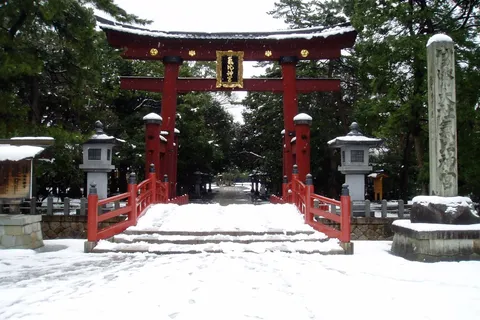
Kehi Jingu
Kehi-jingū
- Traffic Safety
- Maritime Safety
- Longevity
Osaka, Higashiosaka
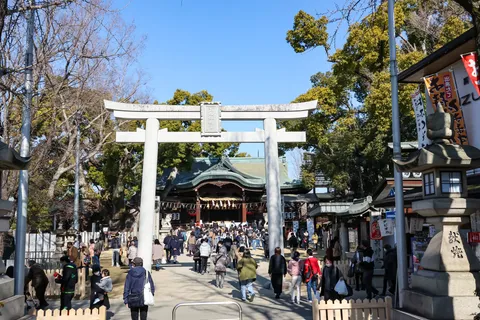
Ishikiri Tsurugiya Jinja
Ishikiri Tsurugiya-jinja
- Good Health
- Protection from Misfortune
- Household Safety
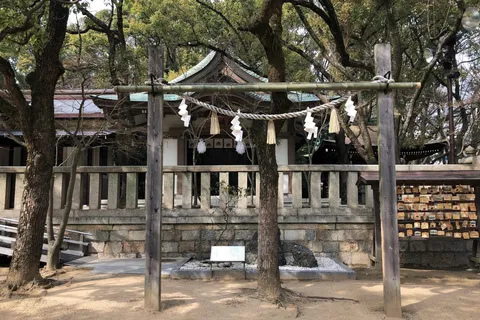
Hyogo, Kobe (Chuo Ward)
Minatogawa Jinja
Minatogawa-jinja
- Good Fortune
- Victory in Competition
- Luck in Competition