History
Yuzawa Jinja stands near the heart of Noboribetsu Onsen, one of Hokkaido’s best-known hot spring resorts, just across the street from the historic Dai-ichi Takimotokan inn. The shrine’s history is inseparable from the story of Takimoto Kinzo, the real historical figure who developed Noboribetsu Onsen itself.
Takimoto Kinzo was born in 1826 in Honjo, in Kodama District of Musashi Province (present-day Honjo City, Saitama Prefecture). In his teens he moved to Edo and apprenticed under a master carpenter, becoming a skilled tradesman. In 1858, responding to the shogunate’s call for settlers to develop Ezo (present-day Hokkaido), he crossed over to the island, settling first in Oshamambe before moving on to Horobetsu (in what is now Noboribetsu’s Horobetsu district), where he is said to have worked on the construction of an ekiteisho, a way-station providing lodging and transport along the road.
It was here that Kinzo’s wife, Sada, began suffering from a severe skin disease that spread across her body. Having heard that a hot spring near Noboribetsu was said to be effective for skin ailments, Kinzo brought her into the forest to Jigokudani (Hell Valley), where the spring’s waters gushed forth, and built a simple bathhouse so she could take the cure. Sada’s condition improved rapidly, and she eventually recovered completely. Struck by the healing power of the spring, Kinzo resolved to make it available to others suffering from similar afflictions, and went on to open a hot spring inn — the beginnings of what would grow into today’s Dai-ichi Takimotokan, and the foundation of Noboribetsu Onsen as a resort town. For this, Kinzo is remembered today as the father of Noboribetsu Onsen.
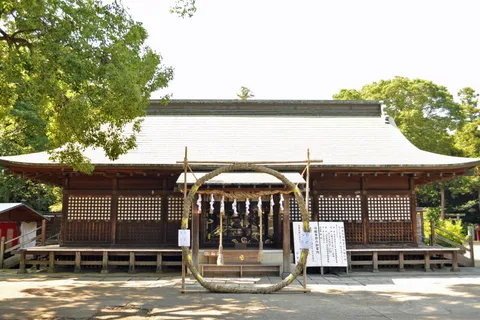
Alongside his work developing the hot spring, Kinzo also relocated a small shrine that had stood in Jigokudani to the site of present-day Yuzawa Jinja, enshrining it as the tutelary shrine (ubusunagami) of the growing hot spring settlement. This is the origin of Yuzawa Jinja, founded in 1858 (Ansei 5). The shrine was elevated to village shrine (murasha) status in 1883, the current main hall was built in 1936, and after the war, in 1948, the shrine was registered as an independent religious corporation — the status it holds today as the guardian shrine of Noboribetsu Onsen.
Kinzo himself died in 1899 at the age of 73, but in recognition of his role in founding the hot spring resort, he was enshrined after his death as “Takigawa-no-Yumoto-Okina-no-Mikoto.” He is worshipped at Yuzawa Jinja alongside Homutawake-no-Mikoto (Emperor Ojin, worshipped as the god Hachiman), Ōnamuchi-no-Mikoto (another name for Ōkuninushi), and Sukunahikona-no-Mikoto. The presence of the resort’s actual human founder among the enshrined deities, standing alongside the three traditional guardian gods, is what makes Yuzawa Jinja unique among Hokkaido’s shrines.
Highlights
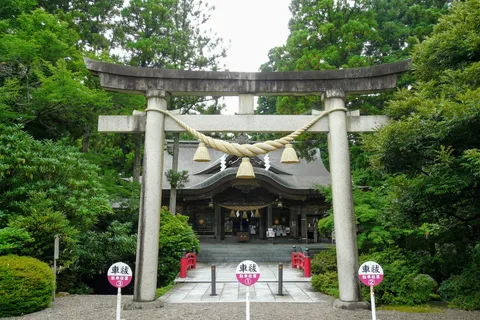
Walking to the far end of Gokuraku-dori, the main street running through Noboribetsu Onsen, toward Jigokudani, visitors pass beneath a large torii gate and climb a stone stairway flanked by a pair of komainu guardian lions to reach the shrine grounds. Though only a short distance from the bustle of the hot spring resort, the grounds are shaded by trees and have a notably quiet, contemplative atmosphere — and in autumn, the foliage here is known for its beauty.
The shrine office offers a few distinctive items, including daruma-shaped omikuji fortune slips. After paying respects, many visitors continue on to Jigokudani and Oyunuma, the dramatic volcanic landscapes that gave rise to the shrine’s own founding story and remain Noboribetsu’s signature sights.
Visiting Tips
The shrine grounds can be visited at any time, but since the shrine office is not always staffed, it’s worth calling ahead if you specifically want to receive a goshuin or amulet. Standing directly across from Dai-ichi Takimotokan, the shrine is an easy stop to combine with a day-trip bath or an overnight stay, and many visitors fold it into a stroll through the resort’s hot spring district.
Annual Festivals
- Reitaisai Grand Festival (August 18): Yuzawa Jinja’s principal annual festival and the most important rite of the shrine’s year, honoring its role as guardian of Noboribetsu Onsen.
- New Year’s Visit (January): Visitors staying in or passing through Noboribetsu Onsen make up many of the shrine’s New Year worshippers.
Nearby Food & Sightseeing
- Dai-ichi Takimotokan: Noboribetsu Onsen’s oldest hot spring inn, standing directly across from Yuzawa Jinja. It traces its roots to the inn founded by Takimoto Kinzo himself, and its large bathing hall is open to day-trip visitors as well as overnight guests.
- Jigokudani (Hell Valley): The dramatic volcanic valley where the shrine’s original founding legend took place, and the source of the hot spring itself. Within easy walking distance of the shrine, it’s the sight nearly every visitor to Noboribetsu Onsen comes to see.
- Gokuraku-dori (Gokuraku Shopping Street): The main street leading to Yuzawa Jinja’s approach, lined with souvenir shops, restaurants, and foot baths — also home to the animatronic Enma-do clock tower, famous for its demon-themed show.
Frequently Asked Questions
- Q. Can I get a goshuin at Yuzawa Jinja?
- A. Yes, a hand-written goshuin is available directly in your goshuin book for a fee of ¥500. The shrine office isn't always staffed, though, so if you want to be sure of receiving one, it's a good idea to call ahead (0143-84-2439) to check.
- Q. What are the visiting hours, and is there an admission fee?
- A. The shrine grounds are open to visit at any time, free of charge. Just note that the office where goshuin and amulets are available keeps more limited hours.
- Q. How do I get to Yuzawa Jinja?
- A. It's a 1–2 minute walk from the 'Dai-ichi Takimoto-mae' Donan Bus stop. The shrine sits up a stone stairway at the far end of Gokuraku-dori, the main street running through the heart of Noboribetsu Onsen, directly across from the historic Dai-ichi Takimotokan inn — an easy stop if you're staying anywhere in the resort.
- Q. Is parking available?
- A. There's no parking lot at the shrine itself. The nearby paid Jigokudani parking lot (¥500 for a standard car) is the most practical option, followed by a short walk to the shrine.
- Q. What is the story behind Yuzawa Jinja's founding?
- A. The shrine is closely tied to Takimoto Kinzo, the real historical figure who developed Noboribetsu Onsen. In 1858, Kinzo brought his wife Sada, who suffered from a severe skin disease, to bathe in the hot spring waters of Jigokudani (Hell Valley). When her condition rapidly improved, he relocated a small shrine that had stood in Jigokudani to this site to serve as the resort town's tutelary shrine, and went on to build the bathhouse that grew into today's hot spring resort. After his death, Kinzo himself was enshrined here as 'Takigawa-no-Yumoto-Okina-no-Mikoto,' alongside Homutawake-no-Mikoto, Ōnamuchi-no-Mikoto, and Sukunahikona-no-Mikoto.